Tree of Yoga
 77
77

Tree of Yoga
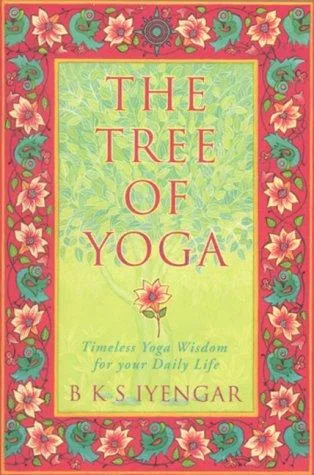
B. K. S. Iyengar’s Tree of Yoga is not a casual read; it’s a dense, authoritative text that demands attention. Iyengar, a titan in the popularization of Hatha Yoga, uses the metaphor of a tree to structure his exploration of yoga’s multifaceted nature, from root to fruit. He meticulously details the ethical limbs (Yama and Niyama) and the physical trunk (Asana), but crucially, he illuminates the branches and leaves – the philosophical and spiritual growth that arises from disciplined practice. A particularly striking passage discusses the interconnectedness of the senses and the mind, illustrating how cultivating awareness in one area naturally impacts others. While the book’s rigor is its strength, its sheer depth can be overwhelming for newcomers. Iyengar’s precise, almost clinical, prose leaves little room for ambiguity, which can feel austere to those seeking a more fluid, intuitive approach to yoga. Nonetheless, for the dedicated student, it offers unparalleled clarity on yoga’s integral philosophy. The book serves as an essential, albeit challenging, guide to the complete yogic system.
📝 Description
77
B. K. S. Iyengar's 'Tree of Yoga,' published in 1988, presents yoga as a holistic system for living, not just physical exercise.
This book moves beyond the physical practice of asana to discuss the ethical, philosophical, and spiritual dimensions of yoga. Iyengar details how yogic principles can be applied to daily life, fostering personal clarity and a connection to the wider world. It aims to illuminate the integral role of ethics and philosophy in the complete yogic path. The text addresses how consistent practice can cultivate equanimity and a deeper understanding of oneself and the environment.
The work is suited for dedicated yoga practitioners wishing to grasp its deeper philosophical currents. Students of esoteric traditions and comparative religion will also find value in its examination of ethical frameworks within ancient practices. Those pursuing self-development and the integration of spiritual concepts into secular life will encounter substantial material. Readers interested in the historical trajectory and philosophical underpinnings of yoga will find it informative.
Published in 1988, 'Tree of Yoga' arrived as Western interest in yoga grew, often focusing on physical postures. Iyengar's text countered this trend by re-emphasizing the ethical and philosophical foundations found in classical yoga, particularly referencing Patanjali's Yoga Sutras. This period saw increased engagement with Eastern philosophies, influenced by figures like Swami Vivekananda and the spread of Vedanta and Buddhist texts. Iyengar's systematic approach, while rooted in classical yoga, offered a clear presentation distinct from purely devotional or theoretical interpretations.
💡 Why Read This Book?
• Gain a structured understanding of yoga's ethical foundations as outlined by Patanjali's Yamas and Niyamas, moving beyond mere physical practice to cultivate inner discipline. • Comprehend the concept of 'Sthira Sukham Asanam' not just as a physical posture, but as a principle for achieving balance and ease in all life situations, as discussed throughout the book. • Explore the intricate relationship between the mind and the senses, learning how focused awareness, as detailed in the book’s philosophical sections, can lead to greater mental clarity and control.
⭐ Reader Reviews
Honest opinions from readers who have explored this book.
❓ Frequently Asked Questions
When was B. K. S. Iyengar's Tree of Yoga first published?
The Tree of Yoga by B. K. S. Iyengar was first published in 1988, marking a significant contribution to yoga literature during a period of growing global interest in the practice.
What philosophical lineage does The Tree of Yoga draw from?
The book is deeply rooted in the classical Yoga philosophy of Patanjali, particularly his Yoga Sutras, which form the bedrock of its ethical and philosophical teachings.
Is The Tree of Yoga primarily a book about yoga poses (asanas)?
While it discusses asanas, The Tree of Yoga focuses more broadly on the philosophical, ethical, and spiritual dimensions of yoga, presenting it as a complete system for life.
What does Iyengar mean by the 'Tree of Yoga' metaphor?
Iyengar uses the tree metaphor to illustrate how the various components of yoga—from ethical conduct (roots) to physical practice (trunk) and spiritual growth (branches and leaves)—are interconnected and interdependent.
Who is B. K. S. Iyengar and why is he important?
B. K. S. Iyengar (1918-2014) was a globally respected yoga teacher renowned for his precise method of teaching asana and his extensive writings that clarified yoga philosophy for a modern audience.
Does the book explain the Yamas and Niyamas?
Yes, The Tree of Yoga provides a detailed explanation of the Yamas (ethical restraints) and Niyamas (observances) as foundational principles for yogic living.
🔮 Key Themes & Symbolism
The Eight Limbs of Yoga
The Tree of Yoga meticulously unpacks the Ashtanga Yoga, or the eight limbs, as codified by Patanjali. Iyengar presents these not as separate stages but as interconnected facets of a unified practice. He details the Yamas and Niyamas as the vital roots grounding the practitioner, followed by Asana (posture) as the trunk, Pranayama (breath control) as the branches, and the higher limbs like Pratyahara (sense withdrawal), Dharana (concentration), Dhyana (meditation), and Samadhi (absorption) as the fruits of sustained effort. This holistic view emphasizes that true yogic development requires attention to all aspects, from ethical conduct to profound states of consciousness.
Yoga as a Science of Self-Mastery
Iyengar frames yoga as a rigorous science dedicated to understanding and mastering the self. The book emphasizes the cultivation of awareness, particularly through the disciplined observation of the mind and senses. Concepts like 'Sthira Sukham Asanam' are presented as principles applicable not only to physical postures but to the entire spectrum of human experience, advocating for a stable yet comfortable engagement with life's challenges. This perspective positions yoga as a practical methodology for achieving mental clarity, emotional equilibrium, and profound self-knowledge, rather than a purely spiritual or religious pursuit.
Integration of Spiritual Principles into Daily Life
A central theme is the practical application of yogic philosophy to everyday existence. Iyengar bridges the gap between ancient wisdom and modern life, illustrating how the principles of yoga can inform personal conduct, relationships, and one's interaction with the world. The book encourages readers to see their daily activities as potential avenues for yogic practice, transforming mundane tasks into opportunities for mindfulness and ethical development. This approach explains spiritual growth, presenting it as an achievable outcome of consistent, conscious effort in all aspects of life.
The Interconnectedness of Body, Mind, and Spirit
The Tree of Yoga consistently highlights the inseparable link between the physical body, the mind, and the spirit. Iyengar argues that the physical practice of Asana and Pranayama directly influences mental states and contributes to spiritual awareness. Conversely, a disciplined mind can enhance the effectiveness of physical practice. This integrated perspective underscores the holistic nature of yoga, where progress in one area supports development in others, leading to a more balanced and complete individual.
💬 Memorable Quotes
Direct passages from the work, attributed to the author.
“The tree of yoga has its roots in Yama and Niyama.”
— This statement expresses the book's core philosophy: that ethical conduct and self-discipline are the essential foundation upon which all other aspects of yoga are built, much like a tree requires strong roots to grow.
“Yoga is the journey of the self, through the self, to the self.”
— This interpretation highlights yoga's introspective nature, emphasizing that the practice is an internal exploration leading to self-discovery and ultimate realization.
“Asana is not merely a physical exercise but a practice of concentration.”
— This concept points to the mental discipline inherent in yoga postures, suggesting that the true benefit of asana lies not just in physical flexibility but in the ability to focus the mind.
“The discipline of yoga is not to be forced; it is to be cultivated.”
— This idea suggests that progress in yoga stems from patient, consistent effort and internal cultivation rather than external pressure or harsh self-discipline.
💡 Key Ideas
Editorial paraphrase of the work's core concepts — not direct quotes.
Steady and pleasant is the posture.
This paraphrased concept refers to 'Sthira Sukham Asanam,' illustrating that true mastery in yoga, and by extension in life, involves finding a balance between stability and comfort, effort and ease.
🌙 Esoteric Significance
Tradition
The Tree of Yoga is firmly rooted in the classical Indian tradition of Yoga, specifically as expounded in Patanjali's Yoga Sutras. It aligns with the broader Vedic and Upanishadic philosophical currents that underpin much of Indian esoteric thought. Iyengar's contribution lies in presenting this ancient system with a modern, systematic, and accessible approach, making its esoteric principles relatable to a global audience seeking self-realization and ethical guidance.
Symbolism
The central symbol is the 'tree,' representing the holistic structure of yoga, with its roots in Yama and Niyama (ethical foundations), its trunk in Asana (physical postures), and its branches and leaves in the higher limbs like Pranayama, Dharana, Dhyana, and Samadhi (higher states of consciousness). Another key motif is the concept of 'Sthira Sukham Asanam,' symbolizing the integration of stability and ease, effort and surrender, a core principle applicable to both physical practice and navigating life's complexities.
Modern Relevance
Contemporary yoga teachers and practitioners who emphasize the philosophical and ethical dimensions of yoga often reference Iyengar's work. Thinkers and schools focusing on mindfulness, integral psychology, and embodied cognition find resonance in his systematic approach to integrating physical practice with mental and spiritual development. His emphasis on self-mastery through disciplined awareness continues to inform modern therapeutic and self-development practices.
👥 Who Should Read This Book
• Dedicated yoga practitioners seeking to deepen their understanding beyond physical postures and explore the ethical and philosophical underpinnings of the practice. • Students of comparative religion and philosophy interested in the systematic frameworks of Eastern traditions, particularly classical Yoga. • Individuals pursuing personal growth and self-awareness who want to integrate principles of discipline, mindfulness, and ethical conduct into their daily lives.
📜 Historical Context
B. K. S. Iyengar's The Tree of Yoga, published in 1988, arrived at an important moment for yoga in the West. The 1970s and 1980s saw a surge in Hatha Yoga's popularity, often presented through simplified, posture-focused systems. Iyengar, already a globally recognized figure since the mid-20th century for his systematic approach and innovative use of props, used this book to reassert the philosophical and ethical depth of yoga. He explicitly drew from the lineage of Patanjali's Yoga Sutras, a foundational text for classical yoga philosophy, which some contemporary Western interpretations had sidelined. While authors like Swami Vivekananda had earlier introduced Vedantic and Yogic philosophy to the West, Iyengar’s work provided a practical, discipline-oriented framework for integrating these principles. The book countered a prevailing trend towards purely physical or spiritually vague interpretations, emphasizing yoga as a comprehensive path to self-awareness and ethical living, grounded in ancient Indian thought.
📔 Journal Prompts
The foundational role of Yama and Niyama in the yogic path.
Cultivating 'Sthira Sukham Asanam' in a challenging situation.
Observing the interplay between the senses and the mind during daily activities.
The practical application of yogic principles to one's personal relationships.
Reflecting on the interconnectedness of physical practice and mental stillness.
🗂️ Glossary
Yama
The five ethical restraints or abstinences in Patanjali's Yoga Sutras, forming the first limb of Ashtanga Yoga. They include non-violence, truthfulness, non-stealing, continence, and non-possessiveness.
Niyama
The five observances or disciplines in Patanjali's Yoga Sutras, forming the second limb. They include purity, contentment, austerity, self-study, and surrender to a higher power.
Asana
Literally 'seat,' referring to the physical postures practiced in Hatha Yoga. In Patanjali's system, it signifies a steady, comfortable posture suitable for meditation.
Pranayama
The control and regulation of the breath, considered the fourth limb of Ashtanga Yoga. It is believed to influence the mind and vital energy (prana).
Sthira Sukham Asanam
A key phrase from Patanjali's Yoga Sutras (II.46) translating to 'steady, comfortable posture.' It signifies finding balance, ease, and stability in practice and life.
Dharana
The sixth limb of Ashtanga Yoga, referring to the concentration of the mind on a single point or object.
Dhyana
The seventh limb of Ashtanga Yoga, representing sustained meditation or contemplation, a state of undisturbed flow of attention.
🔮 Readers Also Liked
Browse all →









More by B. K. S. Iyengar
All books →





More Free Occult Philosophy Books
View all →