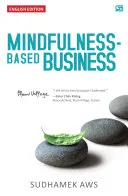
Mindfulness-Based Business
 78
78

Mindfulness-Based Business
Sudhamek AWS's "Mindfulness-Based Business" attempts a delicate balancing act, seeking to reconcile the often-conflicting demands of commerce with ethical and humanitarian ideals. The author, identified as a successful businessman, clearly aims to bridge the perceived chasm between worldly enterprise and spiritual aspiration. The book's strength lies in its earnest attempt to offer a practical model for this integration, moving beyond mere platitudes. However, at times, the theoretical underpinnings feel underdeveloped, particularly when attempting to articulate the precise mechanisms by which mindfulness translates into tangible business improvements beyond a general sense of well-being. A passage discussing the "ethical sourcing of materials" is commendable, but lacks specific examples of how a mindful approach concretely alters supply chain decisions in complex global markets. The work succeeds in posing vital questions about the purpose of business in the 21st century, but its answers could benefit from greater empirical grounding. Ultimately, it offers a hopeful, if occasionally abstract, vision for a more conscientious form of capitalism.
📝 Description
78
Published in 2024, Mindfulness-Based Business offers a framework for merging contemplative practices with commercial enterprises.
Sudhamek AWS proposes a model for integrating mindfulness into business operations, arguing that a conscious approach can lead to more ethical conduct, better decision-making, and a kinder workplace. The book contends that the pursuit of profit does not have to conflict with humanitarian goals. It details how a leader's internal state directly affects a company's external performance and results. This work is for business leaders, entrepreneurs, and managers who wish to connect their professional lives with their personal principles. It will appeal to those tired of profit-only business models and looking for a more complete way of doing business. Professionals in psychology, ethics, and business strategy will find useful content here. Consultants and educators promoting responsible business practices can also use it as a reference.
This book emerges from a lineage that links contemplative traditions with practical life. While its direct roots are contemporary, its ideas resonate with earlier movements that sought to apply ethical and psychological principles to commerce. The post-war period saw management theories that acknowledged employee well-being. Later, the New Age movement in the late 20th century brought Eastern philosophies, including mindfulness, into Western business contexts. AWS's work appears at a time when corporate social responsibility and employee mental health are subjects of significant public and academic attention.
💡 Why Read This Book?
• You will learn a practical methodology for infusing ethical considerations into daily business operations, as explored in Sudhamek AWS's concept of "mindful leadership." • Gain an understanding of how cultivating individual presence, as detailed in the book's exploration of mindful decision-making, can positively impact organizational outcomes. • Discover how the "triple bottom line" concept, as presented through the lens of mindfulness, can guide businesses towards greater social and environmental responsibility beyond profit motives.
⭐ Reader Reviews
Honest opinions from readers who have explored this book.
❓ Frequently Asked Questions
What is the core philosophy behind Mindfulness-Based Business?
The core philosophy integrates principles of mindfulness, such as present-moment awareness and non-judgment, into business practices. It posits that this integration can lead to more ethical decision-making, enhanced employee well-being, and ultimately, more sustainable and compassionate commercial enterprises.
Who is Sudhamek AWS, the author?
Sudhamek AWS is presented as a successful businessman with a strong humanitarian social concern, who authored Mindfulness-Based Business, first published in 2024.
How does this book differ from standard business advice?
Unlike conventional business literature, it prioritizes the internal state of the leader and employees, linking mindfulness practices directly to operational effectiveness and ethical conduct, rather than focusing solely on external metrics.
What specific business areas does the book address?
The book addresses leadership, decision-making, customer service, investment strategies, and supply chain management, proposing how a mindful approach can transform each of these areas.
Is this book suitable for someone new to mindfulness?
Yes, the book aims to make mindfulness accessible within a business context, explaining concepts clearly and offering practical applications that can be adopted even by those with no prior experience with meditation or contemplative practices.
What is the publication year of Mindfulness-Based Business?
Mindfulness-Based Business by Sudhamek AWS was first published on October 23, 2024.
🔮 Key Themes & Symbolism
Mindful Leadership
This theme focuses on the transformation of leadership paradigms. It argues that leaders who cultivate self-awareness and emotional regulation through mindfulness can foster more trusting and productive work environments. By applying principles of non-judgment and compassionate listening, leaders can enhance team cohesion and improve conflict resolution. The book posits that this internal shift in leadership directly influences the ethical compass and operational efficiency of the entire organization, moving beyond traditional command-and-control structures to a more collaborative and conscious model.
Ethical Commerce
The work explores how mindfulness can serve as a foundation for ethical decision-making in all business transactions. It challenges the notion that profit maximization inherently necessitates compromising ethical standards. Instead, it proposes that a mindful approach encourages consideration of the broader impact of business activities on stakeholders, society, and the environment. This includes scrutinizing supply chains, fair labor practices, and responsible marketing, grounding these ideals in the practice of present-moment awareness to avoid reactive or exploitative choices.
Integrative Business Models
This theme centers on the synthesis of seemingly disparate elements: commercial success and humanitarian values. The book advocates for integrative models that recognize the interconnectedness of financial health, social responsibility, and employee well-being. It moves beyond the 'either/or' dichotomy often presented in business discourse, suggesting that a mindful approach can unlock synergies between these aspects. The goal is to foster organizations that are not only profitable but also contribute positively to the world, demonstrating that business can be a force for good.
Conscious Decision-Making
The book details how mindfulness practices enhance cognitive functions crucial for sound business judgment. By training the mind to observe thoughts and emotions without immediate reaction, individuals can approach complex problems with greater clarity and reduced bias. This theme studies how practices like focused attention and open awareness can lead to more innovative solutions, better risk assessment, and a more profound understanding of market dynamics. It emphasizes that conscious decision-making fosters resilience and adaptability in a rapidly changing business landscape.
💬 Memorable Quotes
Direct passages from the work, attributed to the author.
“Business and spirituality are two things that cannot be united. Like oil and water.”
— This sentiment reflects a common perception that the secular, profit-driven world of commerce is fundamentally at odds with spiritual or ethical pursuits, highlighting the challenge the book aims to overcome.
“The author... possesses a high humanitarian social concern.”
— This observation suggests that the author's personal values and ethical framework are integral to the business philosophy presented in the book, indicating a blend of practical experience and altruistic motivation.
“A fine tie between business theory and noble aspirations.”
— This description implies that the book skillfully integrates established business concepts with higher moral or spiritual goals, presenting a cohesive and balanced perspective.
“Mindfulness-based business that Sudhamek presents in this boo”
— This incomplete phrase points to the central concept of the book: a specific approach to business that is informed and guided by the practice of mindfulness.
“Between the worldly and the heavenly.”
— This phrase captures the perceived dualism between material pursuits (worldly) and spiritual or ethical considerations (heavenly), illustrating the traditional separation that the book seeks to bridge.
🌙 Esoteric Significance
Tradition
While not explicitly tied to a single esoteric lineage like Hermeticism or Kabbalah, "Mindfulness-Based Business" draws heavily from Buddhist contemplative traditions, particularly the Vipassanā (insight) meditation techniques. Its application within a secular, commercial context reflects a modern trend of "decontextualizing" spiritual practices for broader utility, a phenomenon seen in the secularization of yoga and meditation. The work aligns with the broader esoteric interest in the mind-body connection and the power of consciousness to shape reality, including economic realities.
Symbolism
The primary symbolic motif is the "mindful state" itself, representing clarity, equanimity, and non-attachment—qualities traditionally sought in spiritual practice. The integration of "worldly" (business) and "heavenly" (ethics) aspirations symbolizes the alchemical process of transforming base material (profit motive) into a higher form (value creation for all stakeholders). The concept of "interconnectedness," central to Buddhist thought, serves as a symbolic reminder that individual actions within business have far-reaching consequences.
Modern Relevance
This work is highly relevant to contemporary movements in ethical technology, sustainable business, and the burgeoning field of organizational psychology focused on well-being. Thinkers and practitioners in the "future of work" space, as well as proponents of "stakeholder capitalism," find resonance in its message. It informs current discussions on corporate social responsibility (CSR) and ESG investing, offering a psychological and practical framework for achieving these goals. Its influence can be seen in corporate wellness programs and leadership development initiatives that increasingly incorporate mindfulness.
👥 Who Should Read This Book
• Entrepreneurs seeking to build businesses with a strong ethical foundation, looking for practical methods to align profit with purpose. • Corporate executives and managers interested in improving organizational culture, enhancing employee well-being, and fostering more conscious decision-making processes. • Students and academics of business ethics, organizational behavior, and applied psychology exploring the intersection of contemplative practices and commercial enterprise.
📜 Historical Context
Published in 2024, "Mindfulness-Based Business" emerges into a contemporary discourse increasingly concerned with corporate ethics and employee well-being. Its conceptual lineage can be traced to the late 20th century, particularly the burgeoning interest in Eastern contemplative practices within Western professional settings, influenced by figures like Jon Kabat-Zinn and his development of Mindfulness-Based Stress Reduction (MBSR) in the 1970s. The book can be seen as a modern extension of "conscious capitalism," a movement gaining traction in the early 2000s, championed by thinkers like John Mackey of Whole Foods. While earlier management theories focused on efficiency and productivity, this work, like its predecessors in applied mindfulness, emphasizes the internal state of the individual as a critical driver of organizational success. It arrives at a time when discussions around ESG (Environmental, Social, and Governance) criteria are prominent, positioning mindfulness as a tool for achieving these broader societal goals within a capitalist framework.
📔 Journal Prompts
Reflect on the "mindful leadership" principles presented: how can they be applied to a specific challenge in your current professional role?
Consider the "ethical commerce" concept: identify one area in your business or work where an ethical lapse could occur and how mindfulness might prevent it.
Analyze the "integrative business models" proposed: what are the potential synergies between profit and social good in your industry?
Explore the practice of "conscious decision-making": how might applying non-judgmental awareness alter your approach to a recurring business problem?
Examine the "triple bottom line" through a mindful lens: how does present-moment awareness influence your perception of people, planet, and profit?
🗂️ Glossary
Mindfulness-Based Business
A business philosophy and practice integrating principles of mindfulness, such as present-moment awareness and non-judgment, into all aspects of commercial operations to foster ethical conduct and holistic success.
Mindful Leadership
A leadership approach characterized by self-awareness, emotional regulation, and compassionate engagement, cultivated through mindfulness practices, aimed at creating a positive and productive organizational environment.
Ethical Commerce
The practice of conducting business with a strong moral compass, ensuring that all transactions and operations consider their impact on stakeholders, society, and the environment, guided by mindful awareness.
Integrative Business Models
Frameworks that synthesize seemingly opposing goals, such as profit maximization and humanitarian values, demonstrating that financial success and social responsibility can be mutually reinforcing.
Conscious Decision-Making
The process of making business choices with heightened awareness, clarity, and reduced bias, often facilitated by mindfulness techniques that promote objective observation of thoughts and situations.
Triple Bottom Line
A framework for measuring business success not only by financial profit but also by social impact (people) and environmental sustainability (planet), viewed through the lens of mindful responsibility.
Noble Aspirations
High moral or ethical goals that extend beyond mere financial gain, encompassing humanitarian concerns, social contribution, and the pursuit of a greater good within the business context.