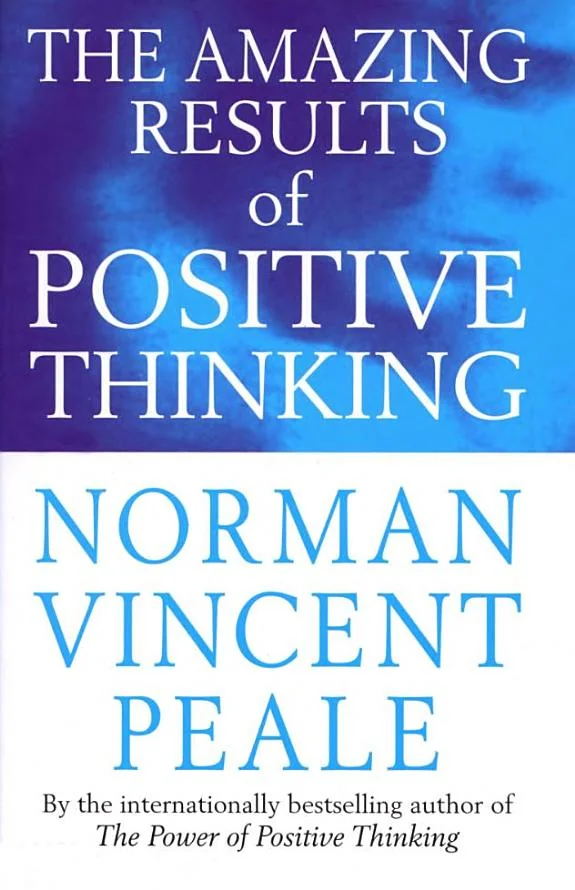
The Amazing Results Of Positive Thinking
 82
82

The Amazing Results Of Positive Thinking
Norman Vincent Peale's "The Amazing Results of Positive Thinking" functions less as a theoretical treatise and more as a compendium of anecdotal evidence. The strength lies in its direct presentation of reader testimonials, offering a clear, if unvarnished, view of the impact of his philosophy. One limitation, however, is the repetitive nature of the reported successes, which, while intended to be reinforcing, can feel formulaic. The concept of "faith-rest, tension-release, and anxiety-drain" is particularly striking, suggesting a practical, almost therapeutic application of mental discipline. The book's ultimate verdict rests on the accumulated testimony, positioning it as a guide for those who believe in the efficacy of directed belief.
📝 Description
82
Norman Vincent Peale's 2012 collection details how positive thinking can bring about life changes.
This 2012 compilation gathers accounts from people who experienced significant life transformations after applying Norman Vincent Peale's "positive thinking" principles. The book's intent is to show how a disciplined mental approach can effectively address personal problems. It includes correspondence from individuals who reported overcoming obstacles like fear, relationship issues, health worries, and self-doubt. These narratives serve to illustrate the practical impact of Peale's methods.
Published amidst mid-20th-century self-help trends, Peale's work tapped into a growing public interest in applied psychology and New Thought ideas. While not an academic text, it touched on popular notions of the mind-body connection. The book's widespread reception indicated a public desire for straightforward guidance on mental resilience and personal achievement.
Peale's work is situated within the broader American New Thought movement, which gained traction in the late 19th and early 20th centuries. This tradition emphasizes the power of the mind to influence physical reality and personal circumstances, often through affirmations, prayer, and visualization. It draws on earlier metaphysical ideas and Christian Science, focusing on spiritual principles as a means to achieve practical results in daily life, including health, prosperity, and happiness.
💡 Why Read This Book?
• Learn how to harness the "faith-rest, tension-release, and anxiety-drain" technique, a specific method for mental quieting, to manage personal anxieties, as detailed in the book's case studies. • Discover concrete examples of individuals who applied Peale's principles to overcome specific challenges like fear and relationship conflicts, providing actionable inspiration. • Understand the practical application of positive belief systems as presented in the book, offering a tangible approach to self-improvement beyond abstract theory.
⭐ Reader Reviews
Honest opinions from readers who have explored this book.
❓ Frequently Asked Questions
What is the core principle behind Norman Vincent Peale's "positive thinking"?
The core principle is that a positive mental attitude, coupled with faith and prayer, can significantly influence one's life circumstances, leading to improved health, happiness, and success. This was first popularized in his earlier work, "The Power of Positive Thinking."
Are the results described in "The Amazing Results of Positive Thinking" scientifically proven?
The book presents anecdotal evidence from readers' letters, detailing personal transformations. While these accounts are compelling, they are not based on scientific studies or clinical trials in the modern sense.
How does this book differ from "The Power of Positive Thinking"?
While "The Power of Positive Thinking" laid out the foundational principles, "The Amazing Results of Positive Thinking" primarily collects and presents the reported outcomes and experiences of readers who applied those principles.
What kind of challenges does the book suggest positive thinking can address?
The book suggests positive thinking can help overcome fear, heal personal relationships, improve health, resolve inner conflicts, and build self-confidence, as reported by numerous individuals in their correspondence.
Is Norman Vincent Peale's work considered religious or psychological?
Peale's work bridges religious faith, particularly Protestant Christianity, with principles of practical psychology. He was a minister and advocated for the integration of spiritual belief with mental techniques for personal betterment.
When was "The Amazing Results of Positive Thinking" first published?
The book was first published on March 31, 2012, though it draws upon decades of Peale's earlier writings and correspondence.
🔮 Key Themes & Symbolism
Faith and Mental Discipline
The central theme is the potent combination of religious faith, specifically Christian, and disciplined mental practices. Peale argues that by cultivating a positive outlook and actively practicing belief, individuals can tap into a higher power that facilitates healing and problem-solving. This isn't merely optimistic thinking; it's presented as an active engagement with spiritual forces through focused intention and prayer, aiming to reprogram the subconscious mind for success.
Anecdotal Testimony as Evidence
A significant portion of the book's structure relies on the collection of letters and personal accounts from readers. These testimonials serve as the primary evidence for the efficacy of Peale's methods. The compilation of these diverse stories—from overcoming illness to mending broken relationships—aims to demonstrate the widespread applicability and tangible results of positive thinking principles across various life situations.
Overcoming Fear and Worry
A persistent focus is on the eradication of fear and worry, which Peale identifies as major impediments to a fulfilling life. The book offers techniques and psychological reframing aimed at replacing these negative states with confidence and peace. Concepts like 'faith-rest, tension-release, and anxiety-drain' are presented as practical methods for dislodging debilitating anxieties through conscious mental effort and reliance on spiritual support.
Practical Application for Daily Life
The work emphasizes the actionable nature of its advice. It's not an abstract philosophy but a toolkit designed for immediate use. Readers are encouraged to apply the principles to specific, everyday problems, suggesting that significant life improvements are achievable through consistent, practical application of mental and spiritual techniques. The book functions as a guide to implementing these strategies effectively.
💬 Memorable Quotes
Direct passages from the work, attributed to the author.
“Hundreds of people wrote this book.”
— This statement highlights that the book is not solely the product of one author's theories but is built upon a foundation of real-life experiences and feedback from a large community of individuals who have applied the principles.
“Does positive thinking always work? The answer, as shown in this book, is”
— This rhetorical question directly addresses potential skepticism, positioning the subsequent content as evidence-based (through testimonials) that affirms the consistent efficacy of the positive thinking approach.
“faith-rest, tension-release, and anxiety-drain”
— This phrase expresses a core technique advocated by Peale for achieving mental calm and overcoming distress, suggesting a direct, almost mechanical process for relieving psychological burdens through faith and focused mental action.
“Since publication of The Power of Positive Thinking thousands of readers have communicated with me.”
— This establishes the lineage and success of Peale's earlier work, setting the stage for "The Amazing Results" by demonstrating a significant prior impact and a large existing audience interested in these concepts.
💡 Key Ideas
Editorial paraphrase of the work's core concepts — not direct quotes.
They told how, by the application of positive thinking principles to their own life situations, they have mastered fear, healed personal relationships, found better health, overcome inner conflicts and gained strong new confidence.
This summarizes the broad spectrum of reported benefits, indicating that positive thinking, as advocated by Peale, is presented as a versatile tool capable of addressing fundamental human struggles across emotional, physical, and relational domains.
🌙 Esoteric Significance
Tradition
While not strictly an esoteric text in the vein of Hermeticism or Kabbalah, Peale's work engages with principles resonant within the broader Western Esoteric Tradition, particularly its manifestation in New Thought and Christian Science. It shares a lineage with mind-over-matter philosophies that posit the mind's capacity to shape reality, a concept found in Hermeticism's "The All is Mind" tenet. Peale's approach, however, channels this power through a specifically Christian framework, making it more accessible to a mainstream audience while retaining a focus on internal spiritual mechanics.
Symbolism
The primary 'symbol' is the concept of 'faith' itself, acting as a conduit for divine power and mental efficacy. 'Prayer' functions not merely as supplication but as a practical tool for focusing intention and aligning one's mind with positive outcomes. The 'mind' is portrayed as a field to be cultivated, capable of transforming external circumstances through directed thought and belief, echoing alchemical ideas of transmutation applied to the self.
Modern Relevance
Peale's emphasis on the mind-body connection and the power of belief continues to influence contemporary self-help, positive psychology, and even certain therapeutic modalities. Thinkers and practitioners exploring manifestation, the law of attraction, and cognitive behavioral therapy (CBT) often echo Peale's core ideas, albeit sometimes stripped of their explicit religious context. His work remains a touchstone for discussions on the psychological impact of belief systems in personal development.
👥 Who Should Read This Book
• Individuals struggling with persistent feelings of fear, anxiety, or self-doubt who are seeking practical, faith-based strategies for mental resilience. • Readers interested in the historical development of mid-20th century American self-help literature and its intersection with religious thought and popular psychology. • Those who respond positively to anecdotal evidence and testimonials as a means of understanding and adopting new principles for personal growth.
📜 Historical Context
Norman Vincent Peale's "The Amazing Results of Positive Thinking" emerged in 2012, but its conceptual roots lie firmly in the mid-20th century American religious and psychological landscape. Peale, a minister at Marble Collegiate Church in New York City, was a prominent figure in the post-World War II era, a time characterized by a widespread search for meaning and psychological well-being. His approach drew heavily from the principles of New Thought and practical Christianity, emphasizing the power of belief and faith to influence material outcomes. This era also saw the rise of other popularizers of self-help, such as Dale Carnegie, whose "How to Win Friends and Influence People" (1936) offered practical social advice, and figures associated with the burgeoning field of humanistic psychology. While Peale’s work was immensely popular, it also faced criticism from some theological quarters for what they perceived as an overemphasis on personal gain and a dilution of traditional Christian doctrine, and from some secular psychologists for its lack of empirical grounding.
📔 Journal Prompts
Reflections on the 'faith-rest, tension-release, and anxiety-drain' technique's application to current worries.
Analyze the reported successes in the testimonials: which specific 'positive thinking principles' were most emphasized?
Consider the role of 'faith' as presented in the book versus your personal understanding of it.
Document instances where a shift in your own mental attitude preceded a tangible change in a life situation.
Explore the concept of the mind's power to shape reality as discussed in the book's context.
🗂️ Glossary
Positive Thinking Principles
The core tenets advocated by Norman Vincent Peale, emphasizing the cultivation of optimistic beliefs, faith, and confident mental attitudes as a means to achieve desired outcomes in life.
Faith-Rest, Tension-Release, Anxiety-Drain
A specific method promoted by Peale involving a conscious process of resting in faith, releasing built-up tension, and draining away anxiety through mental and spiritual discipline.
Inner Conflicts
Internal psychological struggles or opposing desires within an individual that cause distress or indecision, which the book suggests can be resolved through positive mental application.
Personal Relationships
The connections and interactions between people, which the book posits can be improved or healed by applying principles of positive thinking and faith.
Self-Confidence
A belief in one's own abilities, qualities, and judgment, which Peale suggests can be significantly bolstered through the consistent practice of positive thinking.
Anecdotal Evidence
Personal accounts and stories offered as proof or illustration of a concept's effectiveness, forming a significant basis for the claims made in this book.
Applied Psychology
The use of psychological principles and techniques to solve practical problems in everyday life, a domain Peale's work engages with through its focus on mental and spiritual application.