Tarot Card Reading
 61
61

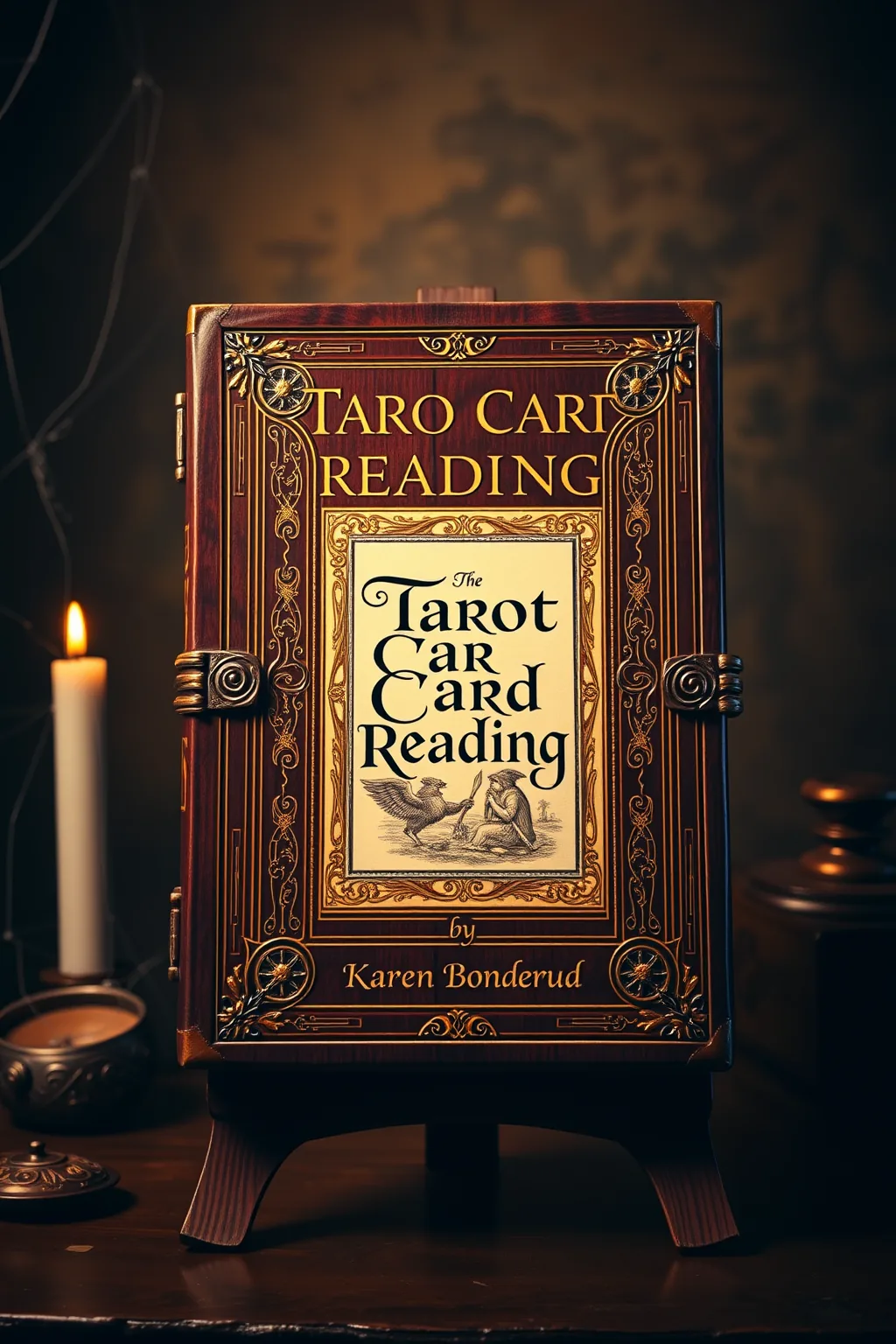
Tarot Card Reading



By Isolde Whitaker (Sacred Texts Editor) — Karen Bonderud's "Tarot Card Reading" is an essential compendium for anyone seeking to move beyond superficial interpretations. Bonderud masterfully elucidates the intricate symbolism and esoteric underpinnings of the Tarot, presenting it as a profound system of spiritual guidance. Her insightful prose illuminates the connections between the Major and Minor Arcana, revealing the archetypal narratives that shape human experience. This book is particularly valuable for its emphasis on the Tarot as a tool for self-discovery and empowerment, rather than simple prognostication. It is an authoritative yet accessible guide, perfectly suited for both dedicated students of the occult and curious minds eager to explore the ancient art of cartomancy.
📝 Description
61
Karen Bonderud's 2018 "Tarot Card Reading" examines the 78 cards as keys to understanding.
This book details the 78 cards that make up the Tarot deck. Bonderud looks at the symbolism within each card, connecting them to archetypal forces and older philosophies. The text aims to move beyond simple prediction, encouraging readers to see the Tarot as a means for self-reflection. It addresses those new to the practice as well as those with experience.
The book suggests that the Tarot can serve as a mirror for the soul. It frames the cards as a way to understand life's events and to foster intuition. Readers are encouraged to find self-knowledge and to harness the Tarot's potential for personal change.
This work fits within the Western esoteric tradition that views the Tarot not just as a divinatory tool, but as a symbolic language. It draws on the idea that the cards represent universal archetypes and psychological principles, aligning with practices that use symbolic systems for spiritual or personal development. The approach suggests an understanding of the Tarot that connects to broader philosophical and mystical thought, similar to how other esoteric systems use imagery and metaphor to convey deeper meanings.
💡 Why Read This Book?
Unravel the ancient language of the Tarot and unlock profound self-awareness. This book offers a deep dive into esoteric symbolism, empowering you to interpret the cards not just for prediction, but for spiritual growth and guidance. Ideal for seekers of hidden knowledge, aspiring diviners, and practitioners looking to deepen their connection to this mystical art.
⭐ Reader Reviews
Honest opinions from readers who have explored this book.
❓ Frequently Asked Questions
What is the primary purpose of Tarot card reading as presented in this book?
This book presents Tarot not just as a tool for prediction, but as a profound system for self-discovery, spiritual insight, and understanding life's archetypal patterns.
Is this book suitable for complete beginners to Tarot?
Yes, Karen Bonderud's clear explanations and systematic approach make it an excellent starting point for those new to the Tarot, while still offering depth for experienced readers.
What kind of symbolism is explored in the book?
The book delves into rich, layered symbolism, exploring the archetypal figures, numerological significance, astrological correspondences, and Kabbalistic connections within the Tarot deck.
How does this book approach the ethical use of Tarot?
It emphasizes the responsible and ethical use of Tarot as a tool for empowerment and guidance, encouraging readers to approach readings with integrity and compassion.
Can this book help improve my intuition?
Absolutely. By understanding the symbolic language and archetypal energies of the Tarot, readers are guided to develop and trust their own intuitive insights during readings.
🔮 Key Themes & Symbolism
The Archetypal Journey of the Fool
This theme explores the foundational archetype of the Fool, representing the innocent seeker starting a journey of spiritual discovery. We examine its placement within the Major Arcana, its connection to new beginnings, spontaneity, and the leap of faith required to embrace the unknown. The Fool serves as the traveler through the 22 Major Arcana, encountering lessons and transformations that mirror the human life cycle and the soul's evolution. Understanding the Fool is key to grasping the overarching narrative of the Tarot and its promise of personal growth.
Symbolism as the Language of the Soul
This theme emphasizes the Tarot's profound reliance on rich, multi-layered symbolism as its primary mode of communication. We investigate how colors, numbers, celestial bodies, mythical figures, and everyday objects within the cards act as conduits for esoteric wisdom. Each symbol is a key, unlocking deeper meanings related to psychological states, spiritual principles, and universal truths. Learning to decipher this symbolic language allows for intuitive comprehension and a connection to the subconscious and collective unconscious.
The Tarot as a Mirror of Inner Truth
This theme positions the Tarot not as a deterministic oracle, but as a powerful reflective tool for self-exploration and empowerment. The cards are presented as mirrors that reveal our inner landscapes, hidden desires, potential challenges, and innate strengths. By engaging with the Tarot, readers are encouraged to confront their own beliefs, patterns, and aspirations, fostering self-awareness and facilitating conscious decision-making. This perspective shifts the focus from external prediction to internal transformation and personal agency.
💬 Memorable Quotes
Direct passages from the work, attributed to the author.
“Each card whispers a story of the soul's journey.”
— This evocative phrase underscores the narrative and deeply personal nature of Tarot readings, suggesting they reveal profound inner truths.
“Symbolism is the ancient language of the universe.”
— This statement positions symbols as essential keys to understanding cosmic principles and hidden knowledge, central to esoteric studies.
“The Fool's journey is your journey.”
— This personalizes the archetypal Fool's path, connecting the reader directly to the lessons and potential for growth within the Tarot.
“Seek not the future, but the wisdom to shape it.”
— This emphasizes the empowering aspect of Tarot, suggesting it provides insights to navigate and influence one's path, rather than simply foretelling events.
💡 Key Ideas
Editorial paraphrase of the work's core concepts — not direct quotes.
The Tarot is not a crystal ball; it is a mirror.
This quote highlights the book's philosophical stance, emphasizing self-reflection and personal responsibility over passive fortune-telling.
🌙 Esoteric Significance
Tradition
The Tarot is deeply embedded within the Western Esoteric Tradition, drawing heavily from Hermeticism, Kabbalah, Alchemy, and Astrology. Its structure, particularly the 22 Major Arcana, is often seen as a symbolic map of spiritual ascent or the unfolding of consciousness, mirroring Kabbalistic concepts of the Tree of Life. The Minor Arcana, with their suits and numbers, connect to alchemical processes and astrological influences, providing a framework for understanding the interplay of material and spiritual forces in daily life.
Symbolism
The strong symbolism of the Tarot is its most potent esoteric feature. Each card is a microcosm of universal archetypes and energies. The Major Arcana represent stages of spiritual development and cosmic forces, while the Minor Arcana depict the mundane experiences and energies that shape our lives. Symbols like the Ouroboros, the caduceus, celestial bodies, and mythological figures are not decorative but are encoded keys to profound metaphysical and psychological truths, offering insights into the hidden workings of the universe and the human psyche.
Modern Relevance
In contemporary times, the Tarot has transcended its purely divinatory role to become a powerful tool for psychological exploration, personal development, and creative inspiration. Its archetypal imagery resonates deeply with modern seekers navigating complex life challenges, offering a framework for understanding their inner worlds and external circumstances. The Tarot provides a language for the subconscious, fostering intuition, self-awareness, and the ability to approach life's uncertainties with wisdom and agency, making it a timeless guide for personal transformation.
👥 Who Should Read This Book
This book is an indispensable resource for the dedicated Tarot student, offering a profound dive into the symbolic language and esoteric underpinnings of the cards. For the curious beginner, it provides a clear, structured pathway into understanding the Tarot's deeper meanings beyond simple prediction. Spiritual seekers will find it a powerful tool for self-discovery and connecting with universal wisdom. Practitioners and seasoned diviners will appreciate its authoritative insights and the nuanced perspectives it offers for enriching their readings and deepening their practice.
📜 Historical Context
The practice of Tarot divination, while shrouded in mystery, gained significant traction and formalized structure during the late 18th and 19th centuries, a period of intense occult revival in Europe. Thinkers and mystics like Antoine Court de Gébelin and Eliphas Lévi sought to connect the Tarot's imagery to ancient Egyptian mysteries, Kabbalistic traditions, and Hermetic philosophy. This era saw the Tarot evolve from a simple game deck into a complex system of esoteric symbolism, deeply intertwined with the burgeoning interest in spiritualism, occultism, and mystical knowledge. The Rider-Waite-Smith deck, published in 1909, became a key influence, standardizing imagery and making the Tarot more accessible, further solidifying its place as a key tool within esoteric libraries and practices worldwide.
📔 Journal Prompts
Reflect on the Fool's journey: what 'leap of faith' are you currently contemplating in your life?
Choose one card from the Major Arcana that speaks to your current emotional state and journal about its symbolic message.
How can the symbolism of the Minor Arcana's suits (Wands, Cups, Swords, Pentacles) inform your understanding of current challenges or opportunities?
Consider a recent situation and draw three cards. Journal about how their combined symbolism might offer a deeper perspective or guidance.
What does it mean to you for the Tarot to be a 'mirror' rather than a 'crystal ball' in your personal journey?
🗂️ Glossary
Archetype
A universal, inherited pattern of thought or image derived from the experience of the race and present in the individual unconscious. In Tarot, these are represented by the figures and situations in the Major Arcana.
Divination
The practice of seeking knowledge of the future or the unknown by supernatural means. In this context, it refers to the use of Tarot cards to gain insight.
Esoteric
Intended for or likely to be understood by only a small number of people with a specialized knowledge or interest. Esoteric literature looks at hidden meanings and spiritual truths.
Major Arcana
The 22 trump cards of the Tarot deck, representing significant life lessons, spiritual stages, and archetypal forces.
Minor Arcana
The 56 cards of the Tarot deck, divided into four suits, which represent the more mundane aspects of life, daily events, and personal challenges.
This book appears in 3 collections
🔮 Readers Also Liked
Browse all →
More by Karen Bonderud
All books →

From the “Tarot” Collection
View all →
More Free Divination & Tarot Books
View all →