Tarot Plain & Simple
 79
79

Tarot Plain & Simple
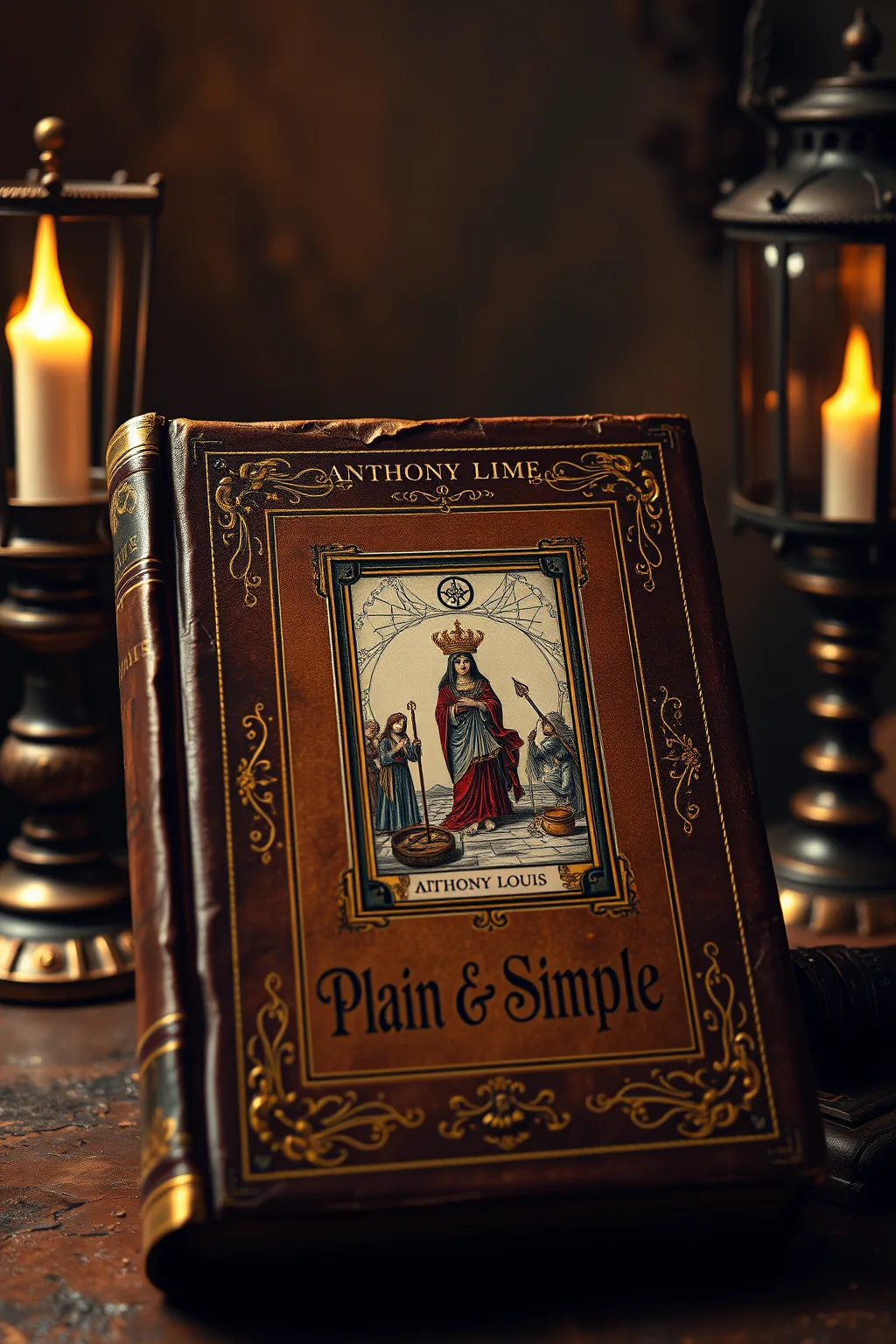
Anthony Louis’s "Tarot Plain & Simple" achieves precisely what its title promises: an unvarnished, direct guide to the Rider-Waite-Smith tarot. Unlike many authors who wrap tarot in layers of arcane theory, Louis presents each card’s meaning with refreshing clarity. His strength lies in meticulously dissecting the iconography of the Rider-Waite-Smith deck, making the visual elements the primary key to interpretation. For instance, his explanation of the Three of Swords, focusing on the piercing of the heart, is stark and effective, avoiding unnecessary embellishment. A limitation, however, is its very simplicity; experienced readers might find the interpretations somewhat basic, lacking deeper nuanced or psychological depth. It’s a solid primer, but not a text that will challenge seasoned practitioners. The book functions best as an accessible entry point, prioritizing practical understanding above all else.
📝 Description
79
Anthony Louis's 2002 book, Tarot Plain & Simple, offers a direct approach to the Rider-Waite-Smith tarot.
This work aims to demystify the Rider-Waite-Smith tarot deck through clear, actionable interpretations for all 78 cards. Louis avoids complex mystical language, focusing instead on straightforward meanings and predictive uses. The book is structured to build a solid understanding of the cards for those new to tarot or seeking a less complicated method.
It serves students of divination who want practical advice over dense philosophical discussion. Readers who prefer a direct, instructional style will find it useful for establishing their core knowledge of tarot symbolism. The author emphasizes the visual cues within the Rider-Waite-Smith imagery as direct indicators of a card's message.
Published in 2002, Tarot Plain & Simple emerged during a time of continued interest in tarot reading. While other books explored psychological or syncretic interpretations, Louis returned to the foundational visual language and divinatory meanings of the Rider-Waite-Smith deck. This focus on core meanings contrasts with more academically oriented tarot scholarship.
💡 Why Read This Book?
• Gain a clear, step-by-step understanding of each of the 78 Rider-Waite-Smith tarot cards, directly referencing the visual cues Louis highlights in his 2002 publication. • Learn foundational spread techniques suitable for beginners, moving beyond mere card identification to practical application as presented in the book’s later sections. • Develop a foundational interpretation method that prioritizes the direct symbolism within the Rider-Waite-Smith imagery, a core principle Louis emphasizes throughout his work.
⭐ Reader Reviews
Honest opinions from readers who have explored this book.
❓ Frequently Asked Questions
What makes 'Tarot Plain & Simple' different from other tarot books?
Anthony Louis's 2002 book prioritizes clarity and direct interpretation of the Rider-Waite-Smith deck's imagery, avoiding complex philosophical or esoteric theories found in many other texts.
Is this book suitable for someone who has never read tarot before?
Yes, 'Tarot Plain & Simple' is specifically designed for beginners, offering straightforward explanations of each card and basic reading methods.
Does the book cover spreads and how to do readings?
Yes, Anthony Louis includes instructions on fundamental tarot spreads, enabling readers to apply their card knowledge practically after learning the meanings.
What tarot deck is 'Tarot Plain & Simple' based on?
The book exclusively focuses on the Rider-Waite-Smith tarot deck, using its iconic imagery as the basis for all interpretations.
What year was 'Tarot Plain & Simple' first published?
The original publication date for Anthony Louis's 'Tarot Plain & Simple' was 2002.
Does the author offer advanced techniques in this book?
No, the book's strength lies in its foundational approach. It concentrates on delivering plain and simple meanings, rather than exploring advanced or complex interpretive strategies.
🔮 Key Themes & Symbolism
Rider-Waite-Smith Iconography
The work hinges on the visual language of the Rider-Waite-Smith deck, first published in 1909. Louis meticulously breaks down the symbolism embedded in each card’s illustration, arguing that these images are the primary key to understanding their meanings. He guides readers to observe specific elements—like the number of figures, objects, or actions depicted—as direct indicators of a card's message, whether upright or reversed.
Direct Divinatory Meanings
Central to Louis's approach is a focus on practical, divinatory interpretations. The book systematically presents meanings for all 78 cards, emphasizing their predictive or advisory qualities in a reading. This contrasts with more psychological or philosophical tarot systems, offering instead a grounded method for using the cards for guidance and foresight.
Suit and Number Symbolism
Louis expounds on the inherent meanings of the four suits—Wands, Cups, Swords, and Pentacles—and how numerical sequences (Ace through Ten) influence the unfolding narrative of the Minor Arcana. He explains how these elements combine to create distinct energies and themes within a reading, providing a structured framework for interpretation.
The Court Cards
The Pages, Knights, Queens, and Kings are presented not merely as characters but as archetypal representations of energy, influence, or personality types within a reading. Louis offers clear interpretations for each court card, detailing their unique characteristics and how they manifest in different contexts, serving as vital components in understanding a tarot spread.
💬 Memorable Quotes
Direct passages from the work, attributed to the author.
“The Rider-Waite deck is probably the most widely used tarot deck in the world.”
— This statement highlights the foundational importance of the Rider-Waite-Smith deck, establishing why a book focused solely on its imagery and interpretation holds significant relevance for many tarot enthusiasts.
“Each card has a meaning, and each card can be interpreted in a number of ways.”
— This emphasizes the core principle of tarot interpretation: while each card carries a fundamental meaning, its specific application and nuance vary depending on the context of the reading and the question asked.
“The Minor Arcana are divided into four suits, each containing ten numbered cards and four court cards.”
— This succinctly defines the structure of the Minor Arcana, a crucial element for understanding the building blocks of a tarot deck and how the cards relate to each other within the suit.
“The suit of Wands relates to the element of fire and is associated with action, energy, and creativity.”
— This defines the elemental and thematic associations of the Wands suit, providing a core understanding of the energies and concepts this suit represents in a tarot reading.
“Reversed cards can indicate that the energy of the card is being blocked, repressed, or is otherwise unavailable.”
— This offers a straightforward interpretation of reversed tarot cards, suggesting they represent internal or external blockages related to the card's upright meaning.
🌙 Esoteric Significance
Tradition
While not strictly adhering to a single esoteric lineage, "Tarot Plain & Simple" is firmly rooted in the Western esoteric tradition, specifically through its focus on the Rider-Waite-Smith deck. This deck, designed by Arthur Edward Waite, a prominent member of the Hermetic Order of the Golden Dawn, carries within its symbolism elements of Hermeticism, Kabbalah, and Christian mysticism, albeit in a synthesized form.
Symbolism
The book emphasizes the detailed symbolism of the Rider-Waite-Smith deck. Key symbols discussed include the Major Arcana figures like The Fool, representing the beginning of a spiritual journey, and The Magician, signifying willpower and manifestation. The Minor Arcana suits—Wands (fire, action), Cups (water, emotion), Swords (air, intellect), and Pentacles (earth, material world)—are explained through their elemental associations and visual cues.
Modern Relevance
Louis’s work remains relevant for contemporary tarot practitioners seeking clarity and a solid foundation. Its direct, accessible approach makes it a valuable resource for newcomers entering the field of divination, including those drawn to modern, secular interpretations of tarot or those exploring its use in self-help and personal development contexts.
👥 Who Should Read This Book
• Aspiring tarot readers seeking a clear, foundational understanding of the Rider-Waite-Smith deck without complex theory. • Individuals who have previously found tarot intimidating and desire a straightforward, practical guide to interpreting cards. • Students of divination looking for a reliable reference text that clarifies the core meanings and symbolism of the 78 tarot cards.
📜 Historical Context
Published in 2002, "Tarot Plain & Simple" arrived during a period where tarot literature was diversifying. While authors like Rachel Pollack were exploring deeper psychological and symbolic layers, and others were integrating tarot with various spiritual traditions, Anthony Louis’s work stood out for its deliberate return to fundamental, accessible interpretation. The Rider-Waite-Smith deck itself, created by A.E. Waite and illustrated by Pamela Colman Smith in 1909, had long been a standard, but Louis’s book offered a systematic, unadorned guide to its meanings. This contrasted with more academic explorations of occultism and divination that were also gaining traction, providing a clear entry point for those who found more complex systems daunting. The book’s straightforwardness likely appealed to a broad audience seeking practical divination tools.
📔 Journal Prompts
The Fool's leap: Reflect on the symbolism of The Fool and its significance for beginning new paths.
The Wands suit's energy: How does the concept of action and creativity, as represented by Wands, manifest in your current projects?
Interpreting The Magician: Consider the elements and gestures of The Magician card and how they relate to personal power and manifestation.
The Pentacles' material world: Explore the representation of the material realm in the Pentacles suit and its connection to your practical life.
Court card archetypes: Which court card (Page, Knight, Queen, King) best embodies a current challenge or opportunity you are facing?
🗂️ Glossary
Major Arcana
The 22 trump cards of the tarot deck, representing significant life lessons, archetypal energies, and major turning points in a reading.
Minor Arcana
The 56 cards of the tarot deck, divided into four suits, which typically represent everyday events, challenges, and circumstances.
Rider-Waite-Smith Deck
A highly influential tarot deck, first published in 1909, known for its detailed pictorial scenes in the Minor Arcana and its symbolic imagery.
Upright Card
A tarot card that appears in its intended orientation during a reading, signifying a direct or positive expression of its meaning.
Reversed Card
A tarot card that appears upside down in a reading, often indicating a blocked, delayed, or internalized aspect of its usual meaning.
Spread
A specific arrangement of tarot cards laid out for interpretation, designed to address particular questions or areas of life.
Divination
The practice of seeking knowledge of the future or the unknown by supernatural means, with tarot being one such tool.
🔮 Readers Also Liked
Browse all →








More by Anthony Louis
All books →




More Free Divination & Tarot Books
View all →