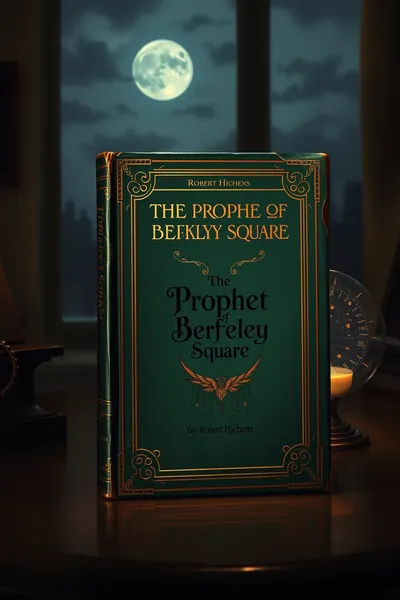
Horary Astrology

 74
74

Horary Astrology
Anthony Louis's *Horary Astrology* offers a rigorously practical introduction to a potent, if often overlooked, branch of the astrological art. Louis eschews airy speculation for a grounded approach, presenting dozens of case studies drawn directly from his active practice. The clarity with which he dissects chart after chart, demonstrating how to extract precise answers from celestial configurations, is the book's primary strength. His explanations of William Lilly's methods, particularly regarding house significations and the Moon's role, are particularly illuminating. The limitation lies perhaps in the sheer volume of examples; while comprehensive, a beginner might feel slightly overwhelmed without prior astrological knowledge. The section dissecting a lost object chart, showing how the 3rd house ruler can indicate the location by degree, is a standout example of the book’s direct utility. This is a working manual, not a philosophical treatise.
📝 Description
74
Anthony Louis's Horary Astrology clarifies a specific method for answering questions through astrological charts.
This book explains horary astrology, a practice that answers specific questions by casting a chart for the moment a question is posed and understood. The method involves interpreting planetary positions, houses, and aspects in relation to the questioner and the nature of the inquiry. Unlike natal astrology, which describes a person's life path, horary astrology focuses on immediate concerns and tangible results.
Louis's work is for anyone who wants direct answers to pressing questions, whether about lost items, relationships, career choices, or legal issues. It is useful for new astrologers wanting a practical way to interpret charts, as well as for experienced practitioners looking to improve their horary skills. People interested in historical occult techniques will also find value here.
The practice depends on correctly identifying the significators for the questioner and the subject, usually assigned to specific houses. The Moon often acts as a co-significator and an indicator of events. Analysis includes examining planetary aspects, essential dignities, and the condition of the Ascendant and its ruler.
Horary astrology has a long history, with William Lilly's work in the seventeenth century being particularly influential for its systematization. This art was historically used across various social strata for practical guidance and discernment. It stands as a distinct branch of astrology focused on immediate, actionable answers rather than life description.
💡 Why Read This Book?
• Understand how to cast a chart for a specific question, learning the method popularized by seventeenth-century astrologer William Lilly, to gain direct answers about immediate concerns. • Develop the skill to identify and interpret significators for querent and subject matter using house systems and planetary rulers, enabling precise analysis of relationships or possessions. • Master the role of the Moon as a co-significator and event indicator, a core concept in horary practice, allowing for a nuanced understanding of unfolding situations and outcomes.
⭐ Reader Reviews
Honest opinions from readers who have explored this book.
❓ Frequently Asked Questions
What is horary astrology and how does it differ from natal astrology?
Horary astrology answers a specific question asked at a particular moment by casting a chart for that precise time. Unlike natal astrology, which describes a person's entire life based on birth time, horary focuses on providing direct answers to immediate inquiries.
Who was William Lilly and why is he important to horary astrology?
William Lilly was a prominent English astrologer in the seventeenth century. His book *Christian Astrology* (1647) is a foundational text for horary practice, detailing many techniques and principles that remain central to the discipline today.
What kind of questions can horary astrology answer?
Horary astrology is designed to answer specific, answerable questions. These can range from locating lost objects, determining the outcome of legal disputes or competitions, assessing the potential of relationships, to making career decisions.
How does one begin practicing horary astrology based on this book?
Begin by formulating a clear, sincere question. The book guides you through casting the chart for the moment the question is understood, identifying key significators, and interpreting houses, planets, and aspects to find the answer.
What is a 'significator' in horary astrology?
A significator is a planet or house that represents a person, thing, or matter relevant to the question. For example, the Ascendant ruler often signifies the questioner, while other houses and their rulers represent the subject of inquiry.
Does this book cover modern horary astrology techniques or only historical ones?
The book draws heavily on historical methods, particularly those of William Lilly, but presents them in a way that is directly applicable to contemporary practice. It emphasizes the enduring effectiveness of these classical techniques.
🔮 Key Themes & Symbolism
The Art of the Question
This book underscores that the efficacy of horary astrology hinges entirely on the clarity and sincerity of the question posed. It posits that a well-formed question acts as a divinely-ordained key, unlocking a specific chart that provides a direct, actionable answer. The text emphasizes that trivial or poorly phrased inquiries yield ambiguous or unhelpful results, distinguishing horary from speculative divination by its focus on precise, answerable dilemmas.
Lilly's Enduring Legacy
Central to the methodology presented is the profound influence of seventeenth-century astrologer William Lilly. The book systematically explores Lilly's techniques for assigning significators, analyzing planetary dignities, and understanding the critical role of the Moon and the Ascendant. It demonstrates how these classical methods, honed over centuries, remain remarkably effective for resolving contemporary issues, positioning Lilly's work not as historical artifact but as a living tradition.
Houses as Areas of Life
A core principle examined is the function of the twelve houses in horary charts. Each house is meticulously detailed in its relevance to different facets of life – from self and possessions (1st and 2nd) to siblings, journeys, and communication (3rd), and ultimately to secrets and hidden matters (12th). The book illustrates how the rulers of these houses, along with their aspects and conditions, map the dynamics and potential outcomes of the question asked.
Planetary Dignities and Aspects
The book stresses the critical importance of planetary essential dignities (rulership, exaltation, detriment, fall) and accidental dignities in assessing the strength and influence of significators. It details how aspects between planets, particularly those involving the Moon or the rulers of key houses, act as the dynamic forces that either facilitate or obstruct the outcome of the query, providing a nuanced reading of celestial communications.
💬 Memorable Quotes
Direct passages from the work, attributed to the author.
“With nothing more than a sincerely asked question, horary astrology can help you find anything that has been lost.”
— This statement expresses the core premise of horary astrology as presented in the book: its directness and accessibility. It suggests that the astrological chart cast for the moment of inquiry acts as a precise diagnostic tool, capable of locating not just physical objects but also answers to complex life situations.
“Sharing the profound methods of influential astrologers, such as seventeenth-century philosopher William Lilly...”
— This highlights the book's commitment to historical accuracy and traditional practice. By referencing William Lilly, it signals that the techniques discussed are rooted in a respected lineage, emphasizing the depth and established authority behind the methods being taught.
“This book delves deeply into the most helpful ways to work with the relevant houses and aspects.”
— This points to the practical, instructional nature of the content. It suggests a thorough examination of astrological mechanics, focusing on the application of house meanings and the interpretation of planetary relationships within the context of a horary chart.
“Join renowned astrologer Anthony Louis as he shares dozens of sample charts taken from his own astrology practice...”
— This emphasizes the book's empirical foundation. The inclusion of numerous case studies from the author's personal practice assures readers that the techniques are tested and proven in real-world scenarios, offering practical demonstrations rather than theoretical abstractions.
💡 Key Ideas
Editorial paraphrase of the work's core concepts — not direct quotes.
The condition of the Moon is often paramount in horary.
This paraphrased concept highlights a key principle in horary interpretation. It signals the significant role the Moon plays as a co-significator and indicator of events, suggesting that its placement, aspects, and state of dignity are crucial for understanding the unfolding of the matter at hand.
🌙 Esoteric Significance
Tradition
Horary astrology fits within the broader Hermetic and Western Esoteric traditions, which emphasize the correspondence between the celestial realm and terrestrial events. It is a practical application of the principle 'As Above, So Below,' viewing the heavens not as deterministic but as a symbolic language reflecting the unfolding of fate and the potential for human discernment. Unlike purely philosophical Hermeticism, horary is divinatory, seeking specific answers to earthly dilemmas through direct celestial consultation.
Symbolism
Key symbols include the Ascendant, representing the querent (the questioner), and the Descendant, often symbolizing the other party in a relationship question. The Moon serves as a primary significator for the matter itself and the unfolding of events, its condition reflecting the ease or difficulty of resolution. Planetary aspects are seen as the 'conversations' or interactions between celestial bodies, dictating the flow and nature of the outcome.
Modern Relevance
Contemporary practitioners of traditional Western astrology, particularly those focused on psychological or predictive techniques, often draw upon horary methods. Modern horary astrologers continue to apply the principles articulated by William Lilly, adapting them to contemporary concerns. Schools and online communities dedicated to esoteric studies frequently feature horary astrology as a core component of their curriculum, recognizing its enduring utility for practical guidance and self-understanding.
👥 Who Should Read This Book
['• Aspiring horary astrologers seeking a practical, example-driven introduction to chart interpretation, learning directly from the techniques of William Lilly.', '• Experienced astrologers looking to expand their skill set with a precise, question-oriented method for providing direct answers to clients.', '• Students of Western Esotericism interested in historical divination techniques and their application in understanding fate and decision-making through celestial symbolism.']
📜 Historical Context
Horary astrology, as practiced and codified, experienced a significant resurgence during the seventeenth century, largely due to the monumental efforts of William Lilly. His 1647 publication, *Christian Astrology*, served as an indispensable manual, detailing the precise rules for casting and interpreting charts for specific questions. This era saw astrology deeply integrated into intellectual and social life; figures like John Dee had already laid groundwork in earlier periods, but Lilly's systematic approach made horary accessible to a wider audience. While the burgeoning scientific revolution and the rise of rationalism would eventually marginalize astrology in academic circles, horary practice persisted, offering practical counsel sought by individuals across social strata. Lilly's work, though sometimes controversial, became the standard, influencing generations of practitioners and establishing a methodology that remains foundational for the art today, even as competing philosophical currents began to question its validity.
📔 Journal Prompts
The significators assigned to the Ascendant and the 7th House in a horary chart.
The Moon's condition and its role as an event indicator.
How the ruler of the 2nd House influences questions of possession or financial matters.
The application of planetary aspects to determine the flow of a horary outcome.
Interpreting the 3rd House for questions concerning siblings or short journeys.
🗂️ Glossary
Horary Astrology
A branch of astrology that answers specific questions by casting a chart for the exact moment the question is understood by the astrologer.
Querent
The person asking the question in a horary astrology reading.
Significator
A planet or house that represents a person, object, or matter relevant to the question being asked.
Ascendant (ASC)
The zodiac sign and degree rising on the eastern horizon at the time of the chart's casting, often representing the querent.
Houses
The twelve divisions of the astrological chart, each representing different areas of life and experience.
Aspects
The angular relationships between planets in a chart, which indicate how their energies interact.
Essential Dignities
The inherent strength or weakness of a planet based on its placement in a zodiac sign (e.g., rulership, exaltation).
This book appears in 1 collection
🔮 Readers Also Liked
Browse all →







From the “Horary Astrology” Collection
View all →








More Free Astrology & Cosmology Books
View all →