How to tell the future
 82
82

How to tell the future
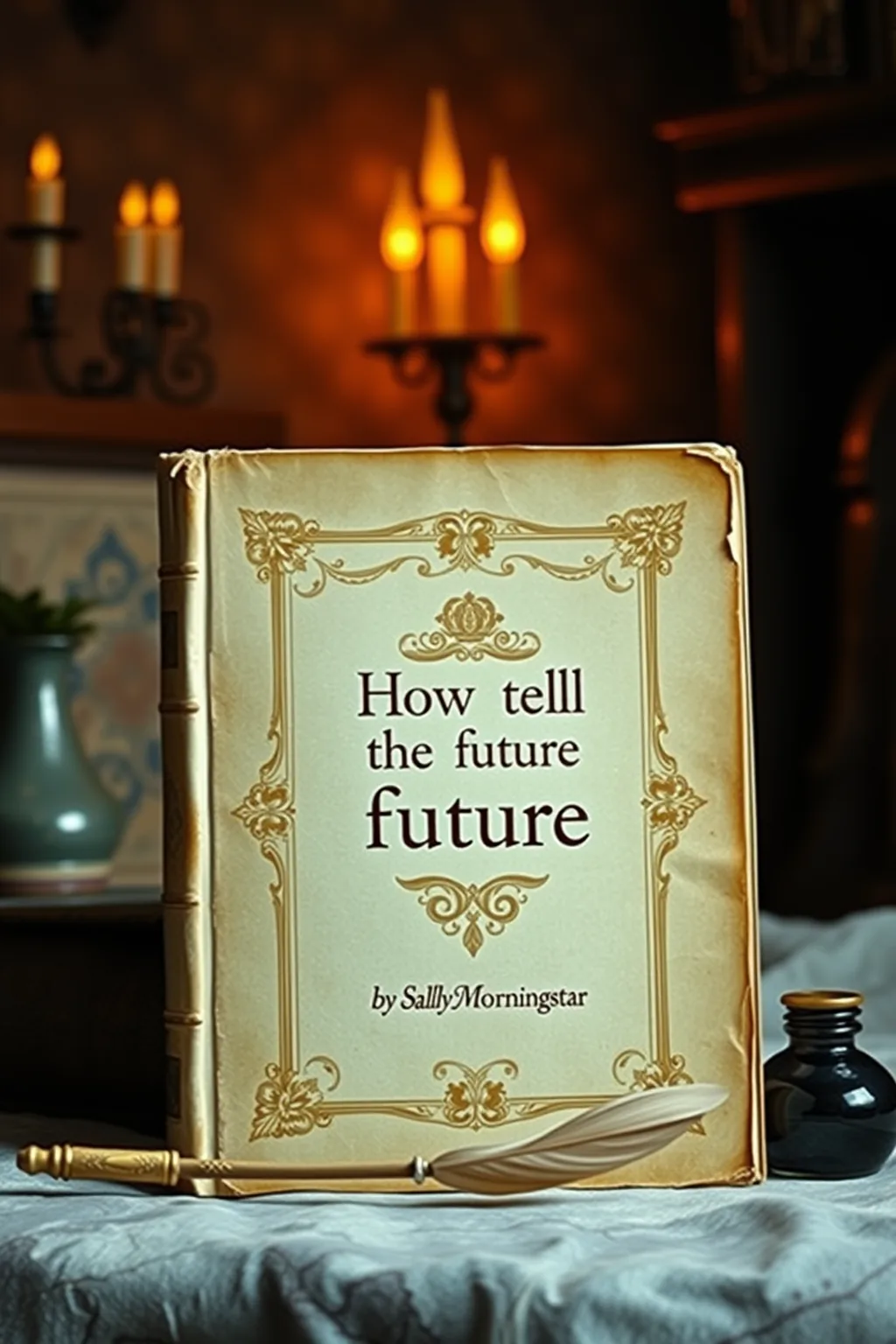
Sally Morningstar's 'How to Tell the Future' tackles the ambitious subject of foresight with a grounded, accessible methodology. The strength of the book lies in its clear explanations of often-complex divinatory systems, particularly its breakdown of numerological correspondences in chapter three. Morningstar avoids sensationalism, presenting divination as a skill to be honed rather than an innate, exclusive gift. However, the work occasionally feels overly generalized; a deeper exploration of the historical roots of specific methods, perhaps referencing early Mesopotamian augury or Greek oracles, would have added significant depth. The section on Tarot, while competent, could benefit from more nuanced discussion of archetypal symbolism beyond surface-level meanings. Nevertheless, for its clarity and practical advice, 'How to Tell the Future' serves as a solid entry point into the practice of divination.
📝 Description
82
Sally Morningstar published 'How to Tell the Future' in 2018, presenting divination as interpretive skill.
This book approaches divination not as mystical pronouncements, but as skills for understanding potential outcomes. Morningstar aims to demystify foresight practices, making them accessible. The work is suitable for those curious about precognitive arts, whether novices looking for an introduction or individuals with prior experience seeking to expand their abilities. It will appeal to readers interested in the practical uses of intuition and interpreting symbols.
Morningstar's method focuses on cultivating an intuitive connection with symbolic language. The text highlights the interpretation of omens, the recognition of synchronicities, and the use of focused visualization. It stresses the validity of personal resonance and subjective experience as routes to insight, moving away from strict doctrines.
Published in 2018, 'How to Tell the Future' arrives during a renewed interest in esoteric studies that began in the late 20th century. It follows earlier divination guides, such as those on cartomancy or scrying, updating these traditions for a contemporary readership. The book's release in the digital age coincides with widespread, yet often fragmented, access to esoteric knowledge.
💡 Why Read This Book?
• Gain a practical framework for interpreting omens and synchronicities, moving beyond passive observation to active understanding, as detailed in the section on 'Interpreting Natural Signs'. • Develop foundational skills in numerological divination, learning how to apply the principles of numbers to personal insights, a core component introduced in chapter three. • Cultivate a more intuitive approach to decision-making by practicing focused visualization techniques, as outlined in the guided exercises within the book.
⭐ Reader Reviews
Honest opinions from readers who have explored this book.
❓ Frequently Asked Questions
What are the primary divination methods discussed in 'How to Tell the Future'?
The book covers several methods, including basic numerology, interpreting everyday omens and synchronicities, and practical visualization exercises. It focuses on accessible techniques rather than obscure or complex rituals.
Is 'How to Tell the Future' suitable for absolute beginners?
Yes, Sally Morningstar's work is specifically designed for those new to divination. It breaks down concepts clearly and provides actionable steps, making it an excellent starting point for beginners.
Does the book require any special tools for divination?
While some methods may benefit from tools like a journal or basic numerology charts, the book emphasizes developing inner intuition and interpretation skills that don't always require specialized equipment.
When was 'How to Tell the Future' first published?
The book was first published in 2018, placing it within the contemporary landscape of renewed interest in esoteric and self-help literature.
What is the author Sally Morningstar's approach to divination?
Morningstar approaches divination as a skill to be learned and practiced, emphasizing personal intuition, symbolic interpretation, and the understanding of underlying patterns rather than predetermined fate.
Can I learn to read Tarot from this book?
While the book touches upon symbolic interpretation relevant to Tarot, its primary focus is on broader divination principles and methods like numerology and omen interpretation, rather than a comprehensive Tarot guide.
🔮 Key Themes & Symbolism
Intuitive Interpretation
The book champions the development of personal intuition as the primary tool for understanding future possibilities. Morningstar suggests that synchronicities and omens are not random but carry meaningful patterns, accessible through focused attention and subjective resonance. This theme emphasizes the user's internal compass as the guiding force in divination, moving away from rote memorization of meanings towards a more organic and personalized understanding of symbolic communication.
Numerological Foundations
A significant portion of the work is dedicated to the principles of numerology, particularly as applied to understanding personal potentials and life paths. The book breaks down how birth dates and names can be analyzed to reveal core energies and influences. This offers a structured yet adaptable system for self-reflection and insight, grounding the more fluid aspects of divination in mathematical and symbolic logic.
Pattern Recognition
Morningstar frames divination as an exercise in recognizing patterns, whether in numbers, symbols, or life events. The act of 'telling the future' becomes an act of discerning underlying structures and probabilities. This perspective encourages a proactive engagement with one's circumstances, viewing potential futures as emergent properties of present conditions rather than fixed destinies.
Practical Application
The emphasis throughout 'How to Tell the Future' is on actionable techniques. The book provides concrete exercises and methods that readers can implement immediately, encouraging consistent practice. This practical orientation aims to explain the process, making divination an accessible skill for everyday life rather than an arcane mystery reserved for a select few.
💬 Memorable Quotes
Direct passages from the work, attributed to the author.
“Omens are whispers of possibility, not pronouncements of doom.”
— This aphorism highlights Morningstar's optimistic and empowering view of divination. It suggests that signs from the future should be interpreted as guidance and potential pathways, rather than fixed, unavoidable events, encouraging agency in response.
“The numbers you are born with are a language, not a cage.”
— This interpretation of numerology frames it as a system of understanding potential and inherent qualities. It emphasizes that numerical associations describe tendencies and energies, not predetermined destinies, thereby promoting a sense of freedom and choice.
“Synchronicity is the universe winking at you.”
— This metaphorical interpretation of synchronicity suggests that meaningful coincidences are moments of alignment between inner and outer realities. It encourages readers to pay attention to these 'winks' as indicators of being on the right path or receiving subtle guidance.
“Your intuition is the most reliable divinatory tool.”
— This statement underscores the book's core philosophy that internal wisdom is paramount. It positions personal insight and feeling as the ultimate arbiters in interpreting divinatory signs, advocating for self-trust over external authority.
“Visualize the outcome not as fact, but as a desired direction.”
— This advice on visualization differentiates it from rigid manifestation. It suggests using focused imagination to clarify goals and intentions, guiding energy towards a preferred outcome without demanding a specific, unalterable result.
🌙 Esoteric Significance
Tradition
The work fits broadly within the modern Western Esoteric tradition, particularly drawing on Hermetic principles of correspondence and the idea that 'as above, so below'. It shares Theosophical influences in its emphasis on inner development and universal laws. However, it departs from more rigid Kabbalistic or Gnostic systems by prioritizing personal, intuitive interpretation over strict adherence to complex, codified structures.
Symbolism
Key symbols include numbers, which are presented as fundamental building blocks of reality and personal destiny in its numerological sections. Synchronicities, or meaningful coincidences, function as symbolic messages from the subconscious or the universe, indicating alignment or offering guidance. Visualization acts as a symbolic act, where imagined outcomes represent potential futures that can be influenced.
Modern Relevance
Morningstar's work is relevant today for practitioners of modern intuitive arts, self-development coaches, and those interested in the intersection of psychology and spirituality. Its focus on accessible divination techniques speaks to contemporary interests in mindfulness, personal growth, and finding meaning in everyday life, influencing online communities and personal practice blogs.
👥 Who Should Read This Book
• Aspiring diviners seeking a clear, practical introduction to fundamental concepts like numerology and omen interpretation. • Individuals interested in developing their intuition and learning to recognize meaningful patterns in their lives. • Readers exploring self-help and personal development who wish to integrate symbolic understanding and foresight into their decision-making processes.
📜 Historical Context
Sally Morningstar's 'How to Tell the Future,' published in 2018, arrived during a period of significant popular engagement with esoteric practices, often facilitated by online platforms. This era saw a blending of traditional occultism with self-help and New Age philosophies. The book's accessible approach to divination can be seen as a contemporary echo of earlier works that sought to explain such arts for a wider audience, distinguishing itself from more academic or rigidly traditionalist occult texts. While not directly engaging with specific contemporaries in its text, its publication date places it in conversation with a broader trend that included figures like Doreen Virtue (though often with more New Age leanings) and the continued interest in Tarot and astrology popularized by various media. Unlike the historical suppression of occult knowledge, the 2010s saw a mainstreaming, albeit often superficial, of these subjects, with books like Morningstar's contributing to this accessibility.
📔 Journal Prompts
Reflect on the numerological significance of your birth date as presented in chapter three.
Identify three recent synchronicities and interpret their potential messages.
Practice the visualization technique described for goal clarification.
Consider the 'whispers of possibility' represented by recent omens in your life.
Explore how the concept of 'pattern recognition' applies to a current challenge.
🗂️ Glossary
Omen
An event perceived as a sign or warning of future occurrences. In this context, omens are interpreted as symbolic messages offering guidance or insight into potential outcomes.
Synchronicity
The occurrence of events that are meaningfully related but not causally connected. The book suggests these are significant coincidences that can offer insight into one's path.
Numerology
The study of the mystical significance of numbers. The book uses numerology to interpret personal characteristics and life path influences based on birth dates and names.
Visualization
The practice of forming mental images or scenes. Here, it is used as a divinatory tool to explore potential futures or clarify intentions.
Intuition
The ability to understand something immediately, without the need for conscious reasoning. The book posits intuition as a primary faculty for interpreting divinatory signs.
Symbolic Language
A system of communication using symbols that represent ideas or concepts. The book treats divination as a form of understanding this language.
Life Path Number
A core number derived from a person's birth date in numerology, believed to represent their fundamental purpose and journey in life.
🔮 Readers Also Liked
Browse all →






More by Sally Morningstar
All books →





More Free Divination & Tarot Books
View all →