Holy Blood, Holy Grail
 75
75

Holy Blood, Holy Grail
The enduring fascination with *Holy Blood, Holy Grail* stems from its audacious synthesis of biblical interpretation, Templar lore, and genealogical speculation. While its central thesis—that Jesus fathered a child with Mary Magdalene and that their descendants founded European royalty—remains unsubstantiated by mainstream historical scholarship, the book excels at presenting a compelling narrative, even if fictional. Its strength lies in its ability to connect disparate threads of legend and history into a seemingly coherent, albeit radical, whole. However, the work's primary limitation is its reliance on interpretation over verifiable evidence, often treating conjecture as fact. A notable passage that encapsulates this approach is the assertion that the Priory of Sion, a purported secret society, exists to protect this bloodline, a claim lacking independent corroboration.
Ultimately, *Holy Blood, Holy Grail* functions more as a foundational text for modern conspiracy theories than as a historical document.
📝 Description
75
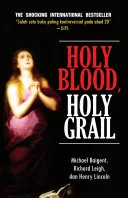
Published in 1982, Holy Blood, Holy Grail proposes Jesus Christ had children with Mary Magdalene.
This 1982 book puts forth a controversial theory about Jesus Christ's lineage. It suggests Jesus and Mary Magdalene had children, and that this bloodline continued through prominent European families, specifically mentioning the Merovingian dynasty of France. The authors connect this supposed lineage to various historical groups and symbols, including the Knights Templar and the Priory of Sion.
The work appeals to those interested in alternative historical accounts and secret traditions within Christianity. It questions established religious narratives and seeks connections between historical figures and esoteric beliefs. The book argues for a suppressed history, centered around a sacred feminine principle embodied by Mary Magdalene and protected by a secret society.
Its claims were met with both strong endorsement and significant academic criticism. The book tapped into a cultural interest in hidden histories and possible secrets held by religious institutions.
Holy Blood, Holy Grail emerged during a period of increased interest in Gnostic traditions and alternative interpretations of Christian history. It taps into a long-standing esoteric fascination with hidden lineages and suppressed knowledge, particularly concerning figures like Mary Magdalene. The book's focus on secret societies, like the Priory of Sion, and their supposed guardianship of historical secrets aligns with recurring themes in esoteric literature about preserved wisdom and hidden truths.
💡 Why Read This Book?
• You will learn about the controversial theory linking Jesus Christ and Mary Magdalene to a hidden royal bloodline, a central tenet explored through the alleged Merovingian dynasty. • You will gain an understanding of how the Knights Templar are presented in the book as guardians of this secret lineage, connecting medieval military orders to dynastic survival. • You will encounter the concept of the 'sacred feminine' as interpreted through Mary Magdalene, and its alleged suppression within historical Christianity, challenging traditional religious narratives.
⭐ Reader Reviews
Honest opinions from readers who have explored this book.
❓ Frequently Asked Questions
What is the main controversial claim of Holy Blood, Holy Grail?
The book's central, controversial claim is that Jesus Christ and Mary Magdalene had a child, and that this bloodline survived and influenced European royalty, particularly the Merovingian dynasty.
Who are the supposed guardians of the Holy Grail in the book?
According to the book, the Knights Templar, and later a secret society called the Priory of Sion, are portrayed as the guardians tasked with protecting the bloodline and the associated sacred knowledge.
What historical figures or groups are central to the book's thesis?
Key figures and groups include Jesus Christ, Mary Magdalene, the Merovingian kings of France, the Knights Templar, and the purported Priory of Sion.
When was Holy Blood, Holy Grail published?
Holy Blood, Holy Grail was published in 1982, sparking significant debate and influencing subsequent theories about secret histories.
Does the book offer verifiable historical proof for its claims?
The book relies heavily on interpretation of religious texts, symbolism, and genealogical speculation. Mainstream historians generally consider its claims to be unsubstantiated by rigorous, verifiable evidence.
What is the 'sacred feminine' concept as presented in the book?
The 'sacred feminine' refers to the perceived divine role and power of Mary Magdalene, which the book argues was deliberately downplayed or suppressed by patriarchal religious institutions.
🔮 Key Themes & Symbolism
The Merovingian Bloodline
The work posits that the Merovingian dynasty, rulers of the Franks from the 5th to 8th centuries, were direct descendants of Jesus Christ and Mary Magdalene. This lineage, according to the book, carried not only royal authority but also a sacred, hidden knowledge. The authors connect various historical and geographical clues, such as the Rennes-le-Château mystery, to support the idea that this bloodline was deliberately concealed and protected through centuries of European history.
Mary Magdalene's Role
Central to the book's thesis is the elevated status of Mary Magdalene, presented not merely as a follower but as the wife of Jesus and the mother of his child. This interpretation challenges orthodox Christian doctrine and re-centers the 'sacred feminine' within Christianity. The book suggests that Magdalene's true significance and the lineage she carried were systematically suppressed by the early Church in favor of a patriarchal structure.
The Priory of Sion and Templar Secrets
The book controversially links the survival of the alleged bloodline to secret societies, most notably the Knights Templar and a purported organization called the Priory of Sion. These groups are depicted as stewards of the dynastic secret and guardians of esoteric wisdom connected to the Holy Grail, which is reinterpreted as a symbol of the bloodline itself rather than a physical object.
The Holy Grail as Symbol
Beyond its traditional association with Arthurian legend and the cup of the Last Supper, the book reinterprets the Holy Grail as a metaphor for the bloodline of Christ. The 'Grail' becomes synonymous with the sacred lineage carried by Mary Magdalene and her descendants. This symbolic redefinition allows the authors to connect disparate historical mysteries and legends under a single, overarching narrative of concealed divine heritage.
💬 Memorable Quotes
Direct passages from the work, attributed to the author.
“The Priory of Sion is the guardian of the secret.”
— This statement points to the purported secret society, the Priory of Sion, as the central organization responsible for preserving and protecting the lineage and esoteric knowledge throughout history, according to the book's narrative.
“Mary Magdalene was the vessel of the sacred feminine.”
— This interpretation emphasizes the book's view of Mary Magdalene as embodying a powerful, divine feminine principle that was suppressed by patriarchal religious structures, positioning her as a key figure in a hidden Christian tradition.
“The Merovingians were the inheritors of a forgotten legacy.”
— This reflects the book's portrayal of the Merovingian dynasty as the primary recipients and protectors of the secret lineage and associated esoteric knowledge passed down from Christ and Magdalene.
💡 Key Ideas
Editorial paraphrase of the work's core concepts — not direct quotes.
The blood of Jesus Christ is the blood of the Kings of France.
This paraphrased assertion highlights the book's core contention: that a direct, biological link exists between Jesus and the royal houses of Europe, specifically the French monarchy, suggesting a continuity of sacred lineage.
The Holy Grail is not a cup, but a lineage.
This conceptual paraphrase reveals the book's symbolic redefinition of the Holy Grail, transforming it from a physical artifact into a representation of the dynastic bloodline originating from Jesus and Mary Magdalene.
🌙 Esoteric Significance
Tradition
This work primarily draws from and popularizes elements found within Western esoteric traditions, particularly those concerning Gnosticism, Templarism, and Grail legends. It attempts to reframe orthodox Christian history through a Gnostic lens, emphasizing suppressed feminine principles and hidden bloodlines. While not strictly a product of a single, established lineage like Hermeticism or Kabbalah, it synthesizes themes commonly explored within these broader mystical frameworks, presenting them as part of a continuous, secret Christian tradition.
Symbolism
The 'Holy Grail' itself is a central symbol, reinterpreted here not as a chalice but as the bloodline of Jesus and Mary Magdalene. Mary Magdalene, often depicted with a pot of ointment or as the 'woman clothed with the sun,' becomes a symbol of the sacred feminine, divine wisdom, and the suppressed matriarchal aspect of early Christianity. The Merovingian dynasty, with its unique regalia and historical associations, symbolizes the continuation and earthly manifestation of this sacred, hidden heritage.
Modern Relevance
Contemporary authors and researchers exploring alternative histories, secret societies, and the role of the sacred feminine in spirituality frequently cite or are influenced by *Holy Blood, Holy Grail*. Its theories have become foundational for many modern conspiracy narratives surrounding Jesus, the Templars, and hidden royal lineages. Furthermore, it continues to inspire discussions within New Age spirituality and esoteric circles regarding suppressed Gnostic gospels and alternative interpretations of Christ's life and teachings.
👥 Who Should Read This Book
• Readers interested in alternative historical theories about Jesus Christ and early Christianity, particularly those questioning orthodox narratives and seeking connections to suppressed lineages. • Enthusiasts of medieval history, secret societies, and legendary mysteries, who are drawn to explorations of the Knights Templar and the Holy Grail legend. • Individuals exploring Gnostic or esoteric interpretations of religious texts and history, especially those focusing on the role of the 'sacred feminine' within spiritual traditions.
📜 Historical Context
Published in 1982, *Holy Blood, Holy Grail* by Michael Baigent, Richard Leigh, and Henry Lincoln arrived during a resurgence of interest in esoteric Christianity and secret societies, fueled partly by the popularity of authors like Erich von Däniken and the enduring mystique of the Knights Templar. The book tapped into a cultural moment receptive to alternative historical interpretations, challenging the established narratives of the Catholic Church and biblical scholarship. It drew heavily on existing theories surrounding the Merovingian dynasty and the mystery of Rennes-le-Château, synthesizing them into a grand, overarching conspiracy. While celebrated by some as a revelation, it was largely dismissed by academic historians and theologians. Notably, it engaged with, and was critiqued by, scholars working on medieval history and religious studies, who pointed to the lack of primary source corroboration for its central claims. The book's reception highlighted a divide between popular fascination with hidden histories and rigorous academic scrutiny.
📔 Journal Prompts
The concept of the Merovingian bloodline as a hidden legacy.
Reflecting on the reinterpretation of Mary Magdalene's role and symbolism.
The Priory of Sion as a protector of ancient secrets.
The symbolic meaning of the Holy Grail as a lineage versus an object.
Considering the impact of patriarchal structures on religious narratives.
🗂️ Glossary
Merovingian Dynasty
The first dynasty of Frankish kings, ruling much of France and parts of Germany from roughly the 5th to the 8th century CE. The book controversially claims they were direct descendants of Jesus Christ.
Mary Magdalene
A central figure in the New Testament, traditionally considered a follower of Jesus. The book posits she was Jesus' wife and bore him children, making her a key figure in the alleged royal bloodline.
Knights Templar
A medieval Catholic military order, founded around 1119. The book suggests they were custodians of the secret bloodline and esoteric knowledge, possibly linked to the Holy Grail.
Priory of Sion
A purported secret society named in the book, alleged to have existed for centuries to protect the secret bloodline of Jesus and Mary Magdalene. Its historical existence is widely disputed.
Sacred Feminine
A concept representing the divine feminine principle in spirituality. In the book, Mary Magdalene embodies this principle, whose importance the authors argue was downplayed by patriarchal religious institutions.
Rennes-le-Château
A French village and its associated castle ruins, central to many theories about hidden treasures and secret societies. The book links the mystery of its 19th-century priest, Bérenger Saunière, to the larger bloodline conspiracy.
Holy Grail
In the context of this book, the 'Holy Grail' is reinterpreted not as a physical cup but as the bloodline descending from Jesus Christ and Mary Magdalene.