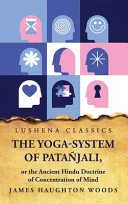
The Yoga-System of Patañjali
 74
74

The Yoga-System of Patañjali
James Haughton Woods's translation of the Yoga-Sūtras of Patañjali is an endeavor of considerable academic merit, particularly for its detailed engagement with the commentaries. Woods himself notes the "misgiving" in rendering such an intricate system, a sentiment that echoes throughout the text's scholarly tone. The strength lies in its historical positioning, highlighting Patañjali as a bridge between ancient Indian thought and the development of Buddhism. However, the dense prose and focus on philological detail can present a barrier for the uninitiated. A particularly illuminating section is the exploration of *samadhi*, where Woods unpacks the subtle states of consciousness described by Patañjali and his commentators, moving beyond superficial interpretations. While invaluable for the serious student, its scholarly apparatus might feel overwhelming for those seeking a more direct, experiential guide. It remains a significant scholarly contribution to the study of Yoga's philosophical foundations.
📝 Description
74
James Haughton Woods published his translation of Patañjali's Yoga-Sūtras in 1914.
This volume presents the Yoga-Sūtras of Patañjali, a central text in Indian philosophy, alongside extensive commentary by James Haughton Woods. Woods's translation and notes sought to connect ancient Indian thought with its later developments in Buddhism and contemporary Eastern religions. The book carefully details the structure and ideas within Patañjali's system, giving readers direct access to its core principles.
This work is suited for scholars of comparative philosophy, students of Indian religious traditions, and serious yoga practitioners interested in its philosophical foundations. It appeals to those who prefer detailed academic analysis and require historical and textual context to understand yoga's origins. Readers examining the historical links between Brahmanical and Buddhist thought will also find value here.
Published in the early 20th century, this translation appeared as Western interest in Eastern philosophies grew. Woods aimed to make Patañjali's Yoga-Sūtras accessible, linking early Indian schools with later Buddhist philosophies and modern Asian religious thought. It positioned the text as a significant bridge, illuminating complex Sanskrit concepts for an English-speaking audience and contributing to the academic study of yoga's philosophical lineage.
💡 Why Read This Book?
• Gain a precise understanding of *citta* (consciousness) and its *vritti* (mental modifications) as analyzed by Woods, offering a foundation for understanding the mechanics of the mind that few other translations provide. • Grasp the historical significance of Patañjali's Yoga-Sūtras as a bridge between early Indian philosophy and the emergence of Buddhist thought, as detailed in the historical context sections. • Explore the concept of *kaivalya* (liberation) and the role of *ishvara* (a supreme being) within Patañjali's system, providing specific philosophical insights not typically found in modern yoga texts.
⭐ Reader Reviews
Honest opinions from readers who have explored this book.
❓ Frequently Asked Questions
What is the primary focus of James Haughton Woods's translation of The Yoga-Sūtras of Patañjali?
Woods's translation focuses on presenting the Yoga-Sūtras with extensive commentary, aiming to elucidate the intricate philosophical system and its historical importance as a link between ancient Indian thought and later developments like Buddhism.
When was James Haughton Woods's translation of The Yoga-Sūtras of Patañjali first published?
The first publication date listed for James Haughton Woods's translation is 2023-06-25, though the original scholarly work likely dates to an earlier period.
What philosophical schools does The Yoga-System of Patañjali connect?
The work highlights Patañjali's system as a bridge between early Indian philosophies, notably the Nyaya school, and the fully developed Indian Buddhism, as well as contemporary religious thought in Eastern Asia.
What is the concept of 'kaivalya' discussed in the book?
Kaivalya, discussed extensively in the text, refers to the ultimate state of liberation or emancipation within Patañjali's Yoga system, often understood as the isolation of consciousness from material existence.
Who would benefit most from reading this translation?
Scholars of comparative philosophy, students of Indian religious traditions, and practitioners seeking a deep philosophical and historical understanding of yoga's origins will find this text particularly beneficial.
Does the book explain the eight limbs of yoga?
Yes, the work delves into the eight limbs of yoga (*ashtanga*), detailing their philosophical significance and role within Patañjali's comprehensive system for achieving liberation.
🔮 Key Themes & Symbolism
Consciousness and Mental Modifications
The text rigorously examines *citta*, the seat of consciousness, and its *vritti*, the fluctuations or modifications that cloud its clarity. Woods’s translation illuminates Patañjali's systematic deconstruction of these mental states, presenting them not as inherent flaws but as phenomena to be observed and transcended. Understanding these modifications is presented as the essential first step toward the yogic goal of stilling the mind and achieving higher states of awareness.
The Path to Liberation (Kaivalya)
Central to Patañjali's system is the concept of *kaivalya*, or absolute freedom. This theme is explored through the lens of Patañjali's aphorisms and their commentaries, detailing the progressive stages of spiritual realization. The work explains how the systematic practice of yoga, encompassing ethical conduct, physical discipline, and mental concentration, is designed to disentangle the Purusha (pure consciousness) from the material world (Prakriti), leading to this ultimate state of isolation and enlightenment.
Ishvara and the Role of Devotion
The book addresses the concept of *ishvara*, often translated as a supreme being or God, within Patañjali's philosophical framework. Woods’s analysis clarifies that *ishvara* is not necessarily a creator deity in the Western sense but rather a special Purusha, untouched by afflictions. The text explores how devotion (*bhakti*) to *ishvara* can serve as a powerful aid on the yogic path, facilitating concentration and accelerating the process of spiritual progress toward *kaivalya*.
Historical and Philosophical Linkages
A significant aspect of this work is its emphasis on Patañjali's Yoga-Sūtras as a crucial historical and philosophical nexus. Woods positions the text as a bridge connecting the earlier Brahmanical traditions, including schools like Nyaya, with the subsequent emergence and development of Indian Buddhism. This perspective highlights the book’s importance for understanding the evolution of religious and philosophical thought across ancient India and its enduring influence on Eastern Asia.
💬 Memorable Quotes
Direct passages from the work, attributed to the author.
“The Yoga-Sūtras of Patañjali are not without misgiving that one ventures to render into English the texts of an intricate system.”
— This expresses the translator's awareness of the profound complexity and potential for misinterpretation inherent in translating ancient philosophical and spiritual texts, underscoring the scholarly caution required.
“For this system, together with the Nyaya and...”
— This incomplete fragment highlights the book's intent to contextualize Patañjali's Yoga within broader Indian philosophical traditions, specifically referencing the Nyaya school as a point of comparison or lineage.
“The historical importance of those texts, as forming a bridge between the philosophy of ancient India and the fully developed Indian Buddhism...”
— This statement emphasizes the text's value not just as a philosophical treatise, but as a critical historical document showing the evolutionary links between different major spiritual and philosophical movements in India.
“Reasons for taking np the work.”
— This suggests the introductory sections of the book address the motivations and justifications behind undertaking the translation and scholarly analysis of Patañjali's intricate system.
“the religious thought of to-day in Eastern A sia, emboldens one to the attempt.”
— This interpretation underscores the translator's conviction that the relevance of Patañjali's Yoga extends beyond ancient history, connecting to contemporary spiritual practices and thought in Asia.
🌙 Esoteric Significance
Tradition
While Patañjali's Yoga-Sūtras are a foundational text for classical Indian philosophy and a primary source for the yogic tradition, Woods's scholarly approach positions it within a lineage that bridges Brahmanical thought with the philosophical underpinnings of Buddhism. Its esoteric significance lies in detailing a systematic path toward consciousness alteration and liberation, principles that resonate with many Western esoteric traditions focused on inner transformation and spiritual attainment.
Symbolism
Key symbols explored include *Chitta* (consciousness) and its *Vritti* (modifications), representing the mind's surface activity that obscures deeper awareness. The concept of *Kaivalya* (liberation) symbolizes the ultimate state of pure consciousness, detached from material causality. *Ishvara*, a supreme consciousness, is presented not as a creator but as a focal point for devotion, symbolizing a higher principle that can aid the practitioner's ascent.
Modern Relevance
Contemporary practitioners of contemplative traditions, mindfulness, and various forms of yoga often draw implicitly or explicitly on the principles laid out in Patañjali's Yoga-Sūtras. Thinkers and teachers in fields ranging from transpersonal psychology to secularized meditation practices indirectly utilize concepts like the *vritti* and the path to mental stillness, demonstrating the enduring influence of this ancient system on modern spiritual and psychological exploration.
👥 Who Should Read This Book
• Academic researchers in comparative religion and philosophy seeking a rigorous translation and historical analysis of a seminal Indian text. • Dedicated yoga practitioners interested in understanding the philosophical depth and historical context of yoga beyond contemporary postural practices. • Students of esoteric traditions interested in the systematic paths toward consciousness alteration and liberation described in ancient Indian thought.
📜 Historical Context
Published in an era of intense Western academic interest in Eastern philosophies, James Haughton Woods's translation of the Yoga-Sūtras of Patañjali emerged as a significant scholarly endeavor. This work appeared at a time when Sanskrit texts were being systematically translated, making accessible complex philosophical systems previously known only to a few. Woods's stated goal was to bridge the gap between early Indian thought, exemplified by Patañjali's foundational text, and the subsequent development of Indian Buddhism. He explicitly notes the historical importance of Patañjali's system in relation to schools like Nyaya, positioning it as a crucial link. This translation aimed to rectify the relative lack of engagement with these specific texts in Europe and America, offering a detailed academic apparatus for scholars and serious students seeking to understand the philosophical underpinnings of yoga and its place in the broader field of Indian intellectual history.
📔 Journal Prompts
The nature of *citta* and its *vritti*: How do observed mental modifications align with Patañjali's descriptions?
Reflect on the historical bridge Patañjali's Yoga-Sūtras represent between Brahmanical and Buddhist thought.
Consider the role of *Ishvara* as presented by Woods in the context of yogic practice.
Analyze the concept of *Kaivalya* and its potential implications for personal freedom.
Examine the eight limbs (*ashtanga*) as presented in the text and their interconnectedness.
🗂️ Glossary
Sūtras
Concise aphorisms or threads of text, forming the core statements of philosophical systems like Patañjali's Yoga.
Citta
The mind, encompassing consciousness, intellect, and ego; the internal instrument through which one perceives and acts.
Vritti
Mental modifications, fluctuations, or states of consciousness that arise in the *citta* and obscure its true nature.
Samadhi
A state of profound concentration or meditative absorption, often considered a goal in yogic practice, leading to deeper states of awareness.
Kaivalya
Liberation or absolute freedom; the ultimate state of emancipation in Patañjali's Yoga, characterized by the pure consciousness being freed from matter.
Ishvara
A supreme being or God; in Patañjali's system, a special Purusha untouched by afflictions, often contemplated in devotion.
Ashtanga
The eight limbs or stages of yoga as outlined by Patañjali: Yama, Niyama, Asana, Pranayama, Pratyahara, Dharana, Dhyana, and Samadhi.