Alice's Adventures in Wonderland / Through the Looking Glass

 71
71

Alice's Adventures in Wonderland / Through the Looking Glass
Carroll's Alice books are not mere children's fantasies; they are intricate explorations of perception and language, often mistaken for simple nonsense. The sheer inventiveness of the dreamscapes, populated by figures like Humpty Dumpty with his peculiar linguistic theories, showcases a mind playfully dismantling conventional thought. A particular strength lies in how the narrative mirrors Alice's own struggle to apply logic to illogical situations, a process that feels remarkably relatable. However, the sheer density of wordplay and philosophical undercurrents can sometimes obscure the narrative flow for a casual reader, demanding a certain intellectual engagement. The scene where Alice converses with the Caterpillar about her identity, questioning who she is in relation to her changing size and understanding, remains a potent example of the books' psychological acuity. These are works that reward a critical eye, revealing their deeper structures with sustained attention.
📝 Description
71
Lewis Carroll's Alice books, first published in 1865 and 1871, invite readers into worlds that bend logic.
Alice's Adventures in Wonderland and Through the Looking-Glass chronicle a young girl's journeys into fantastical realms. In Wonderland, she falls down a rabbit hole, encountering a cast of absurd characters and navigating a world where rules constantly change. The sequel sees her step through a mirror into a world that mirrors a chessboard, where she meets characters like the Red and White Queens. These stories, despite their nonsensical surface, hold layers of meaning for those who look closely. Carroll, a mathematician named Charles Dodgson, crafted these narratives from tales he originally told to Alice Liddell. The books stand apart from the didactic children's literature common in the Victorian era, favoring imaginative freedom and psychological depth.
Readers will find intricate wordplay and philosophical puzzles embedded within the accessible narratives. The books reward rereading, revealing new interpretations with each encounter. They are particularly interesting for those examining the precursors to surrealist literature or exploring the interplay between logic and fantasy. The tales question the nature of reality and the construction of identity.
While not overtly occult, Carroll's Alice books engage with a tradition of challenging perceived reality through dream logic and symbolic encounters. The nonsensical elements and bizarre characters can be seen as reflecting a breakdown of Victorian certainty, touching on themes relevant to esoteric thought concerning the nature of consciousness and perception. Alice's struggle to maintain her sense of self amidst shifting rules and nonsensical pronouncements mirrors the seeker's quest for inner stability when confronting illusionary or dualistic views of the world. The books' exploration of language's limits also resonates with mystical traditions that grapple with the ineffability of ultimate truth.
💡 Why Read This Book?
• Gain insight into the Victorian fascination with logic puzzles and wordplay, as seen in the Mad Hatter's tea party from "Alice's Adventures in Wonderland," offering a unique perspective on 19th-century intellectual currents. • Understand the foundational elements of surrealist thought through Alice's disorienting journey, encountering characters like the Cheshire Cat whose existence defies physical laws, predating the formal Surrealist movement. • Explore the philosophical concept of identity and self-perception, particularly how Alice grapples with her changing size and understanding, mirroring broader questions about subjective reality.
⭐ Reader Reviews
Honest opinions from readers who have explored this book.
❓ Frequently Asked Questions
What is the historical significance of Lewis Carroll's "Alice's Adventures in Wonderland"?
Published in 1865, "Alice's Adventures in Wonderland" challenged Victorian literary norms by embracing fantasy and psychological depth over didacticism, influencing later literary movements like Surrealism.
How does "Through the Looking-Glass" relate to "Alice's Adventures in Wonderland"?
"Through the Looking-Glass," published in 1871, is a companion novel featuring Alice in a different dream-world accessed by stepping through a mirror, continuing the exploration of logic and language.
What are some key esoteric themes in the Alice books?
The books explore themes of identity, the nature of reality, the arbitrary nature of rules and authority, and the subjective experience of consciousness, often through symbolic characters and paradoxical situations.
Who was Lewis Carroll?
Lewis Carroll was the pen name of Charles Dodgson, a mathematician at Christ Church, Oxford, known for his Alice books and his work in logic and photography.
Are the Alice books public domain?
Yes, "Alice's Adventures in Wonderland" (1865) and "Through the Looking-Glass" (1871) are in the public domain in most countries, making them widely accessible.
What makes the Alice books relevant to esoteric studies?
Their exploration of altered states of consciousness, symbolic landscapes, and the subversion of rational thought provides a rich basis for examining psychological and philosophical concepts often found in esoteric traditions.
🔮 Key Themes & Symbolism
Subversion of Logic
Carroll masterfully deconstructs conventional logic and language, mirroring philosophical inquiries into the nature of reality. Alice's attempts to apply rational thought to nonsensical situations, such as the Mad Hatter's tea party where time is frozen, highlight the arbitrary nature of societal constructs. This challenges the reader to question established norms and the very foundations of perceived order, aligning with Hermetic principles that suggest reality is more fluid than commonly understood.
Identity and Transformation
Alice's fluctuating size and her constant questioning of 'Who in the world am I?' reflect a profound exploration of identity. Her encounters, particularly with the Caterpillar, serve as allegorical stages of psychological development and self-discovery. This theme appeals to esoteric traditions that emphasize inner transformation and the fluid nature of the self, suggesting that identity is not fixed but a process of becoming, shaped by experience and internal realization.
The Dream State as Revelation
The entirety of Alice's adventures unfolds in a dream state, a liminal space where the boundaries of the mundane world dissolve. This dream logic allows for the exploration of the subconscious and the manifestation of archetypal figures, such as the tyrannical Queen of Hearts. From an esoteric perspective, dreams are often viewed as pathways to deeper truths and insights, offering a critique of the limitations of waking consciousness and its adherence to rigid, materialist views.
Arbitrary Authority
The absurd and often tyrannical rules imposed by characters like the Queen of Hearts represent a critique of arbitrary authority and social hierarchies. The nonsensical trials and pronouncements, such as 'Off with her head!', reveal the fragility of power structures built on irrationality. This theme invites contemplation on the nature of power and obedience, echoing Gnostic concerns about the illusory nature of worldly dominion and the importance of inner discernment.
💬 Memorable Quotes
Direct passages from the work, attributed to the author.
“‘But I don’t want to go among mad people,’ Alice remarked.”
— This statement highlights Alice's initial adherence to conventional norms and her apprehension towards the illogical world she enters. It serves as a point of contrast, emphasizing the surreal nature of Wonderland and the reader's own potential discomfort with challenging established perceptions.
“‘We’re all mad here. I’m mad. You’re mad.’”
— The Cheshire Cat’s pronouncement is a core tenet of Wonderland's philosophy. It suggests that sanity is relative and that the 'normal' world might be the truly irrational one, inviting a re-evaluation of societal definitions of normalcy and madness.
“‘Which way ought I to go from here?’”
— Alice’s question to the Cheshire Cat expresses the book’s exploration of choice and consequence in a world where paths are not clearly defined. It reflects the existential dilemma of navigating life without a predetermined map.
“‘Sentence first—verdict afterwards.’”
— This phrase from the Queen of Hearts' trial exemplifies the complete inversion of justice and logic. It signifies a world where cause and effect are reversed, and outcomes are dictated by whim rather than reason, a recurring motif in the narrative.
“‘It’s no use going back to yesterday, because I was a different person then.’”
— Alice’s reflection on her changing self, particularly after her physical transformations, speaks to the fluid nature of identity. It suggests that personal growth and experience fundamentally alter one's being, a concept central to many spiritual paths.
🌙 Esoteric Significance
Tradition
While not explicitly aligned with a single esoteric lineage, Carroll's works resonate strongly with Hermetic and Gnostic traditions due to their exploration of illusory reality, subjective consciousness, and the subversion of mundane perception. The journey through Wonderland can be seen as an allegory for the soul's passage through various planes of existence or the process of gnosis, where hidden truths are revealed through experiences that defy conventional understanding.
Symbolism
The Cheshire Cat, with its ability to disappear and reappear, symbolizes illusion and the ephemeral nature of form, suggesting that what we perceive is not the entirety of reality. The Mad Hatter's tea party, perpetually stuck at 6 o'clock due to a dispute with Time, represents a temporal stasis or a disruption of the natural order, reflecting concepts of cyclical time or the subjective experience of its passage. Alice herself embodies the seeker, navigating these symbolic landscapes in pursuit of understanding.
Modern Relevance
Contemporary thinkers and practitioners in fields like Jungian psychology, literary criticism, and even certain branches of philosophy of mind draw upon Carroll's Alice books. Concepts such as the exploration of the subconscious through dream imagery and the deconstruction of language's ability to represent reality remain vital. The works continue to inform discussions on perception, identity, and the nature of truth in a postmodern world, serving as a touchstone for understanding the subjective construction of experience.
👥 Who Should Read This Book
• Students of comparative literature and philosophy interested in the roots of surrealism and critiques of logic, particularly those examining the works of figures like Alfred Jarry or the early Surrealists. • Individuals exploring the nature of consciousness and subjective reality, seeking narratives that challenge conventional perceptions of the waking world and look at dream logic. • Readers interested in Victorian-era literature who appreciate works that subtly subvert societal norms and intellectual conventions of their time.
📜 Historical Context
Lewis Carroll's "Alice's Adventures in Wonderland," first published in 1865, emerged during the peak of Victorian intellectualism, a period characterized by rapid scientific discovery alongside enduring religious and social conservatism. Charles Dodgson, an academic mathematician, crafted a narrative that subtly subverted the era's penchant for order and didacticism. While contemporary children's literature often adhered to moralistic tales, Carroll's work embraced absurdity and psychological complexity. The book’s unconventional nature was noted; a contemporary critic like Henry Kingsley praised its 'exquisite' humor and originality. However, its departure from traditional narrative structures and its exploration of nonsensical logic also positioned it apart from the prevailing literary currents, foreshadowing later artistic movements like Surrealism, which would directly engage with dream logic and the subconscious in the 20th century.
📔 Journal Prompts
The Caterpillar's question, 'Who are you?', and Alice's struggle to answer.
The arbitrary rules and punishments of the Queen of Hearts' court.
The Mad Hatter's perpetual tea party and the concept of frozen time.
The Cheshire Cat's philosophy on madness and normalcy.
Alice's disorientation and adaptation to Wonderland's illogical physics.
🗂️ Glossary
Logic Puzzles
Problems requiring deductive reasoning, often involving conditional statements and systematic elimination of possibilities. Carroll, a logician, embedded these within the narrative to highlight its subversion.
Nonsense Literature
Literary works characterized by deliberate illogicality, absurdity, and wordplay, often for humorous or satirical effect. Carroll is a prime example of this genre.
Allegory
A narrative in which characters, events, and settings represent abstract ideas or principles. The Alice books are often interpreted allegorically, exploring themes of childhood, society, and logic.
Surrealism
An artistic and literary movement of the early 20th century that sought to release the creative potential of the unconscious mind, often through dreamlike imagery and juxtapositions.
Dream Logic
The often irrational, associative, and fluid sequence of events and transformations experienced in dreams, which Carroll masterfully simulates in his narratives.
Victorian Era
The period of British history during the reign of Queen Victoria (1837–1901), marked by industrial expansion, social reform, and a blend of scientific progress and traditional values.
Gnosticism
A collection of religious ideas and systems of salvation that flourished in the Roman Empire in the first centuries CE, emphasizing knowledge (gnosis) of a divine nature and spiritual liberation.
🔮 Readers Also Liked
Browse all →








More by Lewis Carroll
All books →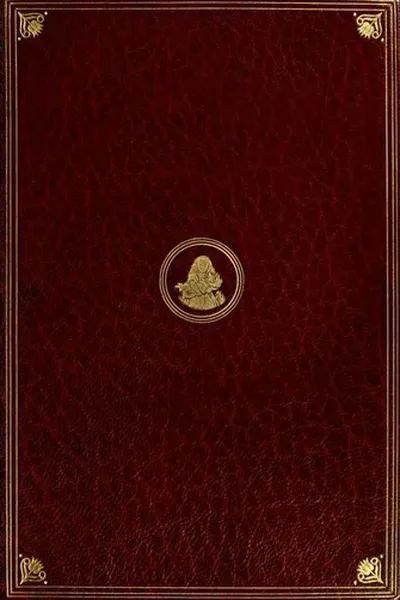





More Free Occult Philosophy Books
View all →