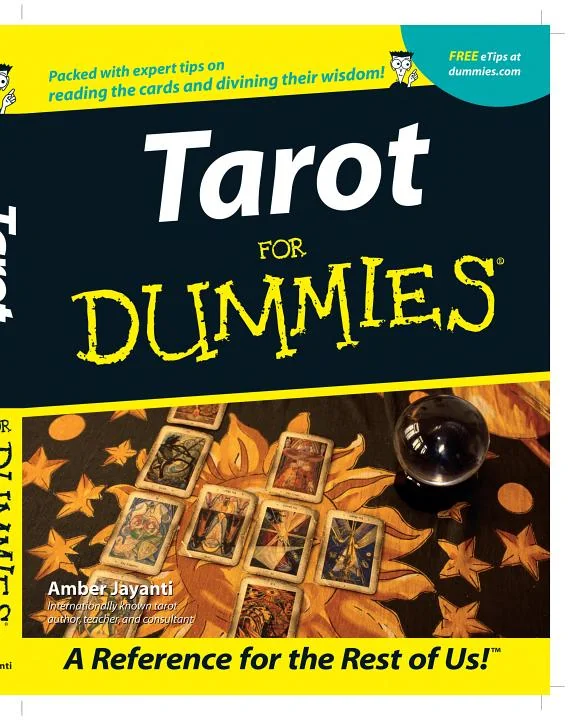
Tarot For Dummies
 79
79

Tarot For Dummies
Amber Jayanti’s "Tarot For Dummies" serves as a functional, if uninspired, entry point into the world of cartomancy. Its strength lies in its systematic breakdown of the 78 cards, offering clear, digestible explanations for both the Major and Minor Arcana. The text avoids overly arcane jargon, a welcome approach for absolute beginners. However, the book's primary limitation is its lack of distinct voice or deeper esoteric exploration. While it explains the Fool’s journey, the narrative feels more like a manual than an invitation to spiritual discovery. A particularly effective section details the symbolism of The Hierophant, grounding its meaning in traditional societal roles, which provides a solid interpretive anchor. Ultimately, this book provides a competent, albeit conventional, foundation for understanding tarot fundamentals.
📝 Description
79
Published in 2001, Tarot For Dummies demystifies the 78-card deck for new readers.
Amber Jayanti's Tarot For Dummies, released in 2001, offers a clear introduction to reading the 78 tarot cards. The book covers both the Major and Minor Arcana, explaining their historical roots and how to interpret them. It guides newcomers through understanding and using the tarot for personal insight and divination. The 'For Dummies' format makes complex ideas accessible, appealing to a wide audience. This includes those skeptical of divination but interested in archetypes, as well as people wanting to learn practical card layouts. The book explains the significance of the 22 Major Arcana, which represent major life lessons, and the 56 Minor Arcana, detailing daily events across four suits: Wands, Cups, Swords, and Pentacles. It also teaches various spreads, from single cards to the Celtic Cross, stressing how card meanings connect in a reading and the balance between intuition and learned knowledge.
This guide connects the practice of tarot reading to a tradition of cartomancy and esoteric study. While modern tarot's development is often linked to late 19th and early 20th-century figures and groups like Eliphas Lévi and the Hermetic Order of the Golden Dawn, Jayanti presents these historical influences for a modern audience. The book acknowledges tarot's shift from a game to a tool for psychological and spiritual reflection, making its historical context relevant for contemporary readers.
💡 Why Read This Book?
• Gain a foundational understanding of the 78-card tarot deck, including the distinct roles of the Major and Minor Arcana, as explained in the chapter on 'Understanding the Cards'. • Learn practical methods for card interpretation and common spreads, such as the Celtic Cross, detailed in sections dedicated to reading techniques. • Explore the historical lineage of tarot from its origins as a game to its modern use as a divinatory tool, as presented in the historical context sections.
⭐ Reader Reviews
Honest opinions from readers who have explored this book.
❓ Frequently Asked Questions
When was Tarot For Dummies first published?
Tarot For Dummies by Amber Jayanti was first published on August 16, 2001, making it a relatively contemporary guide to the ancient practice of tarot.
What is the difference between Major and Minor Arcana in tarot?
The Major Arcana (22 cards) represent significant life lessons and spiritual archetypes, while the Minor Arcana (56 cards) reflect daily events and circumstances, divided into four suits: Wands, Cups, Swords, and Pentacles.
Does Tarot For Dummies teach different card spreads?
Yes, the book covers various popular tarot spreads, including the foundational Celtic Cross and simpler one-card draws, to help users interpret card combinations.
Who is Amber Jayanti?
Amber Jayanti is the author of 'Tarot For Dummies,' bringing her expertise to make the practice of tarot accessible to a wide audience.
Is Tarot For Dummies suitable for complete beginners?
Absolutely. The 'For Dummies' series is renowned for its clear, step-by-step approach, making 'Tarot For Dummies' an ideal starting point for those new to tarot reading.
What historical context does the book provide for tarot?
The book touches upon the evolution of tarot from its early forms, acknowledging its development through influential esoteric movements and its widespread adoption for divination.
🔮 Key Themes & Symbolism
Archetypal Journeys
The Major Arcana are presented as a symbolic journey, with cards like The Fool representing new beginnings and The World signifying completion. The book emphasizes how these archetypes, deeply rooted in Western psychological and spiritual thought, offer profound commentary on human experience and personal growth. Understanding these figures allows readers to identify patterns and potential outcomes in their own lives, connecting the universal narrative of the tarot to individual circumstances.
Symbolic Language of Suits
The Minor Arcana are broken down into their four suits: Wands (action, creativity), Cups (emotions, relationships), Swords (intellect, challenges), and Pentacles (material world, finances). The book details how the imagery and numerical progression within each suit provide nuanced insights into everyday situations. This structured approach helps readers decode the subtle messages of the cards, moving beyond simple meanings to a more integrated understanding of a reading.
Divination as Self-Exploration
Far from mere fortune-telling, the book frames tarot as a tool for introspection and gaining clarity. It highlights how card spreads, when interpreted thoughtfully, can illuminate subconscious influences and potential pathways. This perspective aligns with modern psychological approaches to tarot, emphasizing its utility in understanding one's inner landscape and making informed decisions, rather than predicting an unchangeable future.
Historical Foundations
While accessible, the book acknowledges the historical roots of tarot, touching upon its development from a 15th-century game to its occult significance in the 18th and 19th centuries. It implicitly references the influence of esoteric orders like the Hermetic Order of the Golden Dawn, which significantly shaped modern tarot interpretation. This grounding provides context for the symbolic meanings assigned to the cards.
💬 Memorable Quotes
Direct passages from the work, attributed to the author.
“The Fool starts a journey with nothing but faith and a small bag.”
— This interpretation highlights the archetype of The Fool as a symbol of pure potential, innocence, and the courage to begin anew, often with minimal preparation but maximum trust in the unfolding path.
“The Major Arcana depict significant life lessons and spiritual archetypes.”
— This concept underscores the profound, often transformative, nature of the 22 Major Arcana cards, positioning them as guides to understanding core human experiences and spiritual development.
“Each suit in the Minor Arcana corresponds to a different aspect of life.”
— This explains the fundamental structure of the Minor Arcana, assigning distinct domains like action, emotion, intellect, and the material world to Wands, Cups, Swords, and Pentacles, respectively.
“Tarot reading involves both learned meanings and intuitive understanding.”
— This highlights the dual nature of tarot interpretation, emphasizing that while knowledge of card symbolism is crucial, developing personal intuition is equally vital for accurate and meaningful readings.
“The Celtic Cross spread offers a comprehensive view of a situation.”
— This points to a specific, widely used tarot spread that provides a detailed analysis of a question or situation by examining various influencing factors and potential outcomes.
🌙 Esoteric Significance
Tradition
This work situates itself within the broad Western Esoteric tradition, particularly drawing from Hermeticism and Neoplatonism in its emphasis on archetypes and symbolic correspondences. While not strictly Kabbalistic or Gnostic, it absorbs elements of their symbolic richness. The 'For Dummies' approach aims to democratize access to these traditions, translating complex symbolic systems into easily understandable frameworks for a lay audience, diverging from more exclusive or initiatory schools.
Symbolism
Key symbols include The Fool, representing the uninitiated soul starting a spiritual quest, and The World, signifying ultimate fulfillment and integration. The four suits—Wands (fire, spirit), Cups (water, emotion), Swords (air, intellect), and Pentacles (earth, material)—are central, providing a framework for understanding life's diverse manifestations. The book interprets these symbols as keys to unlocking self-awareness and navigating life's challenges.
Modern Relevance
Contemporary practices in mindfulness, self-help, and even therapeutic psychology often incorporate elements of archetypal exploration and symbolic interpretation that owe a debt to tarot’s historical development. Thinkers and practitioners in fields ranging from Jungian psychology (exploring archetypes) to modern paganism and neo-shamanic traditions find value in tarot’s symbolic language for personal growth and divination, making works like Jayanti’s a gateway to these enduring practices.
👥 Who Should Read This Book
• Absolute beginners to tarot seeking a structured and non-intimidating introduction to card meanings and interpretation techniques. • Individuals interested in self-discovery and personal development who want to explore symbolic tools for introspection and guidance. • Those curious about the history and cultural impact of cartomancy and seeking a practical guide to understanding its foundational concepts.
📜 Historical Context
Published in 2001, "Tarot For Dummies" emerged during a period of renewed interest in esotericism and personal development, following the spiritual currents of the late 20th century. The book arrived decades after the occult revival of the 1960s and 70s, which saw widespread engagement with practices like tarot, astrology, and witchcraft, influenced by figures like Gerald Gardner and Aleister Crowley. While the Hermetic Order of the Golden Dawn laid much of the groundwork for modern tarot interpretation in the late 19th century, Jayanti's work aimed to synthesize and simplify these complex traditions for a mass audience unfamiliar with figures like A.E. Waite or Pamela Colman Smith, whose Rider-Waite deck became the de facto standard. The book’s accessible "For Dummies" format implicitly countered more academic or rigidly traditional approaches, positioning tarot as a practical tool for everyday life rather than solely an arcane pursuit.
📔 Journal Prompts
The Fool's initial leap: What is one new venture you feel called to begin, despite uncertainty?
Reflect on the symbolism of The Hierophant in relation to established traditions or institutions in your life.
How do the energies of Wands, Cups, Swords, and Pentacles manifest in your current daily challenges?
Consider the reversed meaning of The Magician: Where might your personal power feel blocked or misused?
Analyze a recent situation through the lens of the Celtic Cross spread: What hidden influences might be at play?
🗂️ Glossary
Major Arcana
The 22 trump cards in a tarot deck, representing significant life events, spiritual lessons, and archetypal figures. They are often seen as the 'big picture' of a reading.
Minor Arcana
The 56 cards divided into four suits (Wands, Cups, Swords, Pentacles), representing everyday experiences, circumstances, and challenges. Their interpretation often relates to practical matters.
Rider-Waite Deck
A highly influential tarot deck first published in 1909, featuring artwork by Pamela Colman Smith and conceived by A.E. Waite. Its imagery is widely used in modern tarot guides.
Spread
A specific arrangement of tarot cards laid out in a pattern to explore different aspects of a question or situation. Examples include the one-card draw and the Celtic Cross.
Archetype
A universal, archaic pattern or image that derives from the collective unconscious and is believed to influence human behavior and perception. Key archetypes are represented in the Major Arcana.
Divination
The practice of seeking knowledge of the future or the unknown by supernatural means. In tarot, it's often viewed as a tool for gaining insight and exploring possibilities.
Cartomancy
The practice of telling fortunes or giving insights through the use of playing cards or tarot cards. Tarot reading is a form of cartomancy.
This book appears in 1 collection
🔮 Readers Also Liked
Browse all →
From the “Mystery Schools” Collection
View all →
More Free Occult Philosophy Books
View all →