Tarot for beginners
 71
71

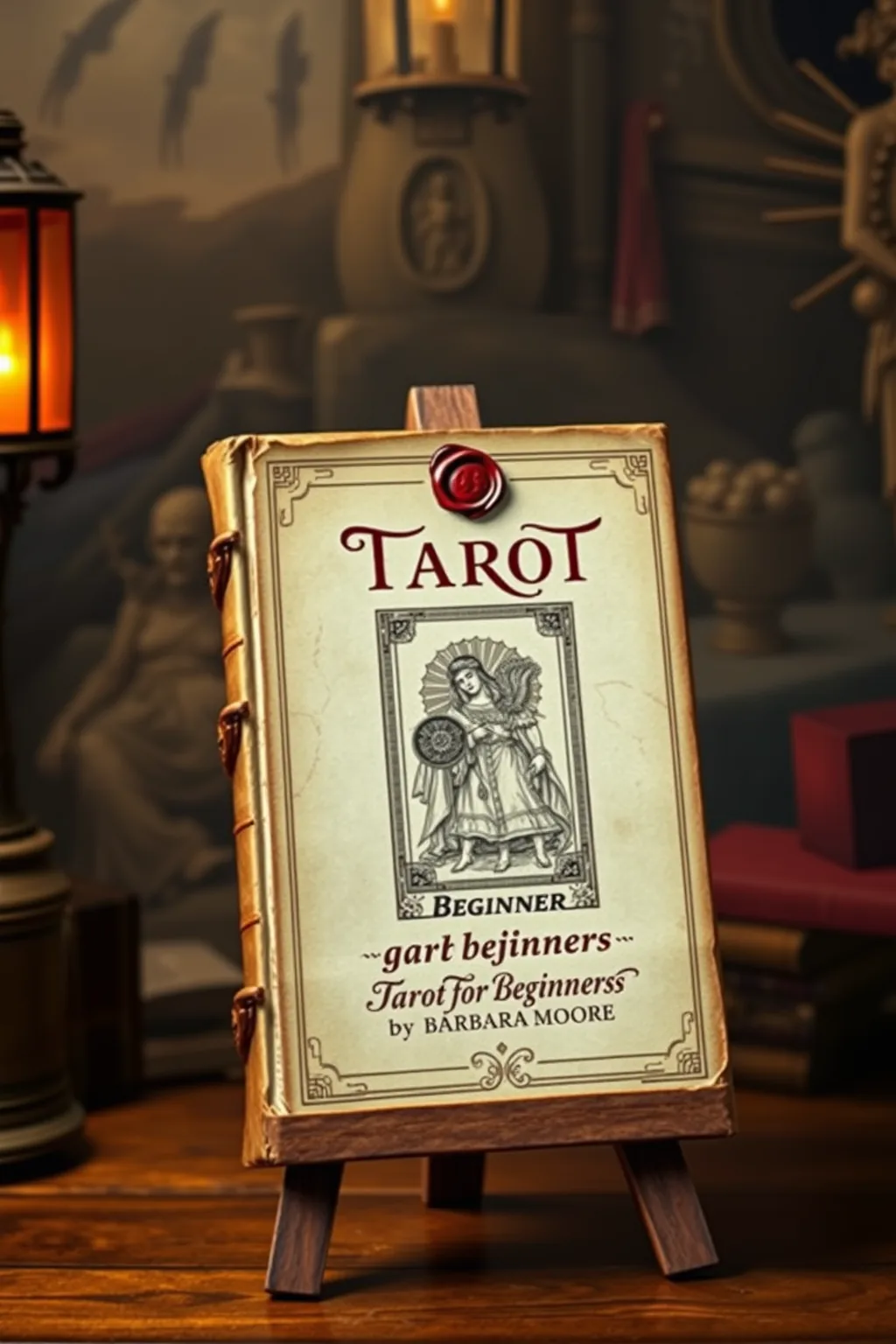
Tarot for beginners
Barbara Moore's "Tarot for Beginners" is a solid, no-nonsense introduction to a practice often shrouded in mystique. Unlike some guides that lean heavily on jargon or overly spiritualized language, Moore grounds her explanations in clear, actionable advice. Her breakdown of the Major and Minor Arcana, particularly the elemental associations with the suits, provides a logical framework for new learners. A slight limitation, however, is the book's brevity; while excellent for absolute novices, those with some prior exposure might find they quickly outgrow its foundational scope. The section on the Court Cards, for instance, could benefit from more nuanced discussion beyond simple personality archetypes. Nevertheless, for its stated purpose, it's a commendable and straightforward entry point into the world of Tarot, avoiding the pitfalls of overly complicated or esoteric presentations common in the field.
📝 Description
71
Barbara Moore's 2010 book, Tarot for Beginners, explains the 78-card Tarot deck.
Barbara Moore's "Tarot for Beginners", published in 2010, breaks down the 78 cards of the Tarot deck. It explains the Major and Minor Arcana, moving beyond simple memorization to foster an intuitive grasp of card meanings. This book is for people new to Tarot who feel overwhelmed by its apparent complexity or who have not found a clear starting point. It offers a structured yet approachable way to learn the basics, from understanding individual card meanings to performing simple card spreads.
The book aligns with a wider trend of making esoteric practices accessible. It emerged during a time of increased public interest in divination and the proliferation of new Tarot decks and online study groups. Moore's method focuses on the core archetypes and the narrative structure within the Tarot. It details the separate functions of the Major Arcana, representing significant life lessons, and the Minor Arcana, which cover daily events and challenges. The system of suits — Wands, Cups, Swords, and Pentacles — is also covered.
Published in 2010, "Tarot for Beginners" arrived as public fascination with divination and occult practices was growing. Tarot itself was seeing a resurgence, with many new decks appearing and online communities forming around its study. This book reflects a movement to bring practices like Tarot out of academic circles and into wider public access. It offers a clear, self-guided method suited to learning in the digital age, focusing on the archetypal language and narrative flow of the cards.
💡 Why Read This Book?
• Gain a clear understanding of the 78-card Tarot structure, including the distinct roles of the Major and Minor Arcana, as explained by Barbara Moore. • Learn the elemental associations for each suit (Wands, Cups, Swords, Pentacles), providing a foundational interpretive key introduced in the book. • Develop an intuitive approach to reading cards by understanding how Moore connects archetypal meanings to practical application and self-reflection.
⭐ Reader Reviews
Honest opinions from readers who have explored this book.
❓ Frequently Asked Questions
When was Barbara Moore's "Tarot for Beginners" first published?
Barbara Moore's "Tarot for Beginners" was first published in 2010, making it a relatively contemporary guide for those new to the practice.
What are the main sections of the Tarot deck covered in the book?
The book covers the two primary sections of the Tarot deck: the Major Arcana, representing significant life events and lessons, and the Minor Arcana, which deal with daily occurrences.
Does "Tarot for Beginners" explain the different suits?
Yes, the book explains the four suits of the Minor Arcana—Wands, Cups, Swords, and Pentacles—and their associated elemental correspondences.
Is this book suitable for someone with no prior Tarot knowledge?
Absolutely. The book is specifically designed for beginners, offering a demystified and accessible entry point into understanding Tarot symbolism and interpretation.
What is the primary goal of Barbara Moore's approach to Tarot?
Moore's approach aims to move learners beyond rote memorization toward a more intuitive understanding of the cards, emphasizing archetypal meanings and self-reflection.
Does the book cover the Court Cards?
Yes, "Tarot for Beginners" addresses the Court Cards (Page, Knight, Queen, King) within the Minor Arcana, often relating them to personality archetypes or roles.
🔮 Key Themes & Symbolism
Understanding the Arcana
The work meticulously distinguishes between the Major Arcana, which represent significant life lessons and archetypal journeys, and the Minor Arcana, detailing the ebb and flow of daily life. Moore illustrates how these two components work in concert, providing a comprehensive narrative within the 78-card structure. This foundational understanding is crucial for any beginner seeking to move beyond superficial interpretations and grasp the deeper symbolic language of the Tarot.
Elemental Suit Correspondences
A core concept presented is the connection between the four suits (Wands, Cups, Swords, Pentacles) and the classical elements: Fire, Water, Air, and Earth, respectively. This book explains how these elemental energies influence the themes and meanings associated with each suit, offering a systematic way to interpret card combinations and understand the energetic dynamics at play in a reading. Grasping these correspondences is key to unlocking the Tarot's nuanced messages.
The Role of Intuition
Beyond memorizing card meanings, Moore emphasizes the development of intuition as a vital component of Tarot reading. The book guides readers on how to connect with the archetypal symbolism on a personal level, encouraging them to trust their inner voice. This perspective frames Tarot not merely as a predictive system but as a tool for self-discovery and psychological insight, fostering a more personal and meaningful practice.
Court Card Archetypes
The book explores the significance of the Court Cards—Page, Knight, Queen, and King—within each suit. These cards are often presented as representing different stages of development, personality types, or roles that individuals might embody or encounter. Understanding these figures provides a richer layer to readings, allowing for the interpretation of interpersonal dynamics and character insights beyond the pip cards.
💬 Memorable Quotes
Direct passages from the work, attributed to the author.
“The Major Arcana represent the big events and lessons in life.”
— This statement captures the book's core teaching on the Major Arcana, framing them as important moments or significant developmental stages in a person's life journey.
“The Minor Arcana deal with the everyday occurrences.”
— This highlights the practical application of the Minor Arcana, distinguishing them from the grander themes of the Major Arcana and positioning them as reflections of daily life.
“Develop your intuition alongside learning the card meanings.”
— This emphasizes Moore's philosophy that Tarot reading requires a balance of knowledge and inner knowing, encouraging a more personal connection to the cards.
“The Court Cards can represent people or stages.”
— This captures the dual interpretation of Court Cards, suggesting they can symbolize specific individuals or phases of personal growth within the context of a reading.
💡 Key Ideas
Editorial paraphrase of the work's core concepts — not direct quotes.
Each suit is associated with an element.
This paraphrase points to the fundamental concept of elemental correspondences for the suits (Wands-Fire, Cups-Water, Swords-Air, Pentacles-Earth), a key interpretive tool.
🌙 Esoteric Significance
Tradition
While "Tarot for Beginners" does not strictly adhere to a single esoteric lineage like Kabbalistic or Gnostic traditions, it operates within the broad Western esoteric milieu that has historically embraced Tarot. Moore's approach is more pragmatic and psychologically oriented, reflecting a modern interpretation of Tarot's divinatory and self-exploratory functions. It draws from the general understanding of Tarot's archetypal symbolism, which has roots in Renaissance esoteric thought and later interpretations by figures like A.E. Waite and Pamela Colman Smith, without being explicitly tied to complex occult systems.
Symbolism
The book focuses on the fundamental symbolism of the Tarot deck. Key symbols include the archetypal figures of the Major Arcana, such as The Fool representing new beginnings and The Magician signifying manifestation. It also elucidates the symbolism of the four suits: Wands (creativity, energy), Cups (emotions, relationships), Swords (intellect, conflict), and Pentacles (material world, security), explaining their elemental associations and how they color the narrative of the Minor Arcana.
Modern Relevance
Moore's work remains relevant today for its clear, accessible methodology, which appeals to a generation of practitioners who often engage with Tarot through online platforms and social media. Its emphasis on intuition and psychological interpretation aligns with contemporary trends in self-help and mindfulness practices. Many modern Tarot enthusiasts, particularly those new to the practice, find its straightforward approach a welcome alternative to more complex or historically dense texts, making it a common starting point for self-guided spiritual exploration.
👥 Who Should Read This Book
['• Absolute beginners to Tarot seeking a structured, non-intimidating introduction to the 78-card deck.', "• Individuals interested in developing intuitive skills through symbolic language, as presented in Moore's approach.", '• Those looking for a practical guide to understanding basic card meanings and performing simple Tarot spreads.']
📜 Historical Context
Published in 2010, Barbara Moore's "Tarot for Beginners" entered a field of spiritual and self-help literature that was experiencing a significant resurgence, partly fueled by the internet. The early 21st century saw a growing mainstream acceptance of esoteric practices, with Tarot cards becoming increasingly visible in popular culture and online forums. Moore's work aligns with this trend, aiming to clarify Tarot for a new generation of seekers who might have been exposed to it through media or digital communities. This period also saw a proliferation of new Tarot decks, and guides like Moore's were essential for helping enthusiasts navigate this expanding visual and symbolic universe. While not directly engaging with academic esotericists, her approach provided a practical entry point, contrasting with more scholarly works or those rooted in older, less accessible traditions like Hermeticism. The book reflects a broader movement towards accessible spirituality, making ancient tools relevant for contemporary life.
📔 Journal Prompts
Reflect on the archetype of The Fool and its connection to your current life path.
Consider the elemental energy of Cups in your recent emotional experiences.
Explore the meaning of the Swords suit in relation to your thoughts and communication.
Analyze the role of Pentacles in your material world and security.
How do the Court Cards, such as the Queen, manifest in your relationships?
🗂️ Glossary
Major Arcana
The 22 trump cards in a Tarot deck, representing significant life lessons, archetypal themes, and major events or spiritual journeys.
Minor Arcana
The 56 cards divided into four suits (Wands, Cups, Swords, Pentacles), typically representing everyday events, challenges, and experiences.
Wands
One of the four suits in the Minor Arcana, traditionally associated with the element of Fire, representing creativity, passion, inspiration, and action.
Cups
One of the four suits in the Minor Arcana, associated with the element of Water, representing emotions, relationships, intuition, and the subconscious.
Swords
One of the four suits in the Minor Arcana, associated with the element of Air, representing intellect, thoughts, communication, conflict, and truth.
Pentacles
One of the four suits in the Minor Arcana, associated with the element of Earth, representing the material world, finances, work, health, and practicality.
Court Cards
The four highest-ranking cards in each Minor Arcana suit (Page, Knight, Queen, King), often interpreted as representing personality types, people, or stages of development.
🔮 Readers Also Liked
Browse all →









More by Barbara Moore
All books →




More Free Divination & Tarot Books
View all →