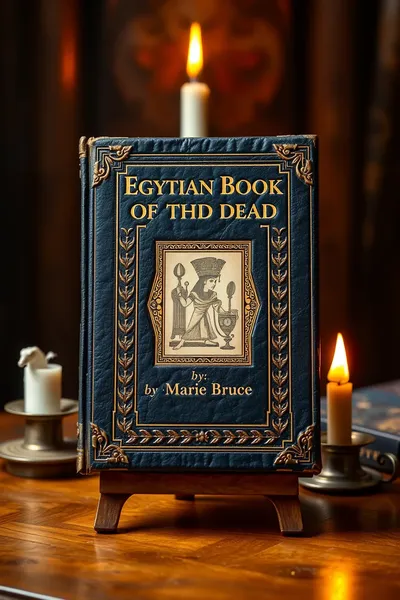
I Ching Wisdom-6 Copy Prepak
 62
62

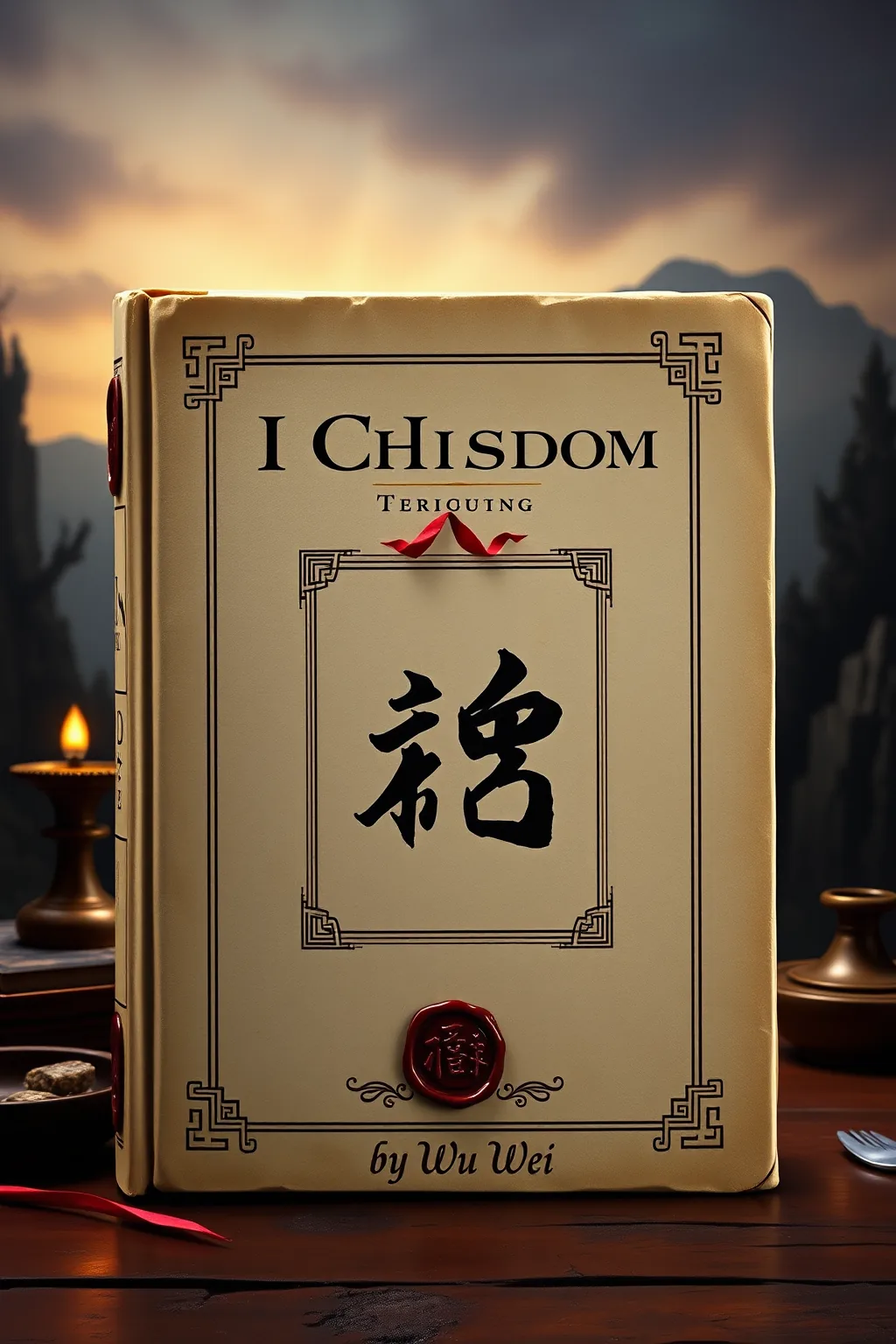
I Ching Wisdom-6 Copy Prepak



Sophia Crane, Associate Editor: 'I Ching Wisdom' by Wu Wei is an indispensable addition to any serious esoteric library. Wu Wei masterfully deciphers the complex symbolism of the I Ching, presenting its profound philosophical underpinnings with striking clarity. This pre-pack is ideal for introducing neophytes to the oracle while offering seasoned practitioners a fresh perspective on its ancient wisdom. The text elucidates the nuanced interplay of hexagrams and trigrams, revealing their predictive and transformative power. It serves as a potent guide for self-discovery and navigating life's inevitable shifts, making it a cornerstone for understanding Eastern metaphysical traditions.
📝 Description
62
Wu Wei's 'I Ching Wisdom' (6-copy pre-pack) deciphers the ancient Chinese divination text.
This collection presents Wu Wei's interpretation of the I Ching, a classic Chinese text used for divination and philosophical reflection. The book focuses on the symbolic language within the I Ching's hexagrams and lines, explaining how they represent the dynamic interplay of Yin and Yang. It aims to provide readers with a framework for understanding life's changes and making decisions.
The author guides readers through the I Ching's structure, detailing the meanings of its sixty-four hexagrams and their changing lines. The goal is to help individuals gain insight into their circumstances and align their actions with natural patterns. This approach is intended for those interested in practical application of the text's wisdom.
The I Ching, or 'Book of Changes,' is a foundational text within Chinese traditional thought, influencing Taoism, Confucianism, and various folk practices. Its use extends beyond simple fortune-telling to a sophisticated system for understanding cosmic principles and human affairs. The text's sixty-four hexagrams, formed by combinations of yin and yang lines, are seen as archetypal representations of situations and their potential transformations. This book situates itself within this lineage, offering a specific reading of these ancient symbols for contemporary understanding.
💡 Why Read This Book?
Embark on a journey of profound self-discovery and cosmic alignment. This pre-pack offers direct access to the ancient wisdom of the I Ching, a timeless oracle guiding you through life's complexities. Ideal for spiritual seekers, students of Eastern philosophy, and practitioners of divination, it provides tools for insightful decision-making and a deeper understanding of universal patterns. Unlock the secrets of change and harmony.
⭐ Reader Reviews
Honest opinions from readers who have explored this book.
❓ Frequently Asked Questions
What is the I Ching?
The I Ching, or 'Book of Changes,' is an ancient Chinese divination text and philosophical classic. It uses a system of 64 hexagrams, formed by combinations of six stacked lines (either solid or broken), to offer insights into past, present, and future circumstances.
How is the I Ching used for divination?
Divination with the I Ching typically involves casting coins or yarrow stalks to generate a hexagram. This hexagram, along with its changing lines, is then interpreted using the text's wisdom to provide guidance on a specific question or situation.
Who was Wu Wei?
Wu Wei is a pseudonym often associated with scholars and practitioners who deeply engage with Taoist principles. The author's intent is to channel the spirit of effortless action and intuitive understanding inherent in Taoism through their interpretation of the I Ching.
What are the core philosophies behind the I Ching?
The I Ching is deeply rooted in Taoist philosophy, emphasizing balance, change, and the interconnectedness of all things through the interplay of Yin and Yang. It teaches that transformation is constant and understanding its patterns leads to harmony.
Is this book suitable for beginners?
Yes, this pre-pack is designed to be accessible to beginners while offering depth for experienced practitioners. It provides clear explanations and a framework for understanding the foundational concepts of the I Ching.
🔮 Key Themes & Symbolism
The Oracle of Change
At its heart, the I Ching is a profound exploration of impermanence and transformation. It teaches that change is the only constant in the universe, and by understanding the natural cycles of growth, decay, and renewal, one can learn to navigate life's challenges with greater wisdom and resilience. Each hexagram represents a specific stage or dynamic within this grand cosmic flux, offering guidance on how to act in accordance with the prevailing energies.
The Dance of Yin and Yang
The fundamental principle underpinning the I Ching is the dynamic interplay of Yin (passive, dark, feminine) and Yang (active, light, masculine). These seemingly opposing forces are in fact complementary and interdependent, constantly interacting and transforming into one another. The hexagrams, through their solid (Yang) and broken (Yin) lines, visually represent this ceaseless dance, illustrating how balance and harmony are achieved through their harmonious union.
Symbolic Language of the Hexagrams
The 64 hexagrams, formed from combinations of eight trigrams, are not merely abstract symbols but potent archetypes that encapsulate universal human experiences and cosmic principles. Each hexagram, with its unique arrangement of lines, carries layers of meaning, imagery, and associated wisdom. Deciphering this rich symbolic language allows the reader to gain useful insights into their current situation and potential future outcomes, fostering a deeper connection with the subtle energies of existence.
💬 Memorable Quotes
Direct passages from the work, attributed to the author.
“When you are uncertain, it is best to wait.”
— This emphasizes the virtue of patience and discernment. It advises against hasty action when clarity is lacking, suggesting that a period of stillness and observation can lead to more opportune and effective decisions.
“To know oneself is to know the universe.”
— This profound statement highlights the microcosmic-macrocosmic connection, suggesting that the inner range of human consciousness mirrors the vast workings of the cosmos. True self-understanding unlocks a deeper perception of universal laws.
“Progress is made by yielding, not resisting.”
— This reflects the Taoist principle of Wu Wei (non-action) or effortless action. It suggests that true progress often comes not from forceful opposition, but from flowing with the natural currents of events and adapting with grace.
“The sage acts without acting.”
— This expresses the essence of Wu Wei. It speaks to acting with perfect alignment to the natural order, where actions are spontaneous, effective, and devoid of ego-driven striving, arising from deep intuition and wisdom.
💡 Key Ideas
Editorial paraphrase of the work's core concepts — not direct quotes.
The superior man understands the signs of the times.
This quote emphasizes the importance of foresight and intuitive understanding, urging the reader to be attuned to the subtle shifts and omens that indicate coming changes, much like a seasoned sailor reads the wind and waves.
🌙 Esoteric Significance
Tradition
The I Ching is a core part of East Asian esoteric thought, particularly within Taoism and Chinese metaphysics. It serves as a primary text for understanding the principles of cosmic harmony, cyclical change, and the interconnectedness of all phenomena. Its esoteric significance lies in its ability to act as a bridge between the mundane and the spiritual realms, offering a symbolic language that can be used for divination, self-cultivation, and aligning one's life with the natural flow of the Tao.
Symbolism
The core symbolism of the I Ching revolves around its 64 hexagrams, each composed of six lines, either solid (Yang) or broken (Yin). These lines represent fundamental forces and states of being. The eight trigrams (combinations of three lines) further elaborate on these concepts, representing elements like Heaven, Earth, Thunder, Water, Mountain, Wind, Fire, and Lake. Together, these symbols create a body of work that mirrors the archetypal patterns of the cosmos and human experience, offering useful insights into cause and effect, potential outcomes, and the dynamics of change.
Modern Relevance
In our rapidly evolving world, the I Ching's wisdom on change and adaptation is more relevant than ever. It provides a timeless framework for navigating uncertainty, making conscious decisions, and understanding the underlying patterns that govern our lives. Its emphasis on balance, introspection, and aligning with natural forces offers a powerful counterpoint to the chaos and superficiality of modern existence, empowering individuals to find inner stability and a deeper sense of purpose.
👥 Who Should Read This Book
This 'I Ching Wisdom' pre-pack is an invaluable resource for a diverse audience. For the curious beginner, it offers a clear and accessible entry point into the ancient art of Chinese divination and philosophy. Seasoned practitioners of the I Ching will find fresh perspectives and deeper insights into its complex symbolism and predictive power. Spiritual seekers interested in Eastern metaphysics, Taoism, and self-discovery will discover a profound tool for introspection and guidance. Scholars of comparative religion and philosophy will appreciate its historical and cultural significance. Ultimately, anyone seeking to understand the nature of change, make more informed decisions, and live in greater harmony with the universe will find profound value within its pages.
📜 Historical Context
The I Ching, or 'Book of Changes,' emerged from the mystical and philosophical range of ancient China, with its origins tracing back over three millennia. Initially a tool for divination used by shamans and royalty, it evolved into a profound philosophical text deeply intertwined with Taoism and Confucianism. Its compilation and commentary spanned centuries, with key figures like King Wen, Duke of Zhou, and Confucius contributing to its layered wisdom. During periods of intellectual ferment, such as the Spring and Autumn and Warring States periods, the I Ching offered a framework for understanding cosmic order and human destiny amidst political upheaval. Its influence permeated Chinese culture, shaping governance, ethics, and personal development, and later, it would profoundly impact Eastern thought and eventually Western esoteric traditions, offering a timeless perspective on the nature of change and the universe.
📔 Journal Prompts
Reflect on a recent decision: Which hexagram might have guided you differently, and why?
Consider the concept of Wu Wei in your daily life. Where can you apply 'effortless action'?
Meditate on the interplay of Yin and Yang in a personal relationship. How can balance be fostered?
What symbol from the I Ching resonates most with your current life circumstances, and what does it signify?
How can understanding the 'signs of the times' help you navigate a future challenge?
🗂️ Glossary
Hexagram
A figure composed of six stacked horizontal lines, each either solid (Yang) or broken (Yin). There are 64 unique hexagrams in the I Ching, representing different archetypal situations and energies.
Trigram
A figure composed of three stacked horizontal lines, either solid (Yang) or broken (Yin). There are eight trigrams, representing fundamental elements and concepts like Heaven, Earth, and Water.
Yang
In I Ching philosophy, Yang represents the active, light, masculine, creative, and outward-moving principle. It is symbolized by solid lines.
Yin
In I Ching philosophy, Yin represents the passive, dark, feminine, receptive, and inward-moving principle. It is symbolized by broken lines.
Wu Wei
A fundamental Taoist concept often translated as 'non-action' or 'effortless action.' It refers to acting in accordance with the natural flow of the universe, without striving or forcing outcomes.
This book appears in 4 collections
🔮 Readers Also Liked
Browse all →






More by Wu Wei
All books →





From the “I Ching” Collection
View all →









More Free Divination & Tarot Books
View all →