Tao te Ching

 72
72

Tao te Ching
The Tao Te Ching presents a radical counterpoint to the structured, goal-oriented thinking prevalent in many philosophical traditions. Its strength lies in its profound simplicity and its ability to dissolve rigid dichotomies. The concept of 'wu wei,' or effortless action, as described in sections like Chapter 64, challenges the very notion of striving, suggesting that true efficacy comes from yielding to natural patterns. However, its poetic ambiguity, while often illuminating, can also be a barrier. For instance, the constant interplay between opposites, such as 'the straight is not straight' (Chapter 29), demands significant interpretive effort. The work's enduring appeal rests on its capacity to offer a different lens through which to view action and existence. It's a text that rewards contemplation over quick consumption.
📝 Description
72
Attributed to Lao Tzu, the Tao te Ching emerged in ancient China during a period of great social change.
The Tao te Ching, a central text of Taoism, presents a series of aphorisms and observations rather than a systematic philosophy. Its verses guide readers toward living in accord with the Tao, understood as the fundamental principle of existence. The work discusses principles of nature, effective governance, and personal conduct. It frequently uses paradox to convey its ideas, suggesting that apparent opposites are interconnected and that true strength can be found in yielding.
This collection of verses contrasts with other philosophical schools of its time, such as Confucianism. Instead of focusing on social order and strict ethical rules, the Tao te Ching advocates for a more natural approach to life and leadership. It emphasizes aligning oneself with the inherent flow of the universe, often through the concept of wu wei, or effortless action. The text's poetic language and philosophical depth have made it a subject of study and contemplation for centuries.
The Tao te Ching is a foundational scripture within Taoism, an ancient Chinese tradition that seeks harmony with the natural order. It articulates concepts like the Tao, the ineffable source and guiding principle of all reality, and the complementary forces of Yin and Yang. The text promotes a way of living characterized by simplicity, spontaneity, and non-interference, often referred to as wu wei. This approach contrasts with more structured or anthropocentric spiritual and philosophical systems, emphasizing instead a return to a natural, unadorned state of being.
💡 Why Read This Book?
• Understand the principle of 'wu wei,' learning to achieve goals through natural alignment rather than forceful effort, as explored in chapters discussing effortless governance. • Grasp the interconnectedness of opposites, such as Yin and Yang, recognizing how complementary forces shape reality, a concept central to the text's cosmology. • Cultivate a deeper appreciation for simplicity and emptiness, seeing their inherent power and utility, a perspective reinforced throughout the 81 chapters.
⭐ Reader Reviews
Honest opinions from readers who have explored this book.
❓ Frequently Asked Questions
When was the Tao Te Ching first published?
While its origins are ancient, the earliest known manuscripts date to the 3rd century BCE, with a significant version appearing in the 1994 discovery of the Guodian bamboo slips. The traditional, widely circulated version was compiled much later.
Who is Lao Tzu?
Lao Tzu is the traditional author of the Tao Te Ching. He is considered a central figure in Taoism, though historical evidence for his life is scarce, leading some scholars to believe he may be a legendary figure or a composite.
What is the Tao?
The Tao, often translated as 'the Way,' is the fundamental, ineffable principle of the universe in Taoism. It is the natural order, the source of all things, and the underlying pattern of existence that cannot be fully defined or grasped.
Is the Tao Te Ching a religious text?
While it is the foundational text of Taoism, a religion and philosophy, the Tao Te Ching can also be read as a work of profound philosophical and ethical guidance, emphasizing naturalness and cosmic harmony over dogma.
What does 'wu wei' mean?
'Wu wei' is a key concept meaning 'non-action' or 'effortless action.' It signifies acting in accordance with the natural flow of the Tao, without force or excessive striving, achieving results through minimal intervention.
How does the Tao Te Ching relate to Confucianism?
The Tao Te Ching offers a contrasting perspective to Confucianism. While Confucianism emphasizes social hierarchy, ethical rituals, and active governance, the Tao Te Ching advocates for simplicity, spontaneity, and a more passive, natural approach to life and leadership.
🔮 Key Themes & Symbolism
The Nature of the Tao
The Tao Te Ching posits the Tao as the ultimate reality – formless, nameless, and the source of all creation. It is the underlying principle that governs the universe, yet it cannot be empirically proven or fully articulated. The text emphasizes aligning oneself with this natural flow, understanding that true power lies not in control but in surrender to this cosmic order. This concept challenges anthropocentric views, suggesting a reality that transcends human comprehension and intention.
Wu Wei: Effortless Action
Central to Taoist practice is 'wu wei,' often translated as non-action or effortless action. This is not idleness but acting in harmony with the natural course of things, like water flowing around obstacles. The text advocates for a leadership style that leads by example through non-interference and allowing things to unfold naturally. This principle extends to personal conduct, encouraging a life free from unnecessary striving and ambition, finding efficacy in spontaneity.
The Paradox of Opposites
The book frequently explores the interplay of seemingly contradictory forces, such as strength and weakness, light and dark, being and non-being. It asserts that these opposites are not mutually exclusive but are interdependent and complementary aspects of the whole. For instance, the utility of a cup comes from its emptiness, and the strength of a wheel lies in its uncarved center. This perspective encourages a holistic understanding of reality, moving beyond dualistic thinking.
Simplicity and the Sage
The ideal figure in the Tao Te Ching is the sage, who embodies simplicity, humility, and naturalness. This sage cultivates inner peace by reducing desires and acting without pretense. The text suggests that true wisdom lies in recognizing the value of the unadorned and the unmanifest. By returning to a state of primal simplicity, one can reconnect with the Tao and achieve a state of genuine contentment and effective, though unobtrusive, influence.
💬 Memorable Quotes
Direct passages from the work, attributed to the author.
“The Tao that can be told is not the eternal Tao. The name that can be named is not the eternal name.”
— This opening statement immediately establishes the ineffable nature of the Tao. It signifies that any attempt to define or label the ultimate reality will inevitably fall short, as true understanding comes from direct experience, not conceptualization.
“To know does not require speaking; to speak does not know.”
— This aphorism highlights the limitations of language and intellectual discourse in grasping profound truths. True wisdom, according to this view, is often silent and intuitive, transcending the need for verbal expression.
“The sage manages without acting, teaches without speaking.”
— This captures the principle of 'wu wei.' The ideal leader or wise person achieves results through natural influence and guidance, rather than overt commands or forceful intervention, allowing processes to unfold organically.
“When I let go of what I am, I become what I might be.”
— This concept speaks to the transformative power of shedding ego, fixed identities, and preconceived notions. By releasing attachments to the present self, one opens up to the potential for growth and evolution in alignment with the Tao.
“Nature does not hurry, yet everything is accomplished.”
— This observation emphasizes the efficiency and perfection of the natural order. It suggests that true accomplishment arises from patience and allowing processes to unfold at their own pace, mirroring the unhurried yet complete workings of the cosmos.
🌙 Esoteric Significance
Tradition
The Tao Te Ching is the seminal text of philosophical Taoism, a tradition that deeply influences Chinese metaphysics, alchemy, and meditation practices. While not directly aligned with Western esoteric lineages like Hermeticism or Kabbalah, it shares common ground in its pursuit of cosmic harmony, understanding underlying universal principles, and achieving spiritual cultivation through inner transformation. Its emphasis on the ineffable and the power of emptiness finds echoes in various mystical traditions worldwide.
Symbolism
Key symbols include water, representing adaptability, yielding, and persistent strength; the uncarved block ('pu'), symbolizing primal simplicity, authenticity, and the potential before artificial distinctions are imposed; and emptiness, particularly the 'hollow center' of vessels or the stillness of the mind, which is presented as the source of receptivity and true power. These symbols are not mere metaphors but are seen as expressions of the Tao's fundamental nature.
Modern Relevance
Contemporary thinkers and practitioners in fields ranging from mindfulness and non-violent communication to leadership studies and ecological activism draw inspiration from the Tao Te Ching. Its principles of 'wu wei,' balance, and living in accordance with natural cycles offer a potent antidote to the stress and fragmentation of modern life. Schools of thought focusing on holistic health, flow states, and sustainable living frequently reference its teachings.
👥 Who Should Read This Book
• Students of comparative philosophy and religion seeking to understand the origins of Taoism and its contrast with Confucianism. • Individuals interested in contemplative practices and Eastern wisdom traditions looking for guidance on living a more balanced and harmonious life. • Leaders and managers exploring alternative models of governance and influence, particularly those interested in servant leadership and fostering organic growth.
📜 Historical Context
The Tao Te Ching emerged during China's Spring and Autumn period (771–476 BCE), a time marked by fragmentation and the decline of Zhou dynasty authority. This era saw the rise of various philosophical schools, including Confucianism, which emphasized social order, ritual propriety, and ethical governance. In contrast, the Tao Te Ching offered a radical alternative, advocating for a return to naturalness, simplicity, and a critique of artificial social constructs. Lao Tzu, traditionally presented as an older contemporary of Confucius, is credited with its authorship. While the text’s exact compilation date is debated, its core ideas reflect a profound disillusionment with the prevailing political and social chaos, proposing a path of yielding and non-interference as the most effective way to achieve harmony and effective leadership, a stark departure from the active, duty-bound ethos championed by Confucius.
📔 Journal Prompts
The Tao's nameless nature: Reflect on a concept you find difficult to articulate.
Wu wei in daily tasks: Consider an action performed with minimal effort that yielded significant results.
The strength of yielding: Analyze a situation where flexibility proved more effective than rigidity.
Embracing emptiness: Explore the value of stillness or 'nothingness' in your creative process.
The sage's non-action: Ponder how to guide without dominating in a personal relationship.
🗂️ Glossary
Tao (Dao)
The fundamental, ineffable principle of the universe; the Way. It is the source, pattern, and substance of all existence, inherently beyond human comprehension or definition.
De (Te)
Often translated as 'virtue' or 'power.' It represents the manifestation of the Tao in individual beings and things; the inherent quality or inner power that arises from living in accordance with the Tao.
Wu Wei
Effortless action, non-striving, or acting in accordance with nature's flow. It is not inaction but rather acting spontaneously and without force, achieving results naturally.
Yin and Yang
Complementary, interdependent forces that shape the natural world. Yin is typically associated with darkness, passivity, and femininity; Yang with light, activity, and masculinity. They are seen as aspects of a unified whole.
Pu (The Uncarved Block)
A symbol of primal simplicity, naturalness, and the state of things before they are differentiated or shaped by human artifice. It represents pure potential and authentic being.
Sage
The ideal individual who embodies the principles of the Tao. A sage is characterized by humility, spontaneity, detachment, and effortless action (wu wei).
Qi (Chi)
Vital life force or energy that animates all living things. While not explicitly detailed in the Tao Te Ching, the concept is fundamental to Taoist philosophy and practice.
🔮 Readers Also Liked
Browse all →









More by 老子
All books →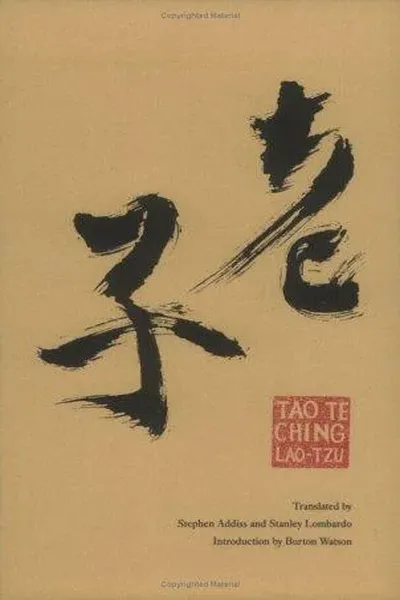





More Free Occult Philosophy Books
View all →