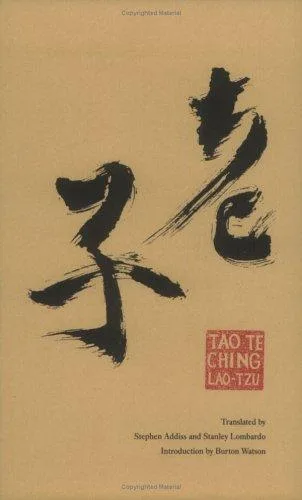
Tao te Ching
 77
77

Tao te Ching


Review by Ophelia Vance (Mystical Literature Reviewer) — The Tao Te Ching stands as a monumental work in the realm of mystical literature, offering esoteric insights that transcend cultural and temporal boundaries. Laozi's words are imbued with a profound sense of wisdom and hidden knowledge, making it an essential read for anyone interested in the deeper mysteries of existence. The text's strength lies in its ability to convey complex philosophical ideas through simple, yet deeply symbolic language. This makes it accessible to both beginners and seasoned scholars of Taoism. The intended audience includes spiritual seekers, philosophers, and those who are drawn to the mystical and esoteric traditions. The Tao Te Ching is a beacon of wisdom that continues to illuminate the path to inner peace and enlightenment.
Dào Dé Jīng (道德經)
- Attribution
- Traditionally attributed to Laozi (Lao Tzu)
- Date
- c. 4th century BCE (received form)
- Tradition
- Foundational text of Daoism (Taoism)
- Language
- Composed in Classical Chinese. Many English translations exist; James Legge (1891) is most commonly used for public-domain editions.
- Status
- Public domain: original is ancient; the Legge 1891 translation and other 19th-century English translations are public domain.
Note: Authorship is uncertain. Modern scholarship considers the text a compilation by multiple hands, likely reaching its received form between the 4th and 3rd centuries BCE.
See also: The Tao Te Ching is often paired with the Zhuangzi as one of the two principal classical Daoist works.
Editorial provenance record — bibliographic facts verified against reference works. How we curate ↗
📝 Description
77
Laozi wrote the Tao Te Ching around the 4th century BCE.
Attributed to Laozi, the Tao Te Ching is a foundational text of Taoism. Its verses explore the concept of the Tao, the ineffable principle that governs the universe. The book uses poetic language to discuss living in accordance with this natural order, advocating for simplicity, humility, and non-action (wu wei). It suggests that by aligning oneself with the Tao, one can achieve a state of balance and harmony in life. The text also touches upon governance, advising rulers to govern lightly and without imposing their will too strongly. It presents a worldview that values yielding over force and emptiness over fullness.
The Tao Te Ching has influenced Chinese thought for over two millennia, shaping not only philosophical discourse but also artistic expression and personal spiritual practice. Its aphoristic style invites repeated reading and contemplation, with different passages resonating with readers at various stages of their understanding. The work is often seen as a guide to cultivating inner stillness and wisdom amidst the complexities of the world.
The Tao Te Ching is a central text within the Taoist tradition, which emphasizes living in harmony with the Tao, the fundamental, unnamable principle of the cosmos. It is considered esoteric because its teachings often rely on paradox, intuition, and direct experience rather than purely rational argument. The text's emphasis on inner cultivation, detachment from worldly desires, and understanding the subtle workings of reality places it within a long lineage of mystical and contemplative practices aimed at achieving spiritual insight and alignment with the natural order.
💡 Why Read This Book?
The Tao Te Ching is a must-read for seekers of spiritual enlightenment, scholars of Eastern philosophy, and practitioners of Taoism. Its timeless wisdom offers a framework for understanding the interconnectedness of all things and the path to personal harmony. This ancient text provides deep insights into the nature of reality and the essence of the Tao, making it an invaluable resource for those exploring the mystical and esoteric dimensions of life.
⭐ Reader Reviews
Honest opinions from readers who have explored this book.
❓ Frequently Asked Questions
What is the Tao Te Ching about?
The Tao Te Ching explores the principles of Taoism, offering insights into the nature of the Tao, the path to inner peace, and the harmonious way of living.
Who is the author of the Tao Te Ching?
The Tao Te Ching is attributed to the ancient Chinese sage 老子 (Laozi), though the exact authorship is a subject of scholarly debate.
What is the significance of the Tao Te Ching in Chinese philosophy?
The Tao Te Ching is a foundational text in Chinese philosophy, providing deep insights into the nature of reality and the path to personal enlightenment.
How does the Tao Te Ching relate to modern spirituality?
The Tao Te Ching offers timeless wisdom that continues to resonate with modern seekers of spiritual enlightenment and practitioners of Taoism.
Can the Tao Te Ching be read for free online?
Yes, there are several translations of the Tao Te Ching available online for free reading, though the authenticity and quality may vary.
🔮 Key Themes & Symbolism
The Nature of the Tao
The Tao Te Ching studies the mysterious and elusive nature of the Tao, the eternal, unnamable force that underlies all existence. This theme explores the concept of the Tao as the source of all creation and the path to inner harmony and enlightenment.
Harmony and Balance
The text emphasizes the importance of living in harmony with the natural flow of the Tao. This theme discusses the principles of balance, simplicity, and non-action (wu wei), which are essential for achieving inner peace and spiritual fulfillment.
Symbolism and Hidden Knowledge
The Tao Te Ching is rich in symbolic language and hidden knowledge, inviting readers to uncover deeper meanings and esoteric truths. This theme explores the use of symbols and metaphors to convey profound philosophical and spiritual insights.
💡 Key Ideas
Editorial paraphrase of the work's core concepts — not direct quotes.
The Tao that can be told is not the eternal Tao.
This quote highlights the ineffable nature of the Tao, suggesting that true wisdom cannot be fully expressed in words.
The journey of a thousand miles begins with one step.
This passage emphasizes the importance of taking small, consistent steps toward personal growth and enlightenment.
Nature does not hurry, yet everything is accomplished.
This quote underscores the principle of wu wei, or effortless action, which is essential for living in harmony with the Tao.
The softest thing in the universe overcomes the hardest thing in the universe.
This passage illustrates the power of gentleness and flexibility, which can overcome rigidity and resistance.
He who knows others is wise; he who knows himself is enlightened.
This quote emphasizes the importance of self-knowledge and introspection in the journey toward spiritual enlightenment.
🌙 Esoteric Significance
Tradition
The Tao Te Ching is a core part of Taoist tradition, which emphasizes the pursuit of spiritual enlightenment and harmony with the natural order of the universe. This tradition includes practices such as meditation, qigong, and the study of classical texts.
Symbolism
Key symbols in the Tao Te Ching include the Tao itself, the yin-yang principle, and the concept of wu wei (non-action). These symbols represent the interconnectedness of all things and the path to inner harmony and enlightenment.
Modern Relevance
The Tao Te Ching continues to be relevant in modern times, offering timeless wisdom and spiritual insights for practitioners of Taoism and seekers of personal enlightenment. Its principles of balance, simplicity, and non-action are particularly valuable in today's fast-paced, stress-filled world.
👥 Who Should Read This Book
The Tao Te Ching is ideal for beginners seeking an introduction to Taoist philosophy, scholars of Eastern thought, spiritual seekers looking for deeper insights, and practitioners of Taoism. Beginners will appreciate the text's accessibility and profound wisdom, while scholars will find rich material for study and reflection. Spiritual seekers will benefit from its timeless insights into the nature of reality and the path to enlightenment. Practitioners of Taoism will find it an essential resource for deepening their understanding and practice.
📜 Historical Context
The Tao Te Ching is believed to have been written around the 6th century BCE, during a time of significant philosophical and cultural development in ancient China. This period saw the emergence of various schools of thought, including Confucianism, Legalism, and Taoism. The Tao Te Ching is attributed to the sage 老子 (Laozi), though the exact authorship is a subject of scholarly debate. The text was written in response to the social and political turmoil of the time, offering a vision of harmony, balance, and inner peace. It has since become a foundational work in Chinese philosophy and has had a profound influence on Eastern thought and spirituality.
📔 Journal Prompts
How does the concept of the Tao resonate with your understanding of reality?
In what ways can you practice the principle of wu wei in your daily life?
Reflect on a time when you experienced harmony and balance in your life.
What symbols or metaphors in the Tao Te Ching speak to you the most?
How can the wisdom of the Tao Te Ching help you navigate challenges in your life?
🗂️ Glossary
Tao
The eternal, unnamable force that underlies all existence, representing the natural flow of the universe.
Wu Wei
The principle of effortless action, or non-action, which involves aligning with the natural flow of the Tao.
Yin-Yang
The concept of balance and interdependence between opposing forces in the universe.
Laozi
The legendary sage attributed with the authorship of the Tao Te Ching, though the exact identity remains a subject of debate.
Taoism
A philosophical and spiritual tradition that emphasizes the pursuit of harmony with the Tao and the natural order of the universe.
This book appears in 1 collection
🔮 Readers Also Liked
Browse all →







More by 老子
All books →





From the “Astrology” Collection
View all →








More Free Astrology & Cosmology Books
View all →