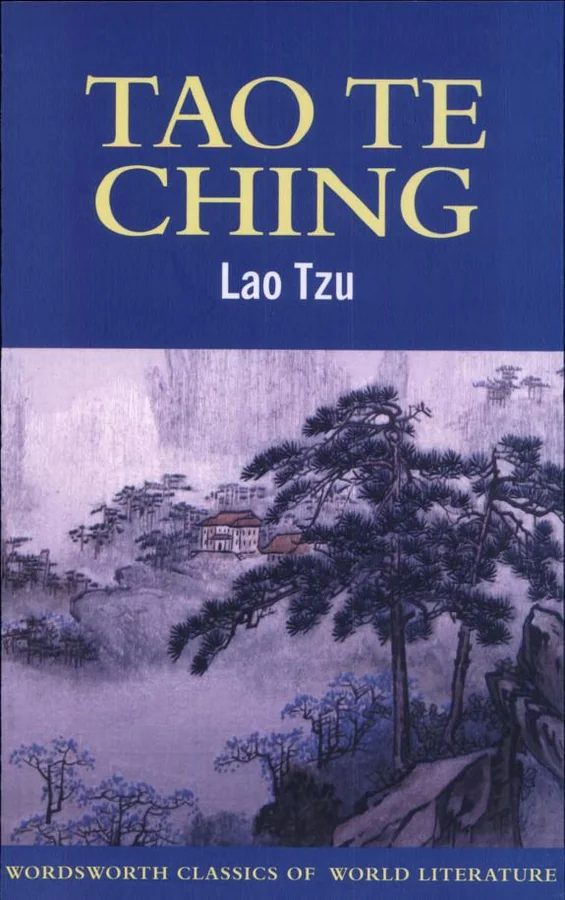
Tao Te Ching
 75
75

Tao Te Ching
The Tao Te Ching, a text whose genesis is shrouded in the mists of ancient China, offers a starkly different perspective on existence than is typically encountered in Western thought. Its enduring power lies in its elegant simplicity and its relentless focus on the natural order. The aphoristic style, while demanding contemplation, rewards the reader with a profound sense of interconnectedness. One particular strength is its consistent articulation of *wu wei*, the principle of acting without forcing, which, if heeded, could offer a radical recalibration of modern frantic living. However, its very abstraction can be a hurdle; the text rarely offers concrete examples of its principles in practice, leaving much to the interpreter's own experience and understanding. The passage on the sage who 'acts but does not rely on his own actions, achieves but does not take credit for his achievements' (Chapter 2) encapsulates this subtle yet powerful philosophy. The Tao Te Ching remains an essential text for anyone questioning the efficacy of conventional approaches to life and governance.
📝 Description
75
Composed around the 4th century BC, the Tao Te Ching is a core text of Taoism.
This collection of aphorisms and poetic verses, attributed to Laozi, forms a foundational text for Taoism. It emerged from China's Spring and Autumn period, a time of considerable social and political change. The text articulates principles that contrast with the more structured approaches of other contemporary schools of thought.
The Tao Te Ching addresses the nature of existence and the cosmos through concepts like the Tao, often understood as 'the Way,' the ineffable source of all things. It also details 'wu wei,' or effortless action aligned with natural flow, and the interplay of Yin and Yang, the universe's complementary forces. The book advocates for a way of life guided by natural principles and non-interference in governance.
As a central text for Taoism, the Tao Te Ching offers a perspective on the universe that emphasizes natural order and effortless alignment. It contrasts with more anthropocentric or ritualistic traditions, suggesting a return to a primordial state of harmony. The concepts of the Tao and wu wei provide a framework for understanding existence not through active striving, but through receptivity and yielding. This approach aligns with certain contemplative and mystical traditions that seek direct experience of underlying reality.
💡 Why Read This Book?
• Gain a framework for understanding natural law through the concept of the Tao, learning how to align personal actions with the cosmic flow as described in the text's early chapters. • Explore the principle of *wu wei* (non-action), understanding how effortless action, as advocated throughout the book, can lead to greater effectiveness and reduced conflict. • Develop a nuanced perspective on leadership and societal harmony by examining the text's proposals for governance based on yielding and simplicity, particularly as presented in chapters concerning the wise ruler.
⭐ Reader Reviews
Honest opinions from readers who have explored this book.
❓ Frequently Asked Questions
What is the earliest approximate date for the Tao Te Ching?
Scholarly consensus generally places the composition of the Tao Te Ching around the 4th century BC, though some estimates extend its origins further back into the Spring and Autumn period of ancient China.
Who is traditionally credited as the author of the Tao Te Ching?
The text is traditionally attributed to Laozi (also spelled Lao Tzu), a philosopher and sage who is considered a central figure in Taoism, though his historical existence is debated.
What does the concept of 'Tao' refer to in the Tao Te Ching?
The Tao, often translated as 'the Way,' is the ineffable, fundamental principle and source of all existence. It is considered the natural order of the universe, beyond human comprehension or description.
What is the meaning of 'wu wei' as presented in the Tao Te Ching?
'Wu wei' translates to 'non-action' or 'effortless action.' It signifies acting in accordance with the natural flow of the Tao, without forcing or striving, leading to a state of spontaneous harmony.
How does the Tao Te Ching contrast with Confucianism?
While Confucianism emphasizes social hierarchy, ritual, and active moral cultivation, the Tao Te Ching advocates for simplicity, naturalness, and non-interference (*wu wei*), offering a complementary, often counter-cultural, perspective.
Is the Tao Te Ching considered a religious or philosophical text?
It is both. The Tao Te Ching is a foundational text for Taoism, a tradition with religious and philosophical dimensions. Its teachings on the Tao and living in harmony have profound spiritual implications.
🔮 Key Themes & Symbolism
The Nature of the Tao
The Tao Te Ching posits the Tao as the ultimate reality, the unnamable source and guiding principle of all existence. It is described as formless, eternal, and all-pervading, yet it gives birth to the 'ten thousand things.' Understanding the Tao involves recognizing its subtle, omnipresent influence and aligning oneself with its natural, spontaneous flow. This concept moves beyond anthropocentric views, suggesting a cosmic order that operates independently of human will or design, forming the bedrock of Taoist cosmology and ethics.
Wu Wei: Effortless Action
Central to the text is the principle of *wu wei*, often translated as 'non-action' or 'effortless action.' This does not imply passivity but rather a mode of action that is in harmony with the natural course of things, free from excessive striving, ego, or forced intervention. The text suggests that by acting in accordance with the Tao, one can achieve more with less effort, mirroring the natural processes of the universe. This concept is applied to personal conduct, governance, and understanding the world.
Simplicity and Naturalness
A recurring theme is the virtue of returning to simplicity and naturalness, rejecting artificiality, excessive desires, and societal conventions that obscure one's innate connection to the Tao. The text often contrasts the wisdom of the sage, who lives in accordance with nature, with the folly of those who pursue superficial knowledge or power. This emphasis on naturalness extends to governance, advocating for minimal intervention and allowing things to unfold organically, as suggested in its discussions on ideal leadership.
Yin and Yang Balance
While not always explicitly named as 'Yin and Yang' in the earliest strata, the text profoundly explores the dynamic interplay of complementary opposites that constitute reality. Concepts like hardness and softness, movement and stillness, assertion and yielding are presented as interdependent forces. The ideal is not to favor one over the other but to understand their constant interplay and to embrace the yielding, receptive quality (often associated with Yin) as a source of strength and resilience, as seen in its metaphors of water.
💬 Memorable Quotes
Direct passages from the work, attributed to the author.
“The Tao that can be told is not the eternal Tao. The name that can be named is not the eternal name.”
— This opening statement highlights the ineffable nature of the fundamental principle of existence. The Tao transcends human language and conceptualization, suggesting that true understanding comes not from definition but from direct experience and intuitive apprehension.
“To know does not require seeing; to hold does not require possession; to be does not require striving.”
— This aphorism expresses the Taoist ideal of non-attachment and effortless being. True knowledge, control, and existence are achieved not through active assertion or acquisition, but through a receptive, non-striving state aligned with the natural order.
“The sage does not accumulate. The more he serves others, the more he has. The more he gives to others, the more he possesses.”
— This verse articulates the paradox of *wu wei* in practice. Generosity and service, when undertaken without expectation or ego, paradoxically lead to greater fulfillment and abundance, demonstrating that true wealth lies in giving, not hoarding.
“Nature does not hurry, yet everything is accomplished.”
— This observation beautifully illustrates the principle of *wu wei* through the example of the natural world. It suggests that processes unfold optimally when allowed to proceed at their own pace, without artificial acceleration or external force.
💡 Key Ideas
Editorial paraphrase of the work's core concepts — not direct quotes.
When people see some things as beautiful, other things acquire ugliness. When people see some things as good, other things acquire badness.
This passage speaks to the relativity of human judgments and the artificiality of distinctions. By creating categories and preferences, humanity imposes a subjective order that obscures the underlying unity and natural balance of the Tao.
🌙 Esoteric Significance
Tradition
While deeply rooted in Chinese indigenous philosophy, the Tao Te Ching holds significant weight within various esoteric traditions globally. Its emphasis on an ineffable, ultimate principle (the Tao) and the cultivation of inner harmony through natural means aligns with mystical and contemplative paths across cultures. It functions as a key text for those exploring non-dualistic philosophies and universal principles of cosmic order, often studied alongside Hermetic texts or Gnostic scriptures for comparative insights into ultimate reality.
Symbolism
The text frequently employs natural imagery as symbolic vehicles for profound truths. Water, for instance, symbolizes the ideal state: soft, yielding, yet powerful enough to wear away stone, embodying *wu wei* and resilience. The 'uncarved block' (*pu*) represents original, unadulterated nature, the state of simplicity and potentiality before societal conditioning. Mountains and valleys symbolize the balance of opposites, the perceived solidity versus the essential emptiness that allows for function.
Modern Relevance
Contemporary thinkers and practitioners in fields ranging from psychology (e.g., the concept of flow) to leadership studies (e.g., servant leadership, non-interventionist management) draw inspiration from the Tao Te Ching's principles. Practices like mindfulness, meditation, and certain martial arts echo its emphasis on inner stillness and effortless movement. Its critique of societal artifice and pursuit of external validation continues to resonate with those seeking authenticity and a more balanced, less consumer-driven existence.
👥 Who Should Read This Book
• Students of Eastern philosophies, particularly Taoism and its historical development, seeking foundational texts that offer a different cosmological and ethical perspective from Western traditions. • Seekers of contemplative practices and personal development who are interested in concepts like *wu wei* and aligning with natural rhythms for inner peace and effective living. • Scholars of comparative religion and political theory interested in ancient governance models and alternative ethical frameworks that prioritize natural order over imposed structure.
📜 Historical Context
The Tao Te Ching emerged during China's Spring and Autumn period (771–476 BC), a time of intense political fragmentation and intellectual ferment known as the Hundred Schools of Thought. Amidst the decline of the Zhou Dynasty and constant warfare, various philosophies arose to address the era's chaos. Laozi, its attributed author, offered a radical alternative to the prevailing social and ethical doctrines, particularly Confucianism. While Confucianism emphasized ritual, hierarchy, and active moral cultivation, Taoism, as presented in the Tao Te Ching, advocated for a return to naturalness, simplicity, and *wu wei* (effortless action). This philosophical divergence provided a critical counterpoint, questioning the efficacy of human intervention and proposing a path of harmony with the underlying cosmic order. The text's ideas, though initially perhaps circulating orally or in scattered form, gained significant traction, influencing subsequent thinkers like Zhuangzi and shaping a distinct tradition within Chinese thought.
📔 Journal Prompts
The Tao's ineffability: Reflect on aspects of existence that defy simple description.
The paradox of *wu wei*: Consider a situation where yielding achieved more than forceful action.
The 'uncarved block' (*pu*): Explore your own innate qualities before external conditioning.
The sage's non-accumulation: Examine the relationship between giving and possessing in your life.
The strength of water: How can receptivity and softness be sources of power?
🗂️ Glossary
Tao (Dao)
The fundamental, ineffable principle of the universe; the Way. It is the source from which all things arise and the underlying order governing existence, beyond human comprehension or definition.
Wu Wei
Literally 'non-action' or 'effortless action.' It signifies acting in accordance with the natural flow of the Tao, without excessive striving, force, or artificiality. It is spontaneous, effective action aligned with cosmic principles.
De (Te)
Often translated as 'virtue,' 'power,' or 'integrity.' It refers to the manifestation of the Tao within individuals and phenomena; the inherent quality or potential that arises from being aligned with the Tao.
Pu
The 'uncarved block.' It symbolizes original, natural simplicity, the unadulterated state of being before societal conditioning and artificial distinctions obscure one's innate connection to the Tao.
Yin and Yang
Complementary, interdependent forces or principles that govern the universe. Yin typically represents qualities like darkness, passivity, and femininity, while Yang represents light, activity, and masculinity. Their dynamic balance is essential for harmony.
The Ten Thousand Things
A common Taoist expression referring to the multiplicity of all phenomena, creatures, and objects in the manifest world, all of which arise from and are sustained by the Tao.
Sage
An enlightened individual who understands and lives in accordance with the Tao. The sage embodies principles like *wu wei*, simplicity, and humility, often serving as a model for ideal conduct and governance.
This book appears in 1 collection
🔮 Readers Also Liked
Browse all →







From the “Taoism” Collection
View all →






More Free Occult Philosophy Books
View all →