Tan Tien Chi Kung
 76
76

Tan Tien Chi Kung
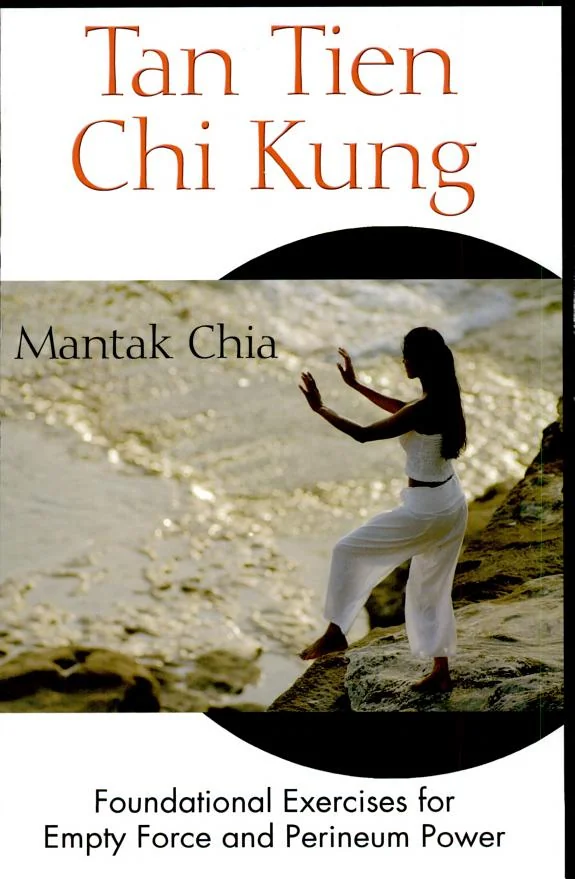
Mantak Chia's "Tan Tien Chi Kung" offers a systematic approach to cultivating the body's core energy, a subject often shrouded in mystique. The strength of this text lies in its clear, step-by-step instruction for fundamental exercises, making complex energetic principles accessible. Chia's emphasis on the lower Dan Tian as the seat of power provides a tangible focus for practitioners. However, the book could benefit from more detailed explanations of the physiological and energetic shifts that occur during practice, moving beyond mere instruction to deeper experiential guidance. A particularly illustrative section involves the "Iron Shirt" exercises, which demonstrate how cultivating the Tan Tien directly impacts physical resilience. Ultimately, "Tan Tien Chi Kung" serves as a solid, albeit introductory, manual for those beginning their journey into Taoist internal arts.
📝 Description
76
Mantak Chia's 1990 book details methods for cultivating internal energy at the body's primary energetic center.
Tan Tien Chi Kung offers a direct approach to developing internal power through the cultivation of the lower dan tian. Mantak Chia, a prominent figure in Taoist internal arts, lays out specific exercises and meditations. These practices aim to strengthen the physical body, increase vitality, and promote mental calm. The book is useful for those interested in qigong, internal martial arts, or Taoist energetic practices. It provides a solid basis for anyone looking to build their energy work for health, spiritual growth, or martial applications.
The techniques presented draw from ancient Chinese Taoist traditions. Chia's work appeared during a time of growing global interest in Eastern contemplative practices. These disciplines were often interpreted through Western scientific or psychological perspectives. The core idea revolves around the dan tian, described as a reservoir for vital energy in the lower abdomen. The book explains how to gather, store, and move Qi (energy) through this center, affecting overall physical and mental health.
This book is situated within the Taoist Neidan (internal alchemy) tradition. Neidan focuses on cultivating the body's vital energies for health, longevity, and spiritual transformation. The concept of the dan tian, or elixir field, is central to this practice, serving as a focal point for condensing and refining Qi. Chia's methods align with traditional Taoist approaches that utilize breathwork, movement, and focused intention to harmonize the body's energetic system.
💡 Why Read This Book?
• You will learn specific breathing techniques and postures for gathering and anchoring Qi in the lower abdomen, directly from Mantak Chia's detailed instructions, which go beyond general meditation. • You will gain practical exercises, such as those for strengthening the "Iron Shirt" (as mentioned in the text), to build internal power and resilience that can be applied to daily life. • You will understand the foundational role of the Tan Tien as a central energy hub in Taoist practice, providing a concrete focus for energy cultivation absent in many broader wellness books.
⭐ Reader Reviews
Honest opinions from readers who have explored this book.
❓ Frequently Asked Questions
What is the primary focus of Mantak Chia's "Tan Tien Chi Kung"?
The book's primary focus is on cultivating the body's vital energy, or Qi, by concentrating on the lower abdominal energy center known as the Tan Tien, a core concept in Taoist practice.
When was "Tan Tien Chi Kung" first published?
Mantak Chia's "Tan Tien Chi Kung" was first published in 2004, making it a relatively modern presentation of ancient Taoist energetic principles.
Are the exercises in "Tan Tien Chi Kung" suitable for beginners?
Yes, the book is structured to guide beginners through fundamental exercises for developing the Tan Tien, offering a foundational approach to internal energy cultivation.
What are the benefits of practicing Tan Tien Chi Kung according to the book?
Practicing Tan Tien Chi Kung aims to increase vitality, strengthen the body, improve mental clarity, and foster emotional balance by developing the core energy center.
How does "Tan Tien Chi Kung" relate to other forms of Qigong?
While sharing roots with general Qigong, this book specifically emphasizes the development and utilization of the Tan Tien as the primary locus of energy cultivation, offering a focused curriculum.
Who is Mantak Chia?
Mantak Chia is a renowned Taoist master and author who has popularized Taoist internal arts, including Chi Kung and Tai Chi, for a global audience since the late 20th century.
🔮 Key Themes & Symbolism
The Tan Tien as Energy Hub
The central thesis of "Tan Tien Chi Kung" is the identification and cultivation of the lower Dan Tian, conceptualized as the primary reservoir and generator of vital energy (Qi). Mantak Chia details specific methods for gathering, condensing, and circulating this energy, positing that a strong Tan Tien is foundational for physical health, mental acuity, and spiritual development within Taoist energetics. The work instructs practitioners on how to develop a palpable sense of this energy center, moving beyond abstract notions to embodied experience.
Energetic Circulation and Health
This work elaborates on the Taoist understanding of Qi flow as intrinsically linked to physical and emotional well-being. "Tan Tien Chi Kung" provides techniques, such as specific breathing patterns and movement sequences, designed to facilitate the smooth and potent circulation of energy throughout the body. By strengthening the energetic channels originating from the Tan Tien, practitioners are guided to clear blockages, enhance organ function, and promote a state of internal harmony and vitality, as understood within traditional Chinese medicine principles.
Foundations for Internal Arts
Mantak Chia presents "Tan Tien Chi Kung" as a prerequisite for more advanced practices in Taoist internal arts, including martial arts and advanced Qigong forms. The book emphasizes that a robust Tan Tien provides the necessary grounding, power, and energetic integrity for techniques requiring internal force generation and sophisticated energy manipulation. This foundational aspect is crucial for practitioners seeking to develop profound internal strength and control, as taught in lineages originating from China.
Mind-Body Integration
The practices outlined in "Tan Tien Chi Kung" inherently foster a deep connection between the mind and body. By focusing attention (Yi) on the Tan Tien and coordinating it with breath and physical movement, practitioners cultivate a unified state of awareness. This integration is presented not merely as a psychological phenomenon but as an energetic reality, leading to enhanced self-awareness, emotional regulation, and a more grounded presence in the physical world, aligning with holistic health paradigms.
💬 Memorable Quotes
Direct passages from the work, attributed to the author.
“The Tan Tien is the furnace where Qi is refined.”
— This statement highlights the active, transformative role of the Tan Tien. It's not just a storage unit but a dynamic center where raw energy is processed, condensed, and made potent for use by the body and spirit.
“Breath is the bridge between the physical and energetic realms.”
— This interpretation underscores the function of breathwork within the practice. It acts as the crucial link, allowing conscious direction and manipulation of Qi, connecting our tangible physical form to the subtler energetic body.
“Gathering energy begins with focused intention.”
— This emphasizes the mental component of energy cultivation. The book implies that directing one's awareness and will towards the Tan Tien is the initial and essential step in accumulating vital force.
“The practice strengthens the root.”
— This refers to the grounding effect of cultivating the Tan Tien. A strong 'root' provides stability, resilience, and a secure energetic foundation, much like the roots of a tree anchor it firmly.
💡 Key Ideas
Editorial paraphrase of the work's core concepts — not direct quotes.
When the Tan Tien is strong, the whole body is strong.
This paraphrased concept emphasizes the central importance of the lower abdominal energy center. It suggests that cultivating this core energy source has a cascading positive effect on overall physical health and resilience.
🌙 Esoteric Significance
Tradition
This work is firmly rooted in the Taoist tradition, specifically drawing from internal alchemy (Neidan) and medical Qigong lineages. It departs from purely philosophical Taoism by offering highly detailed, practical exercises for cultivating and manipulating Qi. Within this tradition, the focus on the Tan Tien as the primary energetic center aligns with core Taoist cosmology and physiology, which views this area as the crucible for generating and storing vital essence.
Symbolism
The primary symbol is the Tan Tien itself, representing the body's energetic core, fertility, and the seat of consciousness. Another key motif is the circulation of Qi, often visualized as a flow or stream, symbolizing vitality, health, and the interconnectedness of all bodily systems. The concept of 'condensing' Qi also acts symbolically, representing the refinement and strengthening of one's vital force into a potent, usable energy.
Modern Relevance
Mantak Chia's approach to Tan Tien cultivation has significantly influenced contemporary holistic health, somatic practices, and certain martial arts lineages. Modern practitioners of stress reduction, energy healing modalities, and even some forms of embodied psychotherapy draw upon the principles of focused intention, breathwork, and somatic awareness that Chia systematized. His work remains a touchstone for those seeking a practical, embodied understanding of internal energy cultivation outside of traditional Asian contexts.
👥 Who Should Read This Book
• Individuals new to energy work seeking a clear, foundational practice rooted in Taoist principles will find "Tan Tien Chi Kung" an accessible entry point. • Practitioners of martial arts, particularly internal styles, looking to deepen their understanding of power generation and grounding will benefit from Chia's emphasis on the Tan Tien. • Those interested in holistic health and cultivating vitality through mind-body integration will discover practical exercises for enhancing physical resilience and mental clarity.
📜 Historical Context
Mantak Chia's "Tan Tien Chi Kung," published in 2004, arrived during a period of escalating global interest in Eastern contemplative practices, particularly Qigong and Taoist internal arts. This era saw a surge in Westerners seeking alternatives to conventional wellness and spiritual paths. Chia's work drew heavily from ancient Taoist traditions, which have roots stretching back millennia, but presented them in a format accessible to a modern, international audience. Unlike purely philosophical or meditative texts, his approach was highly pragmatic and exercise-oriented. During this time, authors like Stephen Mitchell were also translating Taoist classics, making texts like the Tao Te Ching more widely available, though often with a more literary rather than practical energetic focus. Chia's method, emphasizing concrete physical exercises for energy cultivation, carved out a distinct niche, differentiating itself from more esoteric or scholarly interpretations of Taoism and positioning itself as a direct path to cultivating vital force.
📔 Journal Prompts
The sensation of energy in the lower abdomen after practicing the gathering exercises.
How the focus on the Tan Tien influences daily awareness.
The relationship between breath control and the feeling of internal power.
The integration of physical posture and energetic cultivation.
Identifying blockages in Qi flow and potential release through practice.
🗂️ Glossary
Tan Tien
A vital energy center located in the lower abdomen, considered the reservoir and generator of Qi (vital energy) in Taoist traditions. It is central to internal cultivation practices.
Qi (Chi)
The fundamental life force or vital energy believed to permeate all things in the universe. In the body, its circulation is essential for health and vitality.
Qigong
A system of coordinated body posture, movement, breathing, and meditation used for health, spirituality, and martial arts training. 'Chi Kung' is an older romanization.
Lower Dantian
Specifically refers to the primary energetic center located about three finger-widths below the navel and two finger-widths inward, considered the seat of vital energy.
Internal Alchemy (Neidan)
A Taoist practice that uses the body's own energies, breath, and mind to cultivate spiritual development and immortality, often metaphorically described using chemical alchemy terms.
Iron Shirt
A type of Qigong or martial arts conditioning practice aimed at strengthening the body, particularly the torso, to withstand blows by channeling and storing Qi in the Tan Tien.
Yi
Often translated as 'intention' or 'mind.' In Qigong, Yi is crucial for directing Qi, guiding awareness, and focusing the mind during practice.
🔮 Readers Also Liked
Browse all →







More by Mantak Chia
All books →


More Free Occult Philosophy Books
View all →