Law of Attraction
 77
77

Law of Attraction
Michael J. Losier's "Law of Attraction" offers a straightforward, almost instructional guide to a concept that often gets shrouded in mystique. Its strength lies in its directness; Losier avoids overly esoteric language, presenting the Law of Attraction as a logical, albeit metaphysical, process. He effectively dissects the mechanics of thought and emotion, providing a clear three-step process: Ask, Believe, Receive. This methodical approach makes the abstract tangible for the reader. However, the book's primary limitation is its lack of depth when addressing the psychological complexities that underpin belief systems. While it acknowledges limiting beliefs, it often suggests overcoming them with mere affirmation, which can feel insufficient for deeply ingrained patterns. The section on 'emotional vibrational alignment' is particularly illustrative of its practical, yet sometimes superficial, approach. Losier’s work is a functional manual, not a philosophical deep dive.
It serves as a solid, accessible introduction for those new to the principle.
📝 Description
77
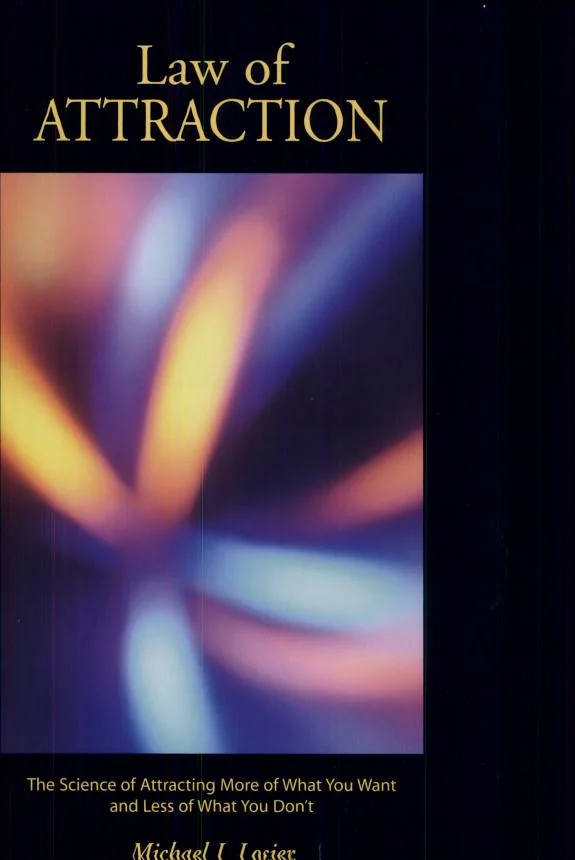
Michael J. Losier published "Law of Attraction" in 2006, offering a practical guide to manifesting desires.
Michael J. Losier's "Law of Attraction" details a method for aligning thoughts, beliefs, and emotions with desired outcomes. The book explains that internal states directly influence external circumstances, proposing that a consistent focus on what one wants, rather than what is lacking, is fundamental to creation.
This work is intended for individuals who feel limited by their present situations and believe they lack agency over their lives. It provides readers with concrete steps to improve their personal and professional lives, aiming for self-empowerment through a structured approach. Losier breaks down the process into clear actions, stressing the importance of knowing what you want, believing it is achievable, and being open to receiving it.
Published in 2006, "Law of Attraction" appeared during a period of renewed interest in New Thought and practical spiritual philosophies. This movement, which traces roots to 19th-century thinkers like Phineas Quimby, emphasizes the mind's power to shape physical reality. Losier's book fits within this lineage, offering a modern interpretation of principles found in earlier texts on mind-body connection and affirmative prayer, aligning with a broader cultural trend that explored self-help and personal manifestation.
💡 Why Read This Book?
• You will learn a concrete three-step process (Ask, Believe, Receive) to actively engage with your desires, a method clearly outlined in Losier's 2006 publication, offering a structured approach to manifestation not found in more theoretical texts. • You will gain practical techniques for identifying and reframing limiting beliefs that hinder your progress, a core component of Losier's strategy for achieving vibrational alignment. • You will feel empowered to consciously direct your thoughts and emotions, understanding how they create your reality, a principle central to the book's 2006 release and its practical application.
⭐ Reader Reviews
Honest opinions from readers who have explored this book.
❓ Frequently Asked Questions
What is the core principle of Michael J. Losier's Law of Attraction?
The core principle is that 'like attracts like.' Your dominant thoughts, beliefs, and emotions attract similar experiences and circumstances into your life. Losier, in his 2006 book, explains this as a dynamic process of sending out energetic signals.
How does Losier suggest one actually 'attract' things?
Losier outlines a three-step process: Ask (clearly define what you want), Believe (know that it is possible and you deserve it), and Receive (be open to accepting it). This actionable framework is a key feature of his 2006 work.
What are 'limiting beliefs' according to this book?
Limiting beliefs are negative or restrictive thoughts and assumptions that prevent you from achieving your desires. Losier's book, first published in 2006, dedicates significant attention to identifying these and offers strategies to overcome them.
Is this book suitable for beginners in metaphysics?
Yes, "Law of Attraction" by Michael J. Losier is highly suitable for beginners. Published in 2006, it breaks down complex metaphysical concepts into simple, actionable steps, making it accessible and easy to follow.
What is 'vibrational alignment' in the context of the Law of Attraction?
Vibrational alignment refers to the state where your emotional and energetic state matches the frequency of your desires. Losier's 2006 book explains that to attract something, you must feel as though you already have it.
When was Michael J. Losier's Law of Attraction first published?
Michael J. Losier's "Law of Attraction" was first published in 2006. This date places it within a significant wave of popular literature exploring manifestation principles in the early 21st century.
🔮 Key Themes & Symbolism
The Mechanics of Attraction
This work meticulously breaks down the Law of Attraction into an understandable, operational process. It moves beyond abstract notions to offer concrete techniques for harnessing one's thoughts and feelings. Losier emphasizes that attraction is not passive but an active engagement with the universe. The core idea is that by consciously directing your internal state—your beliefs, focus, and emotional output—you can influence the external world, drawing desired experiences and outcomes to you. This practical approach, detailed in the 2006 publication, aims to explain the process for the everyday individual seeking tangible results in their life.
Emotional and Energetic Resonance
A central theme is the concept of vibrational alignment. Losier explains that everything, including our thoughts and emotions, operates on a specific frequency. To attract what you desire, your own energetic signature must match that of your desire. This involves cultivating positive emotions and maintaining a belief system that supports your goals. The book provides exercises to help readers identify and shift their emotional states, moving from frequencies of lack or doubt to those of abundance and certainty, thereby creating a resonant field for their aspirations.
Overcoming Obstacles to Manifestation
Losier directly addresses the common stumbling blocks that prevent individuals from successfully applying the Law of Attraction. Chief among these are limiting beliefs and subconscious resistance. The book guides readers through identifying these internal barriers, often rooted in past experiences or societal conditioning. It offers practical strategies for challenging and transforming these negative thought patterns, positing that clearing these energetic blockages is crucial for allowing desired outcomes to manifest. This focus on practical self-correction is a hallmark of the 2006 edition.
Conscious Creation of Reality
The overarching message is one of empowerment and personal agency. Losier frames the Law of Attraction not as a mystical force operating independently, but as a principle that individuals can learn to consciously utilize. The book encourages readers to take responsibility for their thoughts and feelings, understanding them as the primary tools for co-creating their reality. This perspective shifts the focus from victimhood to active participation, providing a framework for individuals to become architects of their own experiences through focused intention and emotional clarity.
💬 Memorable Quotes
Direct passages from the work, attributed to the author.
“Your beliefs are the thoughts that you think over and over again.”
— This statement simplifies the formation of beliefs, framing them as habitual thought patterns. It implies that by consciously choosing and repeating desired thoughts, one can actively cultivate new, more supportive beliefs, thus influencing their reality.
“It is important to know what you want.”
— This highlights the foundational step in the attraction process: clarity of intention. Without a precise understanding of one's desires, the universe (or subconscious mind) cannot effectively respond, making focused desire a prerequisite for manifestation.
“When you are in alignment with your desires, you will feel good.”
— This connects emotional state directly to the process of attraction. Feeling good is presented not just as a byproduct but as an indicator that one is energetically aligned with what they wish to attract, signifying successful vibrational resonance.
“The Law of Attraction is always working, whether you understand it or not.”
— This emphasizes the universality and constant operation of the principle. It suggests that our current life circumstances are a direct result of this ongoing process, encouraging readers to become aware and participate consciously rather than being passively subject to it.
“You must be willing to receive.”
— This addresses the crucial final step in Losier's process. It points out that even with clear asking and strong belief, receptivity is essential. Holding onto doubt, unworthiness, or fear can block the flow of what has been manifested.
🌙 Esoteric Significance
Tradition
While not strictly adhering to a single esoteric lineage, Losier's work draws heavily from the principles of New Thought, a 19th-century American religious movement with roots in Transcendentalism and Christian Science. New Thought emphasizes the power of the mind and spiritual consciousness to create physical reality. Losier adapts these ideas into a secular, practical framework, making them accessible outside traditional esoteric circles. His approach aligns with Hermetic principles concerning the mental nature of the universe ('The All is Mind'), but presents them without the dense symbolism or ritualistic practices common in older Hermetic traditions.
Symbolism
The work itself eschews overt symbolic language, focusing instead on practical application. However, the core concepts operate symbolically. 'Vibration' functions as a symbol for energetic state and frequency, representing the underlying 'stuff' of reality. 'Alignment' symbolizes harmony and congruence between one's inner state and outer goals. 'Receiving' can be seen as a symbol for openness and receptivity, akin to a vessel prepared to be filled, reflecting a willingness to accept the universe's bounty.
Modern Relevance
Losier's "Law of Attraction" continues to be highly relevant in contemporary self-help and personal development spheres. Its clear, actionable methodology appeals to individuals seeking practical tools for life improvement. The principles are echoed in modern mindfulness practices, positive psychology interventions, and the booming field of manifestation coaching. Thinkers and practitioners like Gabby Bernstein and Vishen Lakhiani of Mindvalley often reference or build upon the foundational concepts popularized by works like Losier's, demonstrating its enduring influence on how people approach goal-setting and personal transformation.
👥 Who Should Read This Book
• Individuals new to metaphysical concepts: Those unfamiliar with principles like manifestation or the power of thought will find Losier's 2006 book an accessible entry point due to its clear language and structured approach. • Goal-oriented individuals seeking practical methods: Readers who prefer actionable steps over abstract philosophy will appreciate the 'Ask, Believe, Receive' framework presented in the book. • Those feeling stuck or powerless: Individuals experiencing dissatisfaction with their current life circumstances and seeking a proactive method to effect change will find value in the empowerment offered.
📜 Historical Context
Michael J. Losier's "Law of Attraction" arrived in 2006, a period marked by burgeoning interest in self-help and New Thought philosophies. This era saw a significant cultural embrace of concepts related to positive thinking, manifestation, and the mind's power to shape reality. Losier's work emerged alongside prominent figures and texts, most notably Rhonda Byrne's "The Secret," which achieved massive global success around the same time, popularizing the Law of Attraction principle for a mainstream audience. While Byrne's "The Secret" focused on a more spiritual and documentary-style presentation, Losier offered a structured, step-by-step guide. This period also coincided with the rise of online forums and communities dedicated to these ideas, facilitating widespread discussion and practice. The reception was largely positive among those seeking personal development tools, though critics sometimes pointed to the simplification of complex psychological and philosophical issues, a critique also leveled against other popular works in the field like those by Esther and Jerry Hicks.
📔 Journal Prompts
The clarity of your Ask regarding a specific desire.
The nature of your Belief in achieving that desire.
Your willingness to Receive what you have asked for.
Identifying a Limiting Belief that hinders your progress.
The feeling of Emotional and Energetic Resonance with your goal.
🗂️ Glossary
Law of Attraction
The principle that like attracts like; dominant thoughts, feelings, and beliefs draw similar experiences into one's life. Losier presents it as a fundamental universal law.
Ask
The first step in Losier's process: clearly defining and articulating what one wants to manifest. Precision in desire is key.
Believe
The second step: cultivating the conviction that what you desire is possible and that you are worthy of receiving it. It involves aligning thoughts and emotions with the desire.
Receive
The third step: being open and willing to accept the manifestation of your desire. This involves releasing doubt and resistance.
Vibrational Alignment
The state where your energetic frequency matches the frequency of your desire. Achieved through positive emotions and beliefs, it facilitates attraction.
Limiting Beliefs
Negative or restrictive thoughts and assumptions that unconsciously block the manifestation of desires. Identifying and transforming these is crucial.
Emotional Guidance System
The idea that feelings serve as indicators of one's vibrational state. Positive emotions signal alignment, while negative emotions signal misalignment.
This book appears in 1 collection
🔮 Readers Also Liked
Browse all →









From the “Law of Attraction” Collection
View all →







More Free Occult Philosophy Books
View all →