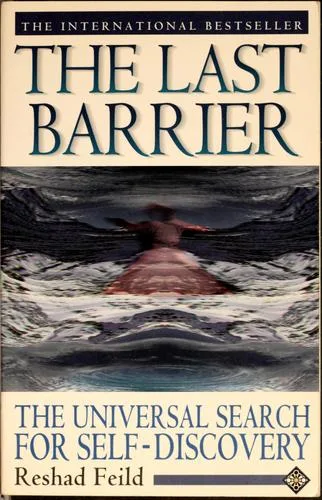
The last barrier
 77
77

The last barrier
Reshad Feild's 'The Last Barrier' is less a theoretical treatise and more a raw, unvarnished account of a soul's arduous ascent. The strength of the work lies in its unflinching honesty; Feild does not shy away from detailing his own failings and confusions as he encountered them. One particularly striking section recounts his struggles with attachment during his time in Sufi communities, illustrating the personal work required even within established esoteric orders. However, the narrative can sometimes feel repetitive, with certain spiritual lessons revisited through different experiences without significant new conceptual development. The book offers a valuable glimpse into the practical application of spiritual principles, though its dense personal focus might leave some readers yearning for broader philosophical engagement. It serves as a potent reminder that the path inward is rarely linear.
📝 Description
77
Reshad Feild's spiritual autobiography, 'The Last Barrier,' was first published in 1977.
'The Last Barrier' recounts Reshad Feild's personal spiritual quest, beginning with his early life and continuing through extensive travels. He details encounters with diverse spiritual teachers and traditions as he sought enlightenment. The book documents his experiences as he moved beyond conventional Western thought.
Feild's narrative focuses on the internal struggles and transformations that arise during a dedicated spiritual path. It speaks to those interested in the broader spiritual currents of the 20th century. Readers will find accounts of personal growth and the inherent difficulties encountered when pursuing spiritual realization.
Published in 1977, 'The Last Barrier' appeared during a time of widespread Western interest in Eastern philosophies and alternative spiritual practices. This interest grew from the counterculture movements of the previous decade, as many individuals searched for meaning outside established societal norms. Feild's work contributes to this ongoing exploration of consciousness and esoteric knowledge.
💡 Why Read This Book?
• Gain practical understanding of the ego's role in spiritual progress, as detailed in Feild's specific encounters with his own limitations. • Explore the concept of the 'last barrier' as a personal struggle for enlightenment, drawing parallels to Feild's own experiences with Sufi teachers. • Witness the challenges of integrating spiritual insights into daily life through Feild's candid reflections on his own journey and its difficulties.
⭐ Reader Reviews
Honest opinions from readers who have explored this book.
❓ Frequently Asked Questions
What is the primary focus of Reshad Feild's 'The Last Barrier'?
The book is primarily a spiritual autobiography detailing Reshad Feild's personal quest for enlightenment and his encounters with various spiritual traditions and teachers from the 1950s onward.
When was 'The Last Barrier' first published?
'The Last Barrier' was first published in 1977, a period when Western interest in Eastern spirituality and alternative paths was significant.
What esoteric traditions does Reshad Feild engage with in the book?
Feild's journey involves significant engagement with Sufism, particularly within the context of his spiritual development, alongside explorations of other esoteric and mystical paths.
What does the 'last barrier' metaphor represent in the book?
The 'last barrier' symbolizes the ultimate internal obstacles—often related to ego and attachment—that an individual must overcome to achieve spiritual realization or enlightenment.
Is 'The Last Barrier' a theoretical text or a personal narrative?
It is predominantly a personal narrative, offering a firsthand account of the author's spiritual experiences, struggles, and insights rather than abstract philosophical discourse.
Who might benefit most from reading 'The Last Barrier'?
Individuals interested in spiritual biographies, the challenges of the spiritual path, and the practical application of esoteric teachings in personal life would find this book beneficial.
🔮 Key Themes & Symbolism
The Ego's Resistance
Feild meticulously details how the ego, with its attachments and intellectual defenses, acts as the primary obstacle on the spiritual path. His narrative illustrates that even within disciplined esoteric practices, the subtle workings of the ego require constant vigilance and surrender. The book explores the internal battles fought to transcend self-importance and preconceived notions, which Feild identifies as the core of the 'last barrier' preventing true spiritual insight.
Surrender and Obedience
A recurring theme is the necessity of surrender to a higher will or guiding force, often embodied by spiritual teachers. Feild recounts instances where his own plans and desires were challenged by his mentors, leading to profound growth through obedience. This theme highlights the esoteric principle that true freedom is found not in self-will, but in aligning oneself with a greater cosmic order, a concept central to many mystical traditions.
The Nature of Spiritual Teachers
The book examines the complex role of the spiritual teacher (guru, sheikh) in guiding a disciple. Feild describes his interactions with various figures, emphasizing that teachers often act as mirrors, reflecting the disciple's own shortcomings and illusions. He portrays teachers not as infallible beings, but as catalysts for inner transformation, whose methods may appear harsh but are designed to break down ingrained ego structures.
Integration of the Sacred
Feild addresses the challenge of living a spiritually integrated life, moving beyond isolated mystical experiences to embodying sacred principles in everyday actions. The narrative traces his efforts to reconcile his profound spiritual encounters with the mundane realities of existence, suggesting that the 'last barrier' is overcome not in renunciation, but in the full embrace and transformation of worldly life.
💬 Memorable Quotes
Direct passages from the work, attributed to the author.
“True obedience is not servitude, but a yielding to a higher truth.”
— This interpretation emphasizes Feild's perspective that spiritual obedience is not about blind compliance, but about aligning one's will with a perceived divine or cosmic order for the sake of personal evolution.
“A teacher's role is to show you the door, but you must walk through it yourself.”
— This interpretation reflects Feild's understanding of the teacher-student dynamic, where guidance is provided, but the ultimate responsibility and effort for spiritual attainment lie with the individual.
💡 Key Ideas
Editorial paraphrase of the work's core concepts — not direct quotes.
The ego is the most subtle of veils.
This paraphrase highlights Feild's view that the self-centered nature of the ego is the most difficult and pervasive obstacle to spiritual realization, requiring deep self-awareness to penetrate.
The path inward is often marked by what we are forced to let go of.
This paraphrased concept underscores Feild's emphasis on detachment and renunciation as essential components of spiritual progress, suggesting that letting go is a primary mechanism of growth.
The greatest barrier is not external, but the illusion of separation within.
This paraphrase captures the core message of the 'last barrier,' suggesting that the final obstacle to enlightenment is the internal perception of separateness from the divine or from universal consciousness.
🌙 Esoteric Significance
Tradition
Feild's work is deeply rooted in the Sufi tradition, particularly its psychological and practical dimensions. It draws upon the lineage of masters who emphasize the inner transformation of the individual rather than purely external ritual or dogma. While presented as a personal journey, it engages with core Sufi concepts of ego dissolution, surrender, and the guidance of a spiritual teacher, aligning with esoteric Sufi paths that focus on the purification of the heart and the attainment of divine consciousness.
Symbolism
The titular 'Last Barrier' serves as a central symbol for the ego's final resistance to surrender and spiritual realization. Other significant motifs include the 'teacher' as a mirror reflecting the disciple's inner state, and the 'journey' itself, symbolizing the arduous, often non-linear process of inner transformation required to break through illusion and attain higher consciousness.
Modern Relevance
Contemporary spiritual seekers, particularly those interested in practical Sufism or mindful approaches to ego-reduction, find resonance in Feild's candid exploration of the spiritual path. His emphasis on personal integrity and the challenges of integrating spiritual truths into daily life speaks to modern practices of mindfulness, self-inquiry, and the search for authentic spiritual experience beyond rigid structures.
👥 Who Should Read This Book
• Individuals interested in spiritual biographies and the direct accounts of personal transformation on the esoteric path. • Students of Sufism seeking practical insights into the challenges of inner work and the role of the teacher. • Readers exploring the intersection of psychology and spirituality, particularly concerning the ego's role in personal growth.
📜 Historical Context
Reshad Feild’s 'The Last Barrier,' published in 1977, emerged during a fertile period for Western esoteric thought. The 1960s counterculture had opened doors to Eastern philosophies, meditation, and alternative spiritualities, creating a receptive audience for personal quest narratives. This era saw a proliferation of books exploring consciousness, mysticism, and non-Western religious traditions. Feild’s work sits alongside the writings of figures like Idries Shah, who also focused on Sufi teachings presented for a Western audience, and Paul Brunton, whose philosophical explorations of Eastern wisdom had paved the way for such introspective accounts. While the intellectual climate was largely accepting of spiritual inquiry, some more orthodox religious or academic circles viewed such personal testimonies with skepticism, preferring established theological or philosophical frameworks. The book’s emphasis on personal experience and direct spiritual realization reflected a broader shift away from institutionalized religion towards individual spiritual seeking.
📔 Journal Prompts
The concept of the 'last barrier' in your own life.
Reflections on moments of ego resistance encountered during spiritual practice.
Experiences with spiritual guidance and the role of teachers.
The practice of surrender in everyday decision-making.
Lessons learned from letting go of personal desires for a greater purpose.
🗂️ Glossary
Ego
In Feild's context, the ego refers to the sense of self that is self-centered, attached to personal desires and opinions, and acts as the primary obstacle to spiritual realization.
Sufism
A mystical dimension of Islam focused on direct experience of God through ascetic practices, meditation, and devotion. Feild engages with its practical, psychological teachings.
Spiritual Teacher
An individual who guides disciples on the spiritual path, often acting as a catalyst for self-discovery by reflecting the student's inner state and challenges.
Surrender
The act of yielding one's personal will and desires to a higher power or spiritual guidance, seen as crucial for overcoming egoic limitations.
Enlightenment
The ultimate state of spiritual realization, characterized by profound wisdom, compassion, and freedom from suffering and illusion.
Inner Work
The process of self-examination, purification, and transformation undertaken to achieve spiritual growth, often involving confronting one's own psychological patterns.
The Last Barrier
The final, most subtle obstacle preventing an individual from achieving full spiritual realization, typically identified as the ego's ultimate defense mechanisms.
🔮 Readers Also Liked
Browse all →








More by Reshad Feild
All books →





More Free Occult Philosophy Books
View all →