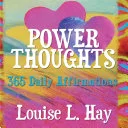
Power Thoughts
 78
78

Power Thoughts
Louise Hay's 'Power Thoughts' offers a structured, daily dose of positivity, a concept she championed throughout her prolific career. The book's strength lies in its sheer volume of affirmations—365 distinct statements, one for each day of the year—making it an accessible entry point for those new to affirmative practices. The thematic organization, covering health, prosperity, and relationships, provides a practical framework for targeted self-improvement. However, the sheer repetition of the affirmation format, while intentional, can feel somewhat undemanding for seasoned practitioners seeking deeper symbolic or philosophical exploration. A notable passage focuses on affirmations for prosperity, suggesting 'I am now in the process of releasing all my limitations, and I welcome abundance into my life.' While effective in its directness, it lacks the nuanced exploration of abundance found in more complex metaphysical texts. Ultimately, 'Power Thoughts' serves as a straightforward, practical tool for cultivating a more optimistic mindset through consistent, daily practice.
📝 Description
78
Louise Hay published 'Power Thoughts' in July 2005, offering 365 daily affirmations.
This book collects 365 affirmations, one for each day of the year, intended to promote positive self-talk and personal change. Louise Hay, a well-known figure in self-help, structured the affirmations thematically to guide readers toward desired results in areas like health, finances, and relationships. Each day presents a specific thought designed to cultivate a more positive outlook. The book aims to help individuals reframe their thinking and bring about positive changes in their lives. It is particularly suited for those who find value in daily, concise guidance and are interested in the practice of affirmations for self-healing and personal development. Readers familiar with Hay's direct and encouraging writing style will find this resource accessible.
Published in the mid-2000s, 'Power Thoughts' aligns with the New Thought movement's emphasis on the power of thought to shape reality. Louise Hay's work, building on earlier thinkers, focuses on the mind's role in well-being and healing. This approach suggests that conscious, positive mental states can influence physical and emotional outcomes. The book's structure, with daily affirmations, provides a practical method for individuals to actively engage with these principles in their everyday lives, fostering a sense of personal agency over their circumstances.
💡 Why Read This Book?
• You will learn to consciously plant seeds of positive thought, as demonstrated by the book's 365 daily affirmations, directly applying Louise Hay's core philosophy of mental cultivation. • You will feel empowered to actively shape your reality by understanding the concept of affirmations as akin to tending a garden, as explained in the original blurb. • You will gain a practical, daily method for focusing your intentions on specific life areas like health and prosperity, a core offering since its 2005 publication.
⭐ Reader Reviews
Honest opinions from readers who have explored this book.
❓ Frequently Asked Questions
When was Louise Hay's 'Power Thoughts' first published?
'Power Thoughts' by Louise Hay was first published on July 1, 2005, offering 365 daily affirmations to its readers.
What are the main themes covered in 'Power Thoughts'?
The book covers themes such as health, prosperity, and relationships, providing daily affirmations tailored to each area for personal growth.
How does Louise Hay describe the nature of affirmations in 'Power Thoughts'?
Hay describes every thought and word as an affirmation, likening them to planting seeds in a garden that, with care, lead to a more joyous life.
Is 'Power Thoughts' suitable for beginners in self-help?
Yes, its structure of 365 daily, concise affirmations makes it an accessible starting point for individuals new to positive self-talk and affirmation practices.
What is the core message of Louise Hay's 'Power Thoughts'?
The core message is that by consciously choosing positive affirmations, individuals can create a new, fulfilling life and cultivate daily joy.
What is the author's background related to this book?
Louise Hay was the best-selling author of 'You Can Heal Your Life' and a prominent figure in the self-help and New Thought movements.
🔮 Key Themes & Symbolism
Affirmations as Seeds
Hay presents affirmations not merely as words, but as potent seeds planted in the mind. The book's structure, with 365 daily affirmations, encourages a consistent practice akin to tending a garden. This metaphor emphasizes that with regular care and positive focus, these mental seeds will sprout and grow into tangible positive changes in one's life, fostering a more joyous existence over time.
Cultivating Inner Prosperity
A significant focus within 'Power Thoughts' is the theme of prosperity, viewed holistically. The affirmations aim to reprogram beliefs that hinder financial abundance and overall well-being. By encouraging readers to release limiting thoughts and embrace a mindset of welcome, the book guides them toward recognizing and attracting wealth and fulfillment, aligning inner states with outer circumstances.
The Power of Thought
At its heart, the book is a evidence of the author's belief in the absolute power of thought to shape reality. Hay asserts that every thought and word spoken is an affirmation, whether conscious or unconscious. 'Power Thoughts' provides the tools to make these affirmations conscious and positive, empowering individuals to take control of their mental landscape and thereby influence their life experiences.
Daily Practice for Joy
The book's core utility lies in its provision of a daily practice designed to enhance joy. By offering a specific affirmation for each day of the year, Hay provides a structured, accessible method for consistent self-reflection and positive reinforcement. This daily engagement is presented as the pathway to transforming one's life, making each subsequent day potentially more fulfilling than the last.
💬 Memorable Quotes
Direct passages from the work, attributed to the author.
“Every thought you think and every word you speak is an affirmation.”
— This foundational statement highlights Hay's central thesis: our internal and external dialogue continuously shapes our reality. It implies that even unconscious thoughts are actively creating our experiences, urging the reader to become more mindful of their mental and verbal expressions.
“So why not choose to use only positive affirmations to create a new and fulfilling life?”
— This rhetorical question directly challenges the reader to adopt a proactive stance. It frames the choice of positive affirmations not as an option, but as a logical step toward personal agency and the conscious creation of a desired future, emphasizing empowerment.
“An affirmation is like planting a seed.”
— This metaphor simplifies the process of affirmation, comparing it to gardening. It suggests that affirmations require nurturing and time to grow, implying that consistent effort will yield positive results, much like a gardener tending to their plants.
“Power Thoughts includes 365 daily affirmations, with topics including health, prosperity, frie”
— This is a factual statement about the book's content, indicating its structure and scope. It highlights the practical application of affirmations across essential life domains, promising a year's worth of guidance.
💡 Key Ideas
Editorial paraphrase of the work's core concepts — not direct quotes.
You’re always in the process of tending to your garden, and if you do so with care, you’ll find that each day becomes more joyous than the one before it.
Expanding on the garden metaphor, this quote emphasizes the continuous nature of self-cultivation. It links diligent attention to one's inner world ('tending your garden') directly to the outcome of increasing daily joy and fulfillment.
🌙 Esoteric Significance
Tradition
While not strictly adhering to a single esoteric lineage, Hay's work draws heavily from New Thought philosophy, which itself has roots in Transcendentalism and earlier metaphysical movements. It emphasizes the power of the mind to influence reality, a concept shared with Hermeticism's principle of mentalism ('The All is Mind'). Hay's approach focuses on practical application rather than complex ritual or arcane symbolism, making it a more psychologically-oriented interpretation of metaphysical principles accessible to a broad audience.
Symbolism
The primary symbol employed throughout 'Power Thoughts' is the garden, representing the mind. Affirmations are the seeds, and the individual is the gardener. This motif signifies the deliberate cultivation of one's inner landscape. Another implicit symbol is light or joy, representing the positive state to be achieved through this cultivation. The act of speaking affirmations can also be seen as a form of sonic alchemy, transforming vibrational states through spoken intent.
Modern Relevance
Hay's emphasis on affirmations and the mind-body connection continues to influence contemporary wellness culture, self-help literature, and therapeutic practices. Modern mindfulness, positive psychology interventions, and even certain coaching methodologies echo her core tenets. Thinkers and practitioners in fields like cognitive behavioral therapy (CBT), though differing in theoretical underpinnings, also explore the impact of thought patterns on emotional states, demonstrating the enduring relevance of Hay's foundational ideas.
👥 Who Should Read This Book
• Individuals new to self-affirmation practices seeking a structured daily guide to cultivate positivity. • Readers interested in Louise Hay's previous works, like 'You Can Heal Your Life,' who wish to engage with her core principles in a concise, daily format. • Those exploring metaphysical concepts related to the power of thought and mind-body connection who appreciate practical, accessible applications.
📜 Historical Context
Published in July 2005, Louise Hay's 'Power Thoughts' arrived in a landscape where the self-help genre was well-established, having been significantly shaped by figures like Norman Vincent Peale in the mid-20th century. Hay herself gained prominence with 'You Can Heal Your Life' in 1984, a period marked by the rise of New Age spirituality and a growing interest in mind-body connections. 'Power Thoughts' continued this trajectory, offering accessible tools for personal empowerment through affirmations. The early 2000s saw a continued embrace of positive psychology principles, even if not always framed in academic terms. While Hay's work was widely popular, it existed alongside more therapeutically-grounded approaches and was sometimes viewed critically by the mainstream psychological establishment for its direct causal claims between thought and physical well-being. Nonetheless, its longevity speaks to a persistent cultural demand for accessible self-improvement strategies.
📔 Journal Prompts
Reflect on the 'garden' of your mind: which affirmations from 'Power Thoughts' would you plant today?
Consider the concept of affirmations as seeds; how have your 'unconscious' affirmations manifested recently?
Analyze the affirmations related to 'prosperity' in this book; what new beliefs might they help you cultivate?
How does the idea of 'tending to your garden' with care apply to your daily affirmations practice?
What specific thought patterns, related to health or relationships, does this book encourage you to reframe?
🗂️ Glossary
Affirmation
A positive statement used to challenge or overcome self-sabotaging and negative thoughts. In 'Power Thoughts,' affirmations are presented as conscious choices to cultivate a desired reality.
New Thought
A spiritual movement that emerged in the 19th century, emphasizing the power of thought and belief to shape physical reality and achieve health and prosperity.
Mind-Body Connection
The concept that the mind and body are interconnected and influence each other's functioning. Hay's work strongly advocates for the mind's role in physical well-being.
Manifestation
The practice of bringing something tangible or intangible into one's life through conscious thought, belief, and focused intention, often facilitated by affirmations.
Limiting Beliefs
Deeply ingrained assumptions or convictions that restrict an individual's potential or perceived options, often hindering personal growth and success.
Self-Help
A process or movement in which individuals aim to improve their own being or alter their way of life without the direct intervention of external authorities such as physicians, clergy, or therapists.
Positive Self-Talk
The practice of speaking to oneself in a supportive, encouraging, and optimistic manner, often using affirmations to counteract negativity.