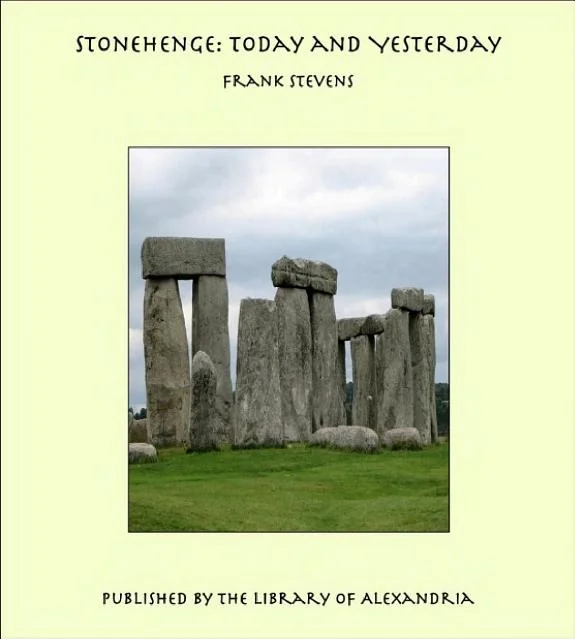
Stonehenge Today & Yesterday
 74
74

Stonehenge Today & Yesterday
Frank Stevens' Stonehenge Today & Yesterday grapples admirably with the sheer weight of speculation surrounding Britain's most famous megalithic structure. The author demonstrates a solid grasp of archaeological findings, particularly in detailing the construction phases and astronomical alignments. The book's strength lies in its comprehensive survey of theories, presenting a balanced overview of scholarly consensus and more fringe ideas. However, the narrative occasionally falters, becoming somewhat bogged down in cataloging every proposed interpretation without always providing a clear critical lens. A particularly illuminating section discusses the transport of the bluestones, highlighting the immense logistical and spiritual impetus required. While the book covers a vast amount of ground, its ultimate value is as a detailed compendium rather than a deeply analytical thesis. It serves as an excellent primer for those seeking to understand the multifaceted history of Stonehenge.
📝 Description
74
Frank Stevens' Stonehenge Today & Yesterday details the monument's construction from 3000 BCE and its evolving purpose.
This book examines Stonehenge from its Neolithic origins to its modern interpretations. Frank Stevens outlines the monument's construction phases, beginning around 3000 BCE, and tracks its changes through different historical eras. The text explores theories about its function, considering possibilities from an astronomical tool to a site for sacred rituals. It places Stonehenge within the larger framework of European Neolithic and Bronze Age cultures, referencing current archaeological discussions and findings about the builders' skills and beliefs. The book also discusses how Stonehenge was viewed and used by later societies, from antiquarians to contemporary spiritual groups, showing its lasting impact on human thought.
Stevens focuses on Stonehenge as a 'cosmic calendar' and a gathering place for rituals. He analyzes the stone alignments with celestial events like the solstices, indicating a complex astronomical knowledge among its creators. The work also considers theories about the movement of the bluestones and their significance. The author moves past simple architectural descriptions to discuss the monument's deep historical, cultural, and spiritual importance.
Stonehenge Today & Yesterday situates the monument within a lineage of sites considered focal points for ancient belief systems and practices. The book touches on modern spiritual movements that reinterpreted the stone circle, connecting it to earth energies and astronomical cycles. It acknowledges the persistent human fascination with Stonehenge as a place holding symbolic meaning, often linked to pagan traditions and a perceived connection to celestial forces. This perspective aligns with a broader interest in how ancient structures continue to resonate with contemporary spiritual seekers.
💡 Why Read This Book?
• Gain a structured understanding of Stonehenge's construction phases, from its earliest earthworks around 3000 BCE to the erection of the sarsen stones, offering a clearer timeline than generalized accounts. • Explore the proposed astronomical functions of Stonehenge, including its precise alignment with the summer solstice sunrise, a key feature that differentiates it from simpler prehistoric sites. • Understand the various theories regarding the purpose of the bluestones, including their quarrying in Wales and transport, a specific logistical and symbolic undertaking discussed in detail.
⭐ Reader Reviews
Honest opinions from readers who have explored this book.
❓ Frequently Asked Questions
When was Stonehenge first constructed?
The earliest phase of Stonehenge construction began around 3000 BCE with the creation of a large circular earthwork, predating the famous stone circles.
What is the significance of the solstices at Stonehenge?
Stonehenge is famously aligned with the sunrise on the summer solstice and the sunset on the winter solstice, suggesting a deep connection to celestial cycles for its builders.
Where did the bluestones at Stonehenge come from?
The smaller bluestones used in Stonehenge's construction were transported over 150 miles from the Preseli Hills in Wales, a feat of considerable effort for Neolithic peoples.
What are the main theories about Stonehenge's purpose?
Theories range from a sophisticated astronomical observatory and solar calendar to a site for healing rituals, a ceremonial center, or a burial ground for elite individuals.
Who built Stonehenge?
Stonehenge was built by Neolithic and Bronze Age peoples in stages over approximately 1,500 years, with different groups contributing to its development.
Is Stonehenge still used for ceremonies today?
Yes, Stonehenge remains a significant site for modern celebrations, particularly for druids and pagans who gather to observe the solstices.
🔮 Key Themes & Symbolism
Neolithic Astronomical Prowess
The work extensively details the precise solar and lunar alignments of Stonehenge, particularly its solstice connections. It posits that the monument's builders possessed a sophisticated understanding of celestial mechanics, using the stones as a sophisticated calendar and observatory. This challenges simplistic views of prehistoric societies, highlighting their capacity for complex calculations and long-term planning, essential for constructing and orienting such a monument.
The Bluestone Enigma
A significant focus is placed on the mystery surrounding the bluestones, which were quarried in Wales and transported hundreds of miles to Salisbury Plain. The book explores the immense effort and potential ritualistic or spiritual motivations behind this arduous journey, suggesting that these stones held a special significance for the builders, far beyond their material properties.
Ritual and Sacred Landscape
Beyond its astronomical functions, Stevens examines Stonehenge as a paramount ritualistic center. The book discusses theories linking the site to ceremonies, healing practices, and its role as a focal point within a wider sacred landscape. It considers how the monument's very construction and orientation were imbued with meaning, serving the spiritual and communal needs of its creators.
Enduring Cultural Resonance
The book traces how Stonehenge has been perceived and reinterpreted across different historical eras, from Roman accounts to medieval legends and modern pagan revivals. It underscores the monument's persistent ability to capture the human imagination and its transformation into a symbol of ancient wisdom and mystery, reflecting evolving cultural values.
💬 Memorable Quotes
Direct passages from the work, attributed to the author.
“The alignment with the midsummer sunrise is not accidental; it represents a conscious act of marking a significant celestial event.”
— This highlights the deliberate astronomical purpose behind Stonehenge's construction, suggesting advanced knowledge and intention rather than mere chance.
“Transporting the bluestones from Wales required a level of social organization and belief that we are only beginning to comprehend.”
— This emphasizes the monumental effort and deep spiritual or cultural drivers that compelled Neolithic communities to undertake such a massive undertaking.
“Stonehenge served not only as a marker of time but as a stage for significant communal and possibly spiritual performances.”
— This interpretation points to the dual role of the monument: a scientific instrument and a central venue for ritualistic activities.
“Each phase of construction added layers of meaning and functionality to the site, reflecting changing societal needs and beliefs.”
— This suggests that Stonehenge was a dynamic entity, evolving over centuries and absorbing new purposes and symbolic weight.
“The enduring fascination with Stonehenge speaks to a fundamental human desire to connect with the cosmos and our ancient past.”
— This offers a perspective on why the monument continues to inspire awe and inquiry, linking it to universal human impulses.
🌙 Esoteric Significance
Tradition
While not strictly adhering to a single lineage, Stonehenge Today & Yesterday engages with themes often explored within Hermeticism and broader Western Esotericism, particularly concerning sacred geometry, cosmic cycles, and the potential for ancient sites to act as energetic focal points. It aligns with the tradition of viewing megalithic structures as repositories of lost knowledge or instruments for celestial attunement, echoing interests found in Theosophy and Neopaganism.
Symbolism
The primary symbols explored are the stones themselves, particularly the sarsen trilithons and the bluestones, representing earthly and perhaps more potent, otherworldly energies. The circle motif is central, symbolizing wholeness, the cosmos, and the cyclical nature of time. The alignment with the solstices symbolizes the connection between the terrestrial and celestial realms, a core concept in many esoteric traditions.
Modern Relevance
Contemporary Neopagan movements, Druid orders, and geomancers frequently cite Stonehenge as a paramount example of a sacred site designed for ritual and cosmic connection. Thinkers interested in archaeoastronomy and the spiritual dimensions of ancient landscapes draw heavily on interpretations presented in works like Stevens', seeing it as evidence of a sophisticated, spiritually-attuned prehistoric worldview.
👥 Who Should Read This Book
• Aspiring archaeoastronomers seeking a detailed overview of Stonehenge's celestial alignments and the evidence for prehistoric astronomical knowledge. • Enthusiasts of ancient mysteries and megalithic cultures interested in a comprehensive survey of theories regarding Stonehenge's purpose and construction. • Students of comparative religion and ritual practices looking to understand how ancient monumental sites functioned as centers for ceremony and belief.
📜 Historical Context
Published in 2006, Frank Stevens' Stonehenge Today & Yesterday emerged during a period of significant ongoing archaeological research and public fascination with prehistoric Britain. The era saw continued debates surrounding the dating of Stonehenge's phases, with key discoveries refining our understanding of its construction timeline, particularly the earliest earthwork enclosures. Contemporary archaeologists like Mike Parker Pearson were actively investigating the monument's connection to Durrington Walls and its potential role in a wider ritual landscape. While Stevens engages with scholarly consensus, the book also acknowledges the persistent appeal of more speculative theories, a common thread in Stonehenge scholarship since the antiquarian investigations of the 17th and 18th centuries. The reception of such works often falls into distinct camps: those focused on empirical archaeological data and those drawn to the site's symbolic and esoteric interpretations.
📔 Journal Prompts
The Neolithic builders' motivation for transporting bluestones from Wales.
The symbolic meaning of Stonehenge's solar alignments.
How the concept of a sacred landscape influenced the placement of Stonehenge.
The evolution of Stonehenge interpretations from antiquity to the 21st century.
The potential role of Stonehenge in prehistoric ritual performances.
🗂️ Glossary
Sarsen Stones
The large sandstone blocks forming the main uprights and lintels of the outer circle and inner trilithons at Stonehenge, quarried locally on Salisbury Plain.
Bluestones
Smaller stones, primarily dolerite and rhyolite, found in the inner horseshoe and outer circle of Stonehenge, originating from the Preseli Hills in Wales.
Trilithon
A structure consisting of two large vertical stones supporting a horizontal stone, forming a distinctive feature of Stonehenge's inner arrangement.
Solstice Alignment
The orientation of Stonehenge's stones to mark the precise sunrise on the summer solstice and sunset on the winter solstice.
Neolithic Period
A prehistoric period characterized by the development of agriculture and settled communities, during which the earliest phases of Stonehenge were constructed.
Archaeoastronomy
The study of how past cultures understood and utilized astronomical phenomena, often in relation to their built environments and belief systems.
Salisbury Plain
A large, chalky plateau in Wiltshire, England, where Stonehenge is located, also containing numerous other prehistoric sites.
This book appears in 1 collection
🔮 Readers Also Liked
Browse all →








From the “Stonehenge” Collection
View all →







More Free Occult Philosophy Books
View all →