Buddhism, Taoism, Confucianism and Shintoism
 81
81

Buddhism, Taoism, Confucianism and Shintoism
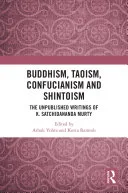
Ashok Vohra and Kotta Ramesh have curated a posthumous collection of K. Satchidananda Murty's essays, offering a valuable glimpse into his thinking on Eastern philosophies. The strength of this volume lies in its focus on Murty's unpublished work, particularly his examinations of Buddhism, Taoism, Confucianism, and Shintoism. His analysis of the origins of these traditions, as hinted at in the blurb, promises a scholarly approach. However, the collection's limitation may be its accessibility; as unpublished academic writings, it might presume a level of prior knowledge that a general reader lacks. The reference to Murty's studies on the "origins of Indian, Chinese and Japanese philosophical traditions" is particularly compelling, suggesting a comparative breadth. Without direct access to the text, assessing its full impact is challenging, but it appears to be a significant academic contribution for specialists.
This collection serves as a focused academic resource rather than a broad introduction.
📝 Description
81
This 2023 collection presents unpublished philosophical writings by K. Satchidananda Murty on four major Eastern traditions.
Published on September 29, 2023, this volume gathers previously unavailable philosophical essays by K. Satchidananda Murty. The work focuses on Murty's detailed examination of Buddhism, Taoism, Confucianism, and Shintoism. It offers scholars and those interested in Eastern thought direct access to his insights on the core principles and historical development of these influential traditions.
The essays are suited for academics, researchers, and advanced students in comparative philosophy and religious studies. Readers seeking analysis beyond introductory levels will find value here, especially those interested in the specific origins and evolution of philosophical systems in India, China, and Japan. A background in philosophical discussion is assumed.
These traditions have profoundly shaped East Asian thought for centuries. Buddhism, originating in India, influenced Chinese philosophy significantly. Taoism, attributed to Lao Tzu, offered a perspective distinct from Confucianism's focus on social order. Confucianism, founded by Confucius, became central to Chinese governance and ethics. Shintoism, Japan's indigenous religion, interacted with Buddhism over time.
This collection engages with traditions that form the bedrock of East Asian contemplative and philosophical life. Buddhism, Taoism, and Confucianism, originating in India and China, have long offered distinct yet often interwoven paths to understanding existence, ethics, and the nature of reality. Shintoism, indigenous to Japan, developed in dialogue with these continental traditions, creating a unique spiritual landscape. Murty's work provides a scholarly lens on the core concepts and historical interactions within these influential systems, allowing readers to grasp their philosophical depth and cultural significance.
💡 Why Read This Book?
• Gain insights into K. Satchidananda Murty's unpublished philosophical analyses, specifically his detailed examinations of Buddhist doctrines and their historical spread, as presented in this 2023 collection. • Understand the foundational principles of Taoism and Confucianism through Murty's scholarly lens, potentially exploring concepts like *wu wei* and *ren* in relation to their Chinese origins. • Appreciate the unique development of Shintoism and its philosophical underpinnings, as discussed in Murty's essays, offering a comparative perspective with Indian and Chinese traditions.
⭐ Reader Reviews
Honest opinions from readers who have explored this book.
❓ Frequently Asked Questions
Who was K. Satchidananda Murty and what was his contribution to philosophy?
K. Satchidananda Murty (1924–2011) was an Indian philosopher recognized for his significant contributions to the field. He was awarded the Padma Vibhushan by the Government of India and the BC Roy Award in Philosophy for his work.
What specific Eastern philosophies are covered in this book?
The book focuses on four major Eastern traditions: Buddhism, Taoism, Confucianism, and Shintoism, exploring their origins and philosophical tenets.
What is the primary focus of the essays by K. Satchidananda Murty?
The essays primarily study the origins and philosophical development of Indian, Chinese, and Japanese traditions, offering a comparative analysis of Buddhism, Taoism, Confucianism, and Shintoism.
When was this collection of Murty's writings first published?
This volume, featuring K. Satchidananda Murty's unpublished philosophical writings, was first published on September 29, 2023.
Is this book suitable for beginners in Eastern philosophy?
Given its nature as a collection of academic essays by a renowned philosopher, it is likely more suited for advanced students and scholars rather than absolute beginners.
What kind of academic recognition did K. Satchidananda Murty receive?
K. Satchidananda Murty received the prestigious Padma Vibhushan award from the Indian government and the BC Roy Award in Philosophy for his intellectual contributions.
🔮 Key Themes & Symbolism
Comparative Origins
This collection critically examines the historical genesis and foundational principles of four major Eastern philosophical and religious systems. It seeks to trace the distinct yet often interconnected paths of Buddhism from India, Taoism and Confucianism from China, and Shintoism from Japan. The work likely highlights how each tradition emerged within its specific cultural milieu, addressing fundamental questions of existence, ethics, and the cosmos. By juxtaposing these origins, the book aims to illuminate both their unique characteristics and their potential points of philosophical convergence or divergence.
Buddhism and its Spread
A significant portion of the volume is dedicated to Buddhism, exploring its philosophical core and its remarkable journey across Asia. The essays likely explore concepts such as impermanence, suffering, and the path to enlightenment, as articulated by Siddhartha Gautama. Murty's analysis probably contextualizes Buddhism's adaptation and integration into diverse cultural landscapes, particularly its profound influence on Chinese thought and its eventual synthesis with indigenous beliefs in Japan.
Taoism and Confucianism
The collection engages with the distinct yet complementary philosophies of Taoism and Confucianism, which have profoundly shaped Chinese civilization. It likely investigates Taoism's emphasis on naturalness, spontaneity, and the concept of *wu wei* (non-action), contrasted with Confucianism's focus on social harmony, ethical conduct, and the cultivation of virtue through practices like *ren* (benevolence). The essays probably explore their historical development and their enduring impact on governance, ethics, and individual life.
Shintoism's Indigenous Roots
The volume also addresses Shintoism, Japan's indigenous spiritual tradition. Murty's writings likely explore its animistic worldview, the reverence for *kami* (spirits or deities residing in nature), and its emphasis on purity and ritual. The essays probably situate Shintoism within the broader context of Japanese culture, considering its interaction with Buddhism and its role in shaping national identity and a unique cosmological perspective distinct from continental Asian traditions.
💬 Memorable Quotes
Direct passages from the work, attributed to the author.
“The texts study the origins of Indian, Chinese and Japanese philosophical traditions.”
— This statement captures the core academic ambition of the collection: to provide a scholarly investigation into the historical and conceptual beginnings of these influential East Asian schools of thought.
“K. Satchidananda Murty was a vociferous writer and an iconoclast.”
— This description highlights Murty's intellectual style, suggesting a willingness to challenge established norms and express his philosophical views with vigor and conviction.
“This volume is a collection of his unpublished writings in philosophy.”
— This fact underscores the unique value of the book, presenting scholarly material that has not previously been accessible to the public or the academic community.
“He was awarded the highly coveted BC Roy Award in Philosophy, and Padma Vibhushan by the Government of India.”
— These accolades attest to Murty's significant recognition and standing within the philosophical and national spheres of India.
“It features Murty’s essays on Buddhism, Taoism, Confucianism and Shintoism.”
— This directly states the subject matter, indicating a comparative approach to four key pillars of East Asian philosophical and religious thought.
🌙 Esoteric Significance
Tradition
While the book itself focuses on established Eastern philosophical traditions, its posthumous publication and focus on unpublished academic work align with an esoteric interest in accessing deeper, less-disseminated layers of thought. It fits within the broader esoteric library's pursuit of understanding diverse spiritual and philosophical lineages, viewing these traditions not just as historical subjects but as potential sources of profound wisdom and alternative worldviews.
Symbolism
Within Buddhism, concepts like the Wheel of Dharma symbolize the Buddha's teachings and the cycle of rebirth. In Taoism, the Yin and Yang represent the complementary, interdependent forces that shape the universe. Confucianism emphasizes symbols of social order and ritual propriety, while Shintoism venerates natural symbols like mountains, rivers, and ancient trees as abodes of *kami*.
Modern Relevance
Contemporary scholars and practitioners of comparative religion and philosophy continue to draw on the foundational texts and concepts of Buddhism, Taoism, Confucianism, and Shintoism. These traditions inform modern ethical frameworks, mindfulness practices (drawing from Buddhism), ecological philosophies (Taoism), and studies of social harmony and governance. The work of figures like Murty provides critical scholarship for understanding these enduring influences.
👥 Who Should Read This Book
• Comparative philosophy students seeking scholarly analyses of the origins and development of major Eastern traditions, moving beyond introductory surveys. • Researchers in religious studies interested in the specific contributions and unpublished perspectives of Indian philosophers like K. Satchidananda Murty on Buddhism, Taoism, Confucianism, and Shintoism. • Individuals engaged in deep philosophical inquiry who wish to understand the historical and conceptual interconnections between distinct Asian intellectual lineages.
📜 Historical Context
This collection emerges from the intellectual field of 20th-century Indian philosophy, a period marked by rigorous engagement with both Western and Eastern traditions. K. Satchidananda Murty (1924–2011) was a prominent figure, known for his scholarship and critical perspectives. The essays, published posthumously in 2023, likely reflect Murty's deep immersion in comparative philosophy. This era saw thinkers like Sarvepalli Radhakrishnan championing Indian philosophy on a global stage, while others engaged in critical dialogues with Marxism, existentialism, and analytic philosophy. Murty’s work here engages traditions that have shaped East Asian civilization for millennia: Buddhism (originating c. 5th century BCE), Taoism (c. 6th century BCE), Confucianism (c. 6th-5th century BCE), and Shintoism (indigenous, formalized interaction from c. 6th century CE). His analysis likely participates in ongoing scholarly debates concerning the authenticity, evolution, and cross-cultural influence of these diverse schools of thought.
📔 Journal Prompts
The origins of Indian, Chinese, and Japanese philosophical traditions as studied by Murty.
K. Satchidananda Murty's iconoclastic approach to philosophy.
The concept of *wu wei* in Taoism compared to Buddhist principles.
The role of *kami* in Shintoism and its distinctiveness.
Murty's analysis of Confucian ethics and social harmony.
🗂️ Glossary
Buddhism
A religion and philosophy originating in ancient India with Siddhartha Gautama (the Buddha), centered on understanding suffering and achieving enlightenment through practices like meditation and ethical conduct.
Taoism
An indigenous Chinese philosophy and religion traditionally attributed to Lao Tzu, emphasizing living in harmony with the Tao (the Way), often through principles like *wu wei* (non-action) and spontaneity.
Confucianism
A system of ethical and philosophical thought originating from Confucius in ancient China, focusing on personal and governmental morality, social harmony, justice, and sincerity, with concepts like *ren* (benevolence).
Shintoism
The indigenous religion of Japan, characterized by the worship of *kami* (spirits or deities) found in natural phenomena and ancestors, emphasizing purity, rituals, and a connection to the land.
K. Satchidananda Murty
An influential Indian philosopher (1924–2011) whose unpublished philosophical writings, particularly on Eastern traditions, are featured in this 2023 collection.
Padma Vibhushan
One of the highest civilian awards in India, bestowed by the Government of India for exceptional and distinguished service.
*Wu Wei*
A central concept in Taoism, often translated as 'non-action' or 'effortless action,' signifying action that is in accordance with the natural flow of the Tao.