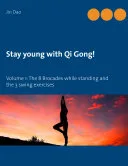
Stay young with Qi Gong
 71
71

Stay young with Qi Gong
Jin Dao's "Stay Young with Qi Gong" presents a clear, if somewhat standard, introduction to this ancient Chinese art. The book's strength lies in its straightforward explanation of foundational Qi Gong concepts, making it digestible for absolute novices. The emphasis on the interplay between movement, breath, and imagination is well-articulated. However, the work occasionally treads familiar ground, lacking the deeper philosophical or historical nuance that might satisfy seasoned practitioners or scholars of TCM. A particularly effective section details the "Eight Brocades" (Ba Duan Jin) movements, offering practical guidance that could be immediately applied. While it fulfills its promise as an accessible primer, it doesn't significantly advance the discourse on Qi Gong's esoteric dimensions. It's a competent guide for beginners seeking a basic regimen.
📝 Description
71
Jin Dao's 2021 book, Stay Young with Qi Gong, explains the mechanics of vital energy cultivation.
This book details the core principles and practical exercises of Qi Gong, a practice from Traditional Chinese Medicine. Jin Dao explains how the cultivation of 'Qi', the body's vital energy, is achieved through a combination of gentle physical postures, controlled breathing, and focused visualization. The aim is to foster an internal equilibrium that supports both physical resilience and mental sharpness, contributing to a lasting sense of well-being.
Stay Young with Qi Gong is written for anyone interested in improving their health and longevity. Jin Dao presents the material in a way that makes it accessible to people of all ages and physical abilities, regardless of previous experience with Qi Gong. The book functions as a straightforward manual for those new to self-cultivation practices and offers a way for established practitioners to deepen their existing knowledge.
Qi Gong has roots stretching back millennia within Chinese culture, drawing from ancient Taoist and Buddhist contemplative traditions. It is viewed as a method for aligning the human energetic system with cosmic principles. The practice was formally incorporated into Traditional Chinese Medicine. This book, published in 2021, seeks to convey the essence of these ancient techniques to a contemporary global audience, emphasizing the body as an interconnected energetic system.
💡 Why Read This Book?
• You will learn specific techniques for cultivating Qi, such as the "Eight Brocades" (Ba Duan Jin) movements, allowing you to actively engage in energy work for personal vitality. • You will gain an understanding of the role of diaphragmatic breathing in TCM, enabling a more conscious and controlled method of managing your internal energy. • You will explore the practical application of visualization (Yi) in conjunction with movement and breath, offering a unique mental tool for health maintenance.
⭐ Reader Reviews
Honest opinions from readers who have explored this book.
❓ Frequently Asked Questions
What is the primary goal of Qi Gong as explained in "Stay Young with Qi Gong"?
The primary goal, as detailed in the book, is to maintain both body and mind health by harmonizing the body's vital energy (Qi), leading to a longer, happier life through integrated movements, breathing, and imagination.
Can someone with no prior physical training start practicing Qi Gong?
Yes, the book emphasizes that anyone can begin learning Qi Gong, regardless of age, previous knowledge, or physical constitution, making it highly accessible.
What are the main components of a Qi Gong practice according to Jin Dao?
The main components are traditional gentle movements, specific breathing methods, and the power of imagination (Yi) to direct internal energy.
How does Qi Gong relate to Traditional Chinese Medicine (TCM)?
Qi Gong is presented as an integral part of TCM, utilizing its principles to promote health and well-being by balancing the flow of Qi within the body's energetic pathways.
Is "Stay Young with Qi Gong" suitable for advanced practitioners?
While it provides a solid foundation, the book is primarily geared towards beginners. Advanced practitioners might find it a useful refresher but may seek more specialized texts for deeper study.
When was "Stay Young with Qi Gong" first published?
The book "Stay Young with Qi Gong" by Jin Dao was first published on January 29, 2021.
🔮 Key Themes & Symbolism
Qi Cultivation and Flow
The central theme revolves around understanding and cultivating 'Qi', the vital life force. The book explains how Qi flows through meridians in the body and how specific exercises, breathing patterns, and mental focus are employed to ensure its smooth circulation. Blockages or deficiencies in Qi are presented as root causes of illness, and mastering its flow is depicted as the key to maintaining youthfulness and vitality. This concept is deeply embedded in Taoist and TCM philosophies.
Mind-Body Harmony
A significant focus is placed on the interconnectedness of the mind and body. The practice of Qi Gong, as outlined, requires not just physical execution but also mental presence and intentionality. The use of imagination (Yi) to guide Qi is a critical element, demonstrating how mental states directly influence physical well-being. This holistic perspective aims to achieve a state of balance where mental tranquility supports physical health and vice versa.
Longevity and Anti-Aging
The title itself highlights the objective of promoting longevity and combating the effects of aging. The book presents Qi Gong as a method to preserve youthfulness by enhancing energy levels, strengthening the body's natural healing capabilities, and fostering a resilient spirit. The practices are designed to counteract the wear and tear of daily life, promoting sustained vitality and a higher quality of life well into old age.
Accessibility and Self-Practice
The work stresses the universal applicability of Qi Gong, regardless of the practitioner's age or physical condition. It provides practical, actionable steps that individuals can integrate into their daily routines. This theme emphasizes empowerment, enabling readers to take an active role in their own health and well-being through consistent, self-directed practice. The book serves as a foundational guide for establishing a personal Qi Gong regimen.
💬 Memorable Quotes
Direct passages from the work, attributed to the author.
“The goal is to maintain body and mind health and thus lead a long, happy life.”
— This statement captures the fundamental purpose of Qi Gong as presented in the book: a holistic approach to wellness aimed at achieving both physical vitality and mental equilibrium for sustained quality of life.
“This is done with a combination of traditional movements, breathing methods and the power of imagination.”
— This highlights the three core pillars of Qi Gong practice detailed in the book: the physical postures, the controlled respiration, and the directed mental focus, emphasizing their synergistic role.
“Qi Gong is part of Traditional Chinese Medicine (TCM)”
— This establishes the foundational context for the practice, linking Qi Gong directly to the established theoretical framework and therapeutic applications within Traditional Chinese Medicine.
💡 Key Ideas
Editorial paraphrase of the work's core concepts — not direct quotes.
Everyone can start learning Qi Gong regardless of age, previous knowledge or constitution - ideally today!
This quote underscores the book's message of inclusivity and immediate applicability, encouraging readers to begin their Qi Gong journey without delay, irrespective of personal background or physical limitations.
The work explores maintaining body and mind health.
This paraphrased concept points to the dual focus of the practice, aiming not only for physical robustness but also for mental clarity and emotional balance, integral components of overall well-being.
🌙 Esoteric Significance
Tradition
This work aligns with the Taoist tradition, a foundational pillar of Chinese esoteric thought. It draws heavily on concepts like Qi (vital energy), meridians, and the balance of Yin and Yang. While presented with a modern, accessible tone, its core principles are rooted in ancient Taoist philosophies concerning harmony with nature and the cultivation of internal vitality for longevity and spiritual well-being, departing from purely materialistic interpretations of health.
Symbolism
The primary 'symbol' is Qi itself – the invisible life force that animates all things. Movements often evoke natural imagery (e.g., flowing water, mountain stability), symbolizing harmony with the cosmos. The practice also involves the internal visualization (Yi), using mental imagery to direct energy, acting as a symbolic conduit between consciousness and the physical body's energetic pathways.
Modern Relevance
Contemporary wellness culture, particularly the burgeoning interest in holistic health, energy healing, and mindfulness, directly benefits from works like this. Practitioners of modern Qigong, somatic therapists, and even some yoga instructors draw upon these principles. The emphasis on self-care, stress reduction through breathwork, and the mind-body connection makes it highly relevant for individuals seeking non-pharmacological approaches to health in the 21st century.
👥 Who Should Read This Book
• Individuals new to energy cultivation practices seeking a clear, practical introduction to Qi Gong based on Traditional Chinese Medicine principles. • Those interested in Taoist philosophy and its application to health and longevity, looking for accessible exercises to integrate into daily life. • Practitioners of other mind-body disciplines (like yoga or Tai Chi) who wish to expand their understanding and incorporate different energetic techniques into their regimen.
📜 Historical Context
Published in 2021, Jin Dao's "Stay Young with Qi Gong" emerges in an era where global interest in mind-body practices and Traditional Chinese Medicine (TCM) is at a peak. Qi Gong itself has a lineage stretching back millennia, evolving from ancient Taoist and Buddhist meditative and martial arts traditions. By the late 20th century, figures like Qi Gong Master Yang Jwing-Ming were instrumental in bringing these practices to Western audiences, often focusing on their health benefits. While Jin Dao's work is a modern distillation, it builds upon this foundation. It appears in a landscape alongside yoga and other somatic disciplines, offering a specific Chinese energetic perspective. Unlike purely secularized forms, this text implicitly engages with the Taoist concepts of Qi and Yin/Yang balance, positioning it within a broader esoteric framework that contrasts with purely biomechanical approaches to health prevalent in Western medicine.
📔 Journal Prompts
The concept of circulating Qi within the body's meridians.
Your personal experience with diaphragmatic breathing during the described movements.
The role of the power of imagination (Yi) in your practice.
How the goal of maintaining body and mind health relates to your current lifestyle.
Initial impressions of the "Eight Brocades" (Ba Duan Jin) sequence.
🗂️ Glossary
Qi (Chi)
The fundamental concept of vital life force or energy that permeates the universe and flows within the body, central to Traditional Chinese Medicine and Qi Gong.
TCM
Abbreviation for Traditional Chinese Medicine, an ancient system of health and healing that includes acupuncture, herbal medicine, Qi Gong, and dietary therapy.
Meridians
Specific pathways within the body through which Qi is believed to flow, analogous to channels or rivers that nourish the organs and tissues.
Yi
Often translated as 'mind', 'intent', or 'imagination'. In Qi Gong, it refers to the conscious mental focus used to guide Qi and direct the body's internal processes.
Breathing Methods
Specific techniques of respiration taught in Qi Gong, often focusing on deep, slow, diaphragmatic breathing to enhance Qi circulation and promote relaxation.
Eight Brocades (Ba Duan Jin)
A set of eight foundational Qi Gong exercises known for their effectiveness in improving overall health and strengthening the body.
Constitution
Refers to an individual's inherent physical and mental makeup, including their general health, resilience, and susceptibility to illness, as relevant to starting Qi Gong.