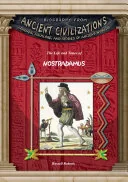
The Life and Times of Nostradamus
 73
73

The Life and Times of Nostradamus
Russell Roberts' "The Life and Times of Nostradamus" provides a welcome dose of skepticism to the enduring legend of the French prophet. Rather than rehashing sensationalist claims, Roberts grounds his analysis in historical fact, detailing Nostradamus's life as a physician and astrologer in 16th-century Salon-de-Provence. The book's strength lies in its meticulous deconstruction of how predictions are often interpreted. For instance, Roberts effectively illustrates how the quatrain often cited to predict the death of Henry II, while compelling, relies heavily on post-event analysis. A limitation, however, is the book's occasional dryness; the academic tone, while commendable for its rigor, might deter readers seeking a more sensational account. The exploration of Nostradamus's use of astrological techniques, detailing the specific planetary alignments he consulted for his predictions, is particularly illuminating. Ultimately, Roberts delivers a sober, fact-based assessment that encourages critical thinking about historical prophecy.
📝 Description
73
Russell Roberts' 2019 book examines Nostradamus's prophecies within his 16th-century life.
Published in 2019, Russell Roberts' "The Life and Times of Nostradamus" offers a scholarly look at the 16th-century French astrologer and physician. The book places Michel de Nostredame's prophetic writings within his biography and the historical setting of Renaissance Europe. It scrutinizes the origins and various interpretations of his "Centuries," the quatrains that supposedly foretold future events. Roberts also questions the nature of prophecy itself, distinguishing between genuine foresight and interpretations made after the fact.
Roberts situates Nostradamus in the intellectually active and religiously turbulent climate of 16th-century France. The work details his medical practice and his consultations for influential patrons. His prophetic activities, particularly the publication of his *Propheties* starting in 1555, are examined against a backdrop of widespread interest in astrology, alchemy, and apocalyptic thinking. The book contrasts Nostradamus's methods with other contemporary divinatory practices and discusses how his work was received during his life and shortly after.
This book engages with the tradition of Renaissance esotericism, a period where astrology, alchemy, and divination were integrated into intellectual and religious life. It examines Nostradamus not as a simple predictor of the future, but as a figure whose work engaged with contemporary occult thought and practices. By analyzing his use of ambiguous language and astrological calculations, Roberts sheds light on how such figures operated within their historical moment, blurring the lines between science, magic, and religious belief.
💡 Why Read This Book?
• Understand the historical circumstances of 16th-century France that shaped Nostradamus's work, moving beyond modern sensationalism to grasp his life in Salon-de-Provence. • Learn how to critically analyze prophetic texts by examining Roberts's explanation of Nostradamus's use of ambiguous language and astrological calculations. • Gain insight into the phenomenon of retrospective interpretation, as the book dissects how later events are matched to Nostradamus's "Centuries" for specific impact.
⭐ Reader Reviews
Honest opinions from readers who have explored this book.
❓ Frequently Asked Questions
Was Nostradamus a doctor and an astrologer?
Yes, Russell Roberts' book confirms Michel de Nostredame was a practicing physician and also a respected astrologer in 16th-century France, consulting on matters of health and future events for various patrons.
When were Nostradamus's prophecies first published?
The first edition of Nostradamus's *Propheties*, containing the initial "Centuries," was published in 1555, a significant date explored within the book's historical context.
Does the book prove Nostradamus predicted the future accurately?
No, the book critically examines the claims of accurate prediction, focusing instead on how interpretations of his ambiguous quatrains often align with events after they have occurred, rather than demonstrating clear foresight.
What is the "Centuries" by Nostradamus?
The "Centuries" is the primary collection of quatrains written by Nostradamus, organized into sets of one hundred verses, which form the basis of his supposed prophecies about future world events.
What was the historical context of Nostradamus's writings?
Roberts places Nostradamus's work in the context of 16th-century Europe, a period marked by religious upheaval, interest in occult sciences like astrology and alchemy, and widespread fascination with apocalyptic prophecies.
How does the book address the ambiguity of Nostradamus's predictions?
The book analyzes Nostradamus's use of cryptic language, anagrams, and historical allusions to create predictions that can be reinterpreted to fit various events, a key concept for understanding his enduring appeal.
🔮 Key Themes & Symbolism
The Astrologer-Physician
Roberts situates Michel de Nostredame not as a mystical recluse, but as a man of his time: a physician trained in the medical arts and an astrologer consulted for his knowledge of celestial influences. The book details his professional life, including his work in plague-stricken areas and his patronage by figures like Catherine de' Medici, demonstrating how his scientific and esoteric pursuits were intertwined within the intellectual framework of the Renaissance. This grounding in his daily life and profession offers a counterpoint to purely supernatural interpretations of his work.
Deciphering the Centuries
A core theme is the methodology and interpretation of Nostradamus's "Centuries." Roberts dissects the poetic and often deliberately obscure language used in the quatrains, exploring how their structure and allusions lend themselves to multiple readings. The work looks at the historical practice of astrology and divination in the 16th century, suggesting that Nostradamus’s predictions were framed within this existing cultural understanding, rather than being direct visions of the future. The book questions the validity of matching past events to specific quatrains post hoc.
Prophecy and Interpretation
Roberts critically examines the very nature of prophecy as presented by Nostradamus and understood by posterity. The book explores how the enduring fascination with Nostradamus stems less from demonstrable predictive accuracy and more from the human desire to find meaning and order in chaotic events. It highlights the psychological mechanisms, such as confirmation bias, that lead readers to perceive prophetic success where ambiguity might be the more accurate explanation. This theme encourages readers to question how we construct narratives of foresight.
Renaissance Occultism
The book places Nostradamus within the broader range of Renaissance occultism, a period where astrology, alchemy, and Hermetic philosophy were not necessarily seen as separate from science. It discusses how figures like Nostradamus engaged with these traditions, often for practical or political purposes. Understanding this context reveals that his work was part of a wider intellectual current that sought to understand the cosmos and humanity's place within it through a combination of observation, calculation, and esoteric lore.
💬 Memorable Quotes
Direct passages from the work, attributed to the author.
“The quatrains were written in a style that allowed for multiple interpretations.”
— This interpretation highlights Roberts' central argument: Nostradamus's predictive power lies not in clarity, but in deliberate ambiguity, making his verses adaptable to various historical events after they unfold.
“The interpretation of the prophecies often occurred long after the events they supposedly foretold.”
— This concept underscores the book's critical stance, suggesting that the perceived accuracy of Nostradamus's predictions is largely a product of retrospective analysis and confirmation bias.
“The enduring appeal of Nostradamus lies more in the human search for meaning than in verifiable foresight.”
— This interpretation captures Roberts' perspective on why Nostradamus remains a figure of fascination, attributing his fame to our innate desire to find patterns and predict the future, rather than to proven prophetic ability.
💡 Key Ideas
Editorial paraphrase of the work's core concepts — not direct quotes.
Nostradamus was a man of his time, integrating medical practice with astrological consultation.
This paraphrase emphasizes Roberts' approach to presenting Nostradamus as a historical figure whose esoteric interests were part of the intellectual fabric of the 16th century, rather than solely supernatural phenomena.
His use of language was deliberately cryptic, employing anagrams and historical allusions.
This paraphrase points to Roberts' analysis of Nostradamus's literary techniques, explaining how these methods contributed to the mystique and enduring interpretability of his prophetic verses.
🌙 Esoteric Significance
Tradition
Nostradamus's work is examined within the broad tradition of Western esotericism, particularly its Renaissance manifestation, where astrology and Hermeticism were prominent. While not strictly aligning with a single lineage like Kabbalah or Gnosticism, his practice draws from astrological calculations and a worldview that saw cosmic influences on human affairs, common in Hermetic thought. The book positions him as a practitioner who synthesized existing divinatory techniques, embedding them in a quasi-poetic form that invited mystical interpretation, fitting within a lineage of seers and oracles.
Symbolism
Key symbols explored include the "Centuries" themselves, representing not just collections of verses but a structured approach to cosmic prediction. Astrological symbols, such as planetary alignments and celestial events, are discussed as the tools Nostradamus used for his calculations, forming the basis of his prognostications. The very act of cryptic writing, employing anagrams and veiled language, functions as a symbol of hidden knowledge, accessible only to those with the inclination or esoteric background to decipher it, mirroring alchemical symbolism.
Modern Relevance
Contemporary interest in Nostradamus, fueled by interpretations of his quatrains regarding modern events, shows his continued, albeit often misunderstood, relevance. Thinkers and practitioners in areas like comparative esotericism, historical divination, and even conspiracy theory circles frequently reference his work. Roberts' book provides a crucial corrective for these modern interpretations, offering a historically grounded perspective that is essential for anyone studying the legacy of prophetic figures or the evolution of esoteric thought in the West.
👥 Who Should Read This Book
• Students of Renaissance history and culture seeking to understand the intellectual currents that fostered figures like Nostradamus, moving beyond simplistic myths. • Enthusiasts of esoteric traditions and divination who wish to critically examine the historical practice of astrology and prophecy, learning analytical techniques. • Skeptical readers and researchers interested in the psychology of belief and interpretation, exploring how ambiguous texts gain perceived predictive power over time.
📜 Historical Context
Russell Roberts' "The Life and Times of Nostradamus" situates Michel de Nostredame within the tumultuous intellectual and religious range of 16th-century France. Published in 2019, the book revisits a figure whose fame peaked centuries earlier, but its analysis is rooted in the era of his life. Nostradamus, a physician by training, operated during a period where astrology, alchemy, and Hermetic thought were deeply integrated into scholarly pursuits, unlike the strict scientific separation of later centuries. His *Propheties*, first published in 1555, emerged in a climate ripe with interest in apocalyptic visions and divination, fueled by both religious fervor and political uncertainty. The work implicitly contrasts Nostradamus's method with more direct forms of prophecy or religious pronouncements of the time. While direct engagement from specific contemporaries is hard to pinpoint in Roberts' analysis, the book discusses the general reception and interpretation of his work during his lifetime and the immediate aftermath, noting how his patron, Catherine de' Medici, sought his counsel.
📔 Journal Prompts
Nostradamus's use of cryptic language: How does ambiguity in communication shape understanding and belief?
The practice of astrology in the 16th century: What role did celestial observation play in Renaissance thought beyond prediction?
The concept of confirmation bias as applied to the "Centuries": How do we selectively interpret information to fit our expectations?
Michel de Nostredame's dual role as physician and seer: Explore the intersection of empirical knowledge and esoteric belief in historical figures.
Interpreting historical prophecies: What criteria should be applied to assess the validity of predictive texts from different eras?
🗂️ Glossary
Quatrain
A stanza of four lines, typically rhyming. Nostradamus's prophecies are primarily composed of quatrains, organized into larger collections called 'Centuries'.
Centuries
The name given to the ten-part collection of Nostradamus's prophecies, with each part containing one hundred quatrains. The first edition appeared in 1555.
Divination
The practice of seeking knowledge of the future or the unknown by supernatural or magical means. Astrology was a primary form of divination in Nostradamus's time.
Hermeticism
A philosophical and religious tradition based primarily upon writings attributed to Hermes Trismegistus. It influenced Renaissance thought, emphasizing esoteric knowledge and the interconnectedness of the cosmos.
Renaissance
The period in European history marking the transition from the Middle Ages to modernity, characterized by a flourishing of arts, science, and exploration of classical learning, roughly spanning the 14th to the 17th centuries.
Confirmation Bias
The tendency to search for, interpret, favor, and recall information in a way that confirms or supports one's prior beliefs or hypotheses.
Salon-de-Provence
The town in southern France where Michel de Nostredame settled in the 1540s, established his medical practice, and wrote much of his famous prophetic work, the "Centuries."
This book appears in 1 collection
🔮 Readers Also Liked
Browse all →









From the “Nostradamus” Collection
View all →






More Free Occult Philosophy Books
View all →