Starseeds
 75
75

Starseeds
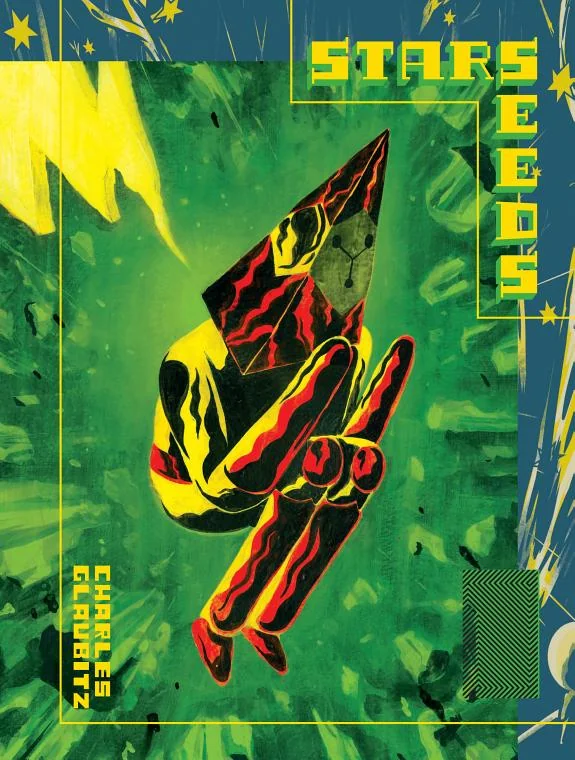
Charles Glaubitz's Starseeds presents a bold, if occasionally dense, visual cosmology. The book's ambitious scope, blending alchemical principles with science fiction tropes and mythological archetypes, is its most striking feature. Glaubitz’s illustrative style, often described as raw and energetic, serves the narrative well, particularly in depicting the abstract energies and symbolic transformations central to the plot. A particular strength lies in the depiction of the Illuminati's attempt to forge a new element; the visual representation of this process is both unsettling and compelling.
However, the narrative’s complexity can sometimes outpace its clarity. While the hermetic ideas are fascinating, their integration into the plot occasionally feels more like an invocation of symbols than a fully integrated thematic exploration. The pacing, especially in the latter half, might leave some readers wishing for more direct engagement with the characters or a clearer exposition of the overarching prophecy. Despite these limitations, Starseeds offers a singular vision.
Read more ↓
Glaubitz crafts a distinct visual language for esoteric concepts, making Starseeds a noteworthy contribution for those willing to engage with its intricate design.
📝 Description
75
Charles Glaubitz's 2017 graphic novel Starseeds imagines a world where light carries cosmic prophecies.
Starseeds, a 2017 graphic novel by artist Charles Glaubitz, blends mythology, religion, and spirituality with hermetic philosophy, alchemy, and scientific ideas. The story centers on cosmic prophecies conveyed through light, which signals an awakening tied to a "Crystal Sigil." Opposing this is an organization called the Illuminati, which attempts to control fundamental elements. Glaubitz uses comic art to present this narrative, connecting ancient traditions with speculative fiction.
The book is for readers interested in esoteric subjects, especially those who appreciate visual interpretations of complex philosophical and cosmological concepts. It will appeal to fans of speculative fiction that includes alchemy, hermeticism, and ancient mythologies. Those who enjoy allegorical storytelling and the intersection of art with esoteric thought will find Glaubitz's approach valuable. The graphic novel format allows for a unique way to explore these themes, making the abstract more accessible through art.
Released in 2017, Starseeds emerged during a time of increased interest in esoteric themes in popular culture. Though not directly linked to specific historical groups like the Golden Dawn or the Theosophical Society, it draws from the long history of alchemical and Hermetic traditions that have shaped Western esotericism for centuries. Glaubitz's work offers a modern take on these ancient ideas, communicated through the medium of graphic storytelling.
Starseeds draws from a long lineage of alchemical and Hermetic traditions that have shaped Western esotericism for centuries. The narrative's focus on cosmic prophecy delivered through light and the concept of an awakening tied to a "Crystal Sigil" echoes Gnostic ideas of hidden knowledge and spiritual illumination. The Illuminati's pursuit of a "fifth element" through alchemical manipulation connects to classical elements and the search for transformative substances found in esoteric traditions.
💡 Why Read This Book?
• Understand the esoteric concept of the 'Crystal Sigil' and its symbolic role in cosmic awakening, a central motif Glaubitz uses to signify a paradigm shift. • Explore the alchemical goal of creating a 'fifth element' by manipulating the traditional four, as depicted in the Illuminati's secret society agenda. • Experience Glaubitz's unique illustrative style, which visually interprets complex hermetic ideas and mythological narratives, offering a fresh perspective on esoteric art.
⭐ Reader Reviews
Honest opinions from readers who have explored this book.
❓ Frequently Asked Questions
What is the significance of the Crystal Sigil in Starseeds?
The Crystal Sigil functions as a symbol of awakening and prophecy within Starseeds. It represents a focal point for cosmic energies and a harbinger of a new era, as conveyed by light traveling through space.
Who are the main antagonists in Charles Glaubitz's Starseeds?
The primary antagonists are a secret society of Illuminati. They are depicted as actively seeking to manipulate the four classical elements to create a powerful fifth element.
What is the first published date for Starseeds?
Starseeds by Charles Glaubitz was first published on February 15, 2017.
What diverse fields does Starseeds integrate into its narrative?
The graphic novel integrates mythology, religion, spirituality, hermetic ideas, alchemy, and science into its unique narrative structure and visual presentation.
What is the core conflict presented in Starseeds?
The core conflict involves the prophecy of the Crystal Sigil's awakening contrasting with the Illuminati's covert actions to synthesize a new, powerful element.
What kind of art style is featured in Starseeds?
Starseeds is a graphic novel featuring a multimedia, pictorial, and illustrative style characteristic of Charles Glaubitz's work as a visual artist.
🔮 Key Themes & Symbolism
Cosmic Prophecy and Awakening
The narrative hinges on a prophecy delivered through cosmic light, centering on the 'Crystal Sigil.' This concept suggests an external, celestial influence guiding terrestrial evolution or consciousness. It taps into archetypal ideas of divine messages and destined transformations, positing that universal forces are orchestrating a significant shift, symbolized by the sigil's activation. The work explores the notion that humanity is part of a larger, conscious universe where patterns and destinies are inscribed in light and cosmic events.
Alchemical Manipulation of Elements
A core theme involves the Illuminati's clandestine efforts to synthesize a 'fifth element' by combining the traditional four (earth, air, fire, water). This directly references alchemical pursuits, particularly the quest for the Philosopher's Stone or prima materia, a substance capable of transmutation and ultimate creation. The book uses this trope to explore themes of power, forbidden knowledge, and the potential for both creation and destruction inherent in manipulating fundamental universal forces.
Secret Societies and Hidden Knowledge
The presence of the Illuminati as a driving force behind the elemental manipulation highlights themes of secret societies, hidden agendas, and the control of esoteric knowledge. This trope draws from historical and fictional narratives surrounding such groups, suggesting that powerful, clandestine organizations operate behind the scenes, shaping world events. The narrative probes the allure and danger of possessing and wielding knowledge deemed too potent for general awareness.
Mythic and Spiritual Synthesis
Glaubitz deliberately blends diverse mythologies, religious symbolism, and spiritual concepts with scientific and hermetic ideas. This synthesis creates a unique cosmology where ancient archetypes and modern scientific frameworks coexist. The 'Crystal Sigil' and the 'fifth element' are modern manifestations of age-old quests for understanding creation, consciousness, and humanity's place in the cosmos, demonstrating how these fundamental inquiries persist across different cultural and intellectual paradigms.
💬 Memorable Quotes
Direct passages from the work, attributed to the author.
“The secret society of Illuminati steals from the four elements to create a new fifth element.”
— This describes the central conflict and the antagonists' objective. It references alchemical principles and the concept of a hidden, powerful element that could reshape reality, driven by a clandestine group.
“Multimedia artist Charles Glaubitz delivers his first graphic novel, a work of mythical, pictorial, illustrative, and cosmological components.”
— This highlights the author's background and the book's unique format, emphasizing its artistic and visual nature while underscoring its broad thematic scope from myth to cosmology.
“Combining elements of myth, religion, and spirituality with comics, hermetic ideas, alchemy and science.”
— This statement details the eclectic blend of disciplines and genres present in the work, showcasing its ambition to bridge disparate fields of knowledge and artistic expression.
“The artwork is described as having components of myth, religion, and spirituality.”
— This interpretation focuses on the visual aspect, suggesting that Glaubitz's illustrations are not merely decorative but integral to conveying the book's profound thematic elements.
💡 Key Ideas
Editorial paraphrase of the work's core concepts — not direct quotes.
Light travels through space and brings a prophecy of the awakening of the Crystal Sigil.
This line captures the book's premise: a cosmic event, signaled by light, heralds a significant transformation tied to a mystical symbol, suggesting a divinely or universally ordained awakening.
🌙 Esoteric Significance
Tradition
Starseeds draws heavily from the Western Hermetic tradition, particularly its alchemical branches, and incorporates Gnostic ideas about cosmic creation and hidden knowledge. It reflects the Hermetic principle of 'As Above, So Below' by linking celestial events (light carrying prophecy) to terrestrial manipulations (the Illuminati's elemental synthesis). While not strictly adhering to any single lineage, it synthesizes these ancient frameworks into a modern, visual narrative, offering a contemporary lens on timeless esoteric quests for understanding primordial substances and spiritual evolution.
Symbolism
Key symbols include the 'Crystal Sigil,' representing a nexus of cosmic energy and spiritual awakening, a common motif in New Age and esoteric thought signifying transformation and higher consciousness. The 'four elements' (earth, air, fire, water) and the pursuit of a 'fifth element' are central alchemical symbols, representing the primordial building blocks of reality and the ultimate goal of transmutation and perfection. The 'light' itself acts as a symbol of divine knowledge, revelation, and the transmission of cosmic will or prophecy.
Modern Relevance
The work appeals to contemporary interest in consciousness studies, speculative fiction that explores cosmic themes, and the resurgence of alchemical symbolism in art and philosophy. Thinkers and practitioners in fields like transpersonal psychology, modern Gnosticism, and speculative philosophy might find its synthesis of ancient wisdom and futuristic narrative compelling. It speaks to a modern yearning for meaning in a complex universe, offering a visual metaphor for hidden orders and transformative potentials that parallel discussions in contemporary esoteric circles.
👥 Who Should Read This Book
• Students of Hermeticism and Alchemy: Those seeking to understand how classical alchemical principles like elemental manipulation and the quest for a fifth essence are interpreted in contemporary graphic narrative. • Fans of Esoteric Art and Symbolism: Readers who appreciate visual storytelling that integrates complex mythological, religious, and cosmological symbols into a cohesive, speculative work. • Explorers of Philosophical Science Fiction: Individuals interested in narratives that fuse scientific concepts with spiritual and mystical frameworks, offering allegorical explorations of consciousness and universal forces.
📜 Historical Context
Published in 2017, Charles Glaubitz's Starseeds arrived in an era where esoteric themes continued to permeate counter-cultural and artistic circles, though often in fragmented forms. While not directly aligning with the organized esoteric movements of the late 19th and early 20th centuries like Theosophy or Anthroposophy, it draws upon a deep wellspring of Western Hermeticism and alchemical traditions that have seen periodic revivals. The graphic novel format itself represents a contemporary medium for complex philosophical and mystical ideas, a path explored by artists in subsequent years. Glaubitz’s work can be seen as a descendant of earlier attempts to visualize esoteric concepts, much like the symbolic illustrations found in 19th-century occult texts or the allegorical narratives of Gnostic gospels. The reception of such works often remains niche, appealing to dedicated practitioners and scholars of esotericism rather than mainstream audiences.
📔 Journal Prompts
The Crystal Sigil's awakening: How might personal transformation mirror this cosmic event?
Illuminati's fifth element: What 'new' concepts or forces are currently sought in your field of study?
Cosmic light as prophecy: Reflect on intuitive insights received during moments of quiet contemplation.
Glaubitz's synthesis of myth and science: Where do you see these seemingly disparate fields converging in your understanding?
The power of pictorial elements: How can visual metaphors enhance understanding of abstract philosophical ideas?
🗂️ Glossary
Crystal Sigil
A symbolic representation within the book that signifies a key moment of cosmic awakening or prophetic revelation, acting as a focal point for universal energies.
Fifth Element
In the context of Starseeds, this refers to a hypothetical new element, created by manipulating the classical four elements, possessing immense power or transformative potential, echoing alchemical pursuits.
Illuminati
A secret society depicted in the novel, engaged in clandestine activities to control or create powerful esoteric forces, drawing on historical and conspiratorial notions of such groups.
Hermetic Ideas
Concepts derived from Hermeticism, an esoteric tradition attributed to Hermes Trismegistus, focusing on divine wisdom, cosmology, and the interconnectedness of all things, often including alchemical principles.
Alchemy
An ancient practice involving the transmutation of matter, often seeking to convert base metals into gold or discover a universal elixir. In Starseeds, it's depicted as a method for creating a new element.
Cosmological Components
Elements relating to the origin, structure, and evolution of the universe. In Starseeds, this includes prophecies delivered through light and the interplay of fundamental forces.
Pictorial
Relating to or consisting of pictures; visual representation. In Starseeds, this describes the illustrative and graphic novel format used to convey complex ideas.
This book appears in 1 collection
🔮 Readers Also Liked
Browse all →






From the “Illuminati” Collection
View all →





More Free Freemasonry & Secret Societies Books
View all →