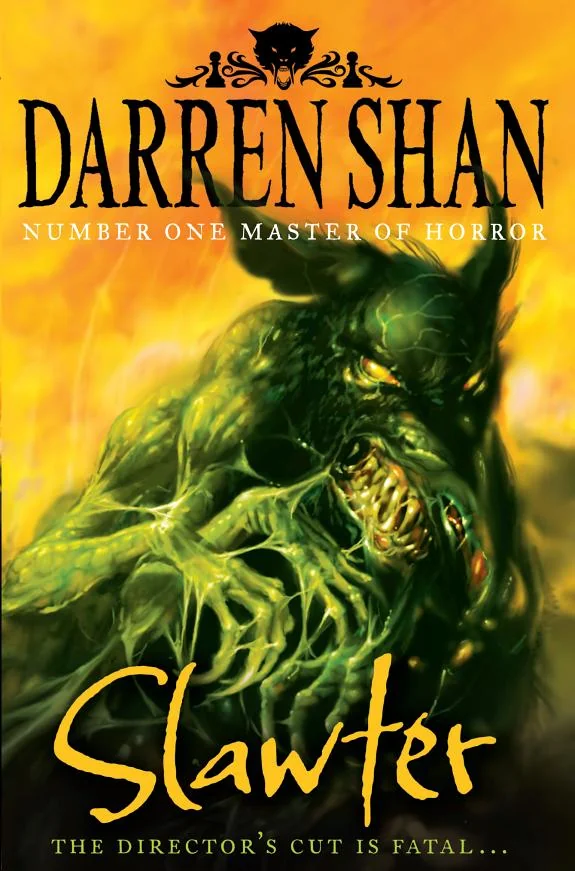
Slawter
 82
82

Slawter
Slawter charts the bleak genesis of Larten Crepsley, a vampire whose later exploits in Shan's original series painted him as a figure of both terror and reluctant nobility. The book's strength lies in its unflinching portrayal of a world that breeds monsters, forcing Crepsley into a life of violence from his earliest days. Shan doesn't shy away from the grim realities of his protagonist's existence, depicting a desperate struggle for survival that hardens him irrevocably. A particularly effective element is the depiction of the underground world of the 'Ghouls', a society built on predation and fear, which serves as Crepsley's initial crucible. However, the narrative occasionally feels constrained by its prequel status, sometimes sacrificing organic plot development for the sake of aligning with future events. The pacing, while generally brisk, can feel uneven as it races to establish foundational elements of Crepsley's mythos. Ultimately, Slawter provides a brutal, compelling origin story that complicates the character's later heroism.
📝 Description
82
Slawter, published in 2008, reveals Larten Crepsley's brutal origins.
Darren Shan's 2008 novel Slawter chronicles the early life of Larten Crepsley, a key figure from his earlier vampire saga. This book serves as a prequel, focusing on Crepsley's formative years and the events that shaped his complex morality and formidable reputation within the vampire world. The narrative explores how a character becomes what he is, examining the influences and choices that lead him down a particular path.
Fans of Shan's previous vampire series will find Slawter particularly resonant, as it expands upon the established lore. The novel appeals to readers who appreciate dark fantasy and coming-of-age stories with a grim outlook. It delves into the development of an anti-hero or even a villain, prioritizing character depth over explicit gore, though it does contain mature themes. The book situates itself within the young adult paranormal fiction genre but offers a perspective that is considerably darker and more morally ambiguous than many of its contemporaries.
Slawter engages with the trope of the dark origin story, a recurring motif in supernatural fiction that questions the nature of inherent evil versus environmental influence. It examines how formative experiences, particularly those involving violence and survival, can shape an individual's moral compass and predispose them to certain actions. The novel’s focus on the making of a morally gray character aligns with traditions that explore the blurred lines between hero and villain, and the societal or personal circumstances that can lead to such ambiguity. It offers a less romanticized, more grounded perspective on the development of a supernatural being.
💡 Why Read This Book?
• Understand the grim origins of Larten Crepsley, moving beyond his established persona to grasp the brutal circumstances that forged his character in the vampire world Shan created. • Experience a dark coming-of-age narrative where survival necessitates extreme measures, illustrating how harsh environments can shape morality and survival instincts. • Explore the concept of inherent versus learned evil through Crepsley's early life, questioning the nature of monstrosity and the choices that define it.
⭐ Reader Reviews
Honest opinions from readers who have explored this book.
❓ Frequently Asked Questions
Is Slawter a standalone book or part of a series?
Slawter is the first book in 'The Saga of Larten Crepsley' series, which serves as a prequel to Darren Shan's earlier 'The Saga of Darren Shan'. It focuses on the early life of the vampire Larten Crepsley.
What age group is Slawter recommended for?
The book is classified as young adult but contains significant violence and mature themes. It is generally recommended for readers aged 14 and older who are comfortable with darker fantasy and horror elements.
Does Slawter explain how Larten Crepsley became a vampire?
Yes, Slawter details the events leading up to Larten Crepsley's transformation into a vampire and his initial experiences in the vampire world, providing context for his later life.
Is this book necessary to understand Darren Shan's other vampire series?
While not strictly essential, reading Slawter provides significant background and depth to the character of Larten Crepsley, enhancing the understanding of his role and motivations in 'The Saga of Darren Shan'.
What is the tone of Slawter compared to other vampire fiction?
Slawter adopts a much darker, grittier, and more violent tone than many contemporary young adult vampire novels, focusing on survival and the harsh realities of a predatory existence rather than romance.
Who is Larten Crepsley?
Larten Crepsley is a central vampire character in Darren Shan's universe. He is depicted as a skilled warrior and a complex figure, known for his pragmatic approach to vampirism and his troubled past.
🔮 Key Themes & Symbolism
The Making of a Monster
Slawter interrogates the genesis of villainy, presenting Larten Crepsley not as inherently evil but as a product of extreme hardship and forced brutality. The narrative emphasizes how a desperate struggle for survival in a cruel world can strip away innocence and compel actions that define one as monstrous. It challenges the reader to consider whether Crepsley's later moral ambiguities stem from an innate darkness or the unforgiving circumstances of his youth, particularly his initial encounters with the predatory Ghouls.
Survival as a Moral Compass
The core of Slawter lies in its depiction of survival as the primary, often sole, driver of morality. In the brutal underworld Crepsley navigates, ethical considerations are a luxury few can afford. The book showcases how constant threat and the need for self-preservation necessitate ruthless decisions, blurring the lines between right and wrong. This theme is exemplified by Crepsley's early choices, where acts of violence, though disturbing, are presented as essential steps towards maintaining existence in a world that offers no quarter.
The Corruption of Innocence
The novel meticulously details the erosion of Larten Crepsley's youthful innocence. From his early life marked by abandonment and abuse to his forced entry into a violent, predatory society, the narrative illustrates a profound descent. Slawter doesn't glorify this corruption but presents it as a tragic consequence of a world that preys on the vulnerable. The stark contrast between Crepsley's initial state and his hardened persona highlights the devastating impact of his experiences.
The Vampire as Predator
Departing from romanticized portrayals, Slawter presents vampirism as a brutal, instinctual existence defined by predation and power dynamics. The book explores the raw, often violent, nature of these beings and the societies they form. It emphasizes the predator-prey relationship as fundamental to their world, where weakness is fatal. This perspective grounds the fantasy in a visceral reality, showcasing the inherent danger and the constant struggle for dominance among vampires and other dark creatures.
💬 Memorable Quotes
Direct passages from the work, attributed to the author.
“I was a killer. I was a thief. I was a murderer. I was a monster.”
— This self-assessment by Larten Crepsley expresses the book's exploration of identity shaped by brutal experiences. It highlights his acceptance, or perhaps resignation, to the dark labels imposed by his actions and his environment.
“There are worse things than death.”
— A recurring sentiment in Shan's work, this phrase suggests the profound suffering and degradation that can befall individuals, making mere physical cessation of life seem preferable to continued torment or a life devoid of meaning.
“The world is a dangerous place, and survival demands a strong heart and a sharp blade.”
— This statement reflects the harsh reality presented in Slawter, where vulnerability is punished and resilience is paramount. It underscores the novel's focus on the brutal necessities of existence in its dark fantasy setting.
“I learned early that mercy was a weakness that could get you killed.”
— This interpretation of Crepsley's formative experiences illustrates the novel's theme of survival dictating morality. It shows how compassion is perceived as a liability in a world where ruthlessness is essential for self-preservation.
💡 Key Ideas
Editorial paraphrase of the work's core concepts — not direct quotes.
They made me into what I am.
This line points to the external forces—abuse, societal pressures, and circumstance—that shaped Larten Crepsley. It suggests a deterministic view of his character, where his identity is a consequence of his environment rather than solely internal choices.
🌙 Esoteric Significance
Tradition
While 'Slawter' itself is not a direct treatise on a specific esoteric tradition, it draws heavily on archetypal themes found across various mystical and occult narratives, particularly those concerning the shadow self and the nature of transformation. Its exploration of becoming a 'monster' through circumstance echoes Gnostic ideas of material corruption and the struggle for gnosis (knowledge) to overcome it, albeit in a highly secularized and violent context. The narrative's focus on the harsh realities of existence and the forging of identity through suffering aligns with certain stoic and hermetic principles regarding resilience and self-mastery, even when those principles are applied to non-human entities.
Symbolism
The vampire archetype itself functions as a potent symbol of primal urges, the corrupting influence of power (immortality, strength), and the duality of existence—predator and, potentially, a being capable of complex emotion. The underground settings and the predatory 'Ghouls' symbolize the hidden, darker aspects of society and the psyche, representing the primal, instinctual forces that must be confronted or embraced for survival. Blood, a central element, symbolizes life force, power, and the inescapable cycle of consumption and existence that defines the vampire's reality.
Modern Relevance
Contemporary dark fantasy and horror literature continue to explore the 'monster as anti-hero' trope that Shan so effectively utilizes. Readers and writers interested in deconstructing traditional horror figures, examining the psychological underpinnings of violence, and exploring morally grey characters find resonance in Crepsley's journey. The novel's focus on the formative influences of environment and trauma on character development aligns with modern psychological and sociological understandings of identity, making it relevant to discussions about nature versus nurture within speculative fiction.
👥 Who Should Read This Book
• Fans of Darren Shan's previous 'Saga of Darren Shan' seeking to understand the origins of Larten Crepsley and the world he inhabits. • Young adult readers interested in dark fantasy and horror who appreciate character-driven narratives with morally complex protagonists. • Aspiring writers studying the craft of building compelling anti-heroes and exploring themes of survival and corruption in speculative fiction.
📜 Historical Context
Darren Shan's 'Slawter', released in 2008, arrived during a significant boom in young adult paranormal literature, largely dominated by the romantic vampire trope exemplified by Stephenie Meyer's 'Twilight' series, which had achieved massive cultural penetration. Shan's work, however, deliberately diverged from this trend. While authors like Melissa de la Cruz were exploring lighter vampire narratives, Shan doubled down on the grim, violent, and morally complex aspects of vampirism established in his earlier 'The Saga of Darren Shan'. 'Slawter' functions as a prequel, detailing the origins of Larten Crepsley, a character who already represented a departure from the typical brooding vampire. The book's reception built on the established fanbase of Shan's previous work, appealing to readers seeking darker fantasy narratives that eschewed sentimentality for brutal realism and character-driven horror. Unlike the widespread mainstream acclaim of 'Twilight', Shan's work maintained a strong following within the darker fantasy and horror communities.
📔 Journal Prompts
Larten Crepsley's transformation into a creature of the night.
The harsh realities of survival in the world presented.
The moral compromises made by characters for self-preservation.
The concept of 'monster' as a label applied by circumstance.
The initial encounters with the Ghouls and their societal structure.
🗂️ Glossary
Vampire
In Darren Shan's universe, vampires are supernatural beings who subsist on blood. They possess enhanced strength, speed, and senses, and achieve immortality. Their nature is often depicted as inherently predatory, though individual morality varies.
Ghoul
A type of subterranean creature that inhabits the underworld. They are depicted as savage, cannibalistic, and organized into a brutal society. Larten Crepsley has early interactions with them.
The Vampire Diet
The necessity for vampires to consume blood to survive and maintain their powers. This is a central aspect of their existence and often dictates their actions and interactions with other beings.
Circumstance
The external conditions and events that shape a character's life and choices. In Slawter, circumstance plays a central role in molding Larten Crepsley's personality and destiny.
Underworld
The subterranean realm inhabited by creatures like Ghouls and, later, where Larten Crepsley finds himself after his transformation. It is a place of darkness, danger, and brutal social hierarchies.
Transformation
The process by which a human becomes a vampire. This involves a significant physical and existential change, often accompanied by immense pain and a fundamental shift in being.
Predator
An organism that hunts and kills other organisms for food. In Slawter, this label is central to understanding the nature of vampires and many other creatures within the narrative's dark world.
🔮 Readers Also Liked
Browse all →









More by Darren Shan
All books →



More Free Occult Philosophy Books
View all →