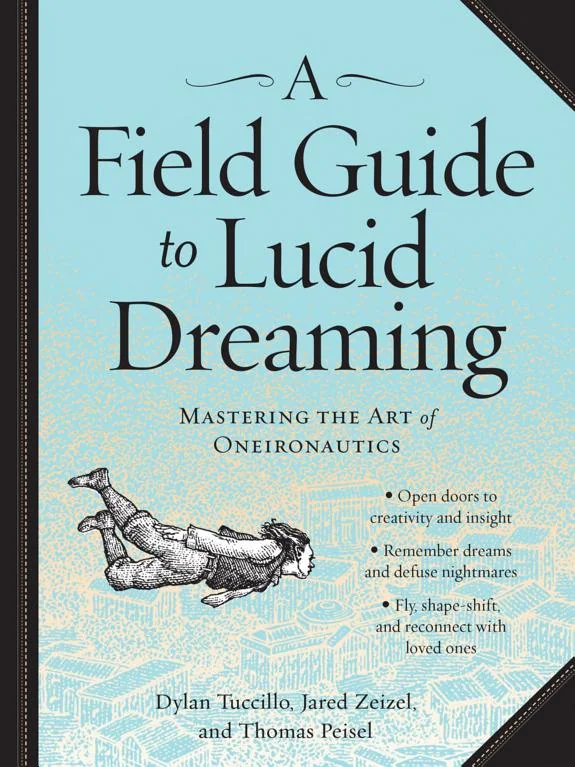
A Field Guide to Lucid Dreaming
 74
74

A Field Guide to Lucid Dreaming
Dylan Tuccillo, Jared Zeizel, and Thomas Peisel’s 'A Field Guide to Lucid Dreaming' refreshingly demystifies the practice of conscious dreaming. Eschewing overly esoteric jargon, the authors present lucid dreaming as an achievable skill, grounded in clear instruction. Their blend of scientific rationale with anecdotal experience makes the prospect of dream navigation feel less like a distant fantasy and more like a tangible pursuit. The section on 'dream signs'—recurring elements in one's personal dreamscape—is particularly effective, offering a concrete method for increasing lucidity. However, the book occasionally leans towards a slightly too-simplistic view of complex psychological phenomena, at times glossing over the deeper therapeutic implications that could arise from sustained lucid dream practice. Despite this, the direct, encouraging tone and the practical exercises make it a valuable primer for anyone curious about exploring their inner world consciously. It effectively serves its purpose as an introductory manual, sparking genuine interest and providing foundational tools.
📝 Description
74
Published in 2017, A Field Guide to Lucid Dreaming offers practical techniques for conscious awareness in dreams.
Dylan Tuccillo, Jared Zeizel, and Thomas Peisel wrote A Field Guide to Lucid Dreaming to provide accessible methods for achieving lucidity. The book explains how to recognize when you are dreaming and how to maintain awareness within the dream state. It combines scientific explanations of sleep and brain activity with direct advice and narrative examples. The authors present lucid dreaming not just as a curiosity, but as a tool for personal growth, sparking creativity, and understanding oneself better. This guide is suitable for newcomers to dreamwork, as well as those with experience in meditation or altered states of consciousness. It is for anyone interested in self exploration or who wishes to gain more insight and control over their dream life.
This 2017 guide emerged during a period of renewed public interest in consciousness studies. It builds upon scientific research into lucid dreaming, notably the work of figures like Stephen LaBerge from the 1980s. The book presents a modern, secular perspective on lucid dreaming, integrating psychological research with practices that have ancient roots. Its appearance aligned with a broader cultural acceptance of mindfulness and self awareness techniques, framing lucid dreaming as an approachable avenue for inner development.
💡 Why Read This Book?
• You will learn practical, step-by-step techniques for inducing lucid dreams, such as the MILD and WBTB methods, directly applicable from the chapter on induction strategies. • You will discover how to identify personal 'dream signs' within your unique dream narratives, a concept detailed in the book's exploration of dream recall and lucidity triggers. • You will gain actionable insights into leveraging lucid dreams for creative problem-solving and self-discovery, as demonstrated by the numerous examples provided throughout the guide.
⭐ Reader Reviews
Honest opinions from readers who have explored this book.
❓ Frequently Asked Questions
What are the main techniques for becoming lucid in a dream?
The book details several key methods, including reality checks performed throughout the day to question waking state, MILD (Mnemonic Induction of Lucid Dreams) to set intention before sleep, and WBTB (Wake Back To Bed) to interrupt and re-enter REM sleep consciously.
Can anyone learn to lucid dream?
The authors suggest that with consistent practice and the right techniques, most individuals can learn to achieve lucidity in their dreams. The book emphasizes patience and persistence, indicating it's a skill that develops over time.
What is a 'dream sign' and why is it important?
A dream sign is a recurring element, theme, or character that appears frequently in your dreams. Recognizing your personal dream signs, as explained in the guide, can act as a trigger for becoming lucid within the dream state.
How does lucid dreaming differ from regular dreaming?
In regular dreaming, you are typically a passive observer or participant without awareness of the dream state. In lucid dreaming, you achieve conscious awareness while dreaming, allowing you to observe, interact, and potentially influence the dream's content and direction.
Is lucid dreaming safe?
The book presents lucid dreaming as a safe and beneficial practice for self-exploration. It highlights that while the experience is vivid, you remain in a sleep state and typically wake up upon intense emotional reaction or direct intention to do so.
What are the benefits of lucid dreaming beyond just flying?
Beyond the thrill of flight, lucid dreaming offers opportunities for creative inspiration, problem-solving, confronting and processing fears, practicing skills, and gaining profound self-knowledge by interacting directly with your subconscious.
🔮 Key Themes & Symbolism
Conscious Dream Navigation
The central theme is achieving 'lucidity'—the state of being aware that you are dreaming while the dream is still in progress. This awareness transforms the passive experience of dreaming into an active exploration. The book provides practical strategies, such as implementing consistent reality checks and utilizing mnemonic induction techniques, to cultivate this conscious presence. It frames the dream world not as an uncontrollable illusion, but as a malleable inner landscape ripe for intentional engagement and discovery.
The Dreamscape as Inner Frontier
This work positions the dream world as a valid and fertile ground for personal growth, creativity, and psychological insight. It moves beyond the fantastical elements often associated with dreams to highlight their potential for problem-solving, healing, and self-understanding. By learning to navigate consciously, readers can engage with their subconscious mind directly, confronting fears, exploring desires, and accessing untapped creative potential, treating the dream state as an extension of waking life consciousness.
Practical Induction Techniques
A core focus is on the 'how-to' of lucid dreaming. The authors meticulously detail proven methods for increasing the likelihood of becoming lucid. This includes the importance of dream recall, identifying personal 'dream signs' that signal a dream state, and specific pre-sleep and interrupted-sleep protocols like MILD and WBTB. The emphasis is on systematic, repeatable practices that empower the reader to actively cultivate lucidity rather than passively waiting for it to occur.
Self-Knowledge Through Dreams
The book advocates for lucid dreaming as a powerful tool for introspection and self-discovery. By becoming aware within a dream, individuals can engage in dialogue with their subconscious, explore the roots of their anxieties or aspirations, and gain a deeper understanding of their own psyche. This process is presented as a form of inner exploration that can lead to significant personal insights and emotional integration, making the dream state a mirror to the self.
💬 Memorable Quotes
Direct passages from the work, attributed to the author.
“Imagine experiencing all the things that happen in dreams, but with one extraordinary difference: You are 'lucid'—consciously, joyously in control.”
— This captures the fundamental appeal of lucid dreaming: the transition from passive dreamer to active participant. It highlights the empowerment and potential for joy that conscious awareness within the dream offers, setting the stage for exploration and agency.
“Learn how to become a dream navigator and explore the strange and thrilling world of your nightly dreams.”
— This framing presents lucid dreaming as a skill to be learned, likening the practitioner to a navigator charting unknown territory. It emphasizes the active, exploratory nature of the practice and the potentially wondrous, albeit strange, experiences awaiting within the dream world.
“Refreshing blend of science, whimsy, and practical tips.”
— This concise description expresses the book's approach, suggesting a balanced methodology. It implies that the guide integrates scientific understanding with imaginative possibilities and actionable advice, making the complex topic of lucid dreaming approachable and engaging.
“The work explores the potential for creative thinking, healing, inspiration, and self-knowledge within the lucid dream state.”
— This interpretation focuses on the therapeutic and developmental applications of lucid dreaming. It underscores the book's perspective that conscious dream exploration can be a pathway to unlocking inner resources, fostering personal growth, and achieving greater psychological integration.
💡 Key Ideas
Editorial paraphrase of the work's core concepts — not direct quotes.
Not just an adventure (yes, you can fly), a lucid dream is a time ripe for creative thinking, healing, inspiration, and self-knowledge.
This quote elevates lucid dreaming beyond mere entertainment. It positions the dream state as a valuable resource for psychological and creative work, suggesting that conscious exploration can yield tangible benefits like innovation, emotional resolution, and deeper self-awareness.
🌙 Esoteric Significance
Tradition
While not strictly adhering to a single esoteric lineage, 'A Field Guide to Lucid Dreaming' aligns with traditions that emphasize the power of the mind and the exploration of inner realities. It echoes Gnostic ideas of inner awakening and the discovery of hidden knowledge within the self. Its practical, self-directed approach also appeals to modern Hermetic principles of 'as above, so below,' applying inner exploration to gain understanding of the outer world and one's place within it.
Symbolism
The act of 'flying' in a lucid dream is a potent symbol of liberation, transcendence of limitations, and mastery over one's personal circumstances or psyche. 'Dream characters' often represent aspects of the dreamer's own personality or unresolved psychological issues, offering opportunities for integration. The recurring 'dream signs' serve as symbolic keys, unlocking awareness and guiding the dreamer toward a more conscious engagement with their subconscious landscape.
Modern Relevance
This work remains highly relevant for contemporary practitioners of mindfulness, self-help, and consciousness studies. Its accessible techniques are often integrated into broader wellness practices. Thinkers and practitioners in fields like transpersonal psychology and even certain branches of modern shamanism draw inspiration from its structured approach to accessing altered states for personal insight and therapeutic benefit.
👥 Who Should Read This Book
• Aspiring dream explorers seeking a practical entry point into lucid dreaming, who want concrete techniques beyond theoretical concepts. • Individuals interested in psychological self-discovery and creativity, looking for tools to unlock subconscious insights and enhance problem-solving skills. • Meditators and mindfulness practitioners aiming to extend their awareness practices into the dream state and explore consciousness more fully.
📜 Historical Context
Published in 2017, 'A Field Guide to Lucid Dreaming' arrived at a time when interest in consciousness, mindfulness, and altered states was gaining mainstream traction, partially fueled by advancements in neuroscience and popular psychology. It built upon a long history of lucid dreaming research, notably pioneered by Dr. Stephen LaBerge in the 1980s with his work at Stanford University. While ancient traditions across various cultures have long spoken of dream awareness, the book reflects a modern, secular interpretation, focusing on empirical techniques and psychological benefits rather than solely mystical frameworks. Its release coincided with a broader cultural embrace of self-help and personal development tools. The work offered a contemporary counterpoint to more esoteric or purely spiritual approaches to dreamwork, presenting a grounded, accessible manual for a wide audience interested in exploring their inner lives.
📔 Journal Prompts
The conscious control over dream environments, such as the ability to fly.
Recurring 'dream signs' and their potential meaning.
The moment of realizing 'I am dreaming' within a specific dream.
Applying lessons learned from a lucid dream to waking life challenges.
The role of intention-setting (MILD) in influencing dream content.
🗂️ Glossary
Lucid Dreaming
The state of being aware that you are dreaming while the dream is occurring. This awareness allows for varying degrees of control over the dream's narrative, environment, and characters.
Reality Check
A deliberate action performed during waking life to question whether one is dreaming. Consistent practice of reality checks can carry over into dreams, triggering lucidity.
MILD (Mnemonic Induction of Lucid Dreams)
A technique involving setting a strong intention to remember that you are dreaming, often repeated during the night or upon waking briefly.
WBTB (Wake Back To Bed)
A method that involves waking up after a period of sleep, staying awake for a short duration (e.g., 20-60 minutes), and then returning to sleep with the intention of becoming lucid.
Dream Sign
A recurring element, theme, person, or object that frequently appears in an individual's dreams. Recognizing dream signs can serve as a cue for lucidity.
REM Sleep
Rapid Eye Movement sleep, the stage of sleep during which most vivid dreaming occurs. Lucid dreams are typically experienced during REM sleep.
Dream Recall
The ability to remember dreams upon waking. Improving dream recall is considered a foundational step for practicing lucid dreaming.