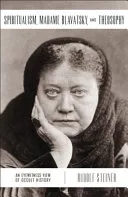
Spiritualism, Madame Blavatsky & Theosophy
 83
83

Spiritualism, Madame Blavatsky & Theosophy
Rudolf Steiner's engagement with the Theosophical movement, and particularly with Helena Blavatsky, is a crucial, often overlooked, nexus in the development of 20th-century esotericism. This compilation offers a direct look at Steiner's perspective, cutting through the often-hagiographic accounts of Blavatsky's influence. The strength lies in its presentation of Steiner's critical yet appreciative stance towards Blavatsky's foundational role. A limitation, inherent in a selection, is the potential for a fragmented view of Steiner's own expansive system, Anthroposophy, which he later developed independently. The passages discussing Blavatsky’s role in initiating a spiritual revolution, particularly her impact on figures like Jung, are particularly insightful for understanding the intellectual currents of the era. This work serves as a vital document for tracing the lineage of modern occult philosophy.
📝 Description
83
Rudolf Steiner's posthumously published writings connect 19th-century spiritualism with Theosophy's esoteric currents.
This volume gathers writings by Rudolf Steiner, whose intellectual development was significantly influenced by the spiritualist movement and the rise of Helena Petrovna Blavatsky's Theosophical Society. The selected texts examine the philosophical ideas and esoteric paths that took shape in the late 19th and early 20th centuries. Steiner's work here reflects on the intellectual lineage that grew from this period, impacting subsequent esoteric thinkers and movements.
Scholars of Western esotericism, students of Theosophy, and those interested in the intellectual heritage of figures like G.I. Gurdjieff, René Guénon, and C.G. Jung will find this collection valuable. It is especially relevant for anyone studying the origins of modern spiritual movements and their philosophical foundations. The late 19th century saw a marked increase in interest in spiritualism and Eastern thought, partly due to organizations like the Theosophical Society, founded in 1875. Blavatsky's texts, such as 'Isis Unveiled,' were central to this resurgence of spiritual inquiry.
This book sits within the Western esoteric tradition, specifically addressing the post-19th century surge in interest in spiritualism and Eastern philosophies. It follows the intellectual currents initiated by Helena Blavatsky and the Theosophical Society, which sought to synthesize Western occultism with Eastern religious and philosophical concepts. Rudolf Steiner, initially a prominent figure within Theosophy, later developed his own distinct path, Anthroposophy. The texts likely trace how Theosophical concepts, such as karma, reincarnation, and spiritual evolution, were interpreted and expanded upon within this milieu, forming a basis for later spiritual movements.
💡 Why Read This Book?
• Gain a direct understanding of Rudolf Steiner's view on Helena Blavatsky's pivotal role in establishing the Theosophical Society in 1875, a foundational event for modern esotericism. • Explore the intellectual landscape that fostered figures like G.I. Gurdjieff and C.G. Jung, understanding the seeds of 20th-century spiritual thought. • Grasp Steiner's critical perspective on the spiritualist movement and its impact, offering a nuanced view beyond simple acceptance or rejection.
⭐ Reader Reviews
Honest opinions from readers who have explored this book.
❓ Frequently Asked Questions
What is the primary focus of Rudolf Steiner's writings on Spiritualism and Madame Blavatsky?
The book focuses on Rudolf Steiner's analysis of the spiritualist movement and Helena Petrovna Blavatsky's foundational role in establishing the Theosophical Society, examining their impact on subsequent esoteric thought.
When was Rudolf Steiner's original work first published?
Rudolf Steiner's original work, from which these selections are drawn, was first published in 2002, though his writings predate this.
How does this book relate to the 'New Age' movement?
The book positions Blavatsky and the Theosophical Society as crucial precursors to the spiritual revolution of the 20th century, often termed the 'New Age,' influencing its subsequent thinkers and movements.
Who were some key contemporaries influenced by Blavatsky and Theosophy, according to Steiner?
Steiner identifies figures such as G.I. Gurdjieff, René Guénon, Hazrat Inayat Khan, Sri Aurobindo, R.A. Schwaller de Lubicz, and C.G. Jung as individuals whose work was shaped by the spiritual currents initiated by Blavatsky.
Is this book a biography of Madame Blavatsky?
No, it is not a biography. It is a collection of Rudolf Steiner's analyses and perspectives on the spiritualist movement, Blavatsky's work, and the Theosophical Society.
What kind of philosophical tradition does Steiner represent in this context?
Steiner's tradition is rooted in Theosophy, from which he later developed his independent spiritual science, Anthroposophy, critically examining the origins and influences of these movements.
🔮 Key Themes & Symbolism
Theosophical Genesis
This theme explores the foundational impact of Helena Petrovna Blavatsky and the Theosophical Society, established in 1875, on the esoteric field of the late 19th and early 20th centuries. Steiner's perspective highlights Blavatsky's role not just as a founder, but as a catalyst for a profound spiritual revolution. The selections examine how her work provided a framework that would influence a generation of thinkers seeking to integrate spiritual, philosophical, and scientific understanding.
Steiner's Critical Engagement
The text looks at Rudolf Steiner's specific intellectual relationship with the spiritualist movement and Blavatsky's Theosophy. It is not merely an endorsement but a critical examination, showing how Steiner engaged with these ideas, drawing from them while also developing his own distinct path, Anthroposophy. This theme addresses the nuances of his thought, appreciating the impetus provided by Blavatsky while charting his own philosophical and spiritual course.
Lineage of Esoteric Thought
This section traces the direct and indirect influence of Blavatsky and Theosophy on subsequent esoteric figures and movements. Steiner identifies key individuals whose intellectual and spiritual trajectories were significantly shaped by this milieu. Understanding this lineage is crucial for grasping the development of movements and philosophies that emerged throughout the 20th century, including aspects of what is often termed the 'New Age'.
Spiritual Revolution of the 20th Century
The selections underscore the argument that the spiritual and philosophical shifts of the 20th century, often associated with the 'New Age', are unimaginable without the pioneering work of Blavatsky and the Theosophical Society. This theme examines the wide impact of their initiatives on shaping new paradigms of spiritual understanding and practice that continue to resonate today.
💬 Memorable Quotes
Direct passages from the work, attributed to the author.
“Without the spiritualist movement and the amazing personality of Helena Petrovna Blavatsky... the spiritual revolution of the twentieth century... would be unimaginable.”
— This statement emphasizes Blavatsky's key and indispensable role in initiating the major esoteric and spiritual shifts that defined the 20th century, framing her as a singular catalyst.
“The work of Rudolf Steiner, G.I. Gurdjieff, René Guénon... could not have become what it was.”
— This highlights the interconnectedness of esoteric thought, suggesting that the intellectual and spiritual paths of prominent 20th-century thinkers were directly or indirectly influenced by the Theosophical current.
“Selections from the Works of Rudolf Steiner”
— This title indicates the book is not a singular treatise but a curated collection, offering glimpses into Steiner's broader philosophical and spiritual explorations concerning specific movements and personalities.
“first published 2002”
— This publication date signifies that while Steiner's thought is rooted in the late 19th and early 20th centuries, this specific compilation is a modern academic or editorial effort to present his views.
“the creator of the Theosophical Society”
— This straightforward description identifies Blavatsky's primary historical achievement, the founding of the Theosophical Society in 1875, positioning it as a key institution in esoteric history.
🌙 Esoteric Significance
Tradition
This work fits within the broad lineage of Western Esotericism, specifically the Theosophical tradition initiated by Helena Blavatsky. It represents a critical examination and subsequent development of Theosophical concepts by Rudolf Steiner, who sought to build a more rigorous spiritual science (Anthroposophy) upon its foundations. It bridges the gap between the more syncretic, often speculative, approach of early Theosophy and the more systematic, philosophical approach of Anthroposophy.
Symbolism
While specific symbols are not detailed in the provided blurb, Theosophy and Steiner's work often engage with universal archetypes and cosmological diagrams. Concepts like the 'Seven Rays,' 'Root Races,' and the intricate symbolism within Blavatsky's 'The Secret Doctrine' are central. Steiner himself utilized complex symbolic representations of spiritual evolution and cosmic processes, often drawing from Gnostic and Hermetic traditions.
Modern Relevance
Steiner's Anthroposophy, which grew out of his Theosophical engagement, continues to influence various contemporary movements, including Waldorf education, biodynamic agriculture, and alternative medicine (anthroposophical medicine). Thinkers and practitioners in these fields often trace their roots back to Steiner's interpretation of esoteric principles, making this work relevant for understanding their philosophical underpinnings.
👥 Who Should Read This Book
["• Students of Helena Blavatsky and the Theosophical Society: Those seeking to understand the historical and philosophical context of Theosophy's formation and its immediate impact.", '• Researchers of Western Esotericism: Individuals interested in tracing the intellectual lineage of 20th-century spiritual thought, particularly its connection to late 19th-century movements.', "• Followers of Rudolf Steiner and Anthroposophy: Readers who wish to explore Steiner's early engagement with Theosophy and how it shaped his later independent philosophical system."]
📜 Historical Context
The late 19th century was a fertile ground for esoteric revival, with Spiritualism gaining traction and Helena Blavatsky co-founding the Theosophical Society in 1875. Blavatsky's extensive writings, such as 'The Secret Doctrine' (1888), offered a complex synthesis of Eastern and Western mystical traditions, challenging prevailing scientific and religious orthodoxies. This period saw a growing interest in alternative spiritualities, partly as a reaction against materialism and the perceived limitations of established institutions. Rudolf Steiner, initially a prominent figure within the Theosophical Society, eventually broke away to form his own spiritual science, Anthroposophy. His engagement with Blavatsky's work, as presented in these selections, is crucial for understanding the intellectual currents that influenced figures like C.G. Jung, who was deeply interested in Theosophy and later explored Steiner's work. The reception of Theosophy was varied, attracting many adherents while also facing criticism and skepticism from both academic and religious circles.
📔 Journal Prompts
Madame Blavatsky's role in initiating a spiritual revolution.
Rudolf Steiner's perspective on the Theosophical Society's influence.
The impact of Blavatsky's work on contemporaries like C.G. Jung.
The spiritualist movement as a precursor to 20th-century esoteric thought.
Analyzing the foundational concepts of the Theosophical Society.
🗂️ Glossary
Spiritualism
A religious movement based on the belief that the spirits of the dead can be communicated with through a medium. It gained significant popularity in the mid-19th century.
Theosophical Society
Founded in 1875 by Helena Petrovna Blavatsky, Henry Steel Olcott, and William Quan Judge, it aimed to promote universal brotherhood, study comparative religion, and investigate unexplained laws of nature and the powers latent in humanity.
Helena Petrovna Blavatsky
A Russian occultist, spiritualist, and author who co-founded the Theosophical Society. Her extensive writings, like 'Isis Unveiled' and 'The Secret Doctrine,' were highly influential in esoteric circles.
Rudolf Steiner
An Austrian esotericist, philosopher, and social reformer who founded Anthroposophy. He was a leading figure in the Theosophical Society before establishing his own distinct path.
Anthroposophy
A spiritual philosophy developed by Rudolf Steiner, seeking to connect the spiritual and material worlds through a process of 'spiritual-scientific' investigation.
New Age
A broad term for a range of spiritual or religious beliefs and practices that emerged in the Western world during the 1970s, often drawing from Eastern religions, mysticism, and the occult.
Esotericism
Belief systems and practices that are concerned with the esoteric, or 'inner,' meaning of reality. It is often contrasted with exoteric approaches, which are outward or public.