Atlas der Chakras
 78
78

Atlas der Chakras
Govinda's "Atlas der Chakras" offers a commendable attempt to systematize the often-esoteric chakra system. Its strength lies in its detailed mapping of each energy center, linking them to tangible physiological and psychological states with a clarity rarely found in popular chakra literature. For instance, the section detailing the Ajna chakra’s connection to intuition and the pineal gland provides specific, actionable points for practitioners. However, the work occasionally leans towards a prescriptive tone, at times presenting interpretations as definitive truths rather than possibilities within a broader spiritual context. The original publication date of 2013 places it within a contemporary surge of interest, yet it manages to avoid the more superficial trends. The book is a solid resource for those seeking a structured approach to understanding these vital energy centers.
📝 Description
78
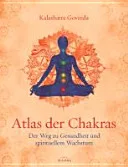
Kalashatra Govinda's Atlas der Chakras, published in May 2013, details the human subtle body's energetic centers.
Atlas der Chakras functions as a detailed manual for understanding the chakra system. Kalashatra Govinda maps the energetic centers within the human subtle body, moving beyond simple descriptions. The book provides insights into the physiological and psychological connections of each chakra, drawing from various traditions to give a complete perspective. Govinda aims to clarify the complex energetic anatomy, making it accessible for those who want to understand their inner workings more deeply.
This text is for individuals involved in spiritual, yogic, or esoteric practices. It assists practitioners of energy work, meditation, and yoga who want a more thorough anatomical and functional grasp of the chakra system. Students of comparative mysticism, psychology, and ancient healing methods will also find its cross-disciplinary approach useful. Those interested in how physical health, emotional states, and spiritual growth connect will find this a practical guide.
The chakra system, originating in ancient India, has a long history of interpretation across spiritual paths. Govinda's work, published in the early 21st century, appears at a time when Eastern esoteric concepts are common in the West, often in simplified forms. This book maintains fidelity to the original complexity of these concepts while making them relevant for contemporary seekers. It follows in the tradition of works that connect Eastern yogic philosophy with Western esoteric scholarship.
💡 Why Read This Book?
• Gain a structured understanding of the seven primary chakras, including their Sanskrit names like Muladhara and Svadhisthana, and their specific energetic functions, moving beyond generalized descriptions. • Explore the concept of Kundalini energy and its ascent, as detailed in the book, to grasp a foundational element of yogic spiritual development. • Learn about potential chakra blockages and imbalances, referencing the book's mapping of these energetic centers to physical and psychological well-being.
⭐ Reader Reviews
Honest opinions from readers who have explored this book.
❓ Frequently Asked Questions
What is the origin of the chakra system discussed in Atlas der Chakras?
The chakra system originates from ancient India, with its earliest mentions found in Vedic literature. Kalashatra Govinda's work explores these ancient concepts, tracing their development through various yogic and tantric traditions.
When was Atlas der Chakras first published?
Atlas der Chakras by Kalashatra Govinda was first published on May 28, 2013.
Does the book discuss the Kundalini energy?
Yes, Atlas der Chakras extensively discusses Kundalini, describing it as dormant spiritual energy at the base of the spine and detailing its potential ascent through the chakra system.
What kind of practices is this book most relevant for?
This book is highly relevant for practitioners of yoga, meditation, energy work, and various esoteric disciplines seeking a deeper, anatomical understanding of the subtle body.
Are the chakras linked to physical and psychological states in the book?
Absolutely. A key aspect of Atlas der Chakras is its detailed exploration of how each chakra correlates with specific physical organs, glands, emotions, and psychological functions.
What distinguishes this book from other chakra guides?
Atlas der Chakras distinguishes itself through its structured, almost anatomical approach to the chakra system, integrating yogic philosophy with psychological and physiological correlations, as established in its 2013 publication.
🔮 Key Themes & Symbolism
Chakra Anatomy and Function
The work meticulously details the seven primary chakras, presenting them not as abstract concepts but as distinct energetic organs within the subtle body. Each is assigned a Sanskrit name, like Muladhara at the root or Ajna in the brow, along with associated colors, elements, and specific psychosomatic functions. Govinda emphasizes the interconnectedness of these centers, illustrating how imbalances in one can affect the entire system, offering a complex energetic map for practitioners to study and integrate.
Kundalini and Spiritual Ascent
A central theme is Kundalini, the primal spiritual energy described as coiled at the base of the spine. The book explores the concept of its awakening and subsequent ascent through the central energetic channel (Sushumna Nadi) and the chakras. This journey is presented as a path towards higher consciousness and spiritual liberation, detailing the transformative potential unlocked as Kundalini rises, activating each chakra sequentially.
Holistic Well-being
Atlas der Chakras posits a direct correlation between the state of the chakras and an individual's overall health—physical, emotional, and mental. It elaborates on how specific chakras govern particular endocrine glands and organs, and how their energetic blockages manifest as psychological issues or physical ailments. The book thus serves as a guide for achieving balance and vitality by tending to these subtle energetic centers.
Comparative Esoteric Understanding
While rooted in yogic traditions, Govinda's work implicitly engages with broader esoteric studies. It bridges ancient Indian philosophy with contemporary understandings of consciousness and subtle energy, aiming to provide a coherent framework applicable to modern practitioners. The book's approach reflects a desire to synthesize diverse spiritual and psychological insights into a unified model of human energetic architecture.
💬 Memorable Quotes
Direct passages from the work, attributed to the author.
“The chakras are not merely points of light, but complex energetic organs governing our physical and psychological existence.”
— This statement highlights the book's core thesis: that chakras possess a functional, almost anatomical role within the subtle body, directly influencing our lived experience beyond abstract spiritual symbolism.
“Kundalini's ascent is the awakening of our inherent spiritual potential, a process mirrored in the activation of each chakra.”
— This interpretation emphasizes the transformative power of Kundalini, framing its journey through the chakras as the mechanism by which dormant spiritual capabilities are realized and integrated.
“An imbalance in the Manipura chakra can manifest as issues of personal power or digestive disturbances.”
— This illustrates the book's method of connecting specific energetic centers to concrete physical and psychological manifestations, providing practical points of reference for self-assessment.
“The Vishuddha chakra governs our capacity for authentic self-expression and communication.”
— This highlights the book's exploration of the psychological and communicative aspects associated with each chakra, particularly the throat chakra's role in voice and truth.
💡 Key Ideas
Editorial paraphrase of the work's core concepts — not direct quotes.
Understanding the energetic interplay between chakras is key to achieving holistic health.
This quote underscores the interconnectedness of the chakra system, suggesting that comprehensive well-being arises from harmonizing these energetic centers rather than treating them in isolation.
🌙 Esoteric Significance
Tradition
The work draws heavily from the yogic and Tantric traditions of India, which form the bedrock of understanding the chakra system. It aligns with esoteric interpretations that view chakras as vital energetic centers influencing consciousness and physical form. While rooted in these Eastern paths, its presentation seeks to be accessible to practitioners across various esoteric disciplines, bridging the gap between ancient wisdom and contemporary spiritual exploration in the post-2000 era.
Symbolism
Key symbols include the lotus flower, often depicted with varying numbers of petals corresponding to each chakra, representing spiritual unfolding. Colors are also significant, with each chakra associated with a specific hue (e.g., red for Muladhara, blue for Vishuddha), symbolizing its energetic qualities and functions. The serpent, representing Kundalini, is another potent symbol, signifying coiled, dormant spiritual energy awaiting awakening.
Modern Relevance
Contemporary practitioners of yoga, meditation, and energy healing frequently utilize the framework provided by works like "Atlas der Chakras." Its detailed mapping of energetic centers and their correlations with physical and psychological states informs modern therapeutic approaches and self-development practices. Thinkers and practitioners in fields such as somatic psychology and transpersonal psychology may also find its integrated model of subtle anatomy relevant to their work.
👥 Who Should Read This Book
• Yoga and meditation practitioners seeking a deeper, anatomical understanding of the chakra system beyond introductory texts. • Students of esoteric traditions interested in the energetic architecture of the subtle body and its connection to consciousness. • Individuals exploring holistic health and well-being who wish to understand the energetic underpinnings of physical and emotional states.
📜 Historical Context
Kalashatra Govinda's "Atlas der Chakras," published in 2013, emerged during a period of widespread popular interest in Eastern spirituality and alternative healing practices in the West. The early 21st century saw numerous books and workshops simplifying or reinterpreting concepts like chakras and Kundalini for a broad audience. Govinda's work positions itself within this milieu but aims for a more structured and detailed exposition, echoing earlier attempts by figures like C.W. Jung to integrate Eastern concepts with Western psychological frameworks. Unlike purely academic treatises, it draws on a lineage of esoteric scholarship that sought to make these teachings practical for spiritual aspirants. While not subject to specific censorship, the chakra system itself has faced skepticism from mainstream science, a contrast to the more mystical interpretations presented in works like this. Its publication reflects the ongoing dialogue between ancient traditions and modern seekers.
📔 Journal Prompts
The Muladhara chakra's role in grounding and security.
Manifestations of Svadhisthana chakra imbalances on emotional well-being.
The connection between the Manipura chakra and personal power.
Reflecting on the symbolism of the lotus petals associated with the Anahata chakra.
How the Ajna chakra influences intuition and perception.
🗂️ Glossary
Chakra
Sanskrit for 'wheel' or 'vortex.' In yogic traditions, these are energy centers located along the spine that govern various physical, emotional, and spiritual functions.
Kundalini
A primal spiritual energy, often depicted as a coiled serpent, believed to reside at the base of the spine, capable of ascending through the chakras upon awakening.
Muladhara
The first chakra, located at the base of the spine, associated with grounding, security, and physical survival.
Svadhisthana
The second chakra, located in the lower abdomen, associated with creativity, sexuality, and emotions.
Manipura
The third chakra, located in the solar plexus, associated with personal power, will, and digestion.
Anahata
The fourth chakra, located in the heart center, associated with love, compassion, and relationships.
Ajna
The sixth chakra, located between the eyebrows (the 'third eye'), associated with intuition, insight, and perception.