The holy war
 77
77

The holy war
Bunyan’s “The Holy War” offers a compelling, if occasionally relentless, depiction of the soul’s spiritual combat. Unlike the more personal journey of *The Pilgrim’s Progress*, this work presents a grand, almost strategic, overview of the forces arrayed against a Christian soul, personified as the besieged city of Mansoul. The sheer inventiveness in naming characters and places—Mr. Evil-Concupiscence, the town of Stench, the Diabolonian forces—is remarkable. However, the extended military metaphors can sometimes obscure the very spiritual truths they are meant to illuminate, making certain passages dense for the modern reader. The depiction of Mansoul’s fall and recapture, particularly the trial of the traitors, provides a vivid dramatization of repentance and divine justice. While it demands sustained attention, the book’s robust theological framework and enduring concern with spiritual integrity make it a significant, if challenging, read.
📝 Description
77
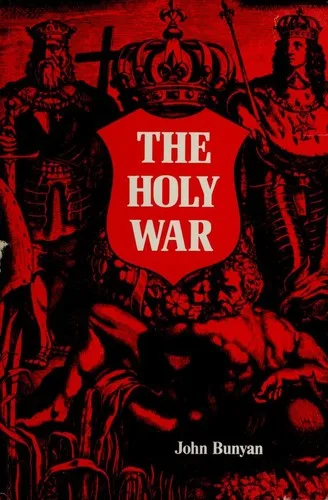
John Bunyan published "The Holy War" in 1682, an allegory of the soul's battle with sin.
Originally published in 1682, John Bunyan's "The Holy War" presents the Christian life as a military campaign. The narrative follows the city of Mansoul, which represents the human soul, as it contends with external forces of evil. Led by Emmanuel, the forces of good defend Mansoul against the schemes of the Lord of the World and his armies. The city is depicted as falling under siege, being conquered, and ultimately undergoing a process of redemption. The text details the internal struggles of Mansoul's inhabitants, who embody different aspects of the human mind and spirit.
This allegorical work delves into the constant vigilance necessary to maintain spiritual integrity. Bunyan, a Baptist preacher, wrote this during a time of significant religious and political change in England. The story uses personified vices and virtues to illustrate the ongoing conflict between good and evil within the individual. It is a significant piece within Puritan literature, showcasing Bunyan's skill beyond his more famous "The Pilgrim's Progress."
While "The Holy War" is primarily a theological allegory rooted in Puritanism, its depiction of the soul as a besieged city and the constant warfare against internal and external malevolent forces touches on themes found in broader mystical traditions. The focus on the inner life, the personification of spiritual states, and the struggle for divine allegiance resonate with contemplative practices that seek to understand and purify the self. The narrative's structure, charting the soul's fall and eventual restoration, mirrors cycles of spiritual ascent and descent explored in various contemplative paths.
💡 Why Read This Book?
• Gain insight into the Puritan concept of spiritual warfare, understanding the constant vigilance described in the battle for Mansoul. • Explore the detailed allegorical landscape Bunyan constructs, learning how specific locations and characters like Diabolus represent spiritual forces. • Appreciate the theological depth of Bunyan's 1682 work, grasping the complex interplay between divine sovereignty and human responsibility in maintaining faith.
⭐ Reader Reviews
Honest opinions from readers who have explored this book.
❓ Frequently Asked Questions
Is 'The Holy War' a sequel to 'The Pilgrim's Progress'?
While both works by John Bunyan are allegorical Christian narratives, 'The Holy War' is not a direct sequel to 'The Pilgrim's Progress.' It presents a different allegorical framework, focusing on the spiritual battle for the soul as a city rather than an individual's pilgrimage.
What is the significance of Mansoul in 'The Holy War'?
Mansoul, meaning 'man-soul,' is the central allegorical setting representing the human soul. Its governance, defense, and vulnerability to external forces like Diabolus illustrate the spiritual life and the constant struggle for righteousness.
Who is Emmanuel in the context of 'The Holy War'?
Emmanuel, meaning 'God with us,' is the benevolent King and commander who ultimately leads the forces of good in their efforts to reclaim Mansoul from the forces of Diabolonians, representing Christ's role in spiritual salvation.
When was 'The Holy War' first published?
John Bunyan's 'The Holy War' was first published in the year 1682, during a period of significant religious discourse and literary output by the author.
What makes 'The Holy War' relevant to esoteric studies?
Its allegorical structure, personification of spiritual forces, and depiction of the soul's internal conflict as an external war resonate with esoteric traditions that explore the nature of consciousness and the hidden battles of the spirit.
Are there different editions or annotated versions of 'The Holy War'?
Yes, various editions exist, including annotated versions like the one edited by Daniel V. Runyon and Derek Perkins, which often provide historical context and scholarly interpretation for readers of this 1682 text.
🔮 Key Themes & Symbolism
The Soul as Battlefield
The central theme is the human soul, symbolized by the walled city of Mansoul, as the primary arena for spiritual conflict. This concept aligns with esoteric views of consciousness as a space where internal and external forces contend for dominance. The narrative details the strategic importance of Mansoul’s gates and walls, representing the soul’s defenses against temptation and sin, personified by the Diabolonian forces and their leader, Diabolus.
Personification of Spiritual Forces
Bunyan masterfully personifies abstract spiritual and psychological concepts as characters and factions. Figures like Mr. Temptation, Mr. Covetousness, and the armies of Lord Will-bewill represent the various inner adversaries and external influences that challenge spiritual integrity. This technique echoes Gnostic and Hermetic practices of understanding cosmic and personal realities through symbolic archetypes and personified powers.
Redemption and Divine Intervention
The narrative arc of Mansoul, from its initial corruption and fall to its eventual liberation and restoration under King Emmanuel, highlights the themes of sin, judgment, and divine grace. This cyclical pattern of descent and ascent is a common motif in esoteric traditions, signifying the soul’s journey through trials towards spiritual enlightenment and reunification with the divine.
The Nature of Authority and Will
The work explores the struggle for control over Mansoul, reflecting the tension between human free will, divine sovereignty, and the external forces of temptation. The roles of Diabolus, Emmanuel, and the city’s own magistrates and inhabitants grapple with questions of obedience, rebellion, and the consequences of corrupted will, a theme frequently examined in theological and esoteric philosophy.
💬 Memorable Quotes
Direct passages from the work, attributed to the author.
“Mansoul, in a word, is the soul of a man.”
— This straightforward declaration by Bunyan explicitly defines the core allegory of the work. It grounds the entire narrative in the concept of the human soul as the central entity engaged in a profound spiritual struggle, making the allegorical city a direct representation of the reader's inner life.
“The Lord of the World, whose name is Diabolus...”
— This identifies the primary antagonist as Diabolus, the 'Lord of the World.' This framing positions the spiritual conflict not just as an internal human struggle but as a cosmic battle against a powerful, external entity representing evil and worldly corruption.
“The town of Stench was a village of evil repute.”
— This refers to a specific location within the allegorical landscape, symbolizing a place or state of being associated with moral decay and corruption. It illustrates Bunyan's method of using place names to denote spiritual conditions and influences.
💡 Key Ideas
Editorial paraphrase of the work's core concepts — not direct quotes.
And now the Lord Mayor of Mansoul, whose name was Mr. Understanding...
This quote introduces key personifications within Mansoul, highlighting the importance of understanding as a leadership faculty within the soul. It suggests that the soul's ability to perceive and comprehend is crucial for its governance and defense against external threats.
Emmanuel, that is, God with us, came down from heaven...
This quote introduces the divine protagonist, Emmanuel, signifying Christ's intervention in the spiritual battle. It underscores the theological belief in divine assistance as essential for the soul's salvation and victory over sin and evil.
🌙 Esoteric Significance
Tradition
While primarily a work of Puritan theology, "The Holy War" shares thematic resonances with esoteric traditions, particularly Gnosticism and certain schools of Hermeticism, through its emphasis on the soul's internal conflict and its personification of spiritual forces. The detailed depiction of the soul (Mansoul) as a fortified city under siege by malevolent entities mirrors Gnostic cosmology's view of the material world as a prison and the spiritual spark within humanity needing liberation from ignorant forces.
Symbolism
The city of Mansoul is the paramount symbol, representing the human soul, consciousness, and will. Its walls, gates, and internal structures (like the castle of Mount Gracious and the palace of the Soul) symbolize the soul's defenses, points of vulnerability, and inner faculties. Diabolus, the primary antagonist, embodies the principle of evil, worldly temptation, and the adversarial force that seeks to enslave the soul, a concept found in various mystical traditions' descriptions of the shadow self or negative forces.
Modern Relevance
Contemporary thinkers in fields like depth psychology and Jungian analysis find parallels in Bunyan's personification of inner demons and virtues. Practitioners of modern Western esoteric traditions, particularly those focused on spiritual warfare or the disciplined cultivation of consciousness, can draw upon the allegorical strategies and the robust depiction of the soul's resilience and capacity for redemption presented in "The Holy War."
👥 Who Should Read This Book
• Students of early modern English literature and religious history, to understand the allegorical methods and theological concerns prevalent in the late 17th century. • Practitioners of esoteric disciplines, to explore the symbolic representation of the soul's battle against internal and external negative forces, drawing parallels with their own spiritual practices. • Readers interested in comparative literature and theology, to examine how Christian allegorical traditions intersect with broader themes of consciousness, free will, and salvation found across different spiritual philosophies.
📜 Historical Context
Published in 1682, John Bunyan's "The Holy War" emerged from the fervent religious range of Restoration England. Bunyan, a prominent Puritan preacher, wrote this allegorical epic during a period marked by theological debates and the aftermath of the English Civil War. The year 1682 saw continued tensions between Protestant Dissenters, to which Bunyan belonged, and the established Anglican Church, alongside anxieties about Catholic influence under King Charles II. Bunyan's work can be seen as a vigorous defense of Protestant soteriology and the individual's spiritual struggle against perceived demonic forces, a common theme in Puritan literature. It offered a grander, more martial allegory than his earlier *The Pilgrim's Progress*, perhaps responding to the turbulent times. While Bunyan was a towering figure among Dissenters, his radical theological views occasionally drew criticism from more moderate Protestant factions, though direct engagement with "The Holy War" by specific contemporary authors is less documented than its broad impact on devotional literature.
📔 Journal Prompts
The siege of Mansoul and its vulnerability to Diabolus.
Mr. Understanding's role in Mansoul's defense and fall.
The nature of the Diabolonian forces' tactics against Mansoul.
King Emmanuel's strategy for reclaiming Mansoul.
The significance of the town of Stench in the allegorical landscape.
🗂️ Glossary
Mansoul
The allegorical city representing the human soul, the central focus of the spiritual warfare depicted in the book.
Diabolus
The personification of the Devil or a primary evil force, the 'Lord of the World,' who wages war against Mansoul.
Emmanuel
The King who leads the forces of good in their battle for Mansoul, representing Christ, whose presence signifies divine aid and salvation.
Diabolonians
The army and inhabitants allied with Diabolus, representing sinful temptations, corrupting influences, and forces that seek to enslave the soul.
Mr. Understanding
A character representing the faculty of understanding within the human soul, crucial for its governance and perception of spiritual truths.
The Lord Will-be-will
A character representing a rebellious or capricious will within Mansoul, often siding with Diabolus against true authority.
The Gates of Mansoul
Symbolic entry points of the soul, representing faculties or aspects through which external influences can enter, such as temptation or divine truth.
🔮 Readers Also Liked
Browse all →








More by John Bunyan, Daniel V. Runyon, Derek Perkins
All books →
More Free Spiritual Development Books
View all →