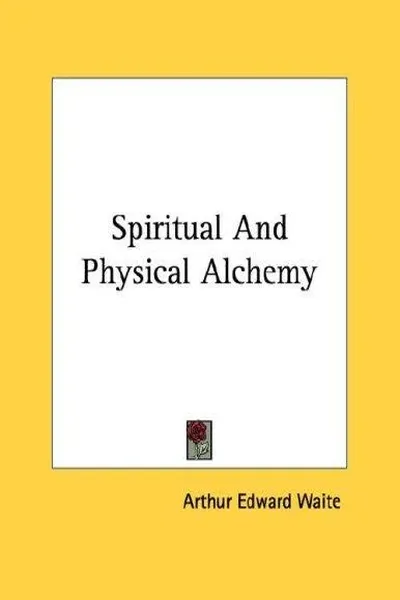
Spiritual Alchemy
 82
82

Spiritual Alchemy
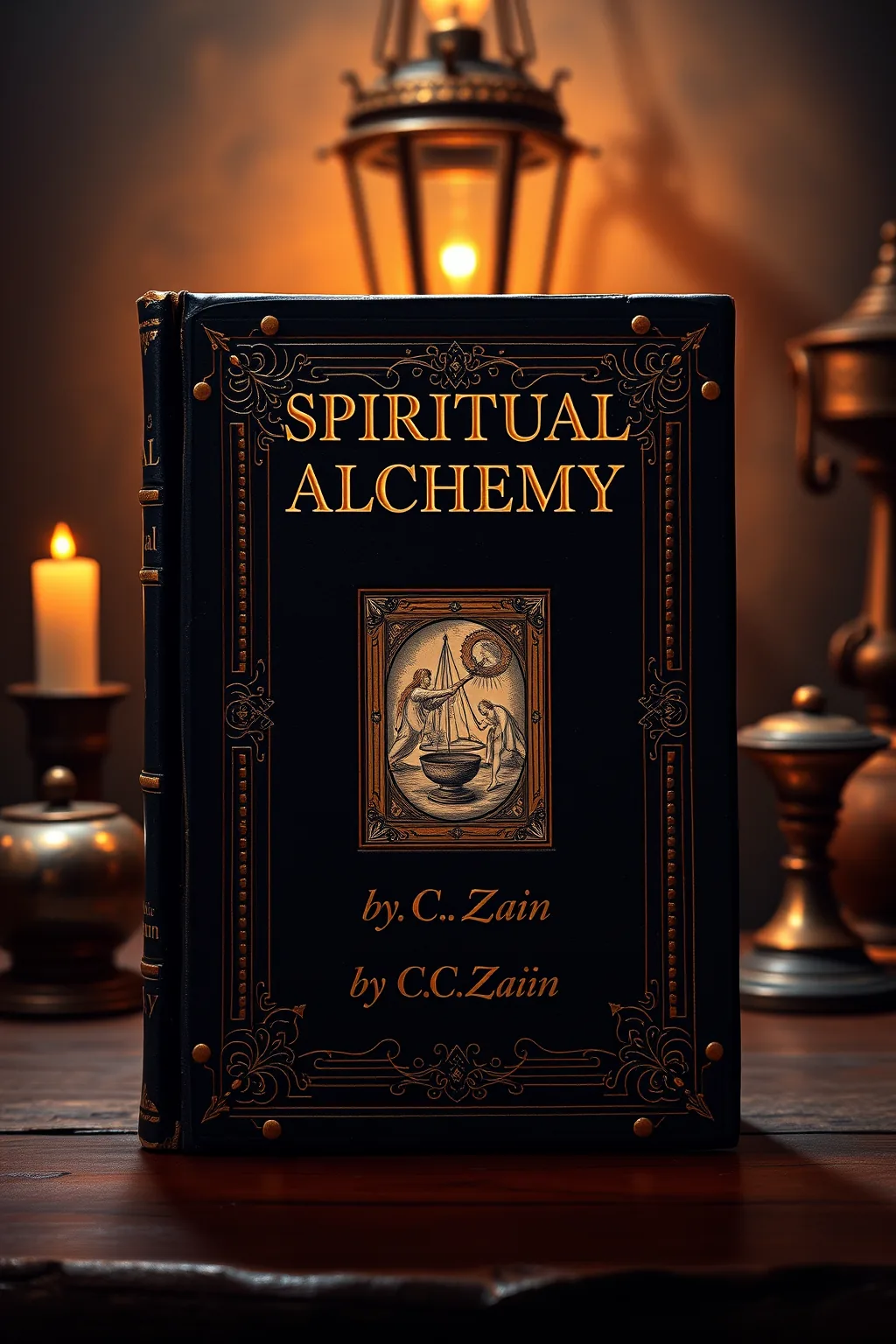
C. C. Zain's Spiritual Alchemy is a meticulously structured guide that attempts to demystify the esoteric language of the Great Work. Its strength lies in its systematic approach, presenting the complex stages of alchemical transformation as a clear, step-by-step process for inner growth. The author’s prose, while dense, is remarkably accessible for such a specialized subject, avoiding excessive jargon where possible. A particular point of clarity emerges in the explanation of the seven alchemical operations, which Zain maps effectively onto psychological states and spiritual disciplines. However, the book's limitation is its occasional rigidity; it presents a singular, definitive path, potentially overlooking the varied and more intuitive approaches favored by some practitioners. The detailed explication of *Calcination* as the initial breaking down of egoic structures is a powerful illustration of this. Ultimately, Spiritual Alchemy offers a robust framework for those seeking a disciplined, conceptual understanding of spiritual transformation through an alchemical lens.
📝 Description
82
First published in 1994, C. C. Zain's Spiritual Alchemy reinterprets alchemical processes as a metaphor for inner transformation.
Spiritual Alchemy by C. C. Zain, published in 1994, details alchemical principles as a guide for personal spiritual growth. It shifts focus from chemical procedures to the individual's internal purification and enlightenment. The book suggests that the complex stages of classical alchemy represent the soul's path toward a higher state of being. Zain presents alchemy not as a historical study but as a current practice for inner development.
This work is intended for those seriously pursuing spiritual understanding, especially within Western esoteric traditions. It offers a symbolic and practical alternative for individuals who find conventional religious structures lacking. Students of Hermeticism, Rosicrucianism, and related mystical schools will find substantial material here. A readiness to engage with symbolic language and abstract ideas is necessary for readers.
Emerging in the late 20th century, Spiritual Alchemy connects with a revival of esoteric subjects, partly influenced by figures like Manly P. Hall. The book synthesizes historical alchemical texts and philosophies into a unified system. While distinct from the Golden Dawn or Theosophy, it continues their work of interpreting ancient wisdom for contemporary seekers. Zain's approach also engages with the late 20th-century interest in Jungian psychology and its alchemical correlations.
💡 Why Read This Book?
• Gain a structured understanding of the seven alchemical operations (Calcination, Dissolution, Separation, Conjunction, Fermentation, Distillation, Coagulation) and their application to personal spiritual development, providing a systematic framework not found in more general spiritual texts. • Explore the symbolic parallels between metallurgical processes and the inner purification of the soul, learning how the *Prima Materia* and *Philosopher's Stone* represent stages of human potential and perfected consciousness. • Understand the Rosicrucian lineage and C. C. Zain's contribution to Western Esotericism, situating this 1994 publication within a historical movement of spiritual philosophy and practice.
⭐ Reader Reviews
Honest opinions from readers who have explored this book.
❓ Frequently Asked Questions
What is the primary goal of the alchemical process as described in Spiritual Alchemy by C. C. Zain?
The primary goal is spiritual transformation and inner purification, leading to the perfection of the soul. The work uses alchemical metallurgy as a metaphor for the internal Great Work of evolving human consciousness towards enlightenment.
Who was C. C. Zain and what is his background?
C. C. Zain was an American author and occultist active in the early to mid-20th century. He was a prominent figure in Rosicrucianism, serving as the Supreme Grand Master of the Ancient Mystical Order Rosae Crucis (AMORC).
Does Spiritual Alchemy focus on literal chemical transformations?
No, the book explicitly focuses on the spiritual and psychological dimensions of alchemy. While it references historical alchemical practices, its core subject is the inner work of the individual, not laboratory experiments.
What are the key stages of the Great Work according to Zain's book?
Zain outlines the seven stages: Calcination, Dissolution, Separation, Conjunction, Fermentation, Distillation, and Coagulation. Each represents a distinct phase of inner purification and integration.
Is Spiritual Alchemy suitable for beginners in esoteric studies?
It is suitable for beginners who are serious about in-depth study of Western Esotericism. While the concepts are advanced, Zain's systematic presentation makes it more accessible than many other alchemical texts.
When was Spiritual Alchemy first published, and what is its significance?
Spiritual Alchemy was first published in 1994. Its significance lies in its comprehensive and systematic approach to spiritual alchemy, offering a structured path for transformation within the Western esoteric tradition.
🔮 Key Themes & Symbolism
The Seven Alchemical Operations
The book systematically details the seven stages of the alchemical Great Work: Calcination, Dissolution, Separation, Conjunction, Fermentation, Distillation, and Coagulation. Each is presented not merely as a historical process but as a crucial step in the internal transformation of the practitioner. Zain elucidates how these stages correspond to psychological and spiritual purification, breaking down the old self and integrating higher consciousness, mirroring the transformation of base metals into gold.
The Philosopher's Stone as Inner Perfection
Central to the alchemical quest is the Philosopher's Stone, which Zain interprets as the perfected spiritual self. This is not an external elixir but the culmination of the inner Great Work. The book explores how the arduous processes of purification and refinement lead to the realization and manifestation of this inner divine potential, the ultimate goal of spiritual alchemy for the individual soul.
Prima Materia and Human Potential
Zain identifies the 'Prima Materia' or First Matter as the undifferentiated, raw potential inherent in every human being. This primal substance, often chaotic and unrefined, is the starting point for the alchemist's work. The book emphasizes that by understanding and working with this fundamental essence, individuals can begin the transformative process of spiritual alchemy, shaping their potential into a refined, enlightened consciousness.
Alchemy as a Path of Self-Realization
Spiritual Alchemy frames the entire alchemical tradition as a profound method for self-realization and spiritual liberation. It moves the focus from external transmutation to internal, psychological, and spiritual evolution. The text argues that the ancient alchemists encoded universal laws of spiritual development within their symbolic language, offering a practical, albeit symbolic, roadmap for the soul's journey.
💬 Memorable Quotes
Direct passages from the work, attributed to the author.
“The Work is the operation of the Great Work, performed by the Alchemist.”
— This statement underscores the active, participatory nature of spiritual alchemy. It is not a passive reception of grace but a deliberate, disciplined engagement by the individual in their own process of transformation and enlightenment.
“The Prima Materia is the foundation of all things, both material and spiritual.”
— This highlights the concept of a universal, undifferentiated substance that underlies all existence. In the context of spiritual alchemy, it represents the raw, untapped potential within the human being, the starting point for all inner development.
“Each stage of the alchemical process involves a death and a rebirth.”
— This succinctly describes the transformative nature of the alchemical journey. It implies that progress requires letting go of old patterns, limitations, and the egoic self, making way for a higher, more refined state of being.
“Alchemy is the science of the Soul.”
— This interpretation positions alchemy not as mere chemistry or metallurgy, but as a profound discipline dedicated to understanding and perfecting the human spirit and consciousness.
💡 Key Ideas
Editorial paraphrase of the work's core concepts — not direct quotes.
The Philosopher's Stone is the perfection of the Soul.
This paraphrase captures the essence of the ultimate goal in spiritual alchemy. The Stone is not an external artifact but the realized, purified, and enlightened state of the individual consciousness.
🌙 Esoteric Significance
Tradition
This work firmly belongs to the Hermetic and Rosicrucian streams of Western Esotericism. It represents a modern interpretation and systematization of ancient alchemical principles, reframing them as a direct path to spiritual realization and self-mastery. Zain's approach aligns with the Rosicrucian emphasis on inner transformation and the pursuit of divine wisdom through disciplined study and practice, making it a key text for understanding the evolution of these traditions.
Symbolism
Key symbols include the *Prima Materia*, representing the undifferentiated potential of the soul, and the *Philosopher's Stone*, symbolizing the perfected spiritual self. The seven operations—Calcination, Dissolution, Separation, Conjunction, Fermentation, Distillation, and Coagulation—function as a symbolic blueprint for psychological and spiritual purification, detailing the breakdown of the old self and the integration of higher consciousness.
Modern Relevance
Contemporary practitioners of Western Esotericism, particularly those involved in Hermeticism, Rosicrucianism, and symbolic studies, continue to draw on Zain's systematic framework. His work informs modern approaches to spiritual psychology and self-help that utilize archetypal and symbolic language, offering a structured method for inner work that appeals to seekers looking for depth beyond superficial spiritual trends.
👥 Who Should Read This Book
• Students of Western Esotericism seeking a structured understanding of alchemy as a path to spiritual growth, particularly those interested in Hermetic and Rosicrucian philosophies. • Individuals engaged in deep psychological or spiritual self-inquiry who are drawn to symbolic systems and allegorical journeys of transformation. • Researchers and practitioners interested in comparative mysticism who wish to explore the practical application of ancient alchemical concepts to modern life and consciousness.
📜 Historical Context
First published in 1994, C. C. Zain's *Spiritual Alchemy* emerged during a period of renewed interest in Western esoteric traditions, a resurgence partly fueled by the preceding decades' engagement with Jungian psychology and comparative religion. Zain, a prominent figure in the Rosicrucian Order AMORC, drew upon a deep well of historical alchemical literature, seeking to synthesize its symbolic language into a coherent system for personal development. This work stands in continuity with earlier 20th-century efforts by figures like Manly P. Hall to re-present esoteric wisdom for a modern audience. Unlike the more theatrical or ritualistic magical orders of the late 19th century, Zain's approach emphasized a systematic, almost philosophical, interpretation of alchemical processes. While not a direct response to a specific contemporary controversy, its detailed mapping of alchemical stages onto psychological processes implicitly engaged with the growing understanding of the psyche, offering an alternative to purely materialist or purely dogmatic spiritual explanations.
📔 Journal Prompts
The *Prima Materia* as your own raw potential: what aspects require refinement through spiritual alchemy?
Reflect on the *Calcination* stage: what egoic structures need to be broken down in your inner work?
How does the concept of the *Philosopher's Stone* inform your current spiritual aspirations?
Consider the *Distillation* process: what lessons are being purified and concentrated in your life experiences?
Map your personal spiritual journey onto the seven alchemical operations described by C. C. Zain.
🗂️ Glossary
Prima Materia
The First Matter; the fundamental, undifferentiated substance from which all things are created. In spiritual alchemy, it represents the raw potential of the human soul before purification and refinement.
Philosopher's Stone
The legendary alchemical substance capable of transmuting base metals into gold. In spiritual alchemy, it symbolizes the perfected, enlightened state of the soul, the ultimate goal of the Great Work.
Calcination
The first alchemical operation, involving the reduction of a substance to ash by intense heat. Spiritually, it represents the burning away of impurities, egoic attachments, and lower desires.
Dissolution
The process of dissolving solids into liquids. In spiritual alchemy, it signifies the breakdown of rigid mental structures and emotional blockages, allowing for emotional release and flexibility.
Separation
The act of dividing or isolating components. Spiritually, this involves discerning and separating higher spiritual truths from lower material concerns or illusions.
Conjunction
The joining of separated elements. In spiritual alchemy, it represents the integration of the spiritual and material aspects of the self, or the union of opposites.
Great Work
The Main work; the entire process of alchemical transformation, encompassing all stages from the initial preparation of the Prima Materia to the creation of the Philosopher's Stone.
🔮 Readers Also Liked
Browse all →









More by C. C. Zain
All books →




More Free Alchemy & Hermeticism Books
View all →