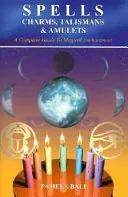
Spells, Charms, Talismans and Amulets
 77
77

Spells, Charms, Talismans and Amulets
Pamela Ball's "Spells, Charms, Talismans and Amulets" offers a refreshingly direct approach to a subject often clouded by arcane jargon. Ball, drawing from her decades as a dream counselor, grounds the esoteric in tangible practice, presenting methods for crafting magical objects with a clarity that feels both accessible and authoritative. A notable strength is the emphasis on personal agency; readers are encouraged to imbue their creations with their own energy and intent, making the practice deeply personal. However, the book sometimes leans heavily on assertion rather than detailed exploration of underlying magical theory, particularly when discussing the efficacy of specific materials. The section on protective amulets, while practical, could benefit from deeper dives into the historical lineages of the symbols proposed. Nevertheless, for those seeking a practical handbook to begin creating their own enchanted items, Ball's guide serves as a competent and encouraging starting point.
📝 Description
77
Pamela Ball's 2001 guide demystifies the creation of magical objects for personal use.
This book acts as a practical manual for making and using spells, charms, talismans, and amulets. It moves past theory, offering direct instructions based on Pamela Ball's experience as a spiritual counselor. Readers learn how to craft their own protective and empowering items.
The text is for those engaged in folk magic and occult practices who seek concrete methods. It details the specific construction and purpose behind various magical objects. Those interested in dream interpretation or spiritual guidance will find Ball's background adds a familiar depth to the instructions.
Published in 2001, this work reflects a late 20th and early 21st century trend towards practical occultism and personal magical development. It connects with older grimoire traditions and folk magic practices, adapting their principles for contemporary application. The book focuses on hands-on methods rather than purely theoretical or academic study of magic.
💡 Why Read This Book?
• Gain practical instruction on crafting talismans and amulets, learning specific techniques for imbuing them with personal intent, a method Ball details throughout her guide. • Understand the symbolic language of materials and forms used in enchantment, a core principle Ball emphasizes when discussing the selection of items for charms. • Develop a foundational understanding of personal energetic projection in magical object creation, as explained in Ball's approach to activating charms and amulets.
⭐ Reader Reviews
Honest opinions from readers who have explored this book.
❓ Frequently Asked Questions
What is the primary focus of Pamela Ball's "Spells, Charms, Talismans and Amulets"?
The book focuses on the practical creation and application of magical objects like spells, charms, talismans, and amulets. It guides readers on how to imbue these items with intent and energy for specific purposes.
Who is Pamela Ball, and what is her background relevant to this book?
Pamela Ball is an author and has been a professional dream counselor and spiritual guide for 30 years. Her extensive experience in advising thousands of individuals informs her practical approach to enchantment in this book.
When was "Spells, Charms, Talismans and Amulets" first published?
The book was first published in July 2001, reflecting a period of renewed interest in practical esoteric practices.
Does the book require prior knowledge of occult practices?
While prior knowledge can be helpful, Ball's book is designed to be accessible to beginners, offering clear instructions and explanations for those new to crafting magical items.
What kind of materials does the book suggest for creating charms?
The book explores the symbolic significance of various materials, encouraging readers to select items that hold personal meaning or possess traditional associations for their intended purpose.
Are the practices described in the book safe?
Ball emphasizes ethical considerations and focused intent, suggesting that the practices are safe when approached with clear purpose and personal responsibility, aligning with her background in spiritual guidance.
🔮 Key Themes & Symbolism
Intentional Object Creation
Ball stresses that the efficacy of spells, charms, talismans, and amulets hinges on focused, conscious intent. The book guides readers through the process of directing their personal energy and will into crafted objects. This involves not just the physical act of making but the mental and emotional state of the creator, transforming everyday items into conduits for specific magical outcomes or protective energies.
Symbolism of Materials
A significant aspect of the work involves understanding the symbolic resonance of various materials. Ball explores how elements like specific stones, herbs, metals, and even colors carry inherent energies and associations that can be harnessed. The selection of components is presented as a deliberate act, enhancing the object's power and aligning it with its intended purpose, whether for protection, attraction, or manifestation.
Personalized Enchantment
Departing from rigid, prescriptive magical systems, Ball champions a personalized approach. She encourages readers to draw upon their own life experiences, intuition, and understanding of symbolism. This fosters a deeper connection to the created objects, making the magical practice a more intimate and empowering expression of the individual's spiritual path, rather than mere adherence to external rules.
Practical Application
The book is fundamentally a practical manual. It aims to clarify enchantment by providing clear, step-by-step guidance. Ball's background as a counselor ensures that the advice is grounded and actionable, focusing on how to actually *do* the work, rather than merely theorizing about it. This makes the esoteric accessible to those who wish to integrate magical practices into their daily lives.
💬 Memorable Quotes
Direct passages from the work, attributed to the author.
“The power lies not just in the object, but in the intent you pour into it.”
— This highlights the core principle that magical efficacy stems from focused consciousness. The physical charm or talisman acts as a focal point, but the creator's will and intention are the true drivers of its power.
“Choose your materials with care; each holds its own voice.”
— This emphasizes the symbolic and energetic properties of components used in magical craft. It suggests that different substances resonate with different energies and purposes, requiring thoughtful selection.
“A well-made amulet is a shield for the spirit.”
— This interpretation underscores the protective function of talismans and amulets. It frames these objects as active defenses against negative influences, safeguarding the wearer's spiritual well-being.
“Enchantment is a dialogue between you and the world of spirit.”
— This positions magical practice as an interactive process, a form of communication and collaboration with subtle energies or spiritual forces, rather than a one-sided imposition of will.
“Your personal energy is the key ingredient.”
— This statement focuses on the vital role of the practitioner's own life force and consciousness in activating and empowering magical objects, suggesting it's the most critical element in the creation process.
🌙 Esoteric Significance
Tradition
This work draws implicitly from various folk magic traditions and the broader Western esoteric interest in sympathetic magic and object consecration. While not strictly adhering to a single lineage like Kabbalah or Theosophy, it carries the practical, imitative, and goal-oriented magic found in grimoires and folk practices across Europe and North America. It represents a modern interpretation of making and charging enchanted objects for personal benefit, emphasizing individual agency over strict adherence to ancient doctrines.
Symbolism
Key symbols often revolve around natural elements and geometric forms. For instance, the choice of a specific crystal might symbolize purity or strength, while the use of a particular knot in a charm could represent binding or protection. Runes, astrological symbols, or sigils, though not always explicitly detailed, are implied as potential symbolic elements that can be incorporated to amplify the object's intended magical function and connect it to broader cosmic energies.
Modern Relevance
Contemporary practitioners of witchcraft, modern paganism, and those interested in personal spiritual development continue to find value in Ball's straightforward approach. Her emphasis on personal intent and the symbolic power of materials aligns well with many contemporary magical philosophies that prioritize individual experience and creative expression over dogmatic adherence to established traditions.
👥 Who Should Read This Book
• Aspiring practitioners of folk magic seeking clear, actionable guidance on creating their own magical tools. • Individuals interested in the symbolic language of objects and how to imbue them with personal meaning and power. • Those exploring dream interpretation and spiritual guidance who wish to understand the tangible applications of intent and energy work.
📜 Historical Context
Pamela Ball's "Spells, Charms, Talismans and Amulets" was published in 2001, a period marked by the continued growth of the New Age movement and a popular interest in practical magic and personal empowerment. This era saw a proliferation of books aiming to clarify occult traditions, making them accessible to a broader audience beyond academic circles or established esoteric orders. Ball's work can be seen as contributing to this trend, offering a hands-on approach that contrasts with more theoretical or ritualistically complex texts. While not directly engaging with a specific philosophical school like Hermeticism or Chaos Magic in its explicit content, it taps into the general zeitgeist of self-directed spirituality. Contemporary authors like Doreen Virtue, also focusing on accessible spiritual guidance and angelic communication, were prominent during this time, reflecting a similar desire to connect individuals with tangible spiritual tools, albeit through different modalities.
📔 Journal Prompts
The materials chosen for a personal charm, and their symbolic significance.
The specific intent behind a talisman you might create.
Reflecting on the voice of a chosen material, as Ball suggests.
How personal energy can be directed into an object.
The protective qualities of an amulet designed for spirit shielding.
🗂️ Glossary
Spell
A magical formula or ritual intended to produce a specific effect or outcome, often involving spoken words, gestures, or the use of charged objects.
Charm
An object believed to possess magical properties, typically worn or carried for protection, good luck, or to influence events.
Talisman
An object inscribed with symbols or figures, believed to impart magical potency or protection to its owner, often created for a specific purpose.
Amulet
An object worn to ward off evil, illness, or harm; primarily serves a protective function.
Intent
The focused purpose or aim behind a magical act or creation; considered the driving force of enchantment.
Consecration
The act of dedicating or setting apart an object or space for sacred or magical purposes, often involving rituals to imbue it with spiritual power.
Sympathetic Magic
A type of magic based on the principle that like produces like, or that a cause affects its effect through a mystical connection, often involving the use of effigies or corresponding items.
This book appears in 1 collection
🔮 Readers Also Liked
Browse all →









From the “Talismans” Collection
View all →

More Free Occult Philosophy Books
View all →