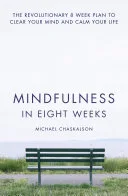
Mindfulness in Eight Weeks: The revolutionary 8 week plan to clear your mind and calm your life
 71
71

Mindfulness in Eight Weeks: The revolutionary 8 week plan to clear your mind and calm your life
Michael Chaskalson’s *Mindfulness in Eight Weeks* delivers precisely what its title promises: a clear, week-by-week pathway to establishing a mindfulness practice. The book’s strength lies in its systematic, no-nonsense approach, eschewing esoteric jargon for accessible guidance. Chaskalson’s strength is his ability to demystify complex psychological states into actionable exercises. For instance, the way he guides readers to observe the physical sensations of anxiety in Week 3, without immediate judgment, is particularly effective. A limitation, however, is that the secular focus, while intended for broad appeal, might leave practitioners seeking deeper philosophical or spiritual underpinnings wanting more. The book serves as an excellent introductory manual, a solid foundation for further exploration. It is a practical tool for gaining mental equilibrium.
📝 Description
71
Michael Chaskalson's 2014 book offers an eight-week plan to cultivate mental clarity and emotional calm.
Mindfulness in Eight Weeks is a practical guide structured around a seven-day program to help readers develop mental clarity and emotional calm. Michael Chaskalson provides a clear framework for incorporating mindfulness techniques into everyday life, moving from theory to concrete actions. The book focuses on simple, accessible exercises that do not require special equipment or settings, making the practice of mindfulness achievable for anyone looking for relief from modern life's pressures.
This book is for people feeling overwhelmed by stress, racing thoughts, or general unease. It suits those wanting a clear method to improve focus, handle difficult feelings, and become more present. Whether someone is new to mindfulness or has some experience but wants a more organized path, Chaskalson's plan offers a straightforward direction. It is especially useful for busy people needing a practice they can do at home on their own schedule.
Published in 2014, Chaskalson's work appeared during a time of increased public interest in secular mindfulness, building on foundations laid by figures like Jon Kabat-Zinn and his Mindfulness-Based Stress Reduction program. The book fits into a broader cultural shift where meditation and contemplative practices moved from religious contexts into mainstream wellness and therapy, recognized for their psychological and physical benefits. Chaskalson's specific eight-week format provides a structured entry into these ancient techniques for a modern audience.
💡 Why Read This Book?
• Gain a structured, week-by-week plan to cultivate present-moment awareness, as detailed in Chaskalson’s eight-week progression, offering a clear roadmap distinct from general mindfulness literature. • Learn to observe thoughts and emotions non-judgmentally, a core concept emphasized throughout the book, enabling a calmer internal state and better emotional regulation. • Develop practical skills for managing stress and improving focus through accessible, home-based exercises outlined in the book, making mindfulness achievable even for busy individuals.
⭐ Reader Reviews
Honest opinions from readers who have explored this book.
❓ Frequently Asked Questions
What is the primary goal of Michael Chaskalson's 'Mindfulness in Eight Weeks'?
The primary goal is to provide a structured, eight-week program for readers to cultivate mindfulness, leading to a clearer mind and a calmer life by developing present-moment awareness and non-judgmental observation of thoughts and feelings.
Is this book suitable for beginners with no prior meditation experience?
Yes, the book is specifically designed as a step-by-step guide for those new to mindfulness. Chaskalson's approach breaks down practices into manageable weekly stages, making it accessible for complete beginners.
How does 'Mindfulness in Eight Weeks' differ from other mindfulness books?
It offers a distinct eight-week progressive plan, making the learning process systematic and structured. The focus is on practical, home-based application rather than theoretical discourse, guiding users through tangible exercises week by week.
What kind of exercises can I expect in the book?
Expect a variety of exercises focused on developing present-moment awareness, such as mindful breathing, body scans, and observing thoughts. These are designed to be integrated into daily routines and are explained clearly for home practice.
When was 'Mindfulness in Eight Weeks' first published?
Michael Chaskalson's 'Mindfulness in Eight Weeks' was first published on September 11, 2014, positioning it within a period of growing interest in secular mindfulness practices.
Does the book require any special equipment or prior knowledge?
No, the book is designed for accessibility. It does not require any special equipment and assumes no prior knowledge of mindfulness or meditation, making it easy for anyone to start.
🔮 Key Themes & Symbolism
Present Moment Awareness
The core of Chaskalson's method is cultivating an unwavering focus on the 'now'. This theme is explored through progressive weekly exercises designed to anchor the reader's attention to immediate sensory experiences and bodily sensations. It moves beyond mere concentration to a quality of open, non-reactive observation, essential for understanding the nature of consciousness itself. The book emphasizes that true presence is not about emptying the mind but about observing its contents without identification, a subtle yet powerful shift in perspective.
Non-Judgmental Observation
A crucial element of mindfulness as presented in this work is the practice of observing thoughts, feelings, and sensations without labeling them as 'good' or 'bad.' This theme encourages a detached yet compassionate stance towards one's inner world. By fostering this attitude, readers learn to reduce internal conflict and reactivity, creating space for greater emotional resilience. The eight-week structure systematically builds the capacity for this gentle, accepting awareness, crucial for personal growth and mental well-being.
Structured Practice Progression
The book's defining feature is its systematic, week-by-week progression. Each module builds upon the last, introducing new techniques and deepening existing ones. This structured approach ensures that readers gradually develop their mindfulness skills, moving from foundational practices like mindful breathing to more complex integrations into daily life. This methodical development is key to establishing a sustainable practice, offering a clear path rather than an amorphous collection of advice.
Integration into Daily Life
Chaskalson stresses that mindfulness is not confined to formal meditation sessions but is a way of being that can permeate all activities. This theme guides readers on how to apply the principles of presence and non-judgment to everyday tasks, interactions, and challenges. The aim is to transform ordinary moments into opportunities for practice, thereby fostering a more conscious and engaged existence outside of dedicated meditation time. This integration is vital for lasting change.
💬 Memorable Quotes
Direct passages from the work, attributed to the author.
“Paying attention in a particular way: on purpose, in the present moment, and non-judgmentally.”
— This is Chaskalson's concise definition of mindfulness, serving as the foundational principle throughout the book. It highlights the active, intentional, and accepting nature of the practice, setting it apart from passive observation or mere relaxation.
“The mind is like a river, with thoughts constantly flowing.”
— This metaphor, used in the text, illustrates the transient nature of thoughts. It encourages readers to see mental activity not as solid entities to be fought, but as a continuous stream to be observed without attachment or resistance.
“Observe the sensations of anxiety without trying to change them.”
— This directive, likely found in the week addressing emotional regulation, encourages a direct, non-reactive engagement with difficult feelings. It's a practical instruction for developing resilience by experiencing discomfort without escalating it through resistance.
“Mindfulness can be practiced during any activity.”
— This interpretation underscores the book's emphasis on integrating mindfulness into daily life. It suggests that actions like eating, walking, or even mundane chores can become opportunities for present-moment awareness and practice.
💡 Key Ideas
Editorial paraphrase of the work's core concepts — not direct quotes.
A structured plan helps build a consistent habit.
This paraphrased concept reflects the book's core design. The eight-week framework is presented as a tool to establish a regular practice, emphasizing that consistency is key to realizing the benefits of mindfulness.
🌙 Esoteric Significance
Tradition
While *Mindfulness in Eight Weeks* is presented as a secular guide, its emphasis on non-judgmental awareness and present-moment focus echoes principles found in various contemplative traditions, including certain schools of Buddhism and Stoicism. It can be seen as a modern, explained interpretation of core meditative practices that have long been explored within esoteric frameworks for self-mastery and spiritual insight. The work departs from traditional esoteric texts by deliberately removing overt spiritual or metaphysical dogma, aiming for universal psychological applicability.
Symbolism
The book itself, through its structured eight-week plan, can be interpreted as a symbolic representation of a journey or a path. The progression through weeks symbolizes stages of inner development, moving from initial awareness to deeper integration. The concept of 'clearing the mind' can be seen as a symbolic shedding of mental clutter, akin to purification rituals in some traditions. The present moment, as the focus of practice, symbolizes the 'eternal now' or the divine spark accessible within each individual.
Modern Relevance
Contemporary thinkers and practitioners in fields ranging from positive psychology to secular Buddhism draw heavily on the principles popularized by works like Chaskalson's. Practices emphasizing mindfulness for mental health, stress reduction, and improved focus are now mainstream in therapeutic settings (e.g., MBCT - Mindfulness-Based Cognitive Therapy) and corporate wellness programs. This book's structured, accessible format makes it a relevant touchstone for anyone seeking practical tools for emotional regulation and cognitive enhancement in the digital age.
👥 Who Should Read This Book
• Individuals seeking a structured, step-by-step program to manage stress and anxiety, offering a clear roadmap for establishing a consistent mindfulness practice over eight weeks. • Beginners curious about mindfulness but intimidated by more complex or spiritually-oriented texts, as Chaskalson provides accessible language and practical exercises for home use. • Busy professionals or students looking for practical techniques to improve focus, concentration, and emotional resilience in their daily lives, with exercises designed for easy integration.
📜 Historical Context
Michael Chaskalson's *Mindfulness in Eight Weeks*, published in 2014, emerged during a significant cultural embrace of secular mindfulness. This period saw a surge in popularity for meditation techniques, largely influenced by the secularization of Buddhist practices, notably through programs like Jon Kabat-Zinn’s Mindfulness-Based Stress Reduction (MBSR), which began gaining traction in the late 1970s and early 1980s. Chaskalson's work fits within this broader trend, offering a structured, home-based approach distinct from the more intensive, often clinical, applications of MBSR. While not directly engaging with esoteric traditions, its widespread appeal tapped into a public yearning for mental clarity and stress reduction that resonated with both secular and spiritually-inclined individuals. The book’s accessible format contrasted with more philosophically dense explorations of consciousness, positioning it as a practical guide for a mass audience seeking tangible results in an increasingly demanding world.
📔 Journal Prompts
Reflect on the sensation of breath as the anchor during Week 1.
Describe a moment from Week 3 where you observed difficult emotions without judgment.
How did the concept of 'present moment awareness' shift your experience during Week 2?
Identify one daily activity from Week 5 that you can now approach with greater mindfulness.
Consider the metaphor of the mind as a flowing river from the book's interpretations.
🗂️ Glossary
Mindfulness
The practice of paying attention in a particular way: on purpose, in the present moment, and non-judgmentally. It involves cultivating awareness of one's thoughts, feelings, bodily sensations, and surrounding environment.
Present Moment Awareness
The state of being fully engaged with and aware of what is happening right now, without dwelling on the past or worrying about the future. It is a core component of mindfulness practice.
Non-Judgmental Observation
Observing thoughts, feelings, and experiences as they arise, without labeling them as good or bad, right or wrong. This attitude fosters acceptance and reduces emotional reactivity.
Body Scan
A mindfulness exercise where attention is systematically directed through the body, noticing any sensations (e.g., warmth, tingling, tension) without judgment. It helps to cultivate body awareness.
Anchoring
Using a focal point, such as the breath or bodily sensations, to help stabilize attention and return to the present moment when the mind wanders during practice.
Mental Chatter
The continuous stream of thoughts, worries, and internal dialogue that often occupies the mind, frequently contributing to stress and distraction. Mindfulness aims to observe this chatter.
Emotional Regulation
The ability to manage and respond to emotional experiences in a healthy and adaptive way. Mindfulness practices can significantly enhance this skill.