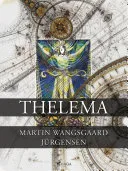
Thelema
 80
80

Thelema
Martin Wangsgaard Jürgensen's Thelema presents a starkly drawn portrait of an artist adrift, Konrad, whose grief over his lost girlfriend Rebecca becomes the fertile ground for a dangerous spiritual and sexual awakening. The introduction of Mia and Suzanna is handled with a deliberate, almost predatory, grace, immediately signaling the narrative's descent into darker territory. Jürgensen excels at depicting the seductive allure of the forbidden, painting Copenhagen not just as a backdrop but as a city harboring hidden currents of power and desire. The novel's strength lies in its unflinching exploration of how trauma can warp perception and open individuals to unconventional, even perilous, paths. A particularly effective sequence involves Konrad's art exhibition, where his personal anguish is channeled into works that draw the attention of his future mentors. However, the novel occasionally falters in fully developing the philosophical underpinnings of the cult, leaning more heavily on atmosphere and psychological suspense than explicit occult doctrine. The guru figure, while commanding, remains somewhat archetypal. Despite this, Thelema offers a compelling, often unsettling, examination of the human need for meaning and connection, even when found in the most shadowed places. It is a potent, if occasionally opaque, literary foray into the occult.
📝 Description
80
Martin Wangsgaard Jürgensen's 2019 novel, Thelema, follows an artist's descent into Copenhagen's occult underbelly.
The novel Thelema, by Martin Wangsgaard Jürgensen, plunges its readers into the shadowed corners of Copenhagen. It chronicles the descent of Konrad, a struggling artist grappling with the loss of his former lover, Rebecca. His life takes a sharp turn when he encounters Mia and Suzanna, two enigmatic women who draw him into a clandestine world. This is not a story of gentle awakening, but a forceful immersion into a subculture where the boundaries between intense personal expression, primal sexuality, and potent occult practices blur and dissolve.
The narrative details the allure of forbidden knowledge and the seductive power of charismatic leadership within a secretive group. This book is crafted for readers who appreciate dark, psychologically complex narratives that explore the fringes of human experience. It will appeal to those interested in literary fiction that engages with themes of occultism, bohemian lifestyles, and the intersection of art and ritual. Readers who are not afraid of mature themes and morally ambiguous characters will find this story particularly engaging.
Published in 2019, Thelema taps into enduring fascination with secret societies and occult traditions. The novel's exploration of a cult leader figure and the merging of sexuality with magic echoes themes found in certain strands of Western esotericism. It presents these through a contemporary, independent fiction lens, touching on how intense personal trauma can lead individuals towards unconventional spiritual or magical paths.
💡 Why Read This Book?
• Gain insight into the psychological pathways that can lead individuals from personal loss, like Konrad's grief over Rebecca, towards embracing esoteric practices and secretive communities. • Explore the convergence of artistic expression, sexual awakening, and occult ritual as depicted in the novel's atmospheric portrayal of Copenhagen. • Understand the dynamics of charismatic leadership and cultic influence within a contemporary narrative framework, examining how such figures exploit vulnerability.
⭐ Reader Reviews
Honest opinions from readers who have explored this book.
❓ Frequently Asked Questions
What is the primary theme of Martin Wangsgaard Jürgensen's Thelema?
The primary theme is the descent of an artist, Konrad, into a world of dark magic and sexuality after a personal tragedy, exploring themes of trauma, artistic expression, and cultic influence.
Who are the main female characters that influence Konrad?
Konrad is primarily influenced by Mia and Suzanna, two mysterious and alluring women who introduce him to a clandestine world.
In what city does the story of Thelema take place?
The novel is set in Copenhagen, Denmark, with the city serving as a backdrop for the protagonist's dark journey.
What is the original publication year of Thelema?
The book was first published on June 14, 2019.
Does Thelema focus on historical occult practices or a fictionalized version?
The novel fictionalizes the intersection of sexuality and dark magic, drawing inspiration from occult themes but presenting a unique narrative rather than a historical account of specific practices.
What is the protagonist's name and his initial state?
The protagonist is an artist named Konrad, who is deeply unhappy after losing his girlfriend, Rebecca.
🔮 Key Themes & Symbolism
Trauma and Transformation
The narrative hinges on Konrad's profound grief over Rebecca's absence. This personal void acts as an entry point for Mia and Suzanna, who offer an alternative path. The book suggests that deep suffering can paradoxically unlock hidden potentials, leading individuals towards radical self-reinvention, albeit through dangerous means. Konrad's artistic crisis mirrors his personal one, and his artistic expression becomes intertwined with his occult initiation, highlighting how creative energy can be channeled into esoteric pursuits.
Sexuality and Dark Magic
A central tenet explored is the potent synergy between sexual energy and occult power. Mia and Suzanna embody this fusion, guiding Konrad into practices where carnal desire is not merely indulged but actively used as a catalyst for magical effect. The book portrays this union as both intoxicating and perilous, suggesting that the unrestrained pursuit of such power can lead to moral compromise and loss of self. It questions the boundaries of personal freedom when intertwined with ritualistic practices.
Artistic Expression and Esotericism
Konrad's identity as an artist is fundamental to his journey. His art serves as both an expression of his inner turmoil and a means by which he attracts the attention of the cult. The novel posits that artistic sensitivity can make one more receptive to esoteric currents, and that the creative process itself can be a form of ritual. The gallery exhibition becomes a central scene where his personal anguish, amplified by his artistic output, draws him into the orbit of Mia and Suzanna.
Cult Dynamics and Leadership
The presence of a guru figure who controls life and death within the cult is a critical element. This highlights the power dynamics inherent in such groups, where devotion can devolve into subservience. The book examines the allure of belonging and the promise of enlightenment or transcendence offered by a charismatic leader, even at the cost of individual autonomy. Konrad's initial despair makes him particularly susceptible to such influence.
💬 Memorable Quotes
Direct passages from the work, attributed to the author.
“Konrad bor i København og har mistet sin kæreste Rebecca. Han er dybt ulykkelig.”
— This opening establishes the protagonist's profound despair and isolation, setting the stage for his vulnerability to external influences and his eventual immersion into the esoteric world.
“Et tilfældigt møde på en galleriudstilling af hans seneste kunstværker...”
— This highlights the central role of Konrad's art. His creative output, born from personal suffering, becomes the very means by which he is drawn into the narrative's central occult drama.
“...får ham i kontakt med nye sider af hans kreativitet og seksualitet.”
— This suggests a transformation initiated by external forces, linking artistic exploration directly with a burgeoning, possibly dangerous, sexual awakening under the guidance of the mysterious women.
“Han føres ind i en verden, hvor seksualitet og mørk magi forenes.”
— This concisely defines the core thematic convergence of the novel: the potent, often transgressive, union of carnal desire and occult power as the central allure and danger for the protagonist.
“Snart er han medlem af en makaber kult med en guru, som bestemmer over liv og død.”
— This points to the narrative's trajectory towards extreme devotion and the perilous dynamics of cult membership, emphasizing the absolute control wielded by the leader.
🌙 Esoteric Significance
Tradition
While the title 'Thelema' directly references Aleister Crowley's religion, the novel appears to engage with broader themes of Western esotericism rather than adhering strictly to Crowleyan dogma. It draws upon the Gnostic idea of liberation through forbidden knowledge and the Hermetic principle of 'as above, so below,' linking the microcosm of human experience (sexuality, art) to macrocosmic forces (magic). The work positions itself within a contemporary literary exploration of occultism, using established symbolic language to explore personal transformation and the darker aspects of spiritual seeking.
Symbolism
The book utilizes several potent symbols. The figure of the artist, Konrad, represents the soul seeking meaning and transcendence through creation. Mia and Suzanna act as psychopomps or guides, leading the protagonist from his mundane suffering into the underworld of occult power. The cult itself symbolizes the allure and danger of collective spiritual identity, where individual will can be subsumed by the will of a charismatic leader, promising liberation but potentially delivering control.
Modern Relevance
Contemporary thinkers and practitioners interested in the intersection of psychology, art, and spirituality find resonance in Thelema's exploration of how personal trauma can be a catalyst for profound, albeit risky, transformation. It speaks to modern anxieties about authenticity, the commodification of spiritual experience, and the search for meaning in secularized societies. The novel's depiction of merging sexuality with occult practices aligns with ongoing discussions in contemporary occultism regarding the integration of all aspects of the self, including the carnal, into spiritual development.
👥 Who Should Read This Book
• Readers interested in literary fiction that explores the darker currents of occultism and bohemian lifestyles, particularly those who appreciate psychologically complex characters. • Individuals curious about fictional portrayals of cult dynamics, charismatic leadership, and the potential for personal transformation through unconventional or forbidden paths. • Those drawn to narratives that examine the interplay between artistic creation, intense sexuality, and esoteric practices, offering a unique perspective on the human psyche's response to grief and desire.
📜 Historical Context
Published in 2019, Martin Wangsgaard Jürgensen's Thelema emerged during a period of renewed popular interest in esoteric subjects, fueled by the internet and a cultural appetite for narratives exploring alternative spiritualities and the occult. While the novel is fictional, it taps into perennial themes within Western esotericism, such as the Gnostic concept of awakening from illusion and the symbolic association of sexuality with spiritual power, which has precedents in movements like Tantra and certain interpretations of Hermeticism. It arrives decades after the counter-cultural explosion of the 1960s, which saw figures like Aleister Crowley, a key figure in Thelema, gain wider (though often sensationalized) recognition. The book's exploration of a charismatic cult leader and its merging of dark magic with intense personal experience can be seen as a contemporary fictional engagement with anxieties surrounding manipulation and power within spiritual seeking, a concern echoed in societal reactions to various new religious movements throughout the 20th century.
📔 Journal Prompts
Konrad's despair over Rebecca as a gateway to the occult.
The fusion of Mia and Suzanna's allure with dark magic.
The artist's role in channeling personal suffering into esoteric practice.
The guru's control over life and death within the cult.
Copenhagen as a setting for hidden magical currents.
🗂️ Glossary
Thelema
A term associated with Aleister Crowley's religion, meaning 'Will' in Greek. It emphasizes individual freedom and the pursuit of one's True Will, often involving unconventional practices.
Occultism
A category of esoteric traditions focusing on hidden knowledge and practices concerning the supernatural, spiritual forces, and the universe, often involving magic, alchemy, and divination.
Cult
A group or movement exhibiting a high degree of devotion to a leader, ideology, or deity, often characterized by isolation, control over members' lives, and unconventional beliefs or practices.
Guru
A spiritual teacher or master, often revered, who guides disciples on their spiritual path. In a cult context, the guru's authority can become absolute.
Gnostic
Relating to Gnosticism, an ancient religious movement emphasizing personal spiritual knowledge (gnosis) for salvation, often viewing the material world as flawed or evil.
Hermeticism
A philosophical and religious tradition based on the purported teachings of Hermes Trismegistus, emphasizing the unity of all things and the possibility of achieving higher states of consciousness.
Esoteric
Intended for or likely to be understood by only a small number of people with a specialized knowledge or interest; relating to hidden knowledge or spiritual disciplines.