River of Fire
 76
76

River of Fire
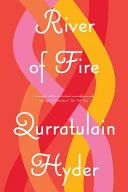
Qurratulain Hyder's *River of Fire* is a monumental achievement, a sprawling narrative that interrogates the very fabric of history and consciousness. Its ambition to map the subcontinent's soul across millennia is breathtaking, particularly in its depiction of the enduring spiritual and cultural currents that bind disparate eras. The novel excels in its portrayal of characters who, though separated by centuries, seem to echo one another's desires and struggles, suggesting a profound continuity of the human spirit. However, the sheer scale and intricate layering of its timelines can, at times, feel overwhelming, demanding a sustained focus from the reader. A particularly striking element is the recurring motif of the protagonist, Champa, whose reincarnated or ancestral echoes appear across different epochs, underscoring the novel's exploration of karma and cyclical existence. This is not a book for casual reading; it is an immersion into a vast historical and philosophical landscape. *River of Fire* offers an unparalleled literary experience for those willing to undertake its profound exploration of time and identity.
📝 Description
76
Qurratulain Hyder's *River of Fire* was first published in 1959.
This novel traces the history of the Indian subcontinent across centuries, linking individual lives through immense periods of time. The story moves from the ancient Mauryan Empire to the 1947 Partition and its aftermath. It examines the human experience as it endures through great societal change.
*River of Fire* is suited for those who enjoy historical fiction that goes beyond typical limits. Readers interested in identity, memory, and the recurring patterns of time, especially concerning India, will find it engaging. Its complex structure and deep themes are particularly valuable for students of postcolonial literature and comparative history.
Published in 1959, the novel addresses the era's literary concerns about colonialism's impact and the formation of new national stories. Hyder's book, however, presents a broader philosophical view. It draws from a rich Indo-Persian literary tradition, setting it apart from writings focused more on politics or nationalism. The book was well received and cemented Hyder's literary standing.
Hyder's work draws upon a deep Indo-Persian literary heritage, connecting historical narratives with philosophical perspectives. The novel's central metaphor, the 'river of fire,' represents the ceaseless flow of time and the transformative, often destructive, forces of history. This aligns with esoteric traditions that view time not as linear but as cyclical and imbued with symbolic meaning, where past, present, and future intermingle. The exploration of persistent archetypes in human experience and the fluidity of identity across generations also resonates with ideas found in various mystical and philosophical streams that look beyond surface-level historical events to underlying patterns.
💡 Why Read This Book?
• Understand the concept of cyclical time and historical recurrence as explored through the recurring character of Champa, a central figure across multiple historical periods. • Grasp the intricate relationship between personal memory and collective history within the context of the Indian subcontinent, particularly as it evolved from ancient times to the Partition. • Experience a literary style that blends historical narrative with philosophical inquiry, offering a unique perspective on human consciousness shaped by the 1959 publication context.
⭐ Reader Reviews
Honest opinions from readers who have explored this book.
❓ Frequently Asked Questions
When was Qurratulain Hyder's River of Fire first published?
Qurratulain Hyder's *River of Fire*, originally titled *Aag ka Darya*, was first published in Urdu in 1959, making it a significant work of mid-20th century South Asian literature.
What historical periods does River of Fire cover?
The novel spans a vast sweep of history, from the ancient Mauryan Empire, through the Mughal era, the British Raj, and culminating in the Partition of India in 1947 and its aftermath.
Is River of Fire a historical novel or something more?
While deeply rooted in history, *River of Fire* transcends simple historical fiction. It incorporates elements of philosophy, mysticism, and a cyclical view of time, exploring the enduring human spirit across epochs.
What is the significance of the title 'River of Fire'?
The title 'River of Fire' is a metaphor for the relentless, transformative, and often destructive passage of time and history, shaping and reshaping lives and civilizations.
How is the concept of reincarnation or recurrence presented in the book?
The novel explores the idea of souls or consciousness reappearing across different eras, most notably through the character of Champa, whose presence and experiences echo through various historical settings.
What is the literary importance of River of Fire?
Considered a masterpiece of Urdu literature, *River of Fire* is lauded for its epic scope, complex narrative structure, and profound exploration of identity, history, and the human condition in the South Asian context.
🔮 Key Themes & Symbolism
Cyclical Time and History
The novel posits history not as a linear progression but as a series of recurring cycles, echoing patterns of human behavior and societal change. This is embodied in the recurring presence of characters like Champa across different eras, suggesting a spiritual or karmic continuity that transcends individual lifetimes. The 'river of fire' itself symbolizes this ceaseless, transformative flow, where past, present, and future are interwoven, challenging conventional notions of historical causality and individual destiny.
Identity and Collective Memory
Hyder meticulously examines how individual and collective identities are forged and transformed by historical events and cultural memory. The novel explores the complex interplay of influences—ancient traditions, colonial encounters, and nationalist aspirations—that shape the South Asian consciousness. It questions the stability of identity in the face of profound societal upheaval, such as the Partition, suggesting that true selfhood emerges from an understanding of one's deep historical roots and the continuous narrative of existence.
The Enduring Human Spirit
Despite the vast temporal distances and the often harsh realities of history, *River of Fire* highlights the persistent threads of human emotion, spiritual seeking, and the quest for meaning. Characters, whether ancient mystics or modern individuals, grapple with universal themes of love, loss, ambition, and disillusionment. The novel suggests a fundamental resilience and continuity in the human spirit, capable of finding solace and purpose even amidst the destructive currents of time and conflict.
Myth and Archetype
Hyder draws heavily on Indian mythology, folklore, and spiritual traditions to imbue her narrative with archetypal resonance. Figures and motifs from ancient epics and spiritual texts are reinterpreted and woven into the fabric of the novel's historical collection. This use of myth provides a framework for understanding the deeper, often unconscious, forces that drive historical events and shape human experience, connecting the specificities of the Indian subcontinent to universal human narratives.
💬 Memorable Quotes
Direct passages from the work, attributed to the author.
“History is a river of fire.”
— This central metaphor expresses the novel's view of time as a relentless, transformative, and often destructive force that shapes civilizations and individual lives.
“The past is never dead. It is not even past.”
— This carries the novel's theme of cyclical time and the persistent influence of historical events and ancestral memories on the present.
“Identity is a fragile construct, easily reshaped by time and circumstance.”
— The novel explores how personal and collective identities are fluid, constantly being redefined by historical forces and the elements of past lives.
“Across centuries, the same human desires and follies repeat.”
— This highlights the novel's perspective on the enduring nature of the human spirit and the archetypal patterns that repeat throughout history.
“Memory is the only true homeland.”
— This suggests that for characters displaced by history or time, memory becomes a vital anchor, a persistent sense of belonging and continuity.
🌙 Esoteric Significance
Tradition
While not strictly adhering to a single lineage, *River of Fire* draws heavily from Indic spiritual traditions, particularly Hinduism and Buddhism, with their concepts of karma, reincarnation, and cyclical time (kalpas). It also echoes Sufi mysticism's emphasis on the eternal return and the interconnectedness of all beings. The novel departs from rigid doctrines by combining these elements into a sweeping historical narrative, focusing on the experiential and psychological dimensions of spiritual continuity rather than theological dogma.
Symbolism
The titular 'river of fire' is a potent symbol, representing the relentless, transformative, and purifying (or destructive) flow of time and historical change. It signifies the ceaseless cycle of birth, death, and rebirth, both for individuals and civilizations. The recurring motif of the 'lost kingdom' or ancient empires evokes a sense of impermanence and the cyclical rise and fall of human endeavors, prompting reflection on the eternal versus the ephemeral.
Modern Relevance
Contemporary thinkers and practitioners exploring concepts of deep time, collective consciousness, and the cyclical nature of history find resonance in Hyder's work. Spiritual teachers and writers focusing on karma, reincarnation, and soul journeys often cite *River of Fire* as a literary exploration of these themes. Its examination of identity formation in the wake of historical trauma also speaks to modern discussions on decolonization and the persistence of cultural memory in a globalized world.
👥 Who Should Read This Book
• Readers fascinated by the concept of reincarnation and karmic cycles seeking a literary exploration of these ideas across vast historical spans. • Students of South Asian history and culture interested in a narrative that transcends a linear view, connecting ancient eras to the modern Partition. • Literary enthusiasts who appreciate epic, multi-generational sagas that blend historical detail with philosophical and spiritual inquiry.
📜 Historical Context
Published in 1959, *Aag ka Darya* (*River of Fire*) emerged in a post-independence India grappling with the monumental task of nation-building and redefining its cultural identity after centuries of colonial rule. The literary landscape was vibrant, with writers like Premchand having already explored social realism, and the Progressive Writers' Movement advocating for socially relevant art. Hyder's novel, however, offered a more expansive, almost metaphysical perspective, moving beyond immediate political concerns to explore the deep currents of Indian history and consciousness. It engaged with the legacy of the Mauryan Empire and the spiritual traditions of the subcontinent, positioning itself against purely nationalist narratives. Its reception was significant, cementing Hyder's status as a major voice, though its complex structure and philosophical depth distinguished it from more straightforward historical accounts. Contemporaries like Mulk Raj Anand and Saadat Hasan Manto were also charting the post-partition literary terrain, but Hyder's unique approach to time and identity set her work apart.
📔 Journal Prompts
The recurring character of Champa across epochs: what archetypal journey does her presence signify?
Reflect on the historical echoes within your own life, mirroring the novel's cyclical view of time.
Consider the 'river of fire' as a metaphor for personal transformation; how has change reshaped you?
Analyze the interplay between personal memory and the grand narrative of Indian history presented in the book.
Explore the concept of 'homeland' as memory, as depicted through characters navigating different eras.
🗂️ Glossary
Aag ka Darya
The original Urdu title of the novel, translating to 'River of Fire'. It is considered a key work in Urdu literature.
Mauryan Empire
An ancient Indian empire that existed from 322 to 185 BCE, founded by Chandragupta Maurya. It was one of the largest empires in ancient India.
Partition of India
The division of British India in 1947 into two independent dominion states, India and Pakistan. It led to widespread violence and displacement.
Cyclical Time
A concept of time that views history and existence as repeating patterns or cycles, often found in Indic religions and philosophies, contrasting with linear conceptions.
Karma
In Indic religions, the principle of cause and effect where intent and actions of an individual influence their future in this life and the next.
Archetype
A recurring symbol, character type, or motif in literature and mythology that represents universal patterns of human nature or experience.
Sufism
A mystical branch of Islam that emphasizes direct personal experience of God, often characterized by practices like meditation and ecstatic poetry.
This book appears in 1 collection
🔮 Readers Also Liked
Browse all →









From the “Reincarnation” Collection
View all →







More Free Occult Philosophy Books
View all →