Six Feet Over
 82
82

Six Feet Over
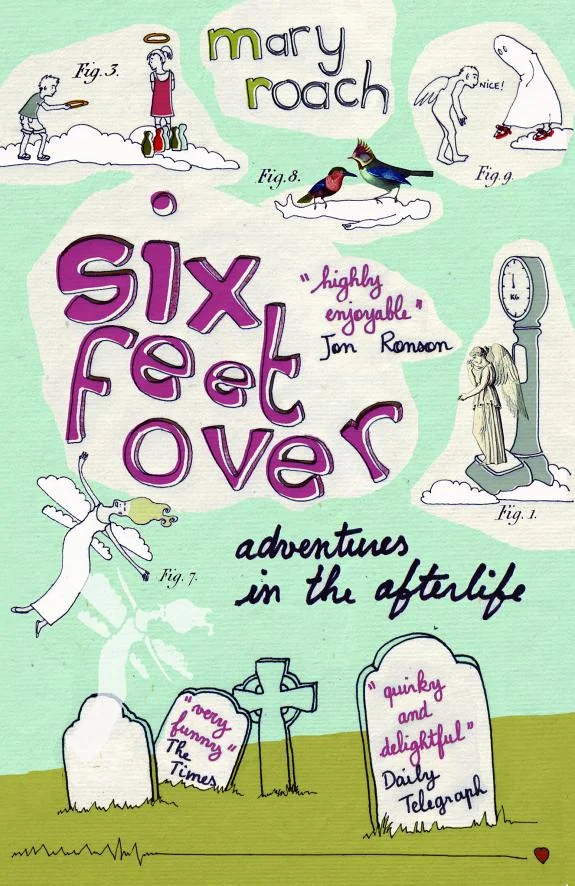
Mary Roach's exploration of post-mortem existence in *Six Feet Over* is characteristically unsentimental and fact-driven. She approaches the profound human question of what happens after death by focusing on the tangible, the scientific, and the often-unpleasant realities of our physical decay and the attempts to study it. Roach excels at presenting complex scientific endeavors, such as the research into brain activity post-mortem or the historical fascination with ectoplasm, with a clarity that demystifies them. A particular strength is her ability to find the human element, even in the most sterile or clinical investigations. However, the book's primary limitation for those seeking spiritual answers is its resolute grounding in empirical science; it offers no comfort for belief systems centered on non-material continuation. The passage detailing the various methods of preserving bodies, from embalming to plastination, starkly illustrates Roach's focus on the physical. Ultimately, *Six Feet Over* offers a scientifically grounded perspective on mortality, challenging readers to consider the biological endpoint rather than abstract possibilities.
📝 Description
82
Mary Roach's 2008 book, originally *Stiff*, investigates the science and culture of cadavers.
Mary Roach's 2008 book, originally titled *Stiff: The Curious Lives of Human Cadavers* and later re-contextualized as *Six Feet Over*, examines the scientific and cultural approaches to death and the body's post-mortem state. The work focuses on the practical, often macabre, realities of what happens to human remains after biological life ends, rather than spiritual continuation. It is written for the curious and scientifically minded, particularly those interested in forensic science, historical burial practices, organ donation, and the philosophical questions surrounding consciousness after death. Roach seeks empirical answers, contrasting them with faith-based speculation. The book touches upon humanity's long-standing fascination with the afterlife and physical remains, from ancient Egyptian mummification to 19th-century spiritualism, situating modern scientific inquiry within this historical arc. It investigates scientific inquiry into phenomena like near-death experiences and consciousness, alongside historical attempts to communicate with the departed. The book also examines the ethical quandaries and scientific challenges in studying the transition from life to death, drawing from fields like neuroscience and thanatology.
While not strictly esoteric in the sense of occult practices, *Six Feet Over* engages with perennial human questions about mortality and what, if anything, persists after death. It contrasts scientific investigation of phenomena like near-death experiences and consciousness with historical attempts at spiritual communication and preservation of the self. The book situates these modern inquiries within a long human tradition of grappling with the physical remains of the deceased, from ancient rituals to 19th-century spiritualism. It explores the boundaries between empirical understanding and the desire for continuity beyond biological cessation.
💡 Why Read This Book?
• You will learn about the scientific methods employed to investigate consciousness and bodily functions after legal death, moving beyond speculation to empirical data, as seen in the chapters discussing post-mortem brain activity. • You will gain an understanding of historical attempts to prove or disprove life after death, from mediums in the late 19th century to modern scientific inquiries, providing a context for current research. • You will feel a more grounded perspective on mortality, confronting the biological realities of death through Roach's unflinching yet accessible prose, illustrated by her examination of organ preservation techniques.
⭐ Reader Reviews
Honest opinions from readers who have explored this book.
❓ Frequently Asked Questions
Does Mary Roach discuss spiritualism or paranormal claims in Six Feet Over?
Yes, the book examines historical and contemporary attempts to scientifically validate spiritualist phenomena, including séances and claims of communication with the deceased, contrasting them with empirical findings.
What scientific fields does Six Feet Over draw upon?
The book references fields such as neuroscience, thanatology (the study of death), forensic science, anatomy, and historical parapsychology to explore post-mortem existence.
Is Six Feet Over a morbid or depressing read?
While the subject matter is death, Roach’s approach is characterized by curiosity and dark humor, making the exploration engaging rather than solely morbid. She focuses on the scientific and cultural aspects.
What is the difference between Six Feet Over and Mary Roach's other books?
While sharing Roach's signature investigative style and humor, *Six Feet Over* specifically tackles the biological and scientific questions surrounding death and the afterlife, distinguishing it from her explorations of other specific topics.
Does the book offer definitive answers about life after death?
No, the book does not claim to offer definitive answers. Instead, it investigates the questions surrounding post-mortem existence through scientific inquiry and historical context.
What historical periods does Six Feet Over cover regarding death practices?
The book spans various historical periods, touching upon ancient practices, the Victorian era's fascination with death and spiritualism, and modern scientific research into the cessation of life.
🔮 Key Themes & Symbolism
Scientific Skepticism
The work rigorously applies scientific methodology to questions of post-mortem existence. It scrutinizes claims of consciousness persisting after death, near-death experiences, and spiritualist phenomena, prioritizing empirical evidence and logical reasoning. Roach contrasts the often-unsubstantiated beliefs of spiritualism with the hard data sought by researchers in fields like neuroscience and thanatology, highlighting the limitations of current scientific understanding while advocating for continued investigation.
Post-Mortem Biology
A central theme is the biological reality of the body after death. Roach details the processes of decomposition, preservation techniques, and the scientific study of the brain and body's functions immediately following cessation of life. This unflinching look at the physical aspects of death serves as a counterpoint to more ethereal notions of an afterlife, grounding the discussion in observable phenomena and scientific inquiry.
Historical Investigations
The book explores historical attempts to prove or disprove life after death. This includes examining the work of early spiritualists, mediums, and scientists who investigated paranormal claims during periods like the late 19th and early 20th centuries. By presenting these historical endeavors, Roach provides context for modern scientific research and highlights humanity’s enduring quest to understand mortality.
Cultural Attitudes Towards Death
Roach explores how different cultures and time periods have viewed death and the body. This ranges from ancient practices to contemporary attitudes towards organ donation, autopsies, and memorialization. The book reveals how societal norms and scientific advancements have shaped our understanding and treatment of the deceased, illustrating a diverse spectrum of human responses to mortality.
💬 Memorable Quotes
Direct passages from the work, attributed to the author.
“The book contrasts historical spiritualism with modern scientific inquiry into the afterlife.”
— This highlights the core tension in the work, showcasing how past attempts to connect with the departed are juxtaposed with contemporary efforts to understand death scientifically.
“Roach examines the practical realities of death, from decomposition to preservation.”
— This points to the book's focus on the tangible, biological aspects of mortality, emphasizing a scientific and often unsentimental perspective on the physical body after life.
“The author seeks empirical answers to the question of post-mortem existence.”
— This captures Roach's commitment to evidence-based exploration, indicating her preference for scientific data and verifiable facts over faith or conjecture when addressing the unknown.
“The work explores the scientific investigation into phenomena like near-death experiences.”
— This specific example illustrates the book's approach to exploring phenomena often associated with the afterlife, grounding them in scientific study and research.
💡 Key Ideas
Editorial paraphrase of the work's core concepts — not direct quotes.
The author investigates the scientific exploration of what happens to the body and consciousness after death.
This paraphrased concept underscores Roach's method: dissecting the post-mortem state through empirical research rather than accepting spiritual or anecdotal claims without scrutiny.
🌙 Esoteric Significance
Tradition
While not strictly within a traditional esoteric lineage like Hermeticism or Gnosticism, *Six Feet Over* engages with the perennial human quest for understanding death and the afterlife, a theme central to many esoteric traditions. It approaches these questions from a scientific, empirical viewpoint, offering a counterpoint to the intuitive, symbolic, or revelatory methods often employed in esoteric studies. The book's value lies in its rigorous examination of phenomena that esoteric traditions might interpret through a spiritual or metaphysical lens.
Symbolism
The book's primary 'symbol' is the physical body itself, representing the tangible anchor of existence. Its post-mortem state symbolizes the ultimate mystery of consciousness and existence. Roach also touches on symbols associated with death across cultures, such as the 'light at the end of the tunnel' in near-death experiences, which she seeks to explain through physiological processes, thus explaining a common spiritual motif.
Modern Relevance
In contemporary thought, *Six Feet Over* remains relevant to discussions in consciousness studies, bioethics, and the philosophy of mind. Thinkers and researchers exploring the boundaries of life and death, the nature of consciousness, and the ethical implications of scientific advancements in medicine and biology find Roach's work a valuable, grounded perspective. It informs conversations in fields ranging from palliative care to artificial intelligence, by clarifying the biological baseline of human existence.
👥 Who Should Read This Book
• Scientific skeptics and materialists seeking empirical evidence regarding post-mortem existence will find their worldview reinforced and challenged by Roach's detailed investigations. • Comparative religion scholars and historians of consciousness will gain insights into how scientific inquiry has intersected with, and sometimes debunked, historical beliefs about the afterlife. • Curious general readers unafraid of mortality's realities will appreciate Roach's accessible prose and dark humor, making a complex topic approachable and engaging.
📜 Historical Context
Published in 2008, *Six Feet Over* emerged during a period of renewed public interest in neuroscience and consciousness studies, alongside a persistent cultural fascination with the paranormal. The late 20th and early 21st centuries saw advancements in medical imaging and brain scanning technologies, allowing for more sophisticated investigation into the brain's activity, even in states bordering death. This era also witnessed the ongoing debate between scientific materialism and various forms of post-materialist or spiritual inquiry. Roach's work fits into a lineage of popular science writing that explains complex subjects, following in the vein of authors like Carl Sagan. It also implicitly engages with the legacy of spiritualism, a movement that peaked in the late 19th century and continued to influence public discourse well into the 20th, and contrasts with the more philosophical explorations of death found in existentialist thought.
📔 Journal Prompts
The scientific investigation into post-mortem consciousness: what unanswered questions remain?
Historical attempts to communicate with the deceased: what were the common methodologies?
The physical body after death: how do preservation techniques alter our perception of mortality?
Near-death experiences: compare physiological explanations with spiritual interpretations.
The role of empirical evidence in understanding life after death.
🗂️ Glossary
Thanatology
The scientific study of death and the processes of dying, including psychological, physiological, and social aspects.
Spiritualism
A religious movement prominent in the 19th century that asserted the possibility of communion between living humans and the spirits of the dead, often through mediums.
Near-Death Experience (NDE)
A profound personal experience associated with being close to death, often involving altered perceptions, feelings of peace, and reported encounters with light or deceased relatives.
Ectoplasm
A supposed physical substance supposedly emitted by spiritualist mediums during séances, often described as a luminous, viscous material.
Plastination
A technique for preserving biological specimens by replacing water and fat with plastics, resulting in durable, odorless, and dry specimens for study.
Empirical evidence
Information acquired through observation and experimentation, serving as the basis for scientific knowledge and theories.
Consciousness
The state of being aware of and responsive to one's surroundings; the totality of one's thoughts, feelings, and sensations.
This book appears in 2 collections
🔮 Readers Also Liked
Browse all →








From the “Astral Projection” Collection
View all →







More Free Occult Philosophy Books
View all →