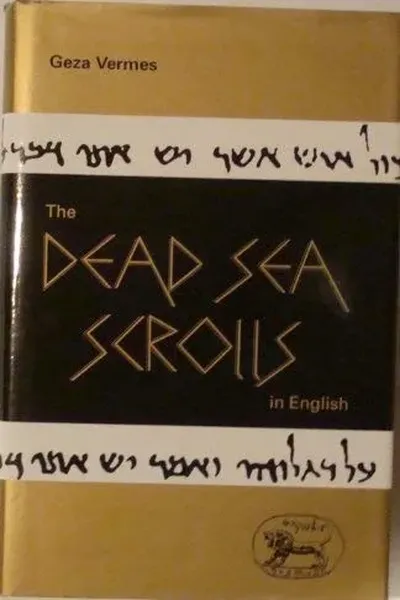
The Dead Sea Scrolls in English

 77
77

The Dead Sea Scrolls in English
Géza Vermès’s translation of the Dead Sea Scrolls in English remains a sturdy, unadorned gateway to these extraordinary documents. Its primary strength lies in its straightforward presentation, allowing the ancient voices to speak with minimal mediation. The text offers a direct confrontation with the raw scriptural and sectarian material that shaped early religious discourse. However, this very directness can also be a limitation; without extensive annotation or commentary, the uninitiated reader may struggle to grasp the full significance of certain passages or the nuances of the various sectarian viewpoints represented. A particularly striking element is the starkness of texts like the Community Rule, which lays bare the stringent disciplinary code of the Qumran sect. For those seeking an unvarnished encounter with the scrolls, this translation provides an essential, albeit demanding, resource. It serves as a crucial, foundational text for serious study.
📝 Description
77
Géza Vermès published his English translation of the Dead Sea Scrolls in 1987.
Géza Vermès's The Dead Sea Scrolls in English presents a direct translation of these ancient manuscripts into modern English. First released in 1987, this edition focuses on rendering the original Hebrew and Aramaic texts without extensive commentary. It aims to make the collection of biblical fragments and sectarian documents accessible for readers who wish to engage with the primary sources themselves. The volume includes writings that offer insight into Jewish religious history during a formative period.
This book is suited for students of ancient history and religious studies, as well as anyone interested in the background of early Christianity and Second Temple Judaism. It functions as a resource for those who prefer to examine the texts directly. Readers seeking an unadorned presentation of these significant historical documents, rather than extensive analysis, will find it valuable. The translation allows for direct interaction with the scrolls' content.
The Dead Sea Scrolls emerged from a period of intense religious ferment in ancient Judaism. These texts, discovered starting in 1947, reveal diverse Jewish groups and beliefs in the centuries surrounding the turn of the Common Era. Vermès's translation makes available documents that shed light on practices and interpretations that existed alongside, and influenced, the development of early Christianity and Rabbinic Judaism. Understanding these scrolls is crucial for grasping the varied spiritual currents of the time.
💡 Why Read This Book?
• Gain direct access to the foundational texts of Second Temple Judaism, understanding the scriptural and sectarian landscape prior to 70 CE, as presented in Vermès's 1987 translation. • Encounter the specific terminology and concepts of groups like the Essenes, such as their emphasis on ritual purity and apocalyptic visions, directly from the scrolls. • Appreciate the textual variations and early interpretations of biblical books, a crucial aspect illuminated by the Dead Sea Scrolls discovered near Qumran.
⭐ Reader Reviews
Honest opinions from readers who have explored this book.
❓ Frequently Asked Questions
When were the Dead Sea Scrolls discovered?
The Dead Sea Scrolls were first discovered by Bedouin shepherds in caves near Qumran in 1947. Subsequent explorations over the following decade uncovered thousands of additional fragments.
What languages are the Dead Sea Scrolls written in?
The majority of the Dead Sea Scrolls are written in Hebrew, with a significant portion in Aramaic and a smaller number in Greek. Géza Vermès's translation focuses on rendering these into English.
What is the significance of Géza Vermès's translation?
Vermès's 1987 translation aimed to provide an accessible English version of the scrolls, enabling wider scholarly and public engagement with these crucial historical documents.
Do the Dead Sea Scrolls contain parts of the Hebrew Bible?
Yes, the scrolls include the oldest known manuscripts of books from the Hebrew Bible, such as the Great Isaiah Scroll, offering vital insights into textual transmission.
What kind of texts are found among the Dead Sea Scrolls?
The collection includes biblical manuscripts, apocryphal texts, commentaries on biblical books, and sectarian documents detailing the beliefs and practices of groups like the Essenes.
Where were the Dead Sea Scrolls found?
The scrolls were discovered in caves in the desert of Judea, near the ancient settlement of Qumran on the northwest shores of the Dead Sea.
🔮 Key Themes & Symbolism
Sectarian Jewish Life
The scrolls offer an outstanding look into the diversity of Jewish religious life during the Second Temple period, particularly highlighting the practices and beliefs of groups like the Essenes. Texts such as the Community Rule (Serekh HaYahad) detail their communal organization, strict adherence to purity laws, and unique interpretations of scripture. This provides a counterpoint to more mainstream Pharisaic and Sadducean traditions, revealing a complex religious ecosystem.
Biblical Textual Variants
Among the most significant contributions of the Dead Sea Scrolls is the evidence they provide for the state of the Hebrew Bible before its final standardization. The discovery of multiple copies of biblical books, often with variations from the later Masoretic Text, allows scholars to trace the development of scripture. Vermès's translation presents these texts, enabling direct comparison and study of textual history.
Messianic and Apocalyptic Expectations
Many scrolls reveal fervent messianic hopes and detailed apocalyptic visions, reflecting anxieties and expectations prevalent in Judea during periods of foreign domination. The texts speak of dualistic struggles between light and darkness, the coming of multiple messianic figures (priestly and kingly), and the ultimate triumph of divine justice. This provides crucial context for understanding the religious milieu from which Christianity emerged.
Ritual Purity and Law
The emphasis on ritual purity is a recurring theme, particularly in the sectarian documents. The scrolls detail elaborate purification rites, dietary laws, and strict regulations concerning the Temple and communal life. This focus underscores the importance of maintaining a state of ritual cleanness for approaching the divine and participating in the community, offering insight into the legalistic dimensions of ancient Judaism.
💬 Memorable Quotes
Direct passages from the work, attributed to the author.
“The Community Rule describes a leader who will 'teach righteousness and the ways of God' and 'make them know what has been from the beginning'.”
— This highlights the sect's self-perception as a righteous community guided by divine instruction, preserving ancient wisdom and leading others toward correct understanding and practice.
“A passage refers to the 'Spirit of Truth' and the 'Angel of Darkness' as opposing forces.”
— This illustrates the dualistic worldview present in some scrolls, framing existence as a cosmic struggle between good and evil, light and darkness, influencing the community's ethical and spiritual outlook.
“The scrolls contain fragments of commentaries (pesharim) that interpret biblical prophecies as directly relating to the sect's own time and experiences.”
— This demonstrates an exegetical method focused on immediate relevance, seeing contemporary events as the fulfillment of ancient prophetic utterances, a common hermeneutical approach in ancient Judaism.
“References are made to 'the New Covenant' and a future priestly messiah.”
— This points to eschatological hopes centered on a renewed covenant with God and the anticipation of a priestly figure who would play a key role in the end times, central to the sect's theological framework.
“The text describes members joining the community through a formal initiation process involving vows.”
— This emphasizes the communal and covenantal nature of the sect, requiring commitment and adherence to its specific laws and doctrines, setting it apart from broader Jewish society.
🌙 Esoteric Significance
Tradition
While not strictly belonging to a single defined esoteric lineage like Kabbalah or Hermeticism, the Dead Sea Scrolls resonate with Gnostic and mystical traditions due to their dualistic cosmology, focus on hidden knowledge, and intense spiritual discipline. The emphasis on purity, angelic realms, and a perceived cosmic battle between light and darkness echoes themes found in later mystical and Gnostic writings, suggesting a shared substratum of ancient religious thought.
Symbolism
Key symbols include the dualistic opposition of 'light' and 'darkness', representing good and evil, truth and falsehood, and the forces governing the cosmos and human existence. Water is also highly symbolic, representing ritual purification and spiritual cleansing, essential for entry into the community and for maintaining a state of readiness for divine intervention. The concept of the 'New Covenant' symbolizes a divinely ordained renewal of the relationship between God and his chosen people.
Modern Relevance
Contemporary esoteric practitioners and scholars of mysticism often turn to the Dead Sea Scrolls for insights into ancient Jewish contemplative practices, early messianic fervor, and the development of dualistic thought. Thinkers exploring the roots of Western esotericism, comparative religion, and early Christian mysticism find the scrolls indispensable for understanding the diverse spiritual currents of the Hellenistic-Roman period. Their influence is seen in studies of Gnosticism and the historical context of contemplative prayer.
👥 Who Should Read This Book
• Students of Second Temple Judaism seeking primary source material on groups like the Essenes and their unique interpretations of scripture. • Comparative religion scholars interested in the diverse religious range of ancient Judea and the origins of early Christian and Rabbinic thought. • Individuals exploring the historical context of messianic prophecies and apocalyptic literature prevalent in the centuries before and during the Common Era.
📜 Historical Context
The discovery of the Dead Sea Scrolls, beginning in 1947, fundamentally altered the range of biblical and early Jewish studies. These manuscripts, dating from approximately the 3rd century BCE to the 1st century CE, emerged during a period of intense religious ferment in Judea, characterized by diverse interpretations of Jewish law and messianic expectation. Vermès's 1987 English translation arrived at a time when scholarly debate was vigorous, building on the initial work of figures like Eleazar Sukenik and later Yigael Yadin. The scrolls offered direct evidence of sectarian groups, most notably the Essenes, whose practices differed significantly from the Pharisees and Sadducees, previously the most well-documented factions. Reception was initially cautious, with access to the fragments tightly controlled by an international team of scholars, leading to accusations of delays and secrecy, but the eventual publication of the texts, including Vermès's translation, opened them up for wider scrutiny and debate.
📔 Journal Prompts
The dualistic concepts of light and darkness as presented in the scrolls.
The Essene emphasis on ritual purity and its implications for community life.
The nature of messianic expectations described in the texts.
The textual variants found within the biblical scrolls discovered near Qumran.
The role of divine revelation and interpretation in the sectarian documents.
🗂️ Glossary
Second Temple Period
The era of Jewish history from the rebuilding of the Second Temple in Jerusalem (c. 516 BCE) until its destruction by the Romans in 70 CE. The Dead Sea Scrolls largely originate from this period.
Essenes
A Jewish sect of the Second Temple period known for its asceticism, communal living, and strict adherence to purity laws. Many scholars believe they were responsible for writing or preserving the Dead Sea Scrolls.
Community Rule (Serekh HaYahad)
A key sectarian document found among the Dead Sea Scrolls, outlining the beliefs, organization, and disciplinary regulations of the Qumran community.
Pesher
A type of commentary or interpretation found in the Dead Sea Scrolls, where biblical prophecies are explained as being fulfilled in the events and experiences of the sect itself.
Masoretic Text (MT)
The standardized medieval Hebrew text of the Jewish scriptures. The Dead Sea Scrolls provide much older textual witnesses that sometimes differ from the MT.
Apocalyptic Literature
A genre of literature characterized by visions, symbolic language, and prophecies concerning the end of times, divine judgment, and the establishment of a new cosmic order.
Dualism
A philosophical or religious concept that posits two fundamental, often opposing, principles. In the scrolls, this is often seen in the contrast between light/darkness or good/evil.
🔮 Readers Also Liked
Browse all →








More by Géza Vermès
All books →




More Free Occult Philosophy Books
View all →