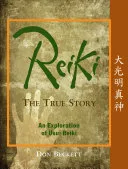
Reiki: The True Story
 77
77

Reiki: The True Story
Don Beckett’s "Reiki: The True Story" is a welcome antidote to the pervasive, often uncritical, acceptance of Reiki's modern mythology. Beckett demonstrates a commendable commitment to historical accuracy, presenting a compelling case for a lineage of teachings that diverge significantly from popular understanding. His meticulous research into the accounts of Mikao Usui’s original students provides a solid foundation for his reinterpretation of Reiki's purpose. The work's strength lies in its scholarly rigor, pushing readers to question assumptions about the practice's origins and founder's intent. However, the book occasionally suffers from a somewhat dry presentation, which, while faithful to its academic spirit, might deter readers seeking a more experiential account. The detailed exploration of Usui's students' secret teachings, while crucial to Beckett’s argument, could have benefited from more direct contextualization within broader esoteric traditions. Despite this, the book stands as a vital corrective, urging a return to the spiritual core of Reiki.
📝 Description
77
Don Beckett's 2009 book, Reiki: The True Story, challenges common understandings of its founder's intentions.
Reiki: The True Story, published in 2009, offers a critical look at the origins and spiritual depth of Reiki. Don Beckett, a recognized figure in the field, traces the lineage of this healing modality, questioning popular accounts of its beginnings and the original goals of Mikao Usui. The book emphasizes knowledge preserved by Usui's direct disciples, who maintained certain esoteric teachings in secrecy for over seventy years.
This work is for serious students of energy healing and those interested in the historical and philosophical foundations of Reiki. It will appeal to readers who question current narratives and seek authentic spiritual lineages. Practitioners aiming to deepen their practice with a more historically grounded perspective, as well as scholars of comparative religion and esoteric studies, will find value in this examination of a modern spiritual movement.
Beckett contends that Reiki is more than a simple healing technique; he presents it as a 'lifelong path of spiritual awakening.' The book focuses on the founder's 'true vision,' which he argues involved more than just physical healing.
This book enters the discourse surrounding modern spiritual practices that often trace their lineage to Eastern traditions. It specifically engages with the lineage of Reiki, a practice popularized in the West in the late 20th century. By focusing on the preserved teachings of Usui's immediate students, Beckett situates his work within a tradition that values direct transmission and the integrity of original teachings over later interpretations or popular adaptations. This approach aligns with esoteric methodologies that seek authenticity through historical lineage and the uncovering of hidden or less accessible knowledge.
💡 Why Read This Book?
• Understand the historical divergence of Reiki from its origins by examining the secrecy surrounding Mikao Usui's original students' teachings, offering a perspective unavailable in popular wellness literature. • Gain insight into the 'true vision' of Mikao Usui, moving beyond superficial healing techniques to grasp the spiritual awakening aspects emphasized in the book's foundational research. • Appreciate the esoteric context of energy practices by learning about the specific, guarded knowledge passed down for over seventy years, providing a unique historical and spiritual depth.
⭐ Reader Reviews
Honest opinions from readers who have explored this book.
❓ Frequently Asked Questions
What is the primary argument of Don Beckett's 'Reiki: The True Story' regarding Reiki's origins?
The book argues that the popular understanding of Reiki's origins and its founder Mikao Usui's intentions is incomplete. Beckett presents a narrative based on the teachings of Usui's original students, suggesting a more profound spiritual path was originally intended.
Who were Mikao Usui's original students, and why are their teachings important in this book?
Usui's original students formed a group that preserved his core teachings in secrecy for over seventy years. Beckett's work relies on their accounts to present a counter-narrative to the widely accepted history of Reiki, emphasizing spiritual development.
How does 'Reiki: The True Story' differ from typical books about Reiki?
Unlike many popular guides, this book functions as a comprehensive investigation into Reiki's history and spiritual philosophy. It focuses on historical authenticity and the founder's original vision, rather than solely on practical healing techniques.
What is the significance of the 'lifelong path of spiritual awakening' mentioned in the book?
Beckett posits that Usui intended Reiki to be more than a healing method; it was meant to be a complete spiritual discipline for personal growth and enlightenment, a concept he explores through the preserved teachings.
When was 'Reiki: The True Story' first published, and what was the general reception?
The book was first published on April 7, 2009. Its reception was generally positive among those seeking a more critical and historically grounded perspective on Reiki, though it challenged some established Reiki communities.
Does Don Beckett claim to have uncovered new historical documents about Mikao Usui?
Beckett's approach is less about new documents and more about synthesizing existing, less-publicized accounts, particularly the oral traditions and teachings passed down by Usui's direct students, offering a reinterpretation of known history.
🔮 Key Themes & Symbolism
Authentic Lineage Transmission
The work centers on the concept of an authentic lineage of Reiki knowledge, passed down through Mikao Usui’s original students. Beckett argues that this guarded transmission preserved the founder's 'true vision,' which included profound spiritual development alongside healing. This theme critiques the popularization of Reiki, suggesting it has often become disconnected from its original, deeper purpose. The book emphasizes that true understanding comes from understanding this unbroken chain of esoteric teaching, contrasting it with more superficial or commercialized interpretations that emerged later.
Spiritual Awakening Path
Beckett frames Reiki not merely as an energy healing technique but as a comprehensive 'lifelong path of spiritual awakening.' This perspective is central to the reinterpretation of Usui's philosophy. The book explores how the practice, when understood through the lens of its original disciples' teachings, serves as a vehicle for profound personal transformation and enlightenment. It moves beyond physical well-being to address the development of consciousness and the pursuit of higher spiritual states, a core tenet often overlooked in contemporary Reiki discourse.
Reconstructing Founder's Vision
A significant aspect of the book is its effort to reconstruct the 'true vision' of Mikao Usui. Beckett challenges the commonly accepted narrative by presenting evidence that Usui's intentions were far more complex and spiritually oriented than often portrayed. The work investigates the founder’s deeper philosophical and spiritual goals, which are purportedly revealed through the teachings that were kept secret by his immediate students for decades. This theme aims to restore Usui's legacy as a spiritual master, not just a healer.
The Secrecy of Original Teachings
The narrative emphasizes the seventy-plus years of secrecy surrounding the knowledge held by Mikao Usui’s original students. This deliberate concealment is presented not as an arbitrary act but as a necessary measure to protect the integrity and esoteric nature of Reiki's deeper principles. Beckett uses this historical secrecy as evidence for the profound spiritual significance of the teachings, suggesting that their guarded transmission ensured their purity and prevented misinterpretation or dilution before their eventual wider dissemination.
💬 Memorable Quotes
Direct passages from the work, attributed to the author.
“The foundation of this book is the teachings of a group of Reiki founder Makao Usui’s original students, who held their master’s knowledge in secrecy for more than seventy years.”
— This statement highlights the book's core methodological approach: relying on a specific, historically guarded body of knowledge from Usui's direct disciples to offer an alternative perspective on Reiki's origins and purpose.
“The work challenges prevailing accounts of Reiki’s genesis and its founder’s true vision.”
— This interpretation points to the book's critical stance, indicating that it actively questions and seeks to correct the commonly accepted historical narrative and philosophical underpinnings of the Reiki practice.
“The book explores the founder’s vision beyond simple energy transfer.”
— This concept suggests that Usui's original intent for Reiki encompassed a deeper spiritual dimension, which the book aims to reveal by examining the esoteric teachings passed down from his students.
“Seventy years of guarded knowledge from Usui's disciples form the basis of this account.”
— This highlights the specific historical claim underpinning the book’s argument: that a distinct and protected body of knowledge, held by Usui's immediate followers, provides the most accurate understanding of Reiki's true nature.
💡 Key Ideas
Editorial paraphrase of the work's core concepts — not direct quotes.
Beckett presents a thorough history of Reiki as both a healing practice and a lifelong path of spiritual awakening.
This paraphrased concept underscores the book's dual focus, presenting Reiki not just as a therapeutic modality but as an integrated system for spiritual growth and personal transformation, as intended by its founder.
🌙 Esoteric Significance
Tradition
This work engages with the modern esoteric tradition of energy healing, particularly as it evolved from Eastern spiritual concepts and was adapted into Western contexts. While not strictly Hermetic or Gnostic, it shares their concern with hidden knowledge and spiritual transmission. Beckett's emphasis on a preserved lineage and the founder's profound spiritual vision aligns with the broader esoteric interest in authentic spiritual lineages and the recovery of 'original' teachings that may have been obscured by time or popularization. It seeks to re-establish Reiki within a framework of spiritual discipline rather than mere technique.
Symbolism
While the book's primary focus is historical and philosophical, the concept of Reiki itself can be seen as symbolic. The 'Reiki' energy can represent the universal life force or 'Ki' (often associated with Taoist concepts of Qi), a fundamental principle in many Eastern esoteric systems. The founder, Mikao Usui, acts as a symbolic figure of the enlightened master who reveals a path to spiritual realization. The secrecy maintained by his students symbolizes the esoteric nature of true spiritual knowledge, which is often guarded and transmitted only to worthy recipients within an initiatory context.
Modern Relevance
Beckett's work remains relevant for contemporary thinkers and practitioners who are critical of the commercialization of spiritual practices. It speaks to a modern yearning for authenticity and depth in fields like mindfulness, yoga, and energy healing. Scholars and practitioners interested in the evolution of spiritual movements in the 20th and 21st centuries, particularly how Eastern philosophies were Westernized and adapted, find value in his historical reconstruction. It informs discussions about maintaining the integrity of spiritual traditions amidst widespread adoption and adaptation.
👥 Who Should Read This Book
• Dedicated Reiki practitioners seeking to deepen their understanding beyond basic techniques and explore the historical and philosophical underpinnings of their practice. • Students of esoteric traditions and comparative religion interested in the evolution of spiritual movements and the transmission of knowledge in the 20th century. • Skeptics and researchers of alternative healing modalities looking for a critical, historically grounded perspective on Reiki that challenges common assumptions.
📜 Historical Context
Published in 2009, Don Beckett's "Reiki: The True Story" emerged during a period of widespread global interest in complementary and alternative medicine, particularly energy healing practices. Reiki had achieved significant popularity in the West since the late 20th century, often presented through simplified manuals and practitioner training programs. However, this popularization frequently led to a dilution of its spiritual and philosophical roots. Beckett's work directly engaged with this trend, positioning itself as a scholarly corrective. He sought to counter the often-unquestioned narratives circulating within the Reiki community by grounding his account in the preserved teachings of Mikao Usui's original students, a group that maintained a more esoteric understanding. This approach deliberately contrasted with the more accessible, therapeutic-focused interpretations prevalent at the time. While specific contemporary scholarly reviews are not widely cited, the book clearly aimed to provoke discussion among serious practitioners and historians of esoteric traditions, potentially drawing parallels with movements like Theosophy in its aim to recover and disseminate 'lost' spiritual knowledge.
📔 Journal Prompts
The secret teachings of Mikao Usui’s original students, as presented by Beckett.
Reiki as a 'lifelong path of spiritual awakening' versus a mere healing technique.
The founder's 'true vision' and how it contrasts with modern interpretations.
The historical significance of the seventy-year secrecy surrounding Reiki's core knowledge.
Personal resonance with the concept of authentic spiritual lineage transmission.
🗂️ Glossary
Reiki
A Japanese form of energy healing developed by Mikao Usui in the early 20th century, traditionally understood as a system for spiritual enlightenment and physical healing.
Mikao Usui
The founder of Reiki, a Japanese Buddhist layman and educator who is credited with developing the practice in the early 1900s. His 'true vision' is a central point of investigation in the book.
Ki / Qi
A fundamental concept in many Eastern philosophies and traditions, referring to the vital life force or energy that flows through all living things. In Reiki, it is often referred to as 'Ki'.
Spiritual Awakening
A process of profound personal transformation and enlightenment, often involving a shift in consciousness and a deeper understanding of oneself and the universe. The book posits this as a core aspect of Usui's original vision for Reiki.
Esoteric Knowledge
Knowledge that is intended for or likely to be understood by only a small number of people with specialized knowledge or interest. The book argues that core Reiki teachings were initially esoteric.
Lineage
In spiritual contexts, a lineage refers to an unbroken chain of transmission of teachings and authority from a founder or master to their successors, often implying authenticity and purity of knowledge.
Usui's Original Students
A specific group of individuals who were direct disciples of Mikao Usui and are cited by Beckett as the keepers of his more profound, secretly transmitted teachings for over seven decades.