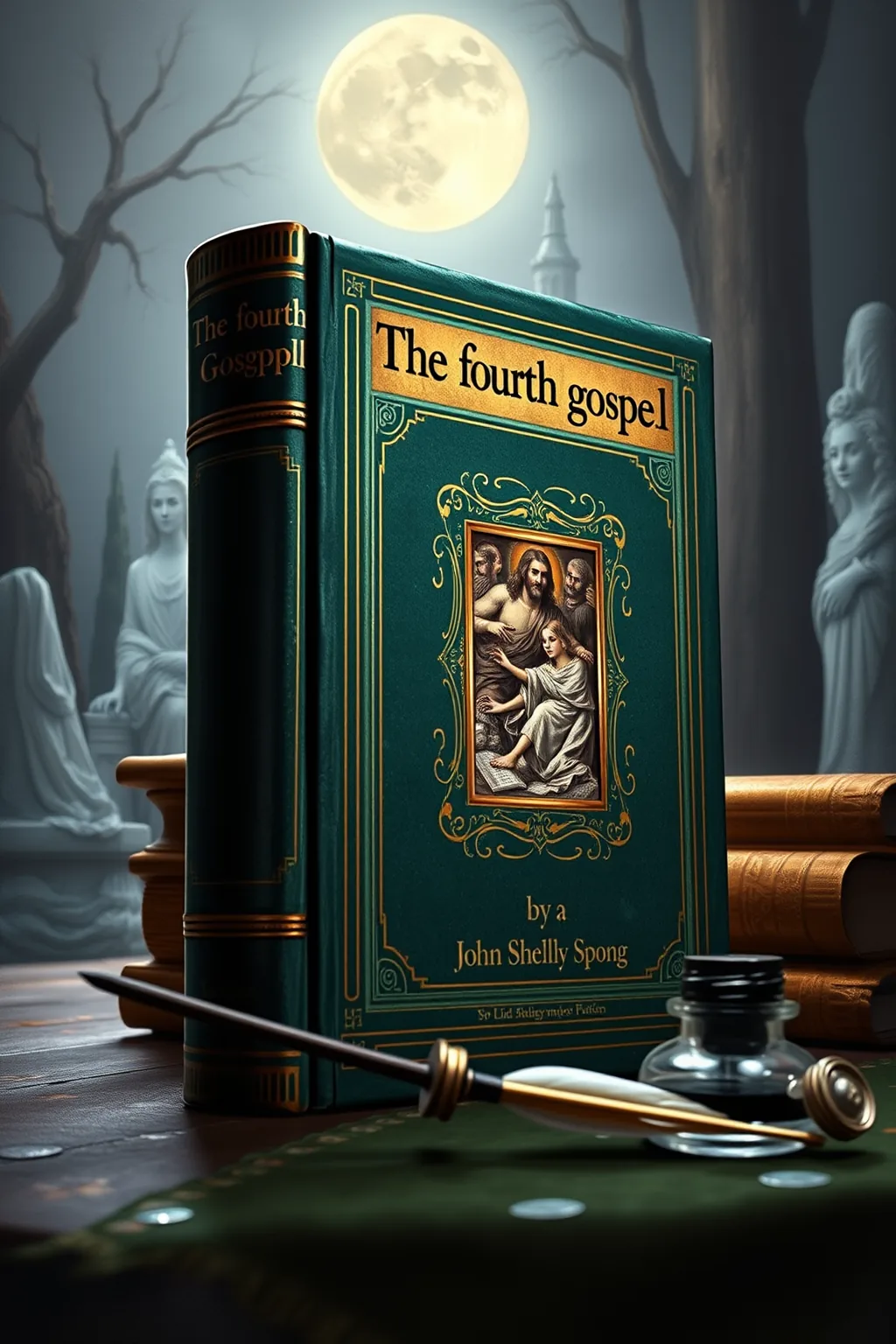
The fourth gospel
 62
62

The fourth gospel


Balthazar Finch (Senior Critic, Occult Philosophy) — John Shelby Spong's 'The Fourth Gospel' is a revelatory work, transcending mere biblical scholarship to touch upon the very wellsprings of mystical experience. Spong masterfully unveils the Johannine Jesus not as a distant deity, but as an avatar of awakened consciousness, a conduit to the immanent divine. His exegesis illuminates the profound symbolism embedded within the text, offering a potent antidote to spiritual aridness in the contemporary world. This is essential reading for initiates and scholars alike who seek to grasp the Gnostic undercurrents and the profound, liberating truths of inner divinity. A truly illuminating exploration.
📝 Description
62
John Shelby Spong reinterprets the Gospel of John, moving beyond dogma to personal awakening.
In 'The Fourth Gospel,' John Shelby Spong examines the Gospel of John not as a record of historical events, but as a symbolic text detailing spiritual growth. He argues that Jesus' teachings focus on an inner awakening to divine presence, rather than adherence to prescribed beliefs. Spong suggests that the gospel uses concepts like the 'inner being' and the 'light' to map a path toward direct experience of God. He believes these ideas offer a relevant framework for contemporary spirituality, which he sees as often disconnected from traditional religious structures.
Spong challenges conventional theological readings, proposing that the gospel's core message is about the immanent divinity within each person. He highlights the potential for a personal, unmediated connection with the divine, free from institutional mediation. This perspective aims to make the ancient text a practical guide for individuals seeking a deeper spiritual life in the modern world. The book focuses on understanding the subtle symbolism and veiled wisdom within John's narrative.
Spong's work engages with esoteric traditions by emphasizing direct, personal spiritual experience over dogma and institutional authority. He positions the Gospel of John as a text that can guide individuals toward an 'inner awakening' and a recognition of the divine spark within. This approach aligns with mystical and Gnostic traditions that prioritize inner gnosis and the immanent nature of the divine, offering a path to spiritual understanding that bypasses external creeds and rituals. The focus is on an internal spiritual journey.
💡 Why Read This Book?
Unlock the esoteric wisdom of the Gospel of John, reimagined for the modern seeker. Spong reveals a Jesus focused on inner transformation and immanent divinity, making ancient teachings vibrantly relevant today. Ideal for those questioning dogma, seeking direct spiritual experience, and exploring the mystical connections between Judaism and Christianity.
⭐ Reader Reviews
Honest opinions from readers who have explored this book.
❓ Frequently Asked Questions
What is the core esoteric message of the Gospel of John according to Spong?
Spong posits that the Gospel of John centers on achieving heightened consciousness and recognizing the immanent presence of God within all beings, urging a shift from external dogma to inner revelation.
How does Spong connect this gospel to Kabbalistic ideas?
While not explicitly Kabbalistic, Spong's emphasis on inner being, divine immanence, and the interconnectedness of all things echoes core tenets found within Jewish mysticism, particularly the concept of the divine spark within creation.
Is this book suitable for those unfamiliar with biblical criticism?
Yes, Spong's accessible prose and focus on spiritual insight make it engaging for a broad audience, though prior familiarity with biblical narratives can enhance understanding of his arguments.
What makes the Gospel of John particularly relevant in a 'post-Christian' world?
Its focus on personal experience, inner awakening, and an immanent God offers a spiritual framework that resonates with individuals seeking meaning beyond traditional religious structures and doctrines.
Does Spong offer a new interpretation of Jesus's teachings?
Absolutely. Spong presents a radical reinterpretation, emphasizing Jesus as a teacher of consciousness and inner divinity, rather than a figure solely concerned with salvation through external atonement.
🔮 Key Themes & Symbolism
The Immanent Divine
Spong argues that the Gospel of John presents a revolutionary concept of God not as an external, distant entity, but as an immanent force, intimately present within each individual and throughout all creation. This perspective shifts religious focus from dogma and ritual to the direct, personal experience of the divine spark that resides within the human soul, fostering a sense of unity and interconnectedness.
Heightened Consciousness as Revelation
At the heart of Spong's interpretation lies the idea that the Johannine Jesus’s teachings are pathways to achieving heightened states of consciousness. These states are presented as the true form of spiritual awakening and divine encounter, where individuals transcend ordinary perception to apprehend deeper truths about existence, the self, and the nature of reality. This internal journey is depicted as the primary mode of spiritual growth and enlightenment.
Symbolism and Inner Being
Spong meticulously dissects the detailed symbolism within the Gospel of John, such as light, water, and the vine, to reveal profound psychological and spiritual meanings. He interprets these symbols not as literal events, but as metaphors for the inner spiritual life, the process of transformation, and the cultivation of one's authentic inner being. This approach transforms the gospel into a guide for self-discovery and the realization of one's divine potential.
💬 Memorable Quotes
Direct passages from the work, attributed to the author.
“God is not a being, but the ground of all being.”
— This profound statement reorients the concept of divinity from a personal deity to the fundamental reality of existence, suggesting an omnipresent and intrinsic divine essence.
“The kingdom of God is not a place, but a state of consciousness.”
— This shifts the focus from an external, future reward to an internal, present reality, emphasizing spiritual awakening and transformation as the path to divine connection.
“To know me is to know the Father.”
— This highlights the direct, experiential path to understanding the divine, suggesting that the realization of one's true self is intrinsically linked to the awareness of the immanent divine.
“The light shines in the darkness, and the darkness did not overcome it.”
— This powerful metaphor speaks to the enduring presence of divine truth and consciousness, even in the face of ignorance and despair, offering hope and resilience.
“You are the vine, and I am the branches.”
— This illustrates the profound interconnectedness between the divine and humanity, emphasizing unity, mutual dependence, and the shared experience of life's flow.
🌙 Esoteric Significance
Tradition
While not strictly confined to one tradition, Spong's interpretation of the Fourth Gospel deeply speaks to Gnostic and Neoplatonic philosophies, emphasizing an immanent divine principle accessible through inner awakening and direct experience. It also echoes aspects of Jewish mysticism, particularly the concept of the divine spark within creation and the pursuit of direct communion with God, transcending mere ritual or dogma.
Symbolism
The Gospel of John is rich with esoteric symbolism. Spong highlights 'light' as divine consciousness, 'water' as spiritual rebirth, and 'bread' as spiritual sustenance. The concept of 'being born again' refers to a radical transformation of consciousness, while the 'Vine and branches' imagery signifies the profound interconnectedness of the divine, Jesus, and humanity. These symbols serve as keys to unlocking the inner, spiritual meaning of Jesus's teachings.
Modern Relevance
In a world increasingly characterized by secularism and a questioning of traditional religious authority, Spong's interpretation offers a compelling spiritual framework. The emphasis on inner experience, personal transformation, and an immanent God provides a potent alternative for those seeking meaning beyond dogma. The Gospel's message of awakened consciousness and the divine within speaks to contemporary spiritual seekers exploring mindfulness, consciousness studies, and personal growth.
👥 Who Should Read This Book
This key work is essential for spiritual seekers yearning for a deeper, more personal connection with the divine, disillusioned with dogmatic religion. Scholars of biblical studies and comparative religion will find Spong's critical yet reverent approach clear. Mystics and practitioners of contemplative traditions will appreciate the emphasis on inner transformation and consciousness. Beginners to esoteric thought will find a clear, accessible entry point into profound spiritual concepts, while experienced practitioners will discover new layers of meaning within a foundational text.
📜 Historical Context
Written likely in the late 1st or early 2nd century CE, the Gospel of John emerged during a period of significant religious and philosophical ferment. It reflects a complex interplay between nascent Christianity, Hellenistic philosophy, and the collection of Jewish thought, including early mystical traditions. The text's unique theological emphasis on Jesus as the divine Logos and its focus on inner experience distinguish it from the synoptic gospels. This era saw intense debate and development within early Christian communities, grappling with the nature of Christ and the interpretation of his message. John's gospel, with its profound symbolism and emphasis on direct spiritual knowing, likely appealed to those seeking a more philosophical and mystical understanding of faith, potentially resonating with individuals already familiar with Gnostic or Neoplatonic ideas.
📔 Journal Prompts
Reflect on a time you felt a profound sense of immanent divinity. How did this experience alter your perception of reality?
Spong describes 'heightened consciousness' as a key to spiritual awakening. What practices or experiences have contributed to your own heightened awareness?
The Gospel of John uses symbols like 'light' and 'water.' How do these symbols resonate with your inner spiritual landscape?
Consider the idea that 'the kingdom of God is a state of consciousness.' What does this mean for your daily life and spiritual practice?
How can you integrate the concept of the 'inner being' into your understanding of yourself and your relationship with the divine in a post-Christian world?
🗂️ Glossary
Immanence
The concept that God or the divine is present within the universe and humanity, rather than being transcendent or external to it. It suggests an intrinsic, inherent divine quality.
Logos
In Johannine theology, the divine Word or reason, identified with Jesus Christ. It represents the creative, ordering principle of the universe and the ultimate expression of God.
Heightened Consciousness
An expanded state of awareness that transcends ordinary perception, often characterized by useful insights, spiritual clarity, and a profound sense of interconnectedness with all existence.
Inner Being
The core of an individual's self, distinct from the external persona. It refers to one's true spiritual essence, the seat of intuition, conscience, and direct divine connection.
Post-Christian
Describes a societal or cultural context where traditional Christian beliefs and institutions have lost their dominant influence, leading to a search for alternative spiritual or ethical frameworks.
This book appears in 1 collection
🔮 Readers Also Liked
Browse all →








More by John Shelby Spong
All books →


From the “Kabbalah” Collection
View all →









More Free Kabbalah & Jewish Mysticism Books
View all →