Shreemad Bhagavad Gita
 81
81

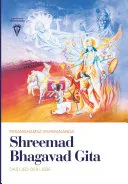
Shreemad Bhagavad Gita
Paramahamsa Sri Swami Vishwananda's presentation of the Shreemad Bhagavad Gita offers a devotional lens on this ancient scripture. The commentary often centers on the path of Bhakti, framing Krishna's advice to Arjuna as a guide for personal spiritual growth and service. Vishwananda's interpretation emphasizes the direct experience of the Divine through love and surrender, making the Gita feel less like a historical text and more like a living guide for contemporary devotees. One particularly resonant aspect is the focus on seeing the Divine in all actions and beings, a concept articulated clearly in Krishna’s discourse on the nature of the Self.
However, readers primarily seeking a critical or purely philosophical analysis might find the commentary's pervasive devotional tone limiting. While its strength lies in fostering a heart-centered approach, it occasionally simplifies complex philosophical debates in favor of emphasizing surrender. The strength of this edition is its accessibility for those new to the Gita and attracted to a devotional path. The limitation is that it may not fully satisfy those who prefer a more academic or purely philosophical engagement with the text. It serves as a warm invitation to the Gita's devotional heart.
📝 Description
81
Paramahamsa Sri Swami Vishwananda's 2019 commentary brings the ancient Bhagavad Gita to contemporary readers.
The Shreemad Bhagavad Gita is a scripture central to Hindu philosophy, structured as a conversation between Prince Arjuna and Lord Krishna on a battlefield. It addresses core questions about duty, life, death, and divinity. This edition features commentary by Paramahamsa Sri Swami Vishwananda, aiming to make the teachings accessible globally.
The text is suited for spiritual seekers across traditions who are interested in Hindu dharma, karma yoga, and bhakti yoga. It offers guidance for a more purposeful and divinely connected life, regardless of religious background. Those drawn to Paramahamsa Sri Swami Vishwananda's spiritual path will find particular relevance here.
Composed in India between the 5th and 2nd centuries BCE, the Bhagavad Gita is part of the epic Mahabharata. Its philosophy draws from Vedic and Upanishadic thought. The work has influenced many scholars and saints throughout history, including Adi Shankaracharya and Mahatma Gandhi.
The Bhagavad Gita is a key text within the Vedic tradition, a broad spiritual and philosophical framework that originated in ancient India. Its teachings on the soul, the divine, and the path to liberation are central to various schools of Hindu thought. Esoterically, it is often studied for its insights into the inner workings of consciousness, the nature of reality beyond the material, and the direct experience of the divine through dedicated practice and understanding.
💡 Why Read This Book?
• Understand the concept of Dharma by examining Arjuna's predicament on the battlefield of Kurukshetra, learning how to discern and fulfill one's righteous duty even in difficult circumstances. • Experience the power of Bhakti Yoga, as elucidated by Krishna, to transform daily actions into acts of devotion and connect with the Divine through love and surrender. • Grasp the nature of the Atman, exploring its eternal essence and its relationship to the Supreme, as described in the Gita's teachings on the soul's true identity beyond the material body.
⭐ Reader Reviews
Honest opinions from readers who have explored this book.
❓ Frequently Asked Questions
What is the Shreemad Bhagavad Gita?
The Shreemad Bhagavad Gita is an ancient Indian scripture, part of the epic Mahabharata, presenting a dialogue between Prince Arjuna and Lord Krishna. It explores duty, devotion, and the nature of reality, offering spiritual guidance for living a purposeful life.
Who is Paramahamsa Sri Swami Vishwananda?
Paramahamsa Sri Swami Vishwananda is a spiritual master and founder of Bhakti Marga, a global spiritual organization. He presents the Bhagavad Gita from a perspective of devotional service (Bhakti Yoga) and Divine Love.
When was the Bhagavad Gita likely composed?
Scholars generally place the composition of the Bhagavad Gita between the 5th and 2nd centuries BCE, making it an ancient text that has influenced spiritual thought for over two millennia.
What is the central message of the Bhagavad Gita?
The central message revolves around fulfilling one's duty (Dharma) with detachment from outcomes, cultivating devotion (Bhakti) to the Divine, and understanding the eternal nature of the soul (Atman) to achieve spiritual liberation.
Is the Bhagavad Gita only for Hindus?
No, the Bhagavad Gita's philosophical and ethical teachings are considered universal. Paramahamsa Sri Swami Vishwananda's edition specifically aims to make its wisdom accessible to people of all backgrounds and traditions.
What is Karma Yoga as explained in the Gita?
Karma Yoga is the path of selfless action. The Bhagavad Gita teaches performing one's duties with dedication and without attachment to the results, thus purifying the mind and progressing spiritually.
🔮 Key Themes & Symbolism
The Path of Devotion (Bhakti Yoga)
This theme is central to Vishwananda's interpretation. It posits that the highest spiritual attainment comes through unwavering love and surrender to the Divine. The Gita's teachings are presented as a guide to cultivating this devotional attitude in every aspect of life, transforming mundane activities into sacred offerings and fostering a direct, loving relationship with God.
Understanding Dharma and Duty
The text deeply explores Dharma, or righteous duty, as exemplified by Arjuna's internal conflict. It emphasizes that fulfilling one's prescribed role in society and life, even when challenging, is crucial for spiritual progress. This theme guides readers to act with integrity and purpose, aligning their actions with cosmic order.
The Nature of the Self (Atman)
A core philosophical concept is the distinction between the temporary physical body and the eternal, unchanging soul (Atman). The Gita teaches that true understanding and liberation come from realizing the Atman's divine nature and its unity with the Supreme. This realization leads to detachment from material suffering and a sense of inner peace.
Action Without Attachment (Karma Yoga)
The Bhagavad Gita presents Karma Yoga as a primary means to spiritual purification. It teaches the principle of performing actions with full effort but without attachment to the fruits of those actions. This detachment frees the individual from the cycle of karma and suffering, leading to equanimity and inner freedom.
💬 Memorable Quotes
Direct passages from the work, attributed to the author.
“Perform your prescribed duty, for performing the prescribed duty is better than neglecting it.”
— This principle highlights the importance of fulfilling one's responsibilities. It suggests that even imperfect action aligned with one's Dharma is superior to inaction or pursuing roles not aligned with one's true nature or societal role.
“The mind is restless and difficult to restrain, but by practice and detachment, O son of Kunti, it can be controlled.”
— This speaks to the challenge of mental discipline. It offers a practical solution: consistent spiritual practice (Abhyasa) and non-attachment to worldly desires (Vairagya) are the keys to mastering the turbulent mind.
“You have a right to perform your prescribed duty, but you are not entitled to the fruits of your actions.”
— This is a core part of Karma Yoga. It encourages dedicated effort in one's tasks while relinquishing the anxiety and attachment to specific outcomes, fostering a sense of peace and surrender.
“Whenever and wherever there is a decline in religious practice, O descendant of Bharata, and a predominant rise of irreligion—at that time I descend Myself.”
— This verse explains the concept of divine intervention. It signifies that God incarnates or manifests His presence when righteousness falters, to restore spiritual balance and guide humanity.
“He who sees inaction in action and action in inaction is intelligent among men; he is perfect in all yogas.”
— This profound statement describes a state of advanced spiritual realization where one understands the subtle interplay between activity and stillness, action and its underlying causes, achieving mastery over the self.
🌙 Esoteric Significance
Tradition
The Bhagavad Gita is a core part of theistic Vedanta, a major school within Hindu philosophy. While not strictly fitting into Western esoteric categories like Hermeticism or Kabbalah, its emphasis on inner transformation, the divine within, and the path to liberation through disciplined practice and devotion aligns with universal esoteric principles of self-realization and union with the Absolute.
Symbolism
The battlefield of Kurukshetra symbolizes the human heart and mind, the arena where the soul (Arjuna) battles internal conflicts (ignorance, attachment, desire) under the guidance of the Divine (Krishna). The chariot, with its horses, senses, and driver, Krishna, represents the body and the disciplined mind controlling the senses. Krishna's divine form, revealed to Arjuna, symbolizes the ultimate reality that can be perceived through spiritual insight.
Modern Relevance
Contemporary spiritual teachers and practitioners across various traditions continue to draw inspiration from the Gita's teachings on duty, detachment, and devotion. Its emphasis on integrating spiritual practice into daily life makes it relevant for modern audiences seeking meaning amidst worldly responsibilities. Thinkers and movements focused on mindful action, ethical conduct, and devotional practices often reference its wisdom.
👥 Who Should Read This Book
• Devotional practitioners seeking to deepen their relationship with the Divine through love and surrender, guided by the commentary of Paramahamsa Sri Swami Vishwananda. • Students of comparative religion and philosophy interested in understanding a central text of Hinduism and its synthesis of various yogic paths. • Individuals facing significant life decisions or ethical dilemmas, looking for practical wisdom on fulfilling duty (Dharma) with integrity and equanimity.
📜 Historical Context
The Bhagavad Gita emerged from the intellectual milieu of ancient India, likely between the 5th and 2nd centuries BCE, a period rich with philosophical inquiry building upon the Vedic and Upanishadic traditions. It was integrated into the vast epic, the Mahabharata, becoming a distinct philosophical and devotional text. Its teachings offered a synthesis of various spiritual paths prevalent at the time, including the paths of knowledge (Jnana Yoga), action (Karma Yoga), and devotion (Bhakti Yoga), presenting a comprehensive spiritual philosophy. The Gita's influence was profound, shaping the discourse of later Indian thinkers like Ramanujacharya and influencing devotional movements across the subcontinent. It provided a accessible framework for understanding complex theological and philosophical ideas, making spiritual realization seem attainable through diverse practices.
📔 Journal Prompts
Arjuna's dilemma on the battlefield, contemplating his duty.
The concept of selfless action (Karma Yoga) in your daily life.
Reflecting on the true nature of the Self (Atman) beyond the physical.
Cultivating unwavering faith and surrender (Bhakti) towards a higher power.
Controlling the restless mind through practice and detachment (Vairagya).
🗂️ Glossary
Dharma
One's righteous duty, moral nature, or intrinsic purpose. In the Gita, it refers to the principles that uphold cosmic order and individual spiritual path.
Karma Yoga
The path of selfless action. It involves performing one's duties without attachment to the results, purifying the mind and leading to spiritual liberation.
Bhakti Yoga
The path of devotion. It emphasizes cultivating intense love and surrender to the Divine as the primary means of spiritual realization.
Atman
The eternal, unchanging self or soul. The Gita teaches that the Atman is distinct from the body and mind and is ultimately divine.
Krishna
The divine charioteer and teacher in the Bhagavad Gita, considered an avatar of Vishnu. He imparts spiritual wisdom to Arjuna.
Arjuna
The Pandava prince to whom Krishna delivers the teachings of the Bhagavad Gita on the battlefield of Kurukshetra.
Vairagya
Detachment or non-attachment. It is the practice of renouncing desire for the fruits of actions and external objects.