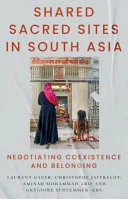
SHARED SACRED SITES IN SOUTH ASIA
 78
78

SHARED SACRED SITES IN SOUTH ASIA
Aminah Schlemmer Mohammad-Arif's study, *Shared Sacred Sites in South Asia*, offers a critical examination of how religious communities in the subcontinent have historically cohabited and venerated shared spaces. The author compellingly argues against simplistic notions of syncretism, instead positing that these sites often functioned through complex negotiations of power, devotion, and local custom. A particular strength lies in the detailed analysis of the pilgrimage routes that catered to diverse groups, demonstrating a pragmatic approach to spiritual accessibility. However, the dense academic prose, while precise, may present a barrier for readers less familiar with South Asian religious scholarship. The discussion of how colonial administrative categories began to rigidly define religious boundaries, potentially disrupting older fluid practices, is particularly illuminating. This book is an essential, albeit demanding, contribution to understanding religious pluralism in South Asia.
📝 Description
78
Aminah Schlemmer Mohammad-Arif's work analyzes South Asian sites venerated by multiple faiths.
This book examines religious practices across South Asia, focusing on sites historically shared by different faith traditions. It moves beyond simple accounts of syncretism to analyze the theological, social, and political forces that allowed these shared sacred spaces to emerge and continue. The author investigates how pilgrims, ascetics, and local communities engaged with these locations, often blurring the boundaries between distinct religious identities.
The narrative places these shared sites within the broader historical currents of South Asia, from the early medieval period through the colonial era. It acknowledges the complex interplay of patronage, conflict, and cultural exchange that shaped the religious geography. The book considers how imperial policies and the rise of distinct confessional identities influenced the perception and use of these multi-religious spaces.
Central to the analysis are concepts such as dargah shrines venerated by both Muslims and Hindus, temples housing deities alongside Sufi saints, and pilgrimage routes that accommodated diverse devotees. The work analyzes the theological justifications and local traditions that facilitated such coexistence, often predating formal religious distinctions.
This study engages with the rich tradition of *bhakti* and Sufi movements in South Asia, which often emphasized personal devotion over strict sectarian boundaries. It touches upon the historical currents where mystical and devotional expressions could transcend formal religious divisions, fostering spaces of shared reverence. The work illuminates how localized spiritual practices and interpretations created an environment where the sacred could be experienced communally, irrespective of formal religious affiliation, reflecting a long-standing undercurrent of inter-spiritual dialogue.
💡 Why Read This Book?
• Gain a nuanced understanding of religious coexistence in South Asia, moving beyond simplistic notions of syncretism, by examining specific shared sites like dargahs and temples, as explored in the book's analysis of devotional practices. • Discover the historical evolution of these shared sacred spaces, understanding how they functioned within the pre-colonial and colonial eras, with particular attention to the impact of administrative categories in the 19th century. • Learn about the theological and social mechanisms that allowed for shared veneration at sites, appreciating concepts such as multi-religious pilgrimage routes and the negotiation of spiritual authority within these unique locations.
⭐ Reader Reviews
Honest opinions from readers who have explored this book.
❓ Frequently Asked Questions
What is the primary focus of *Shared Sacred Sites in South Asia*?
The book's primary focus is on analyzing the historical and theological dynamics of sacred sites in South Asia that have been venerated by multiple religious traditions, exploring how these shared spaces functioned beyond simple syncretism.
When was *Shared Sacred Sites in South Asia* first published?
The work was first published in 2025, making it a contemporary exploration of its subject matter.
Who is the author of *Shared Sacred Sites in South Asia*?
The author is Aminah Schlemmer Mohammad-Arif (Gregoire.).
What are some examples of shared sacred sites discussed in the book?
The book explores examples such as dargah shrines revered by both Muslims and Hindus, temples that incorporate veneration of Sufi saints, and pilgrimage routes accommodating diverse devotees.
What historical periods does the book cover?
The book covers periods from the early medieval era through the colonial era, examining how religious geography and practice evolved over centuries.
What academic fields would find this book most relevant?
This book is most relevant to scholars and students of religious studies, comparative religion, South Asian history, and cultural anthropology.
🔮 Key Themes & Symbolism
Negotiated Devotion
This theme centers on how individuals and communities navigated religious boundaries at shared sites. It moves beyond a facile understanding of religious blending to analyze the active negotiations, theological justifications, and social agreements that enabled diverse groups to worship at the same locations. The work explores how local traditions and the cults of saints, for instance, often predated or transcended formal religious affiliations, creating a space for shared veneration that was less about doctrinal agreement and more about shared spiritual efficacy and community needs.
Colonial Impact on Religious Identity
A significant aspect of the book is its examination of how colonial-era administrative policies and the imposition of Western categories of religious identification altered the range of shared sacred sites. Prior to this period, religious boundaries were often more fluid, with individuals participating in practices across different traditions. The book argues that the colonial drive to classify and codify led to a hardening of religious identities, potentially disrupting older, more integrated forms of worship and communal practice at these historically shared locations.
Pilgrimage as a Unifying Force
The book highlights the role of pilgrimage routes and festivals as crucial sites for inter-religious interaction. These journeys often accommodated a wide array of devotees, including Hindus, Muslims, and others, who converged at common destinations. The analysis emphasizes how these shared pilgrimage experiences fostered a sense of common spiritual purpose, even among those with distinct theological beliefs, demonstrating the practical and lived reality of religious coexistence in South Asia.
Theological and Vernacular Frameworks
This theme investigates the underlying religious frameworks, both formal and vernacular, that supported the existence of shared sacred sites. It studies how theological interpretations within various traditions could accommodate or explain the veneration of figures or places associated with other faiths. Furthermore, it examines the power of local customs, oral traditions, and folk beliefs in maintaining the sanctity and accessibility of these sites for a diverse populace, often prioritizing spiritual experience over strict doctrinal adherence.
💬 Memorable Quotes
Direct passages from the work, attributed to the author.
“Colonial administrative categories began to rigidly define religious boundaries, potentially disrupting older fluid practices.”
— This interpretation points to the book's analysis of how imperial governance imposed fixed religious identities, which may have undermined the historically more flexible nature of religious expression and shared veneration.
“The cult of saints often served as a bridge between disparate religious communities.”
— This concept underscores the importance of Sufi saints and similar figures in attracting devotees from various faiths, illustrating a key mechanism for shared sacredness.
“Pilgrimage routes accommodated a diverse array of devotees, fostering a sense of common spiritual pursuit.”
— This highlights the function of shared journeys to sacred destinations as a unifying experience that transcended individual religious affiliations.
“Local traditions and vernacular beliefs played a central role in maintaining the sanctity of multi-religious sites.”
— This interpretation emphasizes the foundational importance of grassroots customs and popular religious expressions in sustaining the shared veneration at these locations.
💡 Key Ideas
Editorial paraphrase of the work's core concepts — not direct quotes.
Shared sites often functioned not through doctrinal merger, but through the pragmatic negotiation of devotional needs.
This paraphrased concept highlights the book's central argument: that the coexistence at sacred places was driven by practical spiritual requirements and social dynamics rather than a unified theological doctrine.
🌙 Esoteric Significance
Tradition
While not strictly adhering to a single esoteric lineage like Hermeticism or Gnosticism, this work engages with the broader esoteric currents of devotionalism and spiritual practice found across South Asian traditions. It explores how individuals sought direct experience of the divine through practices at sacred sites, often bypassing orthodox religious structures. The book aligns with an esoteric understanding of sacred geography and the potential for places to hold concentrated spiritual energy accessible to those attuned to it, regardless of their formal religious affiliation.
Symbolism
Key symbols examined include the *dargah*, representing the veneration of Sufi saints as intermediaries to the divine, often attracting non-Muslim devotees seeking blessings. The *temple* itself, housing multiple deities or sacred relics, also serves as a symbol of layered sanctity. Furthermore, the symbolic representation of pilgrimage routes as paths of spiritual ascent and transformation, bringing diverse seekers together on a common quest, is central to understanding the spiritual architecture of these shared spaces.
Modern Relevance
Contemporary thinkers and practitioners interested in interfaith dialogue, peace studies, and alternative spiritualities find resonance in this book's exploration of historical coexistence. Movements advocating for religious harmony and scholars researching the phenomenology of religious experience draw upon its insights into how shared sacredness operates on a lived, practical level. The work offers a valuable counter-narrative to contemporary religious sectarianism, demonstrating the enduring potential for shared spiritual landscapes.
👥 Who Should Read This Book
• Comparative religion scholars and students seeking detailed case studies on historical interfaith dynamics and the sociology of religion in South Asia. • Researchers of Sufism and Bhakti movements interested in the overlapping devotional practices and shared veneration these traditions fostered. • Individuals exploring the concept of sacred geography and the spiritual significance of place, particularly those interested in how multiple traditions can imbue a single location with meaning.
📜 Historical Context
Published in 2025, *Shared Sacred Sites in South Asia* arrives at a moment when scholarly interest in religious pluralism and historical coexistence is particularly keen. The work situates itself within a lineage of South Asian studies that grappled with the complexities of religious interaction, following in the wake of scholars like Romila Thapar, who explored early historical dynamics, and later analysts of syncretism. The era it primarily examines, roughly from the early medieval period through the colonial administration of the 19th century, was characterized by a dynamic interplay of Islamic and Indic traditions. The rise of Sufism, for instance, provided numerous points of contact and shared veneration. However, the book critically engages with the impact of British colonial policies, which, through the need for classification and governance, began to impose more rigid religious categories. This process contrasted with earlier periods where, as the book illustrates, the boundaries between Hindu and Muslim devotional practices at sites like dargahs were often more fluid, challenging the notion of inherent, immutable religious divisions.
📔 Journal Prompts
The negotiation of devotional needs at shared sites: what personal spiritual requirements might lead one to venerate a site associated with multiple traditions?
Reflect on the impact of external categorization (e.g., colonial administration) on the fluidity of religious practice.
Analyze the role of intermediaries, such as saints, in bridging distinct religious communities.
Consider the symbolic journey of pilgrimage and its potential for unifying diverse seekers.
Explore how local customs and vernacular beliefs can sustain multi-religious sacred spaces.
🗂️ Glossary
Dargah
A shrine or tomb of a Sufi saint, often a site of pilgrimage and veneration for both Muslims and non-Muslims in South Asia.
Syncretism
The attempted amalgamation of different religions, cultures, or schools of thought. The book argues that shared sacred sites often function beyond simplistic syncretism.
Sufism
The mystical dimension of Islam, characterized by its emphasis on inner spiritual experience, often involving veneration of saints and their shrines.
Bhakti Movement
A devotional movement in Hinduism that emerged in medieval India, emphasizing intense love and devotion to a personal God, often fostering accessible religious practices.
Vernacular Beliefs
Local customs, traditions, and popular religious practices that are distinct from formal religious doctrines and often play a central role in shaping religious life.
Sacred Geography
The study of the religious significance of places and landscapes, and how these spaces are imbued with spiritual meaning and power.
Interfaith Dialogue
Communication and engagement between individuals and groups from different religious traditions, aiming for mutual understanding and cooperation.