Shamanism and Tantra in the Himalayas
 81
81

Shamanism and Tantra in the Himalayas
The sheer scope of Müller-Ebeling, Rätsch, and Shahi's 2002 work is its most striking feature. Their eighteen years of fieldwork in Nepal have yielded a compendium of shamanic and tantric practices that is, frankly, astonishing in its detail and breadth. The documentation of over twenty previously unrecorded psychoactives is particularly notable, offering a rare intersection of ethnobotany and ritual studies. However, the book's density, while a strength for the dedicated scholar, can be overwhelming for the uninitiated. The authors present a vast amount of information with minimal interpretative overlay, leaving the reader to connect many of the dots. A specific passage detailing the use of *Datura metel* in certain tantric initiations provides a stark example of the potent, and sometimes dangerous, substances involved. It is an invaluable, if demanding, resource for understanding this unique Himalayan synthesis.
📝 Description
81
Published in 2002, Shamanism and Tantra in the Himalayas documents living traditions in Nepal.
This volume details the contemporary practices of shamanism and tantra in Nepal, based on nearly two decades of research. The authors meticulously record the rituals, practitioners, and methods within these intertwined spiritual paths. The book also contributes significantly to ethnobotany by identifying over twenty previously undocumented psychoactive substances used in these traditions. This research provides insight into the pharmacological basis of ritualistic states.
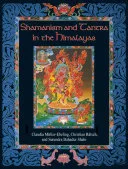
The work features 605 illustrations, including 135 color thangkas, which serve as a crucial visual guide to the iconography and symbolism of Himalayan shamanism and tantra. These images clarify the ritual objects and symbolic language central to these practices. The extensive field research, spanning 18 years, captures the shamanic and tantric cosmology, ethics, and practical applications before potential changes to the traditions.
Shamanism and Tantra in the Himalayas bridges two distinct yet often overlapping esoteric lineages. Shamanism, with its focus on altered states of consciousness and spirit communication, finds a unique expression in the Himalayan context. Tantra, a complex system of spiritual practices originating in India, also developed distinct forms in the Tibetan Buddhist and Bon traditions of the region. This book examines how these traditions interact and manifest in contemporary Nepal, offering a view of their living transmission.
💡 Why Read This Book?
• Gain access to over 20 psychoactive substances, never before documented, integral to Himalayan ritual practices, offering unique ethnobotanical insights. • Understand the living synthesis of shamanism and tantra in Nepal, a cultural phenomenon documented over 18 years of dedicated field research. • Study 135 color thangkas and 605 total illustrations, providing a rich visual key to the complex iconography and ritual objects specific to this region.
⭐ Reader Reviews
Honest opinions from readers who have explored this book.
❓ Frequently Asked Questions
What is the primary focus of 'Shamanism and Tantra in the Himalayas'?
The book's primary focus is the comprehensive documentation of shamanic and tantric practices in Nepal, presented as living traditions resulting from 18 years of field research.
How many illustrations are included in the book?
The book features a total of 605 illustrations, including a significant collection of 135 color thangkas, which are essential for understanding the visual culture of these practices.
What makes the ethnobotanical information in this book significant?
It details more than 20 psychoactive substances, many of which were previously undocumented, providing crucial insights into their use within Himalayan shamanic and tantric rituals.
When was 'Shamanism and Tantra in the Himalayas' first published?
The book was first published on September 1, 2002, marking a significant contribution to the study of Himalayan esoteric traditions.
Who are the authors of this extensive study?
The authors are Claudia Müller-Ebeling, Christian Rätsch, and Surendra Bahadur Shahi, whose combined expertise led to this comprehensive work.
What is the duration of the field research mentioned in the book?
The research underpinning the book spanned an impressive 18 years, ensuring a deep and nuanced understanding of the subject matter.
🔮 Key Themes & Symbolism
Intertwined Shamanic and Tantric Paths
The work meticulously illustrates how shamanic and tantric lineages are not merely coexistent but deeply interwoven within Nepalese culture. It details rituals, cosmologies, and practitioner roles where these two distinct yet complementary traditions inform one another, offering a rare insight into their symbiotic relationship and mutual reinforcement in practice.
Ethnobotanical Dimensions of Ritual
A significant contribution lies in the detailed cataloging of over twenty psychoactive plants and substances, many previously unknown to Western scholarship. The book explores their specific applications within shamanic healing, tantric initiations, and other ritual contexts, highlighting the pharmacological basis of altered states of consciousness central to these traditions.
Visual Language of Himalayan Esotericism
The extensive collection of 605 illustrations, critically including 135 color thangkas, serves as a visual dictionary for the complex symbolism inherent in Himalayan tantra and shamanism. These images illuminate deities, mandalas, ritual implements, and practitioner attire, providing essential context for understanding the symbolic grammar of these practices.
Enduring Field Research Methodology
The foundation of the book is the authors' 18 years of immersive field research in Nepal. This sustained engagement allowed for an authentic representation of contemporary practices, moving beyond historical texts to document the lived realities of shamans and tantrikas, their communities, and the ongoing transmission of their knowledge.
💬 Memorable Quotes
Direct passages from the work, attributed to the author.
“The Himalayan kingdom of Nepal may be the only culture in the world where both shamanic and tantric techniques are still alive and in full practice today.”
— This statement underscores the unique value of Nepal as a living laboratory for studying the confluence of shamanism and tantra, highlighting the book's focus on contemporary, active traditions rather than purely historical or theoretical accounts.
“Includes more than 20 psychoactives never before documented.”
— This points to a crucial ethnobotanical contribution, suggesting that the book offers novel scientific data on plant-based substances and their specific ritualistic uses within the studied traditions.
“The result of eighteen years of field research.”
— This emphasizes the depth and authenticity of the work, indicating that its conclusions are based on extensive, long-term observation and direct interaction with practitioners, lending significant credibility to its findings.
“605 color and black-and-white illustrations, including 135 color thangkas.”
— This highlights the book's strong visual component, suggesting that complex symbolic systems and ritual practices are made accessible through detailed imagery, particularly the inclusion of valuable Tibetan Buddhist thangka paintings.
“The first comprehensive guide to the shamans and tantrikas of Nepal.”
— This positions the book as a key work, asserting its role as the foundational text for anyone seeking an in-depth understanding of these specific Himalayan spiritual practitioners and their traditions.
🌙 Esoteric Significance
Tradition
This work sits at the nexus of comparative spirituality and indigenous studies, extending the lineage of ethnographic exploration into esoteric practices. While not strictly Hermetic, Gnostic, or Kabbalistic in its own right, it provides crucial data for those traditions seeking to understand the broader spectrum of spiritual technologies and altered states of consciousness found globally, particularly those involving potent plant allies.
Symbolism
The book studies the detailed symbolism of Himalayan traditions, exemplified by the intricate iconography of thangkas depicting deities like Mahakala or mandalas representing cosmic order. These visual elements are not merely decorative but are active tools for meditation and ritual, embodying complex cosmological principles and offering direct access to the energetic forces invoked by practitioners.
Modern Relevance
Contemporary practitioners of psychedelic-assisted therapy and consciousness exploration, as well as comparative religion scholars, draw heavily on this work. Its detailed ethnobotanical findings and the documentation of ritualistic use of psychoactives inform modern discussions on entheogens and their potential therapeutic or spiritual applications, bridging ancient practices with current scientific and therapeutic interests.
👥 Who Should Read This Book
• Comparative religion scholars and ethnobotanists: Gain access to outstanding field data on Nepalese shamanism and tantra, including over 20 undocumented psychoactive substances. • Students of esoteric traditions: Understand the practical application and living synthesis of shamanic and tantric practices in a unique cultural context, supported by extensive visual aids. • Researchers of consciousness studies: Explore the ritualistic use of psychoactives and their role in inducing altered states within a specific cultural framework, documented over nearly two decades.
📜 Historical Context
Published in 2002, 'Shamanism and Tantra in the Himalayas' emerged at a time when anthropological and religious studies were increasingly interested in the intersection of indigenous spiritual practices and more formalized religious systems. While Western scholarship had long studied Tibetan Buddhism and its tantric elements, and separately explored shamanism globally, the specific synthesis occurring in Nepal represented a unique field of inquiry. The authors' 18 years of research predated the full impact of globalization and digital dissemination, making their on-the-ground documentation particularly vital for capturing traditions potentially influenced by modernization. The work implicitly engaged with the broader field of comparative religion and ethnobotany, offering empirical data on psychoactive substances that contrasted with earlier, more speculative theories. Unlike purely academic treatises, its comprehensive visual documentation and focus on living practice distinguished it, providing material for scholars and practitioners alike who were exploring alternatives to established Western esoteric traditions.
📔 Journal Prompts
The intricate symbolism within the 135 color thangkas depicted.
The documented uses of over 20 psychoactive substances in ritual.
The synthesis of shamanic and tantric practices observed in Nepal.
The eighteen-year field research methodology employed by the authors.
The specific roles and rituals of Nepalese shamans and tantrikas.
🗂️ Glossary
Tantra
A complex spiritual tradition originating in India, characterized by esoteric rituals, meditation practices, and the use of mantras and visualizations, often involving the concept of harnessing cosmic energy.
Shamanism
A religious practice characterized by the belief that a practitioner can enter into a trance state and communicate with the spirit world, often acting as a mediator between humans and spirits.
Thangka
A traditional Tibetan Buddhist painting on cotton, silk, or brocade, typically depicting a Buddhist deity, scene, or mandala, used as a spiritual tool for meditation and devotion.
Psychoactive Substances
Chemical compounds that affect the mind, altering perception, mood, consciousness, cognition, or behavior, often used in ritualistic or spiritual contexts.
Field Research
Original research conducted in the natural environment or setting where phenomena occur, involving direct observation, interviews, and data collection from participants.
Cosmology
The study of the origin, evolution, and eventual fate of the universe; in a spiritual context, it refers to the belief system about the structure and order of the universe.
Ritual
A set of actions performed according to a prescribed order, often for religious or ceremonial purposes, believed to have symbolic meaning and efficacy.