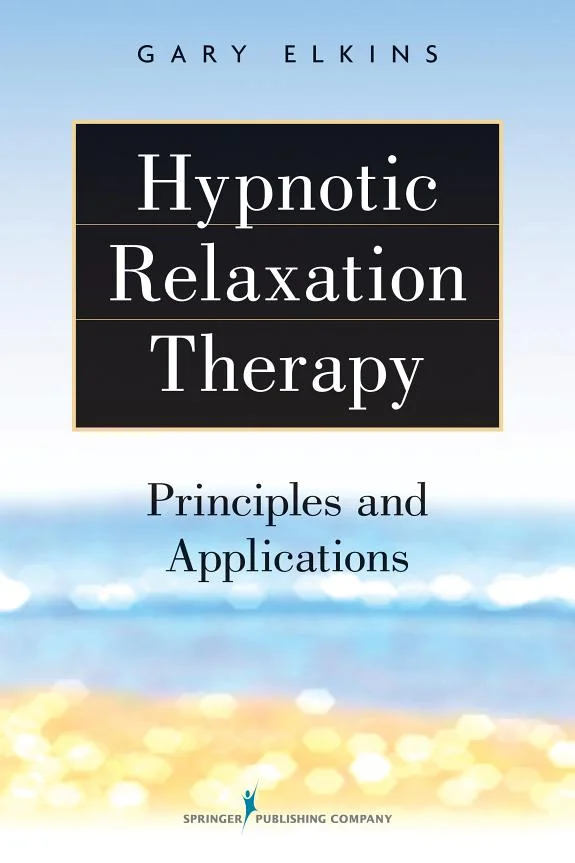
Hypnotic Relaxation Therapy
 75
75

Hypnotic Relaxation Therapy
Gary Elkins’ Hypnotic Relaxation Therapy arrives not with a flourish of mystical pronouncements, but with the sober detail of a clinician’s manual. The strength lies in its systematic, research-informed approach, offering practitioners a clear, step-by-step methodology. Elkins avoids the sensationalism that often clouds discussions of hypnosis, instead presenting it as a viable therapeutic modality. For instance, his discussion of differential relaxation, a technique that teaches clients to distinguish between muscle tension and relaxation, is particularly well-articulated and practical. However, the book’s primary limitation is its dense, academic prose. While commendable for its rigor, it can make the text less accessible to those not already steeped in clinical psychology jargon. The original blurb referencing 'Print+CourseSmart' suggests a pedagogical intent, but the execution feels more suited to graduate seminars than self-study. Ultimately, Elkins provides a valuable, albeit dry, clinical guide to hypnotic relaxation techniques.
📝 Description
75
Gary Elkins' Hypnotic Relaxation Therapy, published in 2009, details empirical research on hypnosis for stress reduction.
Gary Elkins' Hypnotic Relaxation Therapy offers a structured methodology for applying hypnosis to reduce stress and aid therapeutic interventions. Moving past anecdotal evidence, the book is grounded in empirical research, outlining techniques designed to induce deep relaxation, modify stress responses, and foster psychological well-being.
This text is primarily for mental health professionals, clinical psychologists, and therapists who wish to incorporate evidence-based hypnotic techniques into their practice. It is also a resource for students and researchers in psychology and hypnotherapy interested in hypnosis for conditions such as anxiety, insomnia, and pain. The focus on practical application makes it useful for those seeking to improve their therapeutic methods.
The book builds on the historical understanding of hypnosis, which has seen significant development since the late 19th century. Elkins’ research from the early 2000s contributes empirical data to the ongoing scientific exploration of hypnotic states, following a mid-20th century resurgence of interest in the field.
While presented within a modern scientific framework, Elkins' work touches upon a tradition that has historically explored altered states of consciousness for healing. Earlier practices, often viewed as more esoteric, laid groundwork that modern research now seeks to validate. The mid-20th century saw renewed academic interest, partly influenced by figures like Milton H. Erickson. Elkins' research from the early 2000s adds empirical weight to this continuing discourse, connecting contemporary clinical applications to older, sometimes less formalized, approaches to mind-body connection.
💡 Why Read This Book?
• Learn specific induction and suggestion techniques that Elkins details, enabling you to guide clients into states of deep relaxation for therapeutic benefit, as explored in his discussions on hypnotic protocols. • Understand the empirical basis for hypnotic relaxation, moving beyond anecdotal claims to grasp the research Elkins cites supporting its efficacy for anxiety and pain. • Gain practical, actionable strategies for integrating hypnosis into your clinical practice, directly applying Elkins' methods to enhance client outcomes and therapeutic interventions.
⭐ Reader Reviews
Honest opinions from readers who have explored this book.
❓ Frequently Asked Questions
What is the primary goal of Hypnotic Relaxation Therapy as presented by Gary Elkins?
The primary goal is to utilize structured hypnotic techniques to induce deep relaxation, manage stress responses, and promote psychological well-being in clients. Elkins focuses on empirical validation of these therapeutic outcomes.
Who is Gary Elkins, and what is his background relevant to this book?
Gary Elkins is a psychologist and researcher known for his work on hypnosis and its clinical applications. His background includes extensive empirical research, contributing to the scientific validation of hypnotic therapies.
Does the book provide step-by-step instructions for practicing hypnotic relaxation?
Yes, the book is structured to provide a systematic approach, detailing techniques and protocols. Its original publication format suggests a course-like structure designed for learning and application by professionals.
What conditions can Hypnotic Relaxation Therapy potentially address, according to the book?
The therapy is presented as beneficial for a range of conditions including anxiety, insomnia, and pain management. Elkins' research often focuses on these specific areas of application.
Is this book suitable for individuals new to hypnosis or only for experienced therapists?
While grounded in research, the book's detailed methodology makes it particularly valuable for mental health professionals and students seeking to integrate hypnosis. Beginners might find it dense without prior clinical context.
When was Hypnotic Relaxation Therapy first published?
Hypnotic Relaxation Therapy by Gary Elkins was first published on July 15, 2013. This date places it within a period of continued scientific investigation into the efficacy of hypnosis.
🔮 Key Themes & Symbolism
Empirical Validation of Hypnosis
This work grounds hypnotic techniques in scientific methodology, moving beyond anecdotal evidence. Elkins emphasizes research findings to demonstrate the efficacy of hypnosis for therapeutic outcomes. The focus is on measurable results, such as reduced anxiety or pain, and the physiological correlates of hypnotic states. This approach aligns with a modern scientific understanding of consciousness and therapeutic intervention, seeking to legitimize hypnosis as a clinical tool.
Structured Therapeutic Protocols
Hypnotic Relaxation Therapy offers a systematic framework for practitioners. It outlines specific induction methods, suggestion techniques, and strategies for deepening hypnotic states. The book's structure, particularly its original 'Print+CourseSmart' format, suggests a pedagogical intention to guide users through a learnable process. This emphasis on protocol ensures replicability and allows for consistent application in clinical settings.
Mind-Body Connection in Healing
The book explores the intricate relationship between mental states and physical well-being. By inducing relaxation through hypnosis, individuals can influence their physiological responses to stress and discomfort. This perspective highlights the capacity of the mind to modulate bodily functions, a concept central to psychosomatic medicine and holistic healing practices.
Clinical Applications of Suggestion
Elkins details how carefully crafted suggestions can be used within a hypnotic state to promote positive changes. This involves understanding how to bypass conscious critical faculties to implant ideas that support therapeutic goals, whether for managing pain, reducing anxiety, or improving sleep. The precision in suggestion is key to the therapy's effectiveness.
💬 Memorable Quotes
Direct passages from the work, attributed to the author.
“Hypnotic relaxation is a learned skill.”
— This highlights that hypnosis is not an innate talent or passive state, but a process that can be taught and acquired through practice and guidance, emphasizing the active role of both therapist and client.
“The goal is to induce a state of profound physical and mental relaxation.”
— This succinctly defines the core objective of the therapy, pointing towards the deep, comprehensive nature of the relaxation sought, encompassing both somatic and psychological dimensions.
“Expectancy plays a significant role in treatment outcomes.”
— This acknowledges the power of belief and anticipation in the therapeutic process, suggesting that a client's positive expectation of hypnosis can enhance its effectiveness, a factor often studied in placebo research.
“Differential relaxation techniques help distinguish tension from ease.”
— This refers to a specific method taught within the therapy, aiming to increase awareness of bodily sensations and the ability to consciously release muscular tension.
“Hypnosis can alter subjective experience of pain.”
— This points to a key clinical application, indicating that while the physical source of pain may remain, hypnosis can change how an individual perceives and experiences it, offering relief.
🌙 Esoteric Significance
Tradition
While Gary Elkins' approach is firmly rooted in modern clinical psychology and empirical research, the practice of inducing altered states of consciousness for healing has deep roots in various esoteric traditions. Ancient shamanic practices, the meditative disciplines of Eastern religions, and even early Western esoteric movements explored altered states to access inner knowledge or promote healing. Elkins’ work, by systematizing and validating these states through a scientific lens, can be seen as a contemporary, secularized echo of these older traditions, focusing on therapeutic outcomes rather than spiritual attainment.
Symbolism
Within the context of hypnotic relaxation, the primary 'symbols' are not visual icons but internal experiences. The concept of 'deep relaxation' itself functions symbolically, representing a state of peace and detachment from everyday stressors, akin to the 'emptiness' sought in some Buddhist meditations. The guided imagery often employed can invoke archetypal symbols—safe places, flowing water, calming lights—that resonate on a subconscious level, facilitating the release of tension and the restoration of inner balance, drawing on universal psychological motifs.
Modern Relevance
Contemporary practices in mindfulness-based stress reduction (MBSR), biofeedback, and even certain forms of somatic experiencing therapy show parallels with the principles Elkins outlines. Thinkers and practitioners who focus on the mind-body connection, psychoneuroimmunology, and the therapeutic benefits of altered states continue to draw upon and validate research like Elkins'. His work provides a foundational understanding for those seeking non-pharmacological interventions for stress, anxiety, and chronic pain, bridging the gap between psychological theory and lived experience.
👥 Who Should Read This Book
• Mental health professionals and clinical psychologists seeking to expand their therapeutic repertoire with evidence-based hypnotic techniques for anxiety, insomnia, and pain management. • Graduate students in psychology, counseling, and hypnotherapy programs looking for a structured, research-informed text on clinical hypnosis applications. • Researchers investigating the efficacy of psychological interventions and the mechanisms of consciousness, particularly those interested in the mind-body connection and stress reduction.
📜 Historical Context
Gary Elkins' work on Hypnotic Relaxation Therapy emerged in an era where hypnosis, after periods of both intense interest and skepticism, was solidifying its place within evidence-based psychology. The mid-20th century saw key figures like Milton H. Erickson championing less authoritarian, more indirect hypnotic approaches, influencing a generation of therapists. By the 2000s, research methodologies had advanced significantly, allowing for more rigorous testing of hypnotic efficacy. Elkins’ contribution, particularly his research published around 2013, fits within this scientific maturation. It contrasts with earlier, more stage-hypnosis-oriented presentations or psychoanalytic interpretations. While figures like Ernest Hilgard explored the 'hidden observer' phenomenon in the 1970s and 80s, Elkins’ focus is on practical, reproducible clinical protocols. The reception of such work within academic circles has generally been positive, with hypnosis increasingly recognized for its utility in managing pain and anxiety, though debates about its precise mechanisms persist.
📔 Journal Prompts
Reflect on the concept of 'differential relaxation' and how it might apply to managing personal stress.
Consider the role of 'expectancy' in your own therapeutic encounters or personal development.
Analyze the 'structured protocols' described for hypnotic induction and their potential benefits.
Explore the symbolic meaning of 'deep relaxation' as a state of being, beyond mere physical rest.
Examine the application of 'suggestion' in everyday communication and its therapeutic potential.
🗂️ Glossary
Hypnotic Induction
The process by which a therapist guides a client into a state of hypnosis, typically involving relaxation techniques, focused attention, and suggestions.
Suggestion
A communication that influences or directs a person's thoughts, feelings, or behaviors, particularly effective when delivered within a hypnotic state.
Dissociation
A psychological state where there is a disconnection between thoughts, memories, feelings, actions, or sense of identity. In hypnosis, it can involve a focused absorption that reduces awareness of external stimuli.
Differential Relaxation
A technique used in hypnosis and relaxation training that teaches individuals to identify and release muscle tension, distinguishing between necessary tension and unnecessary strain.
Guided Imagery
A mental imagery technique used in hypnosis to evoke a sense of peace, calm, or other desired feelings by engaging the imagination through descriptive language.
Therapeutic Alliance
The collaborative relationship between a therapist and a client, characterized by mutual trust and respect, which is crucial for effective treatment outcomes.
Psychological Well-being
A state of mental health characterized by positive emotions, engagement in life, and a sense of purpose, often improved through therapies like hypnotic relaxation.
This book appears in 1 collection
🔮 Readers Also Liked
Browse all →








From the “Hypnosis” Collection
View all →









More Free Occult Philosophy Books
View all →