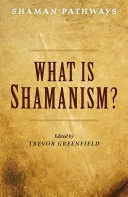
Shaman Pathways - What is Shamanism?
 80
80

Shaman Pathways - What is Shamanism?
Trevor Greenfield's edited volume "Shaman Pathways - What is Shamanism?" attempts a comprehensive overview, a challenging task given the subject's vastness. The strength lies in its collective authorship; the insights from eleven distinct voices offer a breadth of perspective that a single author might struggle to achieve. Dorothy Abrams' contribution, for instance, offers a grounded perspective on the practical application of healing techniques, which is particularly effective. However, the book occasionally suffers from a lack of deeper integration between the essays. While each section addresses a "central aspect," the transitions can feel abrupt, leaving the reader to bridge conceptual gaps. The discussion on spirit allies, while present, could benefit from more specific case studies beyond generalized descriptions. Greenfield's editorial hand is evident in maintaining a consistent, accessible tone, but a more rigorous theoretical framework connecting the diverse viewpoints would elevate its academic standing. It serves as a solid, if somewhat fragmented, introduction to the field.
📝 Description
80
Trevor Greenfield edited Shaman Pathways to clarify what shamanism entails.
This collection, edited by Trevor Greenfield, brings together eleven authors and practitioners to answer the question, 'What is Shamanism?'. Each contributor examines a specific facet of shamanic practice and philosophy. The book aims to introduce newcomers to core concepts while also providing a space for contemporary discussion among experienced practitioners. Its creation stems from a need to gather varied viewpoints on a subject often obscured by its own mystique.
The anthology is designed for both beginners and those with existing shamanic practices. For newcomers, it offers a clear, accessible introduction, explaining complex ideas and methods. For experienced individuals, it presents opportunities to engage with current thought in the shamanic community, looking at new interpretations and ongoing dialogues. This broad appeal makes it a useful resource for anyone interested in shamanism.
Greenfield's compilation places shamanism within the wider scope of human spiritual and healing traditions. Though its precise origins are debated, shamanic practices appear across many cultures and historical periods, often predating formal religions. The book considers how these old practices have survived and changed, especially with modernization and academic study. It points to the persistent human desire for connection with the spirit world and the natural environment, as shown through shamanic ways.
Shamanism, as presented in this work, connects to a long lineage of human spiritual practices focused on altered states of consciousness for healing, divination, and interaction with non-ordinary reality. It is situated within a global history that often predates formalized religious structures, emphasizing direct experience with the spirit world and the natural environment. The book acknowledges the diverse manifestations of shamanism across cultures and its adaptation through time, particularly in response to modernization and critical inquiry. This collection engages with the ongoing effort to understand and articulate these ancient yet evolving traditions for both practitioners and students.
⭐ Reader Reviews
Honest opinions from readers who have explored this book.
❓ Frequently Asked Questions
What is the primary goal of Trevor Greenfield's "Shaman Pathways - What is Shamanism?"?
The book aims to provide a comprehensive introduction to shamanism by presenting diverse perspectives from eleven leading authors and practitioners, addressing both foundational concepts and contemporary debates within the field.
Who are some of the contributors to this book?
The collection features essays from prominent figures such as Dorothy Abrams and Elen Sentier, alongside eight other recognized authors and practitioners in the shamanic community.
Is "Shaman Pathways" suitable for beginners?
Yes, the book is explicitly designed as an excellent introduction for newcomers to shamanism, clearly explaining core aspects and practices without assuming prior knowledge.
Does the book discuss different cultural forms of shamanism?
While focusing on central themes, the anthology implicitly touches upon the diversity of shamanic expressions by featuring practitioners with varied backgrounds and approaches.
When was "Shaman Pathways - What is Shamanism?" first published?
The book was first published on September 28, 2018, reflecting contemporary discussions and thinking in the field of shamanism.
What kind of topics are covered in the book?
The book covers fundamental aspects of shamanism, including the nature of the spirit world, the shaman's role, altered states of consciousness, and the ethical considerations of practice.
🔮 Key Themes & Symbolism
The Shamanic Worldview
This theme explores the fundamental perception of reality inherent in shamanic traditions, positing a multidimensional cosmos where spirits, humans, and nature are intrinsically interconnected. It examines how shamans navigate this worldview, acting as intermediaries between the seen and unseen realms. The discussions often touch upon the energetic and symbolic nature of existence, moving beyond purely materialistic interpretations of health and well-being. The book provides insights into the foundational beliefs that underpin various shamanic practices across different cultures.
Spirit Journeying and Altered States
A core element discussed is the practice of entering altered states of consciousness, commonly referred to as spirit journeys. This section details the methods employed by shamans to achieve these states, often through rhythmic drumming or chanting, to access non-ordinary reality. The purpose of these journeys – seeking guidance, healing, or knowledge – is a central focus. The contributors illuminate the techniques and the subjective experiences associated with traversing these inner landscapes, emphasizing the importance of intention and preparation.
Healing and Intermediation
The role of the shaman as a healer and mediator is thoroughly examined. This theme addresses how shamans diagnose and treat illness, often understood as originating from spiritual imbalances or intrusions. The book explores the shaman's function in restoring harmony within individuals, communities, and the environment by communing with spirit helpers and retrieving lost soul parts or energies. The ethical responsibilities associated with such potent healing work are also highlighted, underscoring the importance of integrity and respect.
Contemporary Shamanism
This theme addresses the evolution and adaptation of shamanic practices in the modern world. It discusses how ancient traditions are being reinterpreted and applied in contemporary contexts, often divorced from their original cultural settings. The contributors engage with the debates surrounding authenticity, appropriation, and the challenges of practicing shamanism in a secularized, globalized society. The book aims to present a balanced view of how shamanism continues to offer relevant pathways for spiritual growth and healing today.
💬 Memorable Quotes
Direct passages from the work, attributed to the author.
“The shamanic path is not a belief system to be passively accepted, but a practice to be lived.”
— This statement emphasizes the active, experiential nature of shamanism, contrasting it with dogmatic adherence. It suggests that true understanding comes through direct engagement and personal application of shamanic principles and techniques.
“Understanding the spirit world requires one to listen beyond the noise of the mundane.”
— This highlights the necessity of cultivating inner stillness and receptivity to perceive the subtle energies and communications from the spirit realms. It implies that ordinary consciousness often filters out this vital information.
“Every plant, stone, and creature possesses a spirit that can be consulted.”
— This expresses the animistic foundation of many shamanic traditions, asserting that consciousness is not limited to humans. It underscores the interconnectedness of all life and the potential for communication with the non-human world.
“The healing a shaman facilitates often involves restoring a lost connection.”
— This points to a common understanding of illness in shamanic contexts as a form of disconnection – from spirit, self, or community. Healing, therefore, involves re-establishing these vital links.
“To be a shaman is to walk between worlds, carrying wisdom from each.”
— This metaphor captures the intermediary role of the shaman, bridging the physical and spiritual dimensions. It suggests a responsibility to translate insights gained in one realm for the benefit of the other.
🌙 Esoteric Significance
Tradition
While shamanism itself predates many formalized esoteric traditions, this work engages with its integration into modern Western esotericism. It departs from purely anthropological or indigenous-focused accounts by framing shamanic practices within a broader spiritual quest for direct experience of the divine or ultimate reality, a common thread in Hermeticism and Gnosticism. The book explores shamanism not merely as a cultural phenomenon but as a potent method for accessing consciousness and spiritual insight, aligning it with esoteric goals of self-transformation and expanded perception.
Symbolism
The book likely studies symbols inherent in the shamanic journey, such as the World Tree (axis mundi) connecting different realms, or animal spirit guides representing primal forces and archetypal energies. The serpent may appear as a symbol of transformation and chthonic power, while birds could represent communication with the upper worlds or spiritual freedom. These symbols function not just as decorative elements but as potent keys to understanding the structure of the cosmos and the dynamics of spiritual power within the shamanic framework.
Modern Relevance
Contemporary thinkers and practitioners in fields like depth psychology (particularly Jungian analysis), transpersonal psychology, and various forms of nature-based spirituality draw heavily on the concepts explored in works like this. Modern shamanic practitioners, often operating outside traditional indigenous contexts, utilize the frameworks discussed to understand their own experiences and ethical responsibilities. The book’s exploration of altered states and spirit communication also finds echoes in contemporary psychedelic research and consciousness studies, highlighting shamanism's enduring relevance.
👥 Who Should Read This Book
['• Beginning students of comparative religion and indigenous studies seeking a clear, multi-voiced introduction to the core concepts of shamanism.', '• Individuals interested in alternative healing modalities and the role of consciousness in well-being, looking for foundational knowledge beyond popular wellness trends.', '• Experienced spiritual practitioners from other traditions who wish to understand the unique principles and practices of shamanism and engage with contemporary discussions.']
📜 Historical Context
Published in 2018, "Shaman Pathways - What is Shamanism?" emerged during a period of heightened interest in indigenous spiritual practices and alternative healing modalities. The late 20th and early 21st centuries saw a significant rise in what scholars termed Neo-shamanism, heavily influenced by the work of figures like Michael Harner and his Foundation for Shamanic Studies, which popularized simplified versions of Siberian shamanic techniques. Greenfield's volume participates in this ongoing discourse, seeking to clarify the core tenets of shamanism for a modern audience while also engaging with practitioners who might be familiar with more established figures like Sandra Ingerman or Håkan Nordkvist. The book's collaborative nature reflects a broader trend in esoteric studies towards multi-authored anthologies that consolidate diverse perspectives, moving away from singular authoritative voices. Its reception likely catered to both newcomers drawn by popular interest and seasoned practitioners looking to engage with contemporary interpretations beyond the foundational texts that defined the field decades prior.
📔 Journal Prompts
The concept of the spirit world as a multidimensional cosmos: What elements of this resonate with your personal understanding of reality?
Spirit allies as described by contributors like Dorothy Abrams: How might different animal or nature spirits inform your daily life?
The shaman's role as intermediary: Reflect on moments where you have acted as a bridge between different perspectives or realms.
The practice of altered states: Consider the difference between induced altered states and everyday moments of heightened awareness.
Ethical considerations in spiritual practice: What responsibilities do you believe come with accessing non-ordinary states or knowledge?
🗂️ Glossary
Shaman
An individual believed to have the ability to contact and influence the spirit world, often acting as a mediator between the human and spiritual realms for purposes of healing, divination, or guidance.
Spirit World
A non-physical dimension or reality inhabited by spirits, deities, ancestors, and other non-corporeal beings, accessible through altered states of consciousness by trained practitioners.
Altered State of Consciousness (ASC)
A state of awareness that deviates significantly from the normal waking state, often achieved through techniques like drumming, chanting, or fasting, to access spiritual insights or healing energies.
Spirit Journey
The act of traveling consciously within the spirit world while in an altered state of consciousness, typically undertaken to gain information, seek assistance, or perform spiritual work.
Spirit Helper/Ally
A spirit being (e.g., animal, plant, ancestral spirit) that provides guidance, power, or assistance to a shaman during spiritual practices or healing sessions.
Intermediary
One who acts as a go-between or mediator, in this context, the shaman acting between the human community and the spirit world.
Divination
The practice of seeking knowledge of the future or the unknown by supernatural means, often through interpreting signs or messages received from the spirit world.