Homeopathy
 74
74

Homeopathy
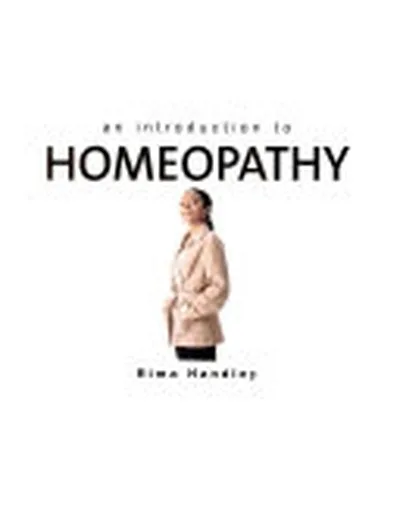
Parragon, Incorporated's "Homeopathy" offers a foundational overview of this complex system. The text commendably breaks down the principle of "like cures like" and the process of "potentization," making these often-obscure concepts more accessible to the uninitiated. A particular strength lies in its clear, if brief, explanation of Samuel Hahnemann's initial experiments, grounding the theory in its historical genesis. However, the work's brevity limits its capacity for deep exploration. For instance, while it mentions the "vital force," it does not fully grapple with the energetic or philosophical implications that scholars like Jan Scholten have elaborated upon in later decades. The book serves as a competent primer, but those seeking a comprehensive philosophical or clinical treatise will find it wanting. It is a serviceable introduction, but not an exhaustive study.
📝 Description
74
Published by Parragon, Incorporated, this 200-page book details the principles of homeopathy.
This volume explains homeopathy, a system of alternative medicine that began in the late 18th century. Its central idea is that a substance causing symptoms in a healthy person can, when highly diluted, treat similar symptoms in a sick person. The book examines the theoretical basis for this approach, going beyond simple remedies to cover the philosophical and energetic aspects important to its practice.
It is written for anyone interested in healing methods outside conventional Western medicine. Readers curious about energetic medicine, practitioners of complementary therapies, and students of medical history will find this work informative. The text aims to clarify homeopathy's distinct methods and historical background for newcomers.
Homeopathy originated with German physician Samuel Hahnemann around 1796. His experiments and writings, particularly the "Organon of the Healing Art," established principles that differed greatly from the medical theories of his time. Homeopathy grew popular in the 19th century before facing challenges from modern scientific medicine.
Homeopathy belongs to a tradition of vitalistic medicine, which posits an animating life force or energy within living beings. Developed by Samuel Hahnemann, it aligns with esoteric thought by emphasizing the energetic nature of both disease and cure, often through highly diluted substances believed to carry specific vibrational patterns. This perspective contrasts with purely materialistic or biochemical models of health and illness, situating homeopathy within a broader exploration of subtle energies and the mind-body connection.
💡 Why Read This Book?
• Gain an understanding of the 'law of similars,' the core principle articulated by Samuel Hahnemann around 1796, explaining how substances causing symptoms in the healthy might cure similar symptoms in the ill. • Grasp the concept of 'potentization,' the unique homeopathic process of dilution and succussion, and its theoretical role in enhancing a remedy's energetic properties as detailed in the text. • Appreciate the historical development of homeopathy as a distinct medical system emerging in late 18th-century Germany, contrasting with contemporary medical practices of the era.
⭐ Reader Reviews
Honest opinions from readers who have explored this book.
❓ Frequently Asked Questions
What is the fundamental principle behind homeopathy?
Homeopathy operates on the principle of 'like cures like,' meaning a substance that causes certain symptoms in a healthy individual can be used in a highly diluted form to treat similar symptoms in a sick person.
Who developed the system of homeopathy?
The system of homeopathy was developed by the German physician Samuel Hahnemann, who first formulated its core principles around 1796.
What is 'potentization' in homeopathy?
Potentization is the process of serial dilution and succussion (vigorous shaking) used in preparing homeopathic remedies. It is believed to increase the remedy's energetic potency.
How does homeopathy differ from conventional medicine?
Unlike conventional medicine that often uses opposing treatments, homeopathy uses highly diluted substances that mimic the symptoms of the illness, aiming to stimulate the body's own healing response.
Is homeopathy based on scientific evidence?
The efficacy of homeopathy beyond placebo is a subject of ongoing scientific debate. Its principles, particularly regarding dilution and the 'vital force,' diverge from mainstream scientific understanding.
What is the 'vital force' in homeopathic theory?
The 'vital force' refers to an animating, energetic principle believed to govern life. Homeopathy posits that illness arises from a disturbance of this force, and remedies aim to restore its balance.
🔮 Key Themes & Symbolism
Law of Similars
The central tenet of homeopathy, the 'law of similars' (similia similibus curentur), posits that 'like cures like.' This principle, formulated by Samuel Hahnemann around 1796, suggests that a substance capable of producing symptoms in a healthy individual can be used to treat similar symptoms when they manifest in a diseased state. The book explores how this concept challenges conventional medical paradigms by proposing a therapeutic approach based on mirroring, rather than opposing, the ailment. It is fundamental to understanding the selection and application of homeopathic remedies.
Potentization and Energetics
This theme explores the unique preparation method known as potentization. It involves serial dilution of a substance, often accompanied by succussion (vigorous shaking), a process believed to imbue the diluted substance with an enhanced energetic property or 'vitality.' The work examines the theoretical basis for this phenomenon, which is distinct from chemical or pharmacological actions. Understanding potentization is crucial for appreciating how homeopathic remedies are prepared and why they are often administered in extremely high dilutions, beyond the point where any original substance molecules might remain.
The Vital Force
A core part of homeopathic philosophy is the concept of the 'vital force' or 'vitality.' This refers to an inherent, non-physical energy that animates living beings and maintains health. Homeopathy posits that disease arises from a disruption or imbalance in this vital force. The book explains how homeopathic remedies are intended not to suppress symptoms directly, but to stimulate the vital force, thereby enabling the body's innate healing mechanisms to restore equilibrium and well-being. This energetic perspective distinguishes homeopathy from purely materialist medical systems.
Individualized Treatment
The book highlights homeopathy's emphasis on individualized patient care. Unlike approaches that focus solely on a diagnosed disease label, homeopathy seeks to understand the totality of a person's symptoms, including their physical, mental, and emotional states. The selection of a homeopathic remedy is based on matching these unique symptom pictures to the known effects of various substances. This holistic and person-centered approach aims to address the root cause of the imbalance within the vital force, rather than merely treating superficial manifestations.
💬 Memorable Quotes
Direct passages from the work, attributed to the author.
“The principle of 'like cures like' is central.”
— This captures the fundamental axiom of homeopathy, suggesting that the path to healing lies in finding a substance that mirrors the patient's affliction.
“Potentization enhances the energetic properties of a substance.”
— This refers to the unique homeopathic preparation method, implying that dilution and shaking unlock or amplify a remedy's non-physical healing potential.
“Illness arises from a disturbance of the vital force.”
— This expresses the homeopathic view of disease as an energetic imbalance, affecting the animating principle of life, rather than solely a material pathology.
“Remedies are chosen to match the individual's symptom totality.”
— This emphasizes the personalized nature of homeopathic prescribing, where the unique constellation of a patient's symptoms guides remedy selection.
“Samuel Hahnemann's experiments led to the 'Organon of the Healing Art'.”
— This points to the foundational work and experimental basis from which the principles of homeopathy were systematically developed and documented.
🌙 Esoteric Significance
Tradition
Homeopathy aligns with certain esoteric traditions that posit a non-physical animating principle governing life, often termed the 'vital force.' This concept has parallels in vitalism found in Hermetic philosophy and certain schools of nature philosophy. While not strictly Kabbalistic or Gnostic, its focus on subtle energies and energetic balance places it within the broader spectrum of holistic, mind-body-spirit healing systems that explore forces beyond the purely material. It represents an attempt to codify and apply principles of energetic resonance and influence in a therapeutic context.
Symbolism
While homeopathy does not heavily rely on overt symbolic imagery in the way some esoteric systems do, the core concepts themselves carry symbolic weight. The 'law of similars' can be seen as symbolizing a principle of energetic correspondence or reflection, where the microcosm (the remedy's effect) mirrors the macrocosm (the patient's illness). The process of 'potentization,' particularly the extreme dilutions, symbolizes the idea that essence or information, rather than material substance, holds the key to healing, pointing towards an immaterial, energetic reality.
Modern Relevance
Contemporary practitioners and thinkers in fields such as energy medicine, bioresonance therapy, and even some branches of psychosomatic healing draw upon homeopathic principles. The idea of subtle energies influencing health, the importance of individualized treatment, and the concept of the vital force continue to resonate. While mainstream science often debates its efficacy, homeopathy remains a significant influence in the range of alternative and complementary medicine, informing approaches that seek to work with the body's inherent energetic systems.
👥 Who Should Read This Book
• Individuals curious about alternative healing modalities: You will gain a foundational understanding of homeopathy's unique principles, historical development, and core concepts like 'like cures like' and 'potentization.' • Students of medical history and philosophy: You can explore a significant alternative medical system that emerged in the late 18th century, offering a contrast to contemporary allopathic practices and engaging with theories of vitalism. • Practitioners of complementary therapies: You will find context for energetic approaches to health, learning about a system that emphasizes the 'vital force' and individualized symptom matching for treatment.
📜 Historical Context
Emerging in the late 18th century, homeopathy represented a significant departure from the often harsh and invasive medical practices of its time. Samuel Hahnemann's formulation of the 'law of similars' around 1796 and his subsequent publication of the "Organon of the Healing Art" challenged prevailing humoral pathology and heroic medicine, which included practices like bloodletting. Throughout the 19th century, homeopathy experienced a surge in popularity, particularly in Europe and the United States, with dedicated hospitals and a devoted patient base. It offered a gentler, less toxic alternative that appealed to many. However, it also faced considerable skepticism and opposition from the burgeoning scientific and pharmaceutical industries, which favored more materialist explanations and interventions. By the early 20th century, the rise of evidence-based medicine and powerful new drugs led to a decline in homeopathy's prominence, though it persisted as a distinct branch of alternative medicine.
📔 Journal Prompts
The 'law of similars' as a principle of energetic correspondence.
Reflecting on the concept of the 'vital force' in personal well-being.
The process of 'potentization' and its implications for healing.
Comparing the individualization in homeopathy with other healing systems.
Samuel Hahnemann's journey from conventional medicine to homeopathy.
🗂️ Glossary
Law of Similars
The fundamental homeopathic principle stating that a substance causing symptoms in a healthy person can, in diluted form, treat similar symptoms in a sick person ('like cures like').
Potentization
The process of preparing homeopathic remedies through serial dilution and succussion (vigorous shaking), believed to enhance the remedy's energetic properties.
Vital Force
An animating, non-physical energy that is believed to govern life and maintain health. Homeopathy views illness as a disturbance of this force.
Succussion
The vigorous shaking or striking of a diluted substance during the preparation of homeopathic remedies, considered essential for potentization.
Symptom Totality
The complete picture of a patient's symptoms, encompassing physical, mental, and emotional aspects, used as the basis for selecting a homeopathic remedy.
Hahnemannian
Pertaining to the principles and practices established by Samuel Hahnemann, the founder of homeopathy.
Allopathic Medicine
Conventional Western medicine, often characterized by treatments that aim to counteract or suppress symptoms, contrasting with homeopathy's 'like cures like' approach.