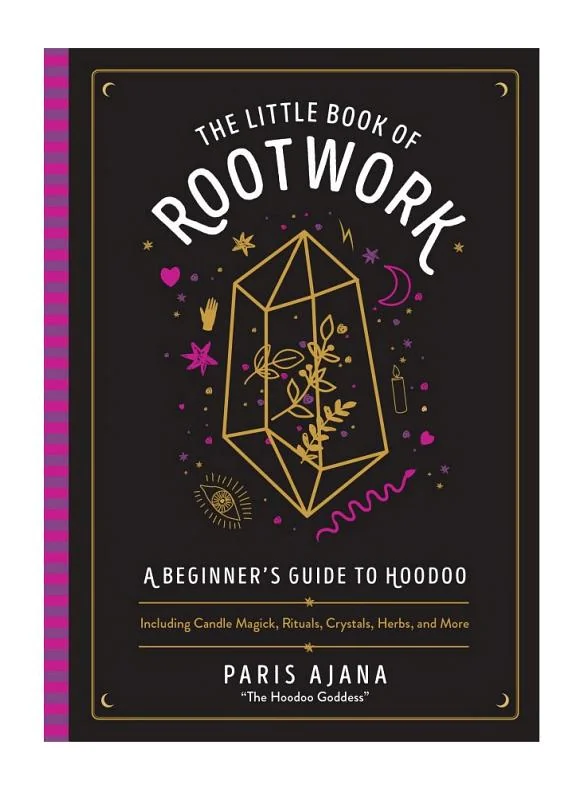
The Little Book of Rootwork
 79
79

The Little Book of Rootwork
Paris Ajana's "The Little Book of Rootwork" offers a refreshingly grounded approach to a potent spiritual tradition. Ajana avoids the pitfalls of sensationalism, instead presenting rootwork as a practical, accessible system for spiritual empowerment. The section on "Setting Up Your Space," which details the creation of a personal altar, is particularly effective, offering concrete steps that feel achievable rather than overwhelming. My primary reservation lies in the brevity of its exploration into the historical persecution faced by rootworkers; while the book acknowledges the dangers, a more detailed account would have provided greater context for the resilience inherent in the tradition. Nevertheless, the accessible guidance on crafting personal mojo bags and understanding the energetic properties of common herbs makes this a valuable resource for anyone seeking to engage with ancestral spiritual practices.
📝 Description
79
Paris Ajana's The Little Book of Rootwork offers a practical guide to African American folk magick.
This book introduces the traditions of African American rootwork, often called conjure. It breaks down complex spiritual practices so that both beginners and those already familiar with such work can understand them. The author focuses on the core principles of rootwork, stressing the importance of personal connection and guidance from ancestors.
The text is written for anyone interested in traditional spiritual practices, especially those from the African American diaspora. It is suitable for newcomers who want a clear introduction to folk magick. It also serves those who have some experience and wish to learn more about how rootwork can aid in personal growth and spiritual connection.
Rootwork, or conjure, has deep roots in the African continent. It evolved significantly during the enslavement of Africans in the Americas, blending West African beliefs with Christian and Indigenous American elements. This magickal system was a vital tool for survival, resistance, and spiritual sustenance.
Rootwork, or conjure, is a system of folk magick originating from West African spiritual traditions. It was profoundly shaped by the African diaspora, particularly during the period of slavery in the Americas. This practice often integrated elements from Christianity and Indigenous American spiritual beliefs, forming a unique syncretic tradition. Historically, rootwork served as a crucial means of spiritual sustenance, resistance, and survival for enslaved Africans and their descendants.
💡 Why Read This Book?
• Learn practical methods for crafting protective amulets and personal spell components, inspired by specific historical African American folk magick practices detailed in the book's chapters on mojo bags. • Gain an understanding of how to connect with ancestral guidance through rituals and offerings, as presented in Paris Ajana's accessible framework for spiritual communion. • Discover the energetic properties and traditional uses of common herbs and roots, enabling you to engage with natural elements for spiritual and personal well-being, as outlined in the book's practical sections.
⭐ Reader Reviews
Honest opinions from readers who have explored this book.
❓ Frequently Asked Questions
What is rootwork and how does it differ from other folk magick traditions?
Rootwork is a specific form of African American folk magick, deeply rooted in West African spiritual practices and shaped by the historical context of the diaspora. It often involves the use of herbs, roots, and natural elements for healing, protection, and spiritual empowerment, distinguishing it from European folk traditions.
Is "The Little Book of Rootwork" suitable for complete beginners?
Yes, the book is designed to be accessible to beginners. It breaks down core concepts and practical applications into understandable steps, offering a friendly introduction to the principles and practices of rootwork without assuming prior knowledge.
What kind of spiritual connection does rootwork facilitate?
Rootwork facilitates a connection to one's ancestors, spiritual guides, and the natural world. It emphasizes personal power and the ability to tap into inner strength and inherited wisdom for guidance and manifestation.
When was "The Little Book of Rootwork" first published?
The book was first published on April 12, 2022, making it a contemporary guide to an ancient tradition.
Does the book cover specific spellcasting techniques?
Yes, "The Little Book of Rootwork" provides practical guidance on creating rituals and spells, including how to craft items like mojo bags and understanding the intent and energetic components required for effective practice.
Who is the author, Paris Ajana?
Paris Ajana is presented as an author and practitioner who aims to make traditional folk magick accessible. The book draws on their understanding and experience within the African American rootwork tradition.
🔮 Key Themes & Symbolism
Ancestral Connection
The work emphasizes the profound importance of connecting with ancestral spirits and drawing upon their wisdom and guidance. It presents this connection not as a distant concept, but as a living, accessible relationship that can inform and empower the practitioner. Readers are encouraged to honor their lineage and understand how ancestral energies can be invoked for support in daily life and spiritual endeavors.
Practical Spellcraft
Focusing on tangible application, this book details how to construct and utilize various forms of rootwork for personal goals. This includes the creation of personal talismans, such as mojo bags, and the understanding of how to imbue them with specific intentions. The emphasis is on accessible materials and straightforward methods, explaining the process of spellcasting for those new to the practice.
Energetic Principles
Ajana explores the underlying energetic currents that drive rootwork. This involves understanding the inherent power within natural elements—herbs, roots, stones—and how to harness them through focused intention. The book guides readers to develop their own energetic sensitivity and to consciously direct these forces for manifestation, healing, and spiritual fortification.
Personal Empowerment
A central theme is the cultivation of personal spiritual power. The book posits that individuals possess inherent capabilities to connect with the divine and their inner strength. Rootwork is presented as a means to awaken and strengthen this inner power, fostering self-reliance and a deeper sense of agency over one's life and spiritual path.
💬 Memorable Quotes
Direct passages from the work, attributed to the author.
“We are all spiritual beings with the ability to connect to the guidance of our ancestors.”
— This statement frames rootwork not as an exclusive art, but as an inherent human capacity. It suggests that accessing ancestral wisdom is a natural faculty available to everyone, encouraging a foundational belief in one's own spiritual potential.
“Tap into your inner power to invigorate your mind, body, and soul.”
— This highlights the holistic aim of rootwork practices. It's not solely about external manifestations but about fostering internal well-being and vitality across all aspects of one's being through the application of traditional magickal principles.
“Discover how to harness traditional folk magick.”
— This concise phrase expresses the book's primary offering: making the practical application of traditional folk magick accessible and understandable for the reader.
“Provides a fun, practical guide to creating rituals and spells.”
— This interpretation emphasizes the book's approachability and hands-on methodology. It suggests that learning rootwork can be an enjoyable and engaging process, not just a theoretical study.
“An in-depth exploration of African American folk magick.”
— This points to the specific cultural and historical lineage that the book focuses on, indicating a deep dive into the nuances and particularities of this distinct magickal tradition.
🌙 Esoteric Significance
Tradition
Rootwork belongs to the broad category of indigenous diasporic spiritual traditions, particularly those originating from the African continent and adapted within the Americas. It aligns with animistic and ancestor-venerating practices, often incorporating elements of Christian symbolism in a syncretic manner, a common feature in many Afro-diasporic religions. Unlike Hermeticism or Kabbalah, which are rooted in Western esoteric textual traditions, rootwork is primarily an oral and experiential tradition, focusing on practical application and direct spiritual communion.
Symbolism
Key symbols in rootwork often draw from nature: roots symbolize grounding, connection to the earth, and the drawing up of power; herbs represent healing, protection, and spiritual cleansing, each with specific energetic properties. Ancestors are paramount, represented through altars, offerings, and direct invocation, signifying a bridge between the physical and spiritual realms. The crossroads, a potent symbol in many African-derived religions, represents decision-making, transition, and the intersection of spiritual forces.
Modern Relevance
Contemporary practitioners of Afro-spiritual traditions, as well as those interested in folk magick and ancestral healing, draw significantly from the principles outlined in works like "The Little Book of Rootwork." Thinkers and practitioners focusing on decolonizing spirituality, reclaiming ancestral practices, and developing accessible, earth-centered magick often cite the importance of such guides. It informs modern witchcraft movements seeking to diversify their practices beyond purely European roots.
👥 Who Should Read This Book
• Aspiring practitioners of African American folk magick seeking a foundational understanding of rootwork principles and techniques. • Individuals interested in comparative spirituality who wish to explore the historical and cultural context of diasporic traditions. • Those seeking to deepen their connection with ancestral guidance and harness practical, earth-based spiritual tools for personal growth.
📜 Historical Context
Rootwork, as explored in Paris Ajana's 2022 publication, is deeply embedded within the African American experience, a tradition that solidified during the antebellum period and Reconstruction era. Its practices often developed in clandestine ways, offering solace and resistance under oppressive systems. This folk magick tradition shares lineage with West African spiritual systems, blended with elements from European occultism and Indigenous American practices. Unlike the more formalized, academic occultism gaining traction in Europe and America during the late 19th and early 20th centuries, such as Theosophy or ceremonial magick, rootwork remained largely a grassroots practice, passed down orally or through informal networks. While scholars like Zora Neale Hurston documented aspects of Black folklore and spirituality in the early 20th century, direct engagement with practitioners and the dissemination of such practices in published form faced challenges, partly due to societal prejudice and the private nature of these traditions. Ajana's work contributes to a modern resurgence and academic interest in these vital spiritual technologies.
📔 Journal Prompts
Reflect on the specific ancestral guidance mentioned in the text.
Consider the practical applications of natural elements discussed.
Analyze the concept of personal power within the rootwork tradition.
Explore the creation of rituals and spells from the book.
Evaluate the connection between mind, body, and soul in rootwork.
🗂️ Glossary
Rootwork
A traditional African American folk magick system focused on healing, protection, and spiritual empowerment, often utilizing herbs, roots, and ancestral veneration.
Mojo Bag
A small cloth bag containing items imbued with specific intentions, used as a personal talisman for protection, luck, or manifestation in rootwork.
Ancestors
Spiritual guides and lineage holders whose wisdom and energy can be invoked for support, protection, and guidance in rootwork practices.
Intention
The focused will and purpose behind a magical act; considered the driving force in spellcasting and ritual within rootwork.
Herbal Magick
The practice of using the inherent energetic properties of plants, herbs, and roots for spiritual, healing, and magical purposes.
Altar
A sacred space, often a table or shelf, dedicated to spiritual practices, typically adorned with symbolic items, offerings, and tools for working with the divine or ancestors.
Syncretism
The blending of different religious or spiritual beliefs and practices, often seen in rootwork where African traditions merged with elements of Christianity and other influences.
This book appears in 1 collection
🔮 Readers Also Liked
Browse all →









From the “Hoodoo” Collection
View all →








More Free Occult Philosophy Books
View all →