Santa Muerte
 64
64

Santa Muerte


Celeste Moreau (Divination & Symbolism Reviewer) — Tracey Rollin's 'Santa Muerte' is a masterful unveiling of a potent, often misunderstood, devotional figure. Rollin masterfully navigates the esoteric currents and rich symbolism, offering profound insights into the spiritual significance of La Santa Muerte. The book’s strength lies in its scholarly yet accessible approach, demystifying complex rituals and beliefs for both the curious novice and the seasoned practitioner. It illuminates the intersection of folk Catholicism, indigenous traditions, and modern spiritual seeking. This is an essential read for anyone interested in death as a spiritual concept, Mexican spiritualism, or the powerful archetypes that guide us through life's liminal spaces. A truly illuminating journey.
📝 Description
64
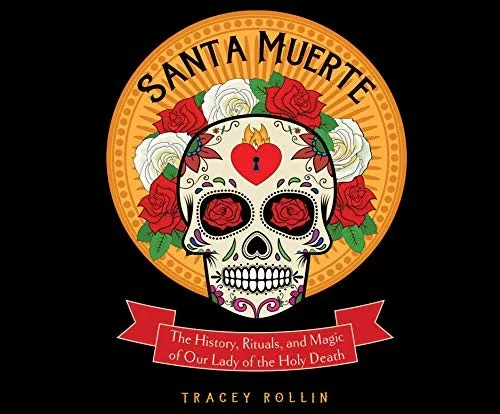
Tracey Rollin's 2018 book examines Santa Muerte devotion, moving beyond simple death cult analysis.
Tracey Rollin's research into Santa Muerte devotion uncovers the practices surrounding the 'Bones Woman,' a saint venerated in Mexico and elsewhere. This volume examines her devotional traditions, including rituals and iconography. Rollin details the symbolism associated with La Flaca, her skeletal appearance, and the nature of offerings made to her. The book connects the earthly and spiritual dimensions of this veneration.
Intended for both serious students and those with a scholarly interest, Rollin's work moves past simple observation. It engages with the spiritual and philosophical foundations of Santa Muerte worship. The book suggests viewing death not as a conclusion, but as a transition. This passage is understood through the lens of a powerful, perhaps intimidating, divine feminine force. Readers will encounter a sacred feminine figure that addresses fundamental human experiences of existence, mortality, and renewal.
This study situates Santa Muerte within traditions that recognize a potent divine feminine, often associated with liminal states and mortality. It touches upon the veneration of skeletal figures found in various cultures, suggesting a cross-cultural resonance with the archetype of death as a transformative force. The book examines how this devotion functions outside mainstream religious structures, aligning with emergent or syncretic spiritual movements that emphasize personal connection and immediate spiritual experience.
💡 Why Read This Book?
Uncover the profound esoteric wisdom surrounding Santa Muerte, a powerful figure of protection and transition. This book offers a deep dive into her rich symbolism, ancient rituals, and philosophical significance, revealing hidden knowledge for seekers and scholars alike. Explore death not as an ending, but as a sacred journey, illuminated by the benevolent, transformative energy of La Flaca.
⭐ Reader Reviews
Honest opinions from readers who have explored this book.
❓ Frequently Asked Questions
What is the historical origin of Santa Muerte devotion?
The devotion to Santa Muerte is believed to have roots in pre-Hispanic Mesoamerican death cults, syncretized with Catholic imagery of death, particularly the Grim Reaper and skeletal saints like St. Michael the Archangel. Its modern resurgence gained momentum in the late 20th century.
Is Santa Muerte worship considered orthodox Catholicism?
No, Santa Muerte devotion operates largely outside the official doctrines of the Roman Catholic Church, which has historically condemned it. It is considered a folk saint and a syncretic practice blending indigenous beliefs with Catholic iconography.
Who is Santa Muerte often invoked for?
Devotees invoke Santa Muerte for protection, healing, love, prosperity, and safe passage through difficult times, including death. She is seen as a powerful intercessor who grants requests swiftly, often to those marginalized or seeking justice.
What are common symbols associated with Santa Muerte?
Key symbols include her skeletal form, a scythe (representing the cutting of ties or death), a globe (representing dominion over the world), and various colors of robes, each signifying different blessings or aspects of her power (e.g., red for love, black for protection).
Can non-Mexicans practice Santa Muerte devotion?
Yes, the devotion has spread globally. While deeply rooted in Mexican culture, individuals from diverse backgrounds connect with Santa Muerte, viewing her as a universal figure of transformation and protection, transcending cultural boundaries.
🔮 Key Themes & Symbolism
The Sacred Feminine & Archetypal Death
This theme studies Santa Muerte as a manifestation of the powerful, primordial feminine archetype, deeply connected to the cycles of life and death. It explores how her skeletal form, rather than representing mere cessation, embodies transformation, liberation, and the raw, untamed essence of existence. We examine her role as a bridge between worlds, a guide through the underworld, and a protector for those facing life's most profound transitions. Her veneration offers a potent re-framing of death, moving beyond fear to embrace it as an integral, sacred part of the cosmic dance, accessible to all who seek her wisdom.
Syncretism and Folk Catholicism
This section illuminates the fascinating syncretism that birthed and sustains Santa Muerte devotion. It traces the convergence of indigenous Mesoamerican death cults with Spanish Catholic traditions, particularly the veneration of skeletal saints and the Grim Reaper. We explore how these disparate threads wove together to create a unique devotional practice that exists at the edges of orthodox religious structures. The emphasis is on understanding Santa Muerte not as an isolated phenomenon, but as a vibrant expression of living folk Catholicism, adapting and evolving through cultural exchange and spiritual necessity.
Ritual, Symbolism, and Personal Transformation
Here, the focus shifts to the practical application of Santa Muerte devotion through ritual and the profound symbolism embedded within her iconography. The book dissects the meaning behind her various colors, the scythe, the globe, and the offerings made to her, revealing layers of esoteric significance. It explores how engaging with these symbols and participating in rituals can foster personal transformation, offering protection, healing, and a deeper understanding of one's own mortality. This theme encourages readers to connect with La Flaca on a personal level, facilitating a journey of empowerment and spiritual growth.
💬 Memorable Quotes
Direct passages from the work, attributed to the author.
“She is the embrace of the inevitable.”
— This highlights Santa Muerte's role as a comforting, albeit powerful, presence that helps devotees accept and read through the certainty of mortality.
“In her skeletal form, she holds the secrets of existence.”
— This emphasizes the profound wisdom and hidden knowledge believed to be contained within Santa Muerte's iconic skeletal representation.
“The colors she wears paint the spectrum of human desire and protection.”
— This refers to the symbolic significance of the different colored robes worn by Santa Muerte, each representing a specific blessing or aspect of her power.
💡 Key Ideas
Editorial paraphrase of the work's core concepts — not direct quotes.
Death is not an end, but a transformation.
This quote captures the core esoteric understanding of Santa Muerte – that death is a sacred passage, not a finality, but a profound metamorphosis.
She is the bridge between the seen and the unseen.
This quote underscores Santa Muerte's function as a mediator, connecting the earthly realm with the spiritual and the unknown.
🌙 Esoteric Significance
Tradition
Santa Muerte devotion is a potent example of modern folk esotericism, deeply embedded within Mexican spiritualism and syncretic practices. It draws from pre-Hispanic indigenous cosmologies that viewed death as a natural, cyclical part of existence, and merges this with Catholic iconography and devotional structures. This fusion creates a unique spiritual path that operates outside orthodox religious boundaries, offering direct, personal access to a powerful divine feminine archetype associated with protection, transformation, and the passage of souls.
Symbolism
The symbolism surrounding Santa Muerte is rich and many-sided. Her skeletal form represents the stripping away of earthly vanities to reveal essential truth and the equality of all before death. The scythe signifies the cutting of negative influences, old patterns, or the final severance of earthly ties. The globe signifies her dominion over all of existence. The various colors of her robes represent different aspects of her power: red for love and passion, black for protection and breaking curses, white for purity and healing, and gold for prosperity.
Modern Relevance
In contemporary society, Santa Muerte serves as a powerful symbol of resilience, empowerment, and accessible spirituality for many, particularly those who feel disenfranchised or overlooked by mainstream institutions. Her veneration offers a profound re-framing of death, moving beyond fear to embrace it as a transformative force. For practitioners, she represents a direct conduit for protection, justice, and aid in navigating life's challenges, making her an increasingly relevant figure in the global range of spiritual seeking and alternative religious movements.
👥 Who Should Read This Book
This compelling work on Santa Muerte is essential reading for a diverse audience. **Spiritual Seekers** will find a profound exploration of death as a sacred transition and a powerful archetype of divine feminine energy. **Scholars of Religion and Anthropology** will appreciate the rigorous examination of syncretism, folk Catholicism, and the cultural evolution of devotional practices. **Practitioners of Esoteric Arts** will gain invaluable insights into the symbolism, rituals, and potent energies associated with La Flaca, enhancing their understanding of death work and protective magic. **Anyone curious about Mexican culture and its unique spiritual landscape** will be captivated by this nuanced and respectful portrayal of a deeply significant figure.
📜 Historical Context
The veneration of Santa Muerte emerges from a wide range of cultural and spiritual evolution, deeply rooted in the pre-Hispanic indigenous traditions of Mesoamerica, which held a profound reverence for death and the afterlife. These ancient beliefs, particularly those associated with Aztec deities like Mictēcacihuātl, the Lady of the Dead, were later syncretized with Catholic imagery during the Spanish colonization of Mexico. The Catholic Church's representation of death, including the Grim Reaper and skeletal saints like St. Michael the Archangel, provided a familiar framework onto which indigenous venerations could be grafted. While similar practices existed in Europe, the Mexican devotion to Santa Muerte gained significant modern traction in the late 20th century, resonating with marginalized communities seeking protection, justice, and spiritual solace in the face of societal challenges and high rates of violence. This resurgence transformed her from a fringe figure into a powerful, albeit controversial, folk saint with a growing global following.
📔 Journal Prompts
Reflect on your personal relationship with the concept of death. How does Santa Muerte's symbolism challenge or affirm your views?
Choose one of Santa Muerte's symbolic colors (red, black, white, gold) and explore its meaning in your life. How can this color guide your intentions?
Consider a time you sought protection or guidance. How might Santa Muerte have offered that support through her symbolism and presence?
What aspects of life feel like a 'transition' for you currently? How can the concept of Santa Muerte as a guide through passages offer solace or clarity?
Imagine creating an altar for Santa Muerte. What symbolic items would you include, and what messages would you convey to her?
🗂️ Glossary
La Flaca
A common and affectionate nickname for Santa Muerte, meaning 'The Skinny One' or 'The Thin Woman,' emphasizing her skeletal form.
Devoto/Devota
Spanish terms for a male (devoto) or female (devota) devotee or follower of Santa Muerte.
Altar
A sacred space, often a table or shelf, adorned with images of Santa Muerte, candles, flowers, offerings, and other symbolic items for devotion and prayer.
Scythe
A curved blade on a long handle, a prominent symbol of Santa Muerte, representing her power to cut ties, end suffering, or usher souls from life.
Syncretism
The merging or blending of different religious beliefs, symbols, and practices, as seen in the fusion of indigenous Mesoamerican and Catholic traditions in Santa Muerte devotion.
This book appears in 2 collections
🔮 Readers Also Liked
Browse all →









From the “Ritual Magic” Collection
View all →






More Free Magic & Ritual Books
View all →