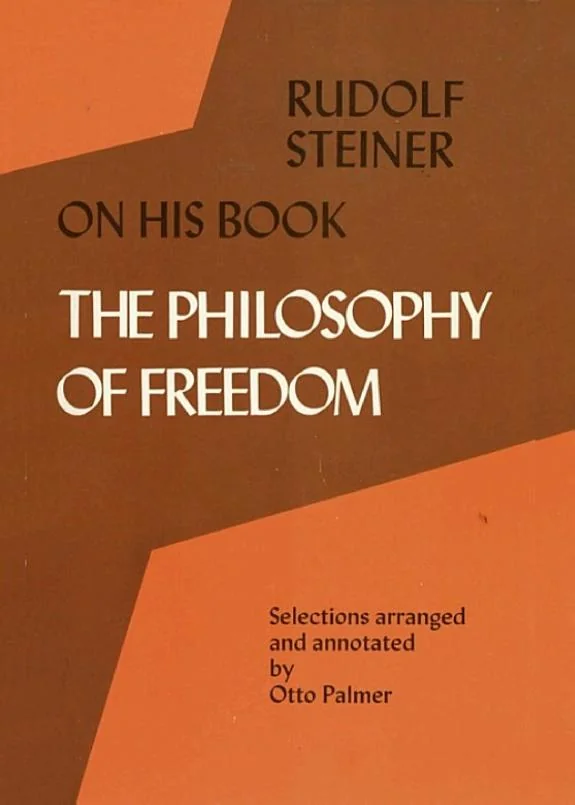
Rudolf Steiner on His Book "The Philosophy of Freedom"
 81
81

Rudolf Steiner on His Book "The Philosophy of Freedom"
Otto Palmer's examination of Rudolf Steiner's "The Philosophy of Freedom" offers a welcome, if sometimes dense, pathway into a text that can initially appear abstract. Palmer’s strength lies in his unwavering focus on the experiential aspect of Steiner’s philosophy. He correctly identifies that Steiner intended the book itself to be a practical exercise in developing free thought, not merely a theoretical treatise. The commentary effectively highlights how the very structure of Steiner’s original work, with its careful progression of ideas, is designed to foster this inner transformation. A notable passage that illustrates this is Palmer's discussion on the overcoming of 'perceptual habits,' encouraging readers to actively question their assumptions. However, the book's limitation is its accessibility; it assumes a significant prior familiarity with Steiner's terminology and conceptual framework. Without this background, some sections can feel opaque. The discussion around "moral imagination" is particularly potent, showing how Steiner's ideas offer a path to ethical action rooted in self-awareness. Palmer's work is a valuable companion for dedicated students, but less so for newcomers to Steiner's complex philosophical landscape.
📝 Description
81
Otto Palmer's 1975 commentary illuminates Rudolf Steiner's 1894 work, "The Philosophy of Freedom."
This volume offers Otto Palmer's 1975 analysis of Rudolf Steiner's "The Philosophy of Freedom." Palmer's goal was to clarify Steiner's original text, stressing that its structure and precise language were designed by Steiner to create a direct inner experience for the reader. The commentary goes beyond simple textual examination to address the experiential side of Steiner's philosophy. It guides readers toward an engagement with the ideas that can foster personal growth through a disciplined study of thought processes.
Palmer's work is intended for those deeply involved with anthroposophy and Steiner's writings. It is especially useful for readers who have already read "The Philosophy of Freedom" and wish to grasp its complex arguments and experiential dimensions more thoroughly. Individuals interested in consciousness development, moral imagination, and spiritual scientific ideas about freedom will find this study valuable. It also serves those studying Western esotericism who want to understand Steiner's specific contributions to human thought.
Published in 1975, Otto Palmer's commentary situates Rudolf Steiner's "The Philosophy of Freedom" within the developing movements inspired by Steiner's early 20th-century work. Steiner's 1894 book aimed to establish a scientific basis for human self-determination, differing from the prevalent positivist and materialist views of his time. While predating Steiner's later spiritual science writings, "The Philosophy of Freedom" laid groundwork for his methods in knowing and ethics. Palmer's analysis connects this foundational text to the broader reception and ongoing study of Steiner's extensive writings.
💡 Why Read This Book?
• Understand the experiential design of "The Philosophy of Freedom." Palmer's commentary elucidates how Steiner intended the book's structure and wording to be an active exercise, fostering freedom of thought through direct engagement, a method distinct from passive reading. • Grasp the concept of "thinking as an activity." This book details how Steiner viewed the mind as a creative force, actively generating knowledge, a perspective that challenges conventional epistemology and offers a new way to engage with intellectual pursuits. • Explore "moral imagination" as an inner achievement. Palmer highlights Steiner's notion that ethical impulses arise from within through conscious self-development, offering a framework for ethical decision-making grounded in self-awareness rather than external rules.
⭐ Reader Reviews
Honest opinions from readers who have explored this book.
❓ Frequently Asked Questions
What is the primary goal of Rudolf Steiner's "The Philosophy of Freedom" as explained in Otto Palmer's commentary?
Otto Palmer's work explains that the primary goal of "The Philosophy of Freedom" is to demonstrate how human beings can achieve true freedom through the conscious, self-directed activity of their own thinking, making freedom an inner, achievable state.
When was Rudolf Steiner's "The Philosophy of Freedom" originally published?
Rudolf Steiner's "The Philosophy of Freedom" was originally published in German in 1894 under the title "Die Philosophie der Freiheit."
How does Otto Palmer's book connect with the concept of 'moral imagination' from Steiner's work?
Palmer's commentary connects with 'moral imagination' by explaining it as Steiner's concept of developing ethical impulses from within through conscious thought and self-awareness, rather than from external authority or dogma.
What is the significance of the year 1975 in relation to Otto Palmer's book?
The year 1975 marks the first publication of Otto Palmer's commentary on Rudolf Steiner's "The Philosophy of Freedom," offering a specific historical moment for this interpretation and study.
What does Palmer suggest about the structure of Steiner's "The Philosophy of Freedom"?
Palmer suggests that Steiner meticulously designed the structure and wording of "The Philosophy of Freedom" not just for intellectual content, but to serve as a powerful, direct inner experience for the dedicated reader, fostering self-knowledge.
What kind of reader would benefit most from Palmer's interpretation?
Readers seriously engaged with anthroposophy, those seeking a deeper experiential understanding of "The Philosophy of Freedom," and students of Western esotericism interested in Steiner's ideas on consciousness and freedom would benefit most.
🔮 Key Themes & Symbolism
Freedom Through Thinking
This commentary emphasizes Steiner's core idea that true human freedom is not an external condition but an internal achievement. Palmer guides readers to understand how 'thinking as an activity' allows individuals to transcend determinism. By consciously engaging with their thought processes, as detailed in "The Philosophy of Freedom," readers can develop the capacity for self-determination and moral initiative, moving beyond conditioned responses to genuine self-awareness and choice.
Moral Imagination and Inner Experience
Palmer highlights Steiner's concept of 'moral imagination' as a vital component of spiritual development. This theme explores how ethical understanding and action arise not from external rules but from an inner wellspring of insight cultivated through conscious thought. The book serves as a guide to fostering this inner faculty, encouraging readers to experience the development of ethical impulses directly through their own contemplative and active thinking processes.
The Experiential Nature of Philosophy
A central theme is Steiner's intention for "The Philosophy of Freedom" to be an experiential work. Palmer stresses that the book's careful structure and precise language are designed to facilitate a profound inner transformation in the reader. This perspective shifts the understanding of philosophical study from mere intellectual acquisition to a process of personal unfolding and the direct apprehension of spiritual realities through disciplined inner work.
Overcoming Perceptual Habits
Palmer's interpretation focuses on Steiner's call to overcome ingrained 'perceptual habits.' This theme addresses how our everyday perception is shaped by unconscious assumptions and cultural conditioning. The commentary encourages readers to engage in a rigorous self-examination of their thinking to break free from these limitations, thereby achieving a clearer, more direct apprehension of reality and fostering genuine cognitive and spiritual freedom.
💬 Memorable Quotes
Direct passages from the work, attributed to the author.
“The very structure was intended to become a powerful inner experience for the careful reader.”
— This highlights Palmer's central argument: that "The Philosophy of Freedom" is not just text, but a carefully crafted tool designed to elicit a direct, transformative inner experience in those who engage with it diligently.
“The advantage of discovering what the author himself had to say about this most important and important work should be obvious.”
— Palmer underscores the unique value of accessing Steiner's own intentions and emphasis regarding "The Philosophy of Freedom," positioning his commentary as a direct conduit to the author's pedagogical and philosophical aims.
“Not only were the words of the text chosen most carefully, but also its very structure was intended to become a powerful inner experience.”
— This emphasizes the deliberate craftsmanship in Steiner's original work, indicating that every element, from word choice to the arrangement of ideas, served a specific purpose in guiding the reader toward inner realization.
“Much has been written by students of spiritual science on The Philosophy of Freedom.”
— This acknowledges the existing body of commentary on Steiner's work, implicitly positioning Palmer's contribution as offering a particular, author-focused perspective on this foundational text within spiritual science.
💡 Key Ideas
Editorial paraphrase of the work's core concepts — not direct quotes.
Every step a deepening Overcoming the surface Penetrating the depths.
This quote expresses Steiner's approach to spiritual knowledge, suggesting a process of moving beyond superficial appearances to a profound understanding through sustained inner effort and conscious exploration.
🌙 Esoteric Significance
Tradition
This work falls within the lineage of Western Esotericism, particularly influenced by German Idealism and Romanticism, which Steiner synthesized with his unique spiritual-scientific methodology. It departs from earlier mystical traditions by grounding spiritual insight in the disciplined activity of human consciousness and thinking, rather than solely relying on revelation or occult practices. It bridges philosophy and spirituality, offering a path to inner freedom that is both intellectually rigorous and experientially attainable.
Symbolism
While "The Philosophy of Freedom" is largely philosophical, its core concepts function symbolically. 'Thinking' itself becomes a symbol for the active, creative potential of consciousness. 'Freedom' symbolizes the realized state of self-determination attainable through this conscious thinking. The journey through the book represents the path of inner development, moving from ordinary perception to a more direct, spiritual apprehension of reality.
Modern Relevance
Contemporary movements in consciousness studies, transpersonal psychology, and certain educational philosophies that emphasize critical thinking and self-awareness draw upon Steiner's ideas. Thinkers exploring the intersection of consciousness, ethics, and individual agency find relevance in Steiner's framework for cultivating moral responsibility and inner freedom in an increasingly complex world.
👥 Who Should Read This Book
• Students of Anthroposophy: Those deeply involved with Steiner's broader work will find this commentary an invaluable guide to understanding the philosophical underpinnings of his spiritual science. • Seekers of Inner Freedom: Individuals interested in developing greater self-awareness, autonomy, and ethical clarity through rigorous mental discipline will benefit from exploring Steiner's concepts as presented by Palmer. • Scholars of Western Esotericism: Researchers and practitioners interested in the evolution of philosophical and spiritual thought in the West will find this work offers a specific lens on Steiner's unique contribution.
📜 Historical Context
Otto Palmer's 1975 commentary appears at a time when Rudolf Steiner's extensive body of work, originating in the early 20th century, was fostering significant movements like anthroposophy. Steiner's "The Philosophy of Freedom" (originally "Die Philosophie der Freiheit," 1894) was a foundational text, preceding his more overtly spiritual-scientific works, aiming to establish a basis for human autonomy and self-knowledge through a rigorous examination of thinking. This work stood in contrast to the prevailing positivist and materialist philosophies of the late 19th century. While figures like Friedrich Nietzsche explored related themes of will and self-overcoming, Steiner's approach was distinct in its emphasis on the conscious, ethical development of thought as the path to freedom. Palmer's book engages with the ongoing study and reception of Steiner's ideas, providing a focused interpretation of a text crucial for understanding Steiner's epistemological and ethical framework.
📔 Journal Prompts
The nature of 'thinking as an activity' within your own cognitive processes.
Developing 'moral imagination' through conscious ethical reflection.
Identifying and overcoming your own 'perceptual habits'.
The structural intent of "The Philosophy of Freedom" as an inner experience.
Your personal understanding of 'freedom' as an inner achievement.
🗂️ Glossary
Anthroposophy
A spiritual philosophy founded by Rudolf Steiner, seeking to understand the spiritual dimensions of the human being and the cosmos through methods of spiritual perception and scientific investigation.
Spiritual Science
Steiner's term for his comprehensive worldview and method, which investigates the spiritual aspects of existence accessible through expanded consciousness and disciplined inner development.
Thinking as an Activity
Steiner's concept that thinking is not a passive reception of information but an active, creative process through which consciousness can apprehend reality and create knowledge.
Moral Imagination
The capacity, developed through conscious thinking, to generate ethical impulses and insights from within oneself, leading to autonomous moral judgment and action.
Perceptual Habits
Ingrained ways of perceiving and interpreting the world, often unconscious and conditioned by upbringing and environment, which Steiner encouraged readers to overcome.
Freedom of the Will
In Steiner's context, this refers not to external liberty but to the inner capacity for self-determination, achieved through conscious self-knowledge and the mastery of one's own thinking.
Epistemology
The branch of philosophy concerned with the nature and scope of knowledge, its justification, and the rationality of belief. Steiner offered a distinct spiritual-scientific epistemology.
This book appears in 1 collection
🔮 Readers Also Liked
Browse all →



From the “Anthroposophy” Collection
View all →





More Free Theosophy & Anthroposophy Books
View all →