Nostradamus

 79
79

Nostradamus
Lemesurier's "Nostradamus" avoids sensationalism, presenting a grounded analysis of the 16th-century prophet. The author adeptly contextualizes Nostradamus's work within the intellectual milieu of the Renaissance, a significant strength that moves beyond mere prophecy recitation. For instance, the detailed exploration of how astrological conjunctions and contemporary political events in 16th-century France might have shaped specific quatrains provides a valuable historical lens. A limitation, however, is that the sheer volume of interpretive theories discussed can occasionally obscure a definitive stance on the nature of the prophecies themselves, leaving the reader to sift through multiple possibilities. The passage discussing the potential astronomical references within the "Centuries" is particularly illuminating. Ultimately, Lemesurier provides a solid, academic foundation for understanding Nostradamus, suitable for serious inquiry.
📝 Description
79
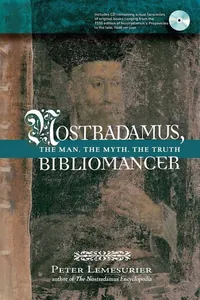
Peter Lemesurier's 1994 book examines Michel de Nostredame's life and prophecies.
This 1994 book by Peter Lemesurier provides a detailed study of Michel de Nostredame. It covers his life as a 16th-century apothecary and seer, alongside an analysis of his famous quatrains. The work places Nostradamus within the intellectual currents of Renaissance esotericism and astrology.
Lemesurier investigates the poetic structure of the prophecies, the historical factors shaping Nostradamus's writings, and the difficulties in interpreting predictions that stretch across centuries. The book also traces the development of Nostradamus scholarship, outlining different approaches used to understand his obscure verses. It is written for those interested in prophetic literature and the historical figure of Nostradamus.
Published in 1994, Lemesurier's study engages with the long tradition of prophetic literature that flourished across various cultures. It specifically positions Nostradamus within the Renaissance milieu, a period when astrology, alchemy, and other esoteric disciplines were integrated into intellectual life. The book addresses how these traditions influenced Nostradamus's worldview and the content of his prophecies, examining the challenges of understanding such works outside their original historical and philosophical framework.
💡 Why Read This Book?
• Understand the specific historical conditions of 16th-century France, as detailed in the book's exploration of Nostradamus's life and the political climate he inhabited, offering context unavailable in generalized prophecies. • Learn about the structural elements of Nostradamus's quatrains, such as their astrological allusions and poetic devices, providing analytical tools for engaging with similar prophetic texts. • Gain insight into the evolution of Nostradamus scholarship since the original publication of his prophecies, appreciating how interpretations have shifted over centuries, a perspective unique to studies focusing on the reception of his work.
⭐ Reader Reviews
Honest opinions from readers who have explored this book.
❓ Frequently Asked Questions
When was Nostradamus's original book of prophecies first published?
The first edition of Michel de Nostredame's "Prophéties" was published in 16th-century France, with the initial collection appearing in 1555.
What was Nostradamus's profession before becoming known for his prophecies?
Michel de Nostredame was trained as a physician and apothecary, practicing medicine during the tumultuous period of the 16th century.
What is the primary format of Nostradamus's prophecies?
The prophecies are primarily written in quatrains, which are four-line stanzas, often with an AABB or ABAB rhyme scheme, organized into longer collections called 'Centuries'.
Does Peter Lemesurier's book claim Nostradamus predicted specific future events accurately?
Lemesurier's work generally approaches the prophecies with historical and analytical rigor, exploring interpretations rather than asserting definitive proof of foreknowledge for specific events.
Where can I find more information about Renaissance astrology and its influence on prophecy?
Further research into Renaissance astrology would involve studying figures like Johannes Kepler or looking at the celestial charts and astrological texts available during the 1500s.
Is this book a biography or an analysis of the prophecies themselves?
It serves as both, offering biographical context for Michel de Nostredame while deeply analyzing the structure, language, and historical interpretations of his prophetic quatrains.
🔮 Key Themes & Symbolism
The Art of the Quatrain
Lemesurier meticulously examines the structure and linguistic nuances of Nostradamus's quatrains. This theme explores how the four-line poetic form, often imbued with astrological references and obscure terminology, served as the vehicle for predictions. The book illustrates how the ambiguity inherent in this format has allowed for a vast array of interpretations across centuries, making the quatrain itself a key element in the enduring mystique of Nostradamus's work.
Renaissance Esotericism
This theme situates Nostradamus's prophecies within the broader intellectual field of the 16th century. Lemesurier highlights the prevalence of occult studies, astrology, and Hermetic philosophy during this period. The work demonstrates how these currents influenced Nostradamus's worldview and the content of his predictions, showing that his prophecies were not created in a vacuum but were products of a specific, spiritually charged era.
Interpretive Methodologies
A significant focus is placed on the various methods scholars and enthusiasts have employed to decipher the "Centuries." This theme addresses the historical evolution of interpretation, from contemporary attempts to link quatrains to immediate events to modern efforts using numerology, anagrams, or historical parallels. Lemesurier critically evaluates these approaches, underscoring the challenges and subjective nature of unlocking Nostradamus's cryptic verses.
The Prophet's Persona
Lemesurier studies the life and public image of Michel de Nostredame, exploring how his dual identity as a respected physician and a predictor of the future shaped his reception. This theme examines the deliberate construction of his persona, the patronage he received, and the controversies surrounding his work. Understanding the man behind the prophecies is presented as crucial to interpreting the prophecies themselves.
💬 Memorable Quotes
Direct passages from the work, attributed to the author.
“The quatrains are characterized by an intentional obscurity, a deliberate vagueness that allows for multiple readings.”
— This highlights the core challenge in studying Nostradamus: his prophecies are not straightforward predictions but rather poetic puzzles designed to be interpreted, often retroactively, fitting events to verse.
“Nostradamus's work reflects the astrological beliefs and anxieties prevalent in 16th-century Europe.”
— This emphasizes that his prophecies should be understood within their historical and cultural context, influenced by the scientific and spiritual understandings of his time, rather than viewed as purely detached foreknowledge.
“The reception of the "Centuries" has varied dramatically across different historical periods.”
— This points to the dynamic nature of Nostradamus's legacy, showing how his prophecies have been seen through different lenses and used to explain events ranging from the French Revolution to World Wars.
“Deciphering the prophecies requires an understanding of Renaissance French, Latin, Greek, and astrological symbolism.”
— This underscores the linguistic and symbolic complexity involved in translating and interpreting the original texts, suggesting that superficial readings often miss crucial layers of meaning.
“Many interpretations of Nostradamus's predictions emerged long after the events they supposedly foretold.”
— This suggests a pattern of confirmation bias, where interpreters find connections after the fact, rather than demonstrating predictive accuracy in real-time.
🌙 Esoteric Significance
Tradition
Lemesurier's work engages with the Western Esoteric tradition, specifically within the lineage of Renaissance Hermeticism and astrological divination. Nostradamus himself was deeply embedded in this milieu, blending medical knowledge with astrological observation and what he presented as prophetic insight. The book examines how Nostradamus's prophecies can be seen as a continuation of ancient divinatory practices adapted to a Christianized European context, distinct from Eastern traditions but sharing the universal human impulse to seek knowledge of the future.
Symbolism
Central to Nostradamus's work are astrological symbols and alchemical motifs, though often veiled. The 'Grand Conjunction' of planets, for instance, appears as a recurring motif signaling significant historical shifts. The concept of 'fire from the sky' or cataclysmic events often carries symbolic weight, representing not just literal destruction but also profound societal transformation and purification, aligning with apocalyptic themes present in various mystical traditions.
Modern Relevance
Contemporary interest in Nostradamus, often fueled by online communities and new editions of his prophecies, continues to draw upon the analytical frameworks explored by scholars like Lemesurier. Thinkers and practitioners interested in predictive astrology, comparative prophecy studies, and the history of occultism frequently reference Nostradamus. The enduring appeal lies in the persistent human desire to understand destiny, making his work a touchstone for discussions on fate, free will, and the interpretation of historical patterns.
👥 Who Should Read This Book
• Students of Western Esotericism: Those seeking to understand the historical roots of prophecy and divination within the Renaissance, gaining context for later esoteric movements. • History Enthusiasts: Individuals fascinated by 16th-century France and the intersection of science, religion, and occultism, offering a specific lens on the period. • Critical Prophecy Readers: Anyone interested in analyzing prophetic texts systematically, learning about the challenges of interpretation and the historical reception of Nostradamus's "Centuries."
📜 Historical Context
Published in 1994, Peter Lemesurier's "Nostradamus" arrived in an era where interest in the 16th-century seer was experiencing a significant resurgence, fueled by popular culture and a desire to find order in perceived global chaos. This period saw numerous books and media exploring prophetic figures. Lemesurier's work distinguished itself by grounding its analysis in the specific historical and intellectual currents of Nostradamus's time, the mid-16th century. He placed Michel de Nostredame within the context of Renaissance humanism and the widespread practice of astrology, contrasting this with later, often more speculative, interpretations. Key contemporaries like Paracelsus, though not directly linked in this text, represented a similar engagement with esoteric knowledge. The reception of Nostradamus's work has always been varied; while Lemesurier focuses on scholarly analysis, the 1990s saw a proliferation of more sensationalist takes, highlighting the ongoing debate between academic rigor and popular fascination that has surrounded the prophecies since their initial publication in 1555.
📔 Journal Prompts
The historical context of 16th-century France as presented in the book.
The deliberate obscurity of Nostradamus's quatrain structure.
The evolution of interpretive methodologies applied to the "Centuries."
Nostradamus's dual role as physician and seer.
The symbolic meaning of astrological conjunctions in prophetic literature.
🗂️ Glossary
Quatrain
A stanza or poem consisting of four lines, often with a specific rhyme scheme. Nostradamus famously used quatrains to present his prophecies.
Centuries
The term for the collections of Nostradamus's prophecies, each typically comprising one hundred quatrains, organized into books also called 'Centuries'.
Michel de Nostredame
The full name of Nostradamus, a 16th-century French apothecary, astrologer, and reputed seer, author of the "Prophéties."
Renaissance Esotericism
The broad category of mystical, spiritual, and magical traditions prevalent in Europe during the Renaissance (approx. 14th-17th centuries), often incorporating Hermeticism, Neoplatonism, and astrology.
Astrology
The study of the movements and relative positions of celestial bodies interpreted as having an influence on human affairs and the natural world.
Divination
The practice of seeking knowledge of the future or the unknown by supernatural means.
Hermeticism
A philosophical and religious tradition based primarily upon writings attributed to Hermes Trismegistus, emphasizing spiritual wisdom and the interconnectedness of the cosmos.
🔮 Readers Also Liked
Browse all →







![Qigong =: [Chi kung]](/img/thumb/qigong-chi-kung-wu-runjin-523499.webp)

More by Peter Lemesurier
All books →




More Free Occult Philosophy Books
View all →