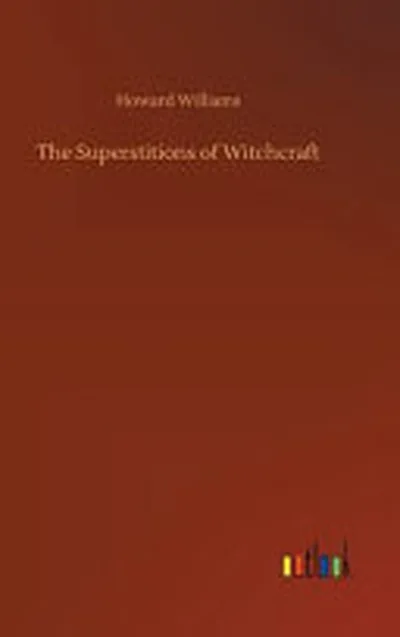
The Superstitions of Witchcraft
 71
71

The Superstitions of Witchcraft
Howard Williams's "The Superstitions of Witchcraft" offers a sober, academic dissection of a subject often shrouded in sensationalism. Rather than exploring the mechanics of spellcraft, Williams meticulously examines the societal roots and historical evolution of beliefs surrounding witchcraft. His strength lies in situating these superstitions within the broader context of folk psychology and cultural anxieties, particularly the anxieties prevalent in the late 19th century. One particularly incisive passage discusses how perceived malevolent magic often mirrored genuine social conflicts and resentments. However, the book's academic tone, while commendable for its rigor, can sometimes feel detached, lacking the vibrant narrative that might draw in a general reader interested in folklore. It is an excellent resource for scholars of comparative religion and anthropology, but less so for those seeking an entry point into magical practice. Williams provides a valuable, if dry, historical autopsy of witch beliefs.
📝 Description
71
Howard Williams's 2018 reproduction examines the folk beliefs and practices of witchcraft.
This 2018 reproduction of Howard Williams's work offers an academic look at superstitions surrounding witchcraft. It moves past sensationalism to investigate the societal anxieties and cultural stories that drove these beliefs. Williams's book was written during a time of growing interest in folklore and anthropology, a period also marked by ongoing discussions about religious and superstitious ideas. He places witchcraft superstitions within larger conversations about societal progress and the survival of ancient beliefs in developing societies.
The book analyzes how old rites persist, how belief influences the perception of magical causes, and the social function of identifying witches as scapegoats. It shows how these beliefs, even if not rational, played important parts in community bonding and explaining bad luck. This study is for those interested in magic's history, folklore, and comparative religion, seeking a scholarly view on witch beliefs rather than practical occult instruction. Students of anthropology and cultural history will find its analytical approach useful.
Howard Williams's study is situated within the late 19th and early 20th-century academic interest in folklore and comparative religion. It reflects a scholarly attempt to understand the cultural roots and social functions of beliefs often categorized as superstition, including those surrounding witchcraft. The work emerged during a period when anthropology and the study of religion were developing as disciplines, seeking to analyze phenomena like witchcraft not as inherently real magic, but as expressions of societal anxieties and cultural frameworks.
💡 Why Read This Book?
• Understand the historical roots of witch beliefs by examining their connection to societal anxieties and folk psychology, as detailed in the book's analysis of late 19th-century folklore studies. • Gain insight into how superstitions function as cultural narratives, exploring the concept of perceived magical causality and its role in explaining misfortune, a central theme discussed by Williams. • Appreciate the academic approach to occult subjects, learning to distinguish between historical belief systems and modern magical practice, as exemplified by the book's reproduction of original scholarship.
⭐ Reader Reviews
Honest opinions from readers who have explored this book.
❓ Frequently Asked Questions
When was "The Superstitions of Witchcraft" originally conceived before its 2018 reproduction?
While the reproduction was published in 2018, the original work by Howard Williams dates to an earlier period, reflecting the intellectual currents of late 19th and early 20th-century folklore and anthropological studies.
Does "The Superstitions of Witchcraft" offer practical spells or rituals?
No, this book is purely an academic study. It analyzes the historical beliefs and societal contexts surrounding witchcraft superstitions rather than providing instructions for magical practices.
What academic disciplines does "The Superstitions of Witchcraft" draw upon?
The work is rooted in folklore studies, anthropology, and comparative religion, examining beliefs and practices from a scholarly, historical perspective.
Who is Howard Williams, the author of "The Superstitions of Witchcraft"?
Howard Williams was an author and scholar whose work focused on the historical and cultural aspects of superstition, magic, and religion, contributing to early anthropological and folklore discourse.
Is "The Superstitions of Witchcraft" a primary source for studying modern witchcraft?
It is a primary source for understanding historical beliefs *about* witchcraft, particularly those prevalent in the late 19th and early 20th centuries, but not for contemporary witchcraft practices.
What distinguishes this book from sensationalist accounts of witchcraft?
Unlike sensationalist accounts, Williams's book employs an academic methodology, analyzing superstitions through the lens of societal psychology, cultural history, and comparative religious studies.
🔮 Key Themes & Symbolism
Societal Anxiety and Witch Beliefs
The work meticulously unpacks how societal anxieties, fears, and misfortunes are often projected onto the figure of the witch. It explores how the belief in witchcraft served as a cultural mechanism for explaining inexplicable events, from crop failures to illness, thereby providing a semblance of order in chaotic times. Williams examines the psychological underpinnings of these fears, situating them within the broader context of community tensions and scapegoating rituals prevalent in historical societies.
The Evolution of Folk Magic
Williams traces the historical trajectory of folk magic and its associated superstitions, moving beyond demonological interpretations to focus on the everyday beliefs and practices of common people. The book analyzes how ancient rites and pagan survivals might have informed later conceptions of witchcraft, differentiating between learned sorcery and inherited folk traditions. This exploration provides insight into the persistent nature of certain magical beliefs across different epochs.
Superstition as Cultural Narrative
This theme centers on how superstitions function as narratives that shape collective understanding and behavior. The book investigates the construction of these narratives around witchcraft, examining the role of folklore, oral tradition, and communal belief in solidifying what constitutes 'witchcraft' in the popular imagination. It highlights how these narratives, however irrational, held significant social and psychological weight for the communities that perpetuated them.
Comparative Religion and Witchcraft
Williams situates witchcraft superstitions within a comparative religious framework, exploring parallels and divergences with other belief systems and ritual practices. The work examines how the concept of malevolent magic interacts with, or is contrasted against, notions of divine intervention or protective charms found in mainstream religious traditions. This comparative approach illuminates the unique position of witchcraft beliefs within the broader spectrum of human spirituality.
💬 Memorable Quotes
Direct passages from the work, attributed to the author.
“The book explores how the idea of witchcraft often served as an explanation for misfortune.”
— This highlights the function of witch beliefs as a cultural framework for understanding and processing negative events, providing a narrative when scientific or rational explanations were unavailable or insufficient.
“Williams examines the persistence of ancient rites within later folk superstitions.”
— This points to the idea that many beliefs associated with witchcraft have roots in much older pagan or animistic traditions, demonstrating the long evolutionary arc of folk magic.
“The work analyzes witchcraft superstitions through the lens of societal psychology.”
— This indicates that the author's approach is not merely descriptive but analytical, seeking to understand the psychological needs and social dynamics that gave rise to and perpetuated beliefs in witchcraft.
“The book differentiates between learned sorcery and inherited folk traditions.”
— This suggests a nuanced view of witchcraft, recognizing that 'witchcraft' encompasses a spectrum from formalized magical practices to more diffuse, inherited folk beliefs and superstitions.
“Superstitions surrounding witchcraft provided a means of explaining the inexplicable.”
— This reinforces the concept of witchcraft beliefs as a coping mechanism for dealing with uncertainty and events that defied rational understanding in historical societies.
🌙 Esoteric Significance
Tradition
While not strictly within a formal esoteric lineage like Hermeticism or Kabbalah, Williams's work engages with the historical 'folk magic' tradition. It examines the societal and psychological underpinnings of beliefs that have long been associated with esoteric practices, even if the book itself is an objective, academic study rather than a grimoire or initiatory text. It provides context for the cultural soil from which many esoteric beliefs and practices historically grew.
Symbolism
The book implicitly touches upon symbols of misfortune and malevolence often associated with witchcraft, such as the 'evil eye' or specific curses, analyzing their function within folk belief systems. It also indirectly addresses symbols of protection and counter-magic that communities employed, viewing them not as inherently powerful but as manifestations of psychological needs and social cohesion.
Modern Relevance
Contemporary scholars of folklore and cultural studies continue to draw on historical analyses like Williams's to understand the persistence of superstition and belief in the face of modernity. Furthermore, modern practitioners of various pagan and witchcraft traditions may consult such works to understand the historical roots and societal perceptions of the practices they engage with, providing a critical historical lens.
👥 Who Should Read This Book
• Students of folklore and anthropology seeking to understand the historical development and societal functions of witch beliefs. • Researchers in comparative religion interested in how notions of magic and superstition intersect with established religious frameworks. • Cultural historians examining the late 19th and early 20th centuries, interested in the interplay between perceived progress and enduring folk traditions.
📜 Historical Context
Howard Williams's "The Superstitions of Witchcraft" emerged from the fertile ground of late 19th and early 20th-century scholarship, a period marked by intense interest in folklore, anthropology, and comparative religion. Figures like Sir James Frazer were popularizing theories about magic, religion, and science, and Williams's work fits within this intellectual milieu by dissecting the persistent belief in witchcraft. The era saw a tension between rationalist progress and the enduring power of folk beliefs, which Williams engages with directly. While not directly engaging in polemics with contemporaries like Margaret Murray, whose theories on witch cults gained traction later, Williams's focus on the psychological and social roots of superstition aligns with a more empirical, less romanticized approach to the subject. The book's reproduction in 2018 situates it as a historical document, valuable for understanding earlier academic perspectives on occult phenomena.
📔 Journal Prompts
Reflect on the concept of 'perceived magical causality' as discussed in Williams's analysis of superstitions.
Consider how societal anxieties, as explored in the book, might manifest in contemporary belief systems.
Examine the 'persistence of ancient rites' in modern cultural phenomena, drawing parallels to Williams's observations.
Analyze the role of 'scapegoating' in historical communities, as presented in the text.
How do the 'cultural narratives' surrounding witchcraft, according to the book, compare to narratives surrounding other perceived threats today?
🗂️ Glossary
Folk Magic
Magical beliefs and practices transmitted through oral tradition within a community, often distinct from formal, learned magical systems or established religious doctrines.
Societal Anxiety
Widespread feelings of unease, fear, or apprehension within a society, often triggered by social, economic, or political instability, which can influence belief systems.
Perceived Magical Causality
The belief that supernatural forces or magical actions are the direct cause of events, particularly misfortune, illness, or death, in the absence of rational explanation.
Scapegoating
The practice of blaming an individual or group for the wrongdoings, mistakes, or faults of others, often leading to persecution.
Pagan Survivals
Beliefs, customs, or practices from pre-Christian or non-Christian religions that persist in modified forms within later cultural or religious traditions.
Comparative Religion
The academic study of different religions, examining their beliefs, practices, and historical development in relation to one another.
Folklore Studies
The academic discipline concerned with the collection, analysis, and interpretation of folklore, including oral traditions, customs, and beliefs.














![AD [frag.] Gela Hermann Büder Wittwe zu Rodenbach Clägerin. Contra Die Gemeindte desselbsten und sonderlich Johannes ... 1650-1651: Iss 180](/img/thumb/ad-frag-gela-hermann-b-der-wittwe-zu-rodenbach-cl-gerin-contra-die-gemeindte-desselbsten-und-sonderlich-johannes-1650-1651-iss-180-buder-gela.webp)